Algeria Bans Cryptocurrency Mining Over Energy Crisis
 Mar, 3 2026
Algeria didn’t just tighten rules on cryptocurrency - it outlawed it entirely. On July 24, 2025, Law No. 25-10 went into effect, making every form of cryptocurrency activity illegal, from buying Bitcoin to running a single mining rig in your garage. The government’s public reason? Cryptocurrency mining is draining the national power grid. But behind that simple explanation lies a much deeper story about energy, control, and a country caught between its past and its future.
Why Algeria Chose to Ban Mining
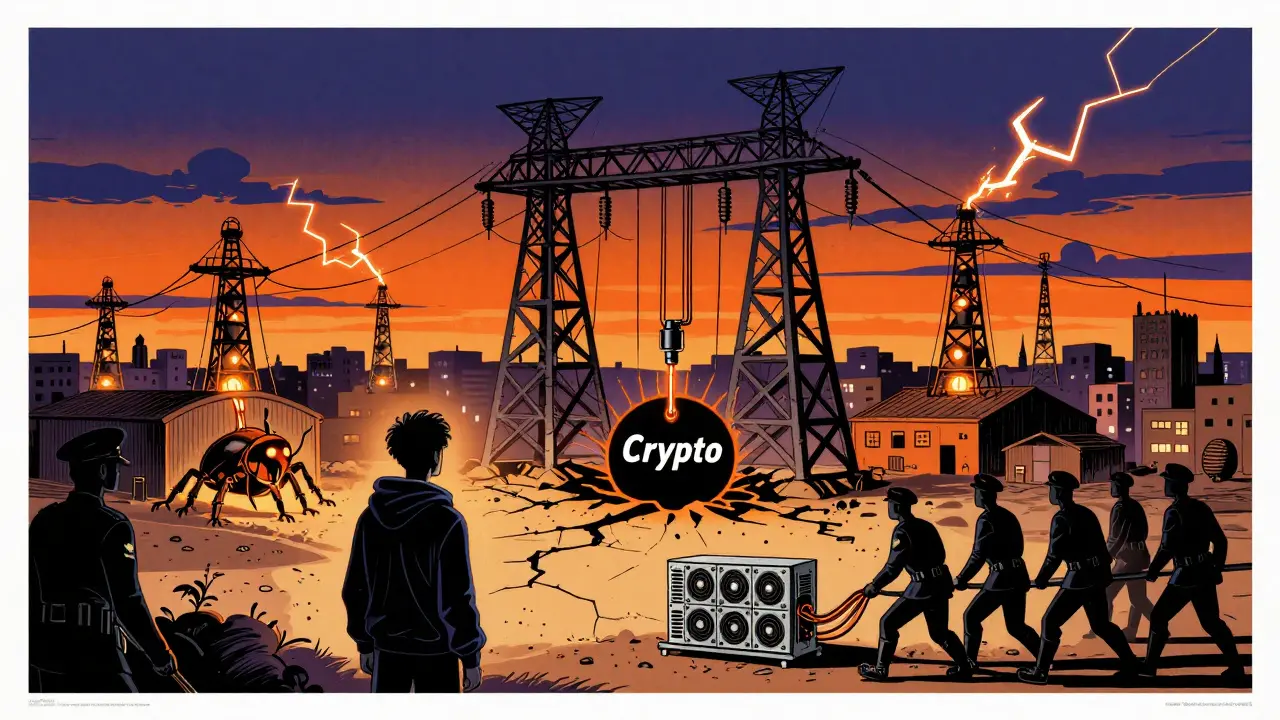
Algeria’s electricity system has been stretched thin for years. The country relies heavily on fossil fuels to generate power, and its grid can barely handle everyday demand, especially during summer when temperatures hit 45°C and air conditioners run nonstop. In 2024, authorities detected unauthorized mining operations siphoning off 15 to 20 megawatts of electricity - roughly 1.5% of the entire national grid’s capacity during peak hours. That’s enough to power over 10,000 homes. The real issue wasn’t just how much power miners used. It was where they used it. Most mining rigs were clustered in industrial zones near cities like Oran and Algiers, where power monitoring is more advanced. These areas already struggled with blackouts. When miners ran hundreds of GPUs 24/7, they pushed local transformers past their limits. SONELGAZ, the state-owned utility, started seeing spikes in electricity use that made no sense - homes and small businesses weren’t using that much power, but entire warehouses were glowing like Christmas trees. The government didn’t just see this as a technical problem. It saw it as a threat to social stability. Algeria heavily subsidizes electricity, charging residents as little as $0.035 per kilowatt-hour. That’s less than a third of the global average. For miners, this meant near-free power. One miner told local media he was making $350 a month just by running 12 rigs - enough to live comfortably in a country where the average monthly wage is under $500. The state couldn’t justify giving away cheap energy to a small group of people while millions faced rolling blackouts.What the Law Actually Bans
Law No. 25-10 doesn’t just stop mining. It bans everything. Holding Bitcoin in a wallet? Illegal. Trading Ethereum on an app? Illegal. Even promoting crypto on social media? Illegal. The law defines crypto-assets as “property, income, funds or financial assets,” meaning even if you never sold your Bitcoin, just owning it is a crime. Penalties are harsh. First-time offenders face up to one year in prison and fines between 200,000 and 1,000,000 Algerian dinars (about $1,500-$7,700). Repeat offenders? Double that. Authorities have already seized over 200 mining rigs since August 2025, including equipment from university students and small business owners. One case in Oran made headlines when police confiscated seven rigs from a 21-year-old engineering student who was mining Litecoin to pay for his tuition. The law also banned VPNs - a move that stunned many. For years, Algerians used VPNs to access global crypto exchanges. Now, using one to buy Bitcoin or check your wallet balance could land you in jail. The government says it’s to prevent circumvention of the ban. Critics say it’s just another tool to control internet freedom.How It Compares to Other Countries
Most countries that ban crypto do so because of fraud, money laundering, or capital flight. Algeria’s ban is different. It’s one of the only places in the world where energy use is the primary justification. China banned mining in 2021 - but it was mostly about financial control and carbon targets. Egypt bans trading but lets people hold crypto. Tunisia licenses mining. Morocco jails people for using Bitcoin, but not specifically because of electricity. In the MENA region, Algeria stands alone. The UAE, Saudi Arabia, and Bahrain have all built regulatory sandboxes for crypto firms. Dubai alone processed $2.1 billion in crypto transactions in Q2 2025. Algeria’s ban has pushed its ranking on the Global Crypto Adoption Index from 87th in 2023 to 112th in 2025. And it’s not just about numbers. Around 37% of Algerian blockchain developers have left the country since 2023, relocating to Tunisia, Morocco, or Europe.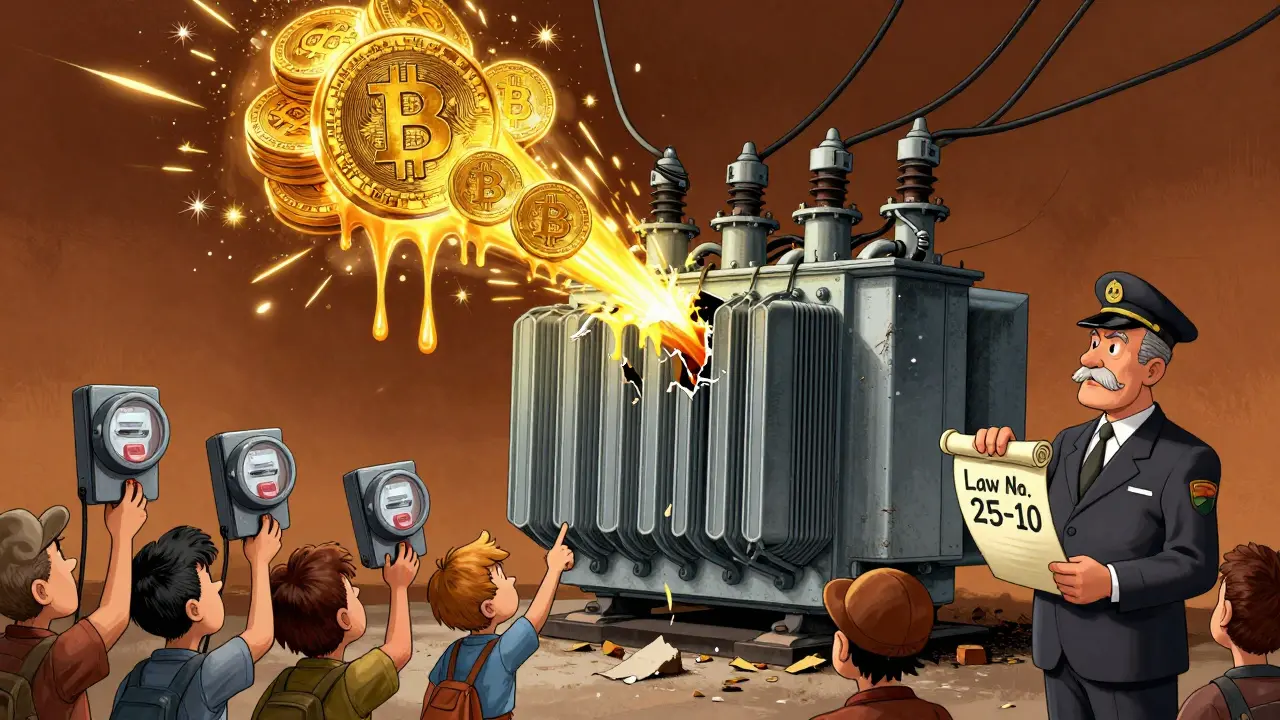
Who’s Against the Ban - and Why
Many experts argue the ban misses the point. Algeria has one of the highest solar energy potentials in the world - over 22 gigawatts, according to its 2024 Renewable Energy Strategy. That’s enough to power the entire country several times over. Dr. Leila Bencharif, a fintech professor at Algiers University, says the government could have allowed mining only during daylight hours using solar power. Instead, it chose to shut it all down. The International Monetary Fund (IMF) echoed this concern. In its July 2025 report, the IMF said Algeria’s energy fears were valid - but a total ban was too blunt. A better approach? Tax mining based on energy use, require licenses for large operations, or dedicate renewable zones for crypto farms. That way, the country could earn revenue, create jobs, and still protect the grid. Even some government workers admit the law is messy. A Bank of Algeria employee told local reporters the ban protects ordinary citizens from scams - but admitted they’ve never seen a single case of a person losing money to crypto fraud in Algeria. Most users who got burned were already using foreign platforms, not local ones.What’s Happening on the Ground
The ban isn’t just a legal change - it’s a cultural shock. Social media groups like “Crypto Algeria” (with over 18,500 members) are full of people sharing stories of equipment seizures, fines, and fear. One user posted a photo of his 12-rig setup being hauled away by gendarmes. Another wrote: “I spent $4,000 on mining gear. Now it’s just scrap metal. I’m not angry at the government. I’m angry at myself for believing this could last.” Enforcement is focused on industrial zones first. SONELGAZ now uses AI to monitor power usage patterns. If a warehouse’s electricity consumption spikes 30-50% above normal without explanation, inspectors show up. In some cases, they’ve found mining rigs hidden under false floors or behind warehouse walls. The ban has also chilled innovation. University professors now avoid teaching blockchain technology. One professor in Constantine told a journalist he deleted all his crypto-related slides after being warned by university officials. “I don’t want to risk my job,” he said.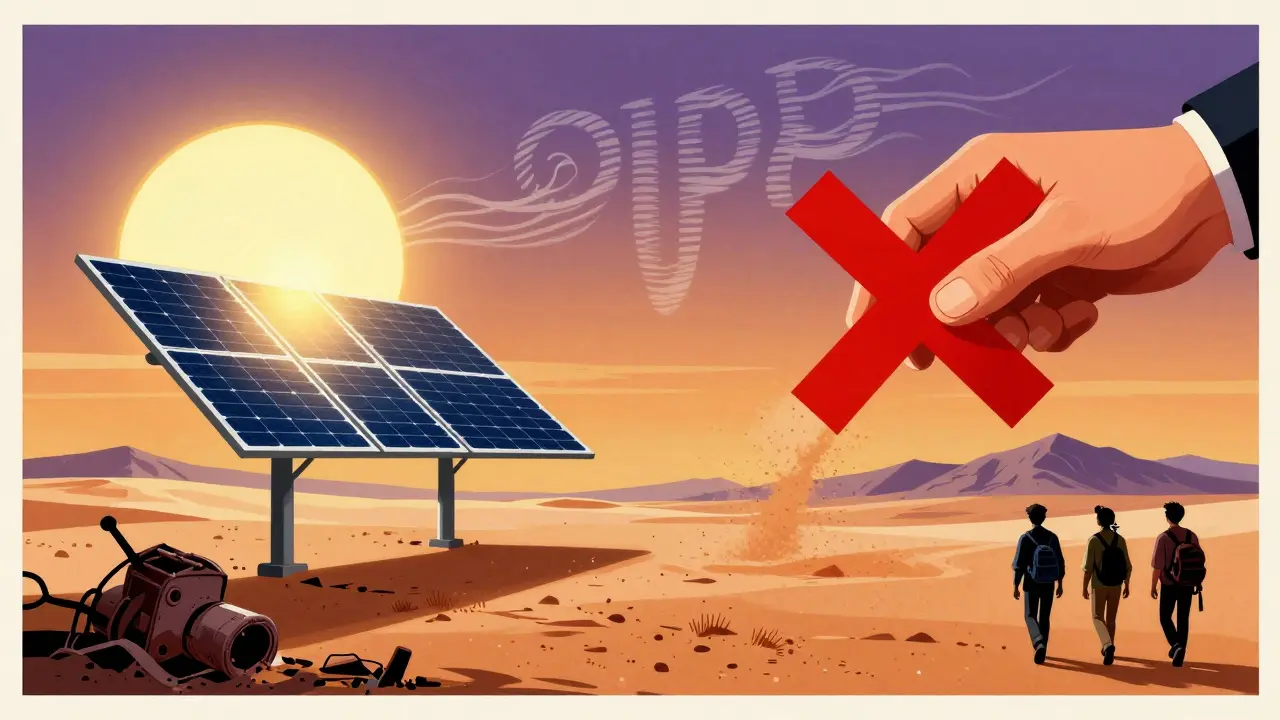
Is There Any Way Around It?
No. There are no legal alternatives. No licensed exchanges. No mining permits. No crypto ATMs. Even using crypto as payment for services - like paying a freelancer in Bitcoin - is now a criminal offense. Some Algerians have turned to peer-to-peer trading using cash or mobile money apps like MobiCash. But that’s risky. Authorities have started monitoring mobile transaction patterns for signs of crypto-related activity. One man in Annaba was arrested after repeatedly sending large sums to a single number linked to a known crypto trader. The government has allocated $9.2 million in its 2025 budget just to enforce this law. That’s not just for seizures - it’s for training cyber units, setting up surveillance systems, and running public awareness campaigns. They’re not just trying to stop mining. They’re trying to erase the idea that crypto even exists.What Comes Next?
The ban feels permanent - but history says otherwise. Between 2020 and 2025, 68% of countries that banned crypto eventually reversed or softened their rules. Egypt lifted its trading ban after two years. Turkey went from hostility to regulation. Even China now allows blockchain development. Algeria’s situation is unique. Energy pressure isn’t going away. The grid will keep struggling. Solar power is growing. The country’s youth are tech-savvy and increasingly connected. The ban might hold for now - but if electricity shortages worsen, and if solar capacity expands, the government might have to reconsider. For now, Algeria’s message is clear: we will not trade our power for profit. Whether that’s a bold stand or a costly mistake remains to be seen.Is cryptocurrency mining completely illegal in Algeria?
Yes. Under Law No. 25-10, all forms of cryptocurrency mining - whether using a single GPU or a large industrial facility - are illegal. The law bans production, distribution, and use of virtual currencies, with no exceptions for scale or energy source.
Can I still hold Bitcoin in Algeria?
No. The law criminalizes holding, buying, selling, or even promoting cryptocurrency. Simply possessing Bitcoin or Ethereum in a digital wallet is considered a violation and can lead to fines or imprisonment.
What happens if I’m caught mining cryptocurrency?
Authorities can seize your mining equipment, fine you between 200,000 and 1,000,000 Algerian dinars ($1,500-$7,700), and imprison you for up to one year. Repeat offenses double the penalties. There have already been multiple documented cases of equipment seizures and arrests since the law took effect.
Why did Algeria ban VPNs along with crypto?
VPNs were commonly used to access foreign cryptocurrency exchanges and wallets. By banning them, the government closed a major loophole that allowed citizens to bypass the crypto ban. Using a VPN for crypto-related activity is now treated as a direct violation of Law No. 25-10.
Are there any legal ways to use blockchain technology in Algeria?
The law targets cryptocurrency, not blockchain technology itself. However, the broad language of the ban and fear of enforcement have created a chilling effect. Many institutions avoid discussing or using blockchain at all, even for non-crypto applications like supply chain tracking or digital identity, out of caution.
How has the ban affected Algeria’s tech industry?
The ban has triggered a significant brain drain. Around 37% of Algerian blockchain developers have relocated to neighboring countries like Tunisia and Morocco since 2023. Investment in local tech startups has dropped sharply, and universities have scaled back or removed crypto-related courses due to legal risks.
Julie Potter
March 3, 2026 AT 09:06So let me get this straight - Algeria’s banning crypto because it’s using too much power, but they’re fine with subsidizing electricity for everyone else? That’s not energy policy, that’s class warfare disguised as fiscal responsibility. And now they’re jailbreaking VPNs? Bro, you’re not protecting the grid, you’re just scared of decentralized money. This isn’t a ban - it’s a panic.
Megan Lutz
March 4, 2026 AT 01:36They didn’t ban crypto because of energy - they banned it because they can’t control it. Energy is the excuse. Control is the goal. When people can earn outside the state’s wage system, it destabilizes the whole illusion of authority. That’s why they’re seizing rigs, banning VPNs, and deleting blockchain lectures. This isn’t about electricity - it’s about power.
Nancy Jewer
March 5, 2026 AT 12:45Look, I get the energy argument - 15-20MW is real, especially in a grid that’s held together with duct tape and hope. But banning *everything*? Even holding BTC? That’s like banning bicycles because someone used one to rob a bank. There are smarter ways: taxed mining zones, solar-only permits, licensing for commercial ops. This is a sledgehammer to a scalpel problem.
James Burke
March 5, 2026 AT 18:52Algeria’s got solar potential that could power Europe. Instead of building crypto farms on rooftops to offset grid load, they just shut it down. That’s not innovation - that’s fear. I’ve seen this play out in places like Nigeria and Venezuela. When you crush grassroots tech, you don’t stop the tech - you just export it. And now Algeria’s losing its best minds.
Ian Thomas
March 6, 2026 AT 10:48One guy mined Litecoin to pay for tuition. Got caught. Rigs seized. Now he’s broke and possibly facing jail. Meanwhile, the state’s spending $9.2 million to enforce this. That’s a $9.2 million investment in… what? A monument to short-sightedness? This isn’t policy. It’s performance art for bureaucrats who think blockchain is a cult.
jay baravkar
March 7, 2026 AT 13:26Man, I just want to say - I feel for those students. 😔 You put your heart into building something, even if it’s just 12 GPUs in a garage, and then poof - gone. It’s not just about money. It’s about hope. Algeria’s youth are trying to build a future, and the government just kicked the ladder out. I hope they find a way to turn this around. 🙏
Jane Darrah
March 7, 2026 AT 23:34Okay, so let me just say this - the whole thing is just… tragic. Like, imagine being a 21-year-old engineering student in Oran, trying to make rent by mining Litecoin, and then one day the cops show up with a forklift and haul away your entire dream like it’s a stolen microwave? And now you’re supposed to be grateful because they’re ‘protecting the grid’? What grid? The one that goes out every time someone turns on an AC? This isn’t justice - it’s poetic irony wrapped in a bureaucratic suit.
Eva Gupta
March 8, 2026 AT 23:55As someone from India, I’ve seen how energy crises hit hard - but we never banned tech. We built microgrids. We incentivized solar. We let people innovate within limits. Algeria could’ve done the same - turned crypto miners into renewable energy partners. Instead, they chose fear. And now, their smartest kids are leaving. It’s heartbreaking. Not because of the law - but because of the lost opportunity.
Issack Vaid
March 10, 2026 AT 10:09Let’s be real - this ban isn’t about energy. It’s about control. The moment people can earn income outside the state’s payroll system, the state loses its grip. That’s why they banned VPNs. That’s why they criminalize wallet ownership. That’s why they’re training cyber units to hunt down GPU owners. This isn’t a power crisis - it’s a power paranoia. And it’s going to backfire.
Josh Moorcroft-Jones
March 12, 2026 AT 08:28So, to summarize: Algeria - a country with 22 GW of untapped solar potential, a youth population that’s tech-savvy, a grid that’s falling apart, and a government that responds by banning the one thing that could’ve turned a liability into an asset - cryptocurrency mining - while also banning the tools people use to access it (VPNs), criminalizing wallet ownership, and spending millions on enforcement… all while the IMF recommends a *taxed, licensed, solar-integrated* approach. This isn’t incompetence. This is a masterclass in self-sabotage. And now, 37% of their blockchain talent is gone. Congrats, Algeria. You just lost the future… for a $0.035/kWh subsidy that no one can even enjoy because the lights keep going out.