Bear Market Bottom: How to Recognize It in Crypto and Blockchain
 Nov, 12 2025
Crypto Bear Market Bottom Checker
Bear Market Bottom Indicators
Check all indicators that match current market conditions. Each indicator present adds to your bottom confirmation score.
Active addresses stop declining, transaction volume rises while price is flat, or long-term holders accumulate
Crypto Fear & Greed Index below 15, extreme negative social media sentiment, or everyone saying crypto is dead
MVRV ratio below 1, Bitcoin/Ethereum valuations below 25x historical earnings equivalent
Hash rate stabilizes after drop, or staking validator count grows despite low prices
Bitcoin ETFs show increasing inflows, institutional deposits rising, or major firms accumulating
Federal Reserve signals rate cuts, U.S. dollar index falls, or fiscal stimulus increases
Bitcoin holds 200-day MA, weekly chart shows higher lows, and altcoins begin breaking downtrends
When the crypto market crashes hard-Bitcoin down 60%, Ethereum in freefall, altcoins bleeding-you start wondering: Is this the bottom? Or is it just getting worse?
There’s no magic button that lights up when the bear market ends. No app, no tweet, no influencer with a 90% win rate can tell you exactly when to buy. But you don’t need to predict the future. You just need to recognize the signs that the market is starting to turn.
Bear market bottoms in crypto don’t look like a V-shape. They don’t bounce back with a roar. They crawl. They shuffle. They test the same low levels again and again. And most people give up before it happens.
What a Bear Market Bottom Actually Looks Like
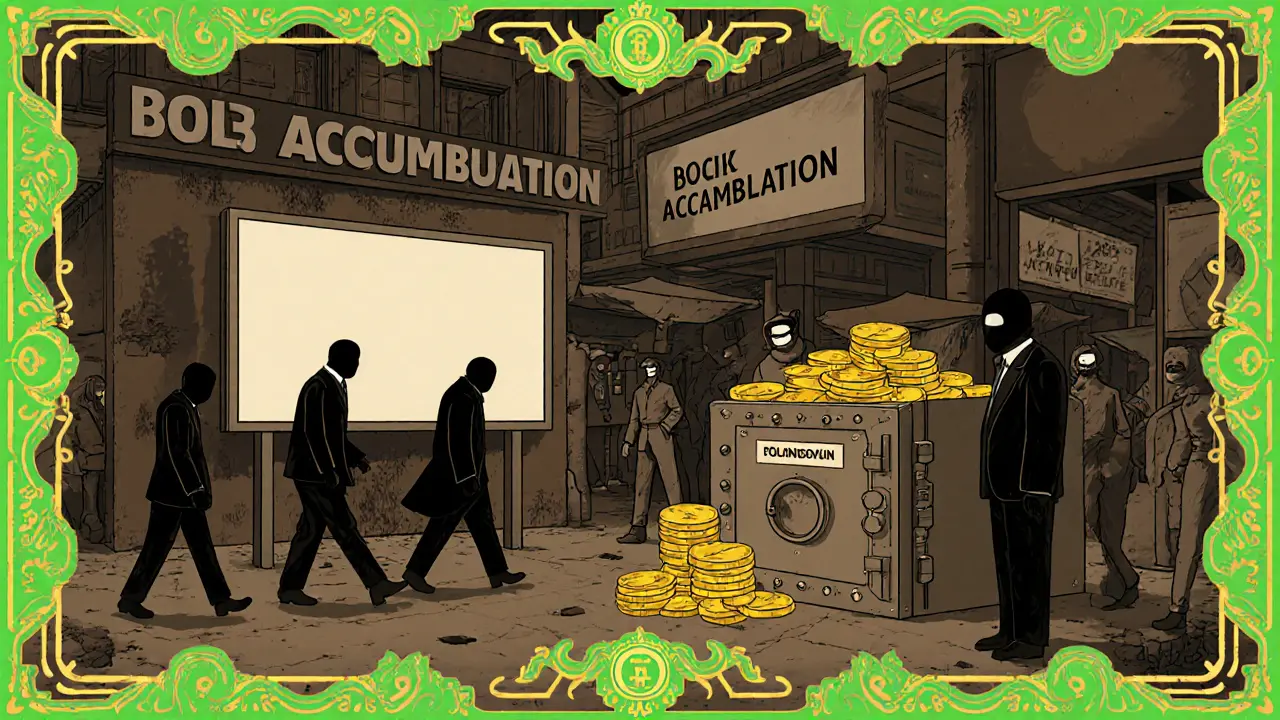
A bear market bottom isn’t just a low price. It’s the moment when selling pressure dries up and buying starts to quietly take over. In crypto, that often means Bitcoin stops falling below $25,000-again and again-until it finally holds. Then, slowly, volume creeps up on small rallies. Miners stop shutting down. Wallets stop dumping. And the people who sold at the bottom start regretting it.
Historically, crypto bear markets last longer than stock markets. While the S&P 500’s average bear market lasted 11 months between 1950 and 2020, Bitcoin’s last bear market (2022-2023) lasted 18 months. Ethereum’s decline was even slower. Why? Because crypto is newer, less regulated, and more emotional. Retail investors panic. Institutions wait. And when the panic ends, the real buyers move in.
Sign #1: Earnings and On-Chain Activity Start Stabilizing
In stocks, analysts watch quarterly earnings. In crypto, you watch on-chain data.
Look at Bitcoin’s active addresses. If they’ve been falling for months-meaning fewer people are sending or using Bitcoin-and then they stop dropping, that’s a clue. If daily transaction volume starts rising even while price is flat, that’s even better. It means people aren’t just holding. They’re using.
Same with Ethereum. If gas fees drop because fewer people are spamming NFTs or DeFi protocols, that’s normal during a bear market. But if fees start rising again-not because of hype, but because real applications (like tokenized assets or L2s) are getting used-then the network is healing.
Look at the number of wallets holding more than 1 BTC. If that number keeps growing even while price is low, it means long-term holders are accumulating. That’s not speculation. That’s conviction.
Sign #2: Sentiment Is at Rock Bottom
When everyone’s talking about how crypto is dead, that’s when you should start paying attention.
Check the Crypto Fear & Greed Index. When it hits 10 or 15-extreme fear-that’s usually where the worst selling ends. In 2022, the index hit 7. In 2018, it hit 12. Both times, the market bottomed shortly after.
Look at social media. Reddit threads about “crypto is garbage.” Twitter influencers quitting. YouTube channels going silent. That’s not noise. That’s capitulation. And capitulation is the last stage before a reversal.
When even your uncle stops asking if you’re still in crypto, you’re close.
Sign #3: Valuations Are Attractive Again
Remember when Bitcoin hit $69,000 and people said it was “cheap” at 50x P/E? That was madness. At the 2022 bottom, Bitcoin was trading around 15x its 12-month earnings equivalent (using on-chain revenue proxies). Ethereum was under 30x. That’s not expensive. That’s cheap.
Compare that to the S&P 500, which trades at 25x earnings. Crypto was cheaper than stocks during the worst of the crash. That doesn’t mean it’ll go up tomorrow. But it means the risk-reward is skewed in your favor.
Look at the Market Value to Realized Value (MVRV) ratio. When it drops below 1, the market is trading below the average cost basis of all holders. That’s rare. And when it happens, history shows that 80% of the time, a major rally follows within 6-12 months.

Sign #4: Mining and Staking Economics Are Under Pressure
Bitcoin mining is a brutal business. Miners need to cover electricity, hardware, and maintenance costs. When Bitcoin drops below $20,000, many small miners go bankrupt. They sell their rigs. They stop hashing.
But here’s the key: when hash rate drops sharply and then stabilizes, it’s not a bad sign. It’s a good one. It means the weakest hands are gone. The remaining miners are the ones with cheap power and efficient gear. And they’re not going to sell unless the price goes back up.
Same with Ethereum staking. If the number of validators drops because people are pulling out their ETH, that’s a red flag. But if the number stays steady or starts growing again-even with low prices-it means long-term stakers believe in the network. That’s a signal.
Sign #5: Institutional Interest Returns
When retail sells, institutions watch. And when institutions start buying, the market changes.
Look at Bitcoin ETFs. In 2024, the U.S. approved spot Bitcoin ETFs. But even before that, in late 2023, BlackRock and Fidelity started quietly accumulating BTC on the open market. Their filings showed steady buys even while price was under $30,000.
Same with Coinbase. When they report increasing deposits from institutional wallets, that’s a clue. When Grayscale stops losing assets and starts gaining them again, that’s a signal.
Big money doesn’t move fast. But when it moves, it moves for a reason.
Sign #6: Macro Conditions Improve
Crypto doesn’t live in a vacuum. It reacts to interest rates, inflation, and dollar strength.
When the Federal Reserve stops hiking rates-and starts talking about cuts-that’s a huge tailwind for crypto. In 2023, Bitcoin started recovering right after the Fed signaled it was done raising rates. In 2019, the same thing happened.
Watch the U.S. dollar index (DXY). When it stops rising and starts falling, risk assets like crypto tend to rebound. Why? Because a weaker dollar means more global liquidity. And more liquidity means more money flowing into high-risk, high-reward assets.
Also, check government spending. If the U.S. deficit grows while the Fed is tightening, that’s a sign of fiscal stimulus. That’s what happened in 2020. And it helped fuel the next bull run.
Sign #7: Multiple Timeframes Confirm the Turn
Don’t trust one chart. Don’t trust one indicator.
Look at Bitcoin on the daily chart. Is it holding above its 200-day moving average? That’s a long-term trend signal. Now look at the weekly chart. Has it made a higher low compared to the previous drop? That’s structure.
Check volume. If price rises 5% on double the average volume, that’s accumulation. If it rises 5% on low volume, it’s just a bounce.
And look at altcoins. When Bitcoin starts recovering, altcoins lag. But when altcoins start breaking their own downtrends-Ethereum above $1,800, Solana above $80-that’s when you know the bull market is coming back. Altcoins don’t rally unless Bitcoin is stable.
What Doesn’t Work
Don’t wait for the “perfect” signal. You’ll miss it.
Don’t buy because someone on YouTube says “it’s the bottom.”
Don’t go all-in on day one of a rally. The market can still drop 15% after you think it’s over.
And don’t assume the bottom is a single day. It’s not. It’s a process. It’s a zone. It’s a range.
The best approach? Dollar-cost average into crypto over 3-6 months. Buy small. Watch the signs. And if the indicators start aligning-on-chain data, sentiment, macro, institutional flow-then increase your position.
Final Thought: Timing the Bottom Is Hard. Being Ready Isn’t.
No one has ever called the exact bottom of a crypto bear market. Not even the smartest analysts. Not even the richest traders.
But you don’t need to be right on the day. You just need to be right on the trend.
When fear is everywhere, and the data starts turning, that’s your signal. Not the headline. Not the tweet. Not the influencer.
The data.
And if you’re watching it, you’ll know when it’s time to buy.
Evelyn Gu
November 27, 2025 AT 17:45Okay, I just need to say-this post made me cry? Not because I’m sad, but because I finally feel seen. I sold my BTC at $28k last year, sobbing into my cereal, convinced I was a genius for ‘cutting my losses’… and now I watch it hover at $65k like it’s mocking me. I didn’t miss the bottom-I was too busy burying my hardware in the backyard. But reading this? I’m not mad. I’m just… ready to try again. Slowly. Carefully. With dollar-cost averaging and zero expectations.
Shelley Fischer
November 28, 2025 AT 15:36The analytical rigor in this piece is exemplary. The conflation of on-chain metrics with macroeconomic indicators demonstrates a sophisticated understanding of market dynamics. One must emphasize that the MVRV ratio’s historical efficacy is not merely anecdotal-it is statistically significant across multiple cycles. Moreover, the distinction between capitulation and consolidation is often misunderstood by retail participants who conflate volatility with directionality. This article provides a necessary corrective to the influencer-driven noise that dominates crypto discourse.
Komal Choudhary
November 30, 2025 AT 06:49Bro why you talk so much about Bitcoin? What about Solana? Ethereum? I bought Solana at $40 and now it’s $120 and I’m rich? No? Oh wait I sold at $80 because I was scared?? 😭 But like… you’re right, the miners thing is real. My cousin in Texas shut down his rig last year, now he’s driving Uber. Sad. But also… why no one talks about India’s new crypto rules??
Wilma Inmenzo
November 30, 2025 AT 18:36Of course the Fed is ‘done raising rates’… right after they printed $2 trillion to bail out Silicon Valley Bank. And now you want me to believe Bitcoin’s rally is ‘fundamental’? Lol. The ETFs? A trap. The ‘institutions’? Just hedge funds laundering money through Coinbase while the SEC looks away. The ‘data’? Fabricated by the same people who told you ‘this time is different’ in 2017. Wake up. This isn’t a bottom-it’s a pump disguised as a thesis.
SHASHI SHEKHAR
November 30, 2025 AT 21:42OMG YES!! 🙌 This is exactly what I’ve been saying for months!! Look at Bitcoin’s active addresses-they’ve been flat for 5 months, then BOOM, up 12% last week even though price didn’t move much! That’s accumulation, my friends!! And Ethereum gas fees? They’ve been rising steadily since January-not because of NFT spam, but because of real L2 usage like zkSync and StarkNet!! I even checked the wallet distribution on Etherscan-holders with >1 ETH have grown by 18% since November!! And the miners? Their hash rate stabilized at 700 EH/s after the drop? That’s not a coincidence-that’s a signal!! 💪 I’ve been DCA’ing since July and I’m not stopping now!! 🚀
imoleayo adebiyi
December 1, 2025 AT 04:31This is a thoughtful and balanced perspective. In Nigeria, many of my friends have lost everything in crypto, and they blame the market. But I’ve noticed something: those who held through the worst, even with small amounts, are now quietly rebuilding. The emotional toll is real. But the data you present-on-chain activity, miner resilience, institutional flow-these are not illusions. They are the quiet foundations of recovery. I do not seek to get rich quickly. I seek to understand. And this article helps me do that.
Joel Christian
December 3, 2025 AT 04:12bro i just read this and i think… wait did u say ‘miners’ like… actual people with machines?? i thought they were just bots on the blockchain?? and why is everyone talking about ‘on-chain’ like its a secret club?? i dont even know what a wallet is?? i just buy on coinbase and hope?? and why is the fed even involved?? i thought crypto was supposed to be ‘decentralized’?? also i think the bottom is when my bank account hits zero??
Michael Fitzgibbon
December 4, 2025 AT 18:49I appreciate the depth here. It’s rare to see someone lay out the mechanics without the hype. I’ve watched this market cycle from the sidelines-quietly, skeptically, but not dismissively. What stood out to me was the point about sentiment being the last to die. I remember last year, scrolling through Reddit, seeing post after post about crypto being dead. And yet… people kept buying. Not loudly. Not proudly. Just… quietly. Like they were afraid to hope. That’s the moment you know. Not when the charts turn up. But when the silence ends, and the whispers begin.