Benefits of Using dApps: Why Decentralized Apps Are Changing Digital Services
 Mar, 9 2026
When you use a regular app - whether it’s for banking, social media, or file storage - you’re trusting a company to handle your data, your money, and your access. But what if you didn’t have to? That’s where dApps come in. Decentralized applications, or dApps, run on blockchain networks instead of centralized servers. They don’t need a company to operate them. No middleman. No single point of control. And that changes everything.
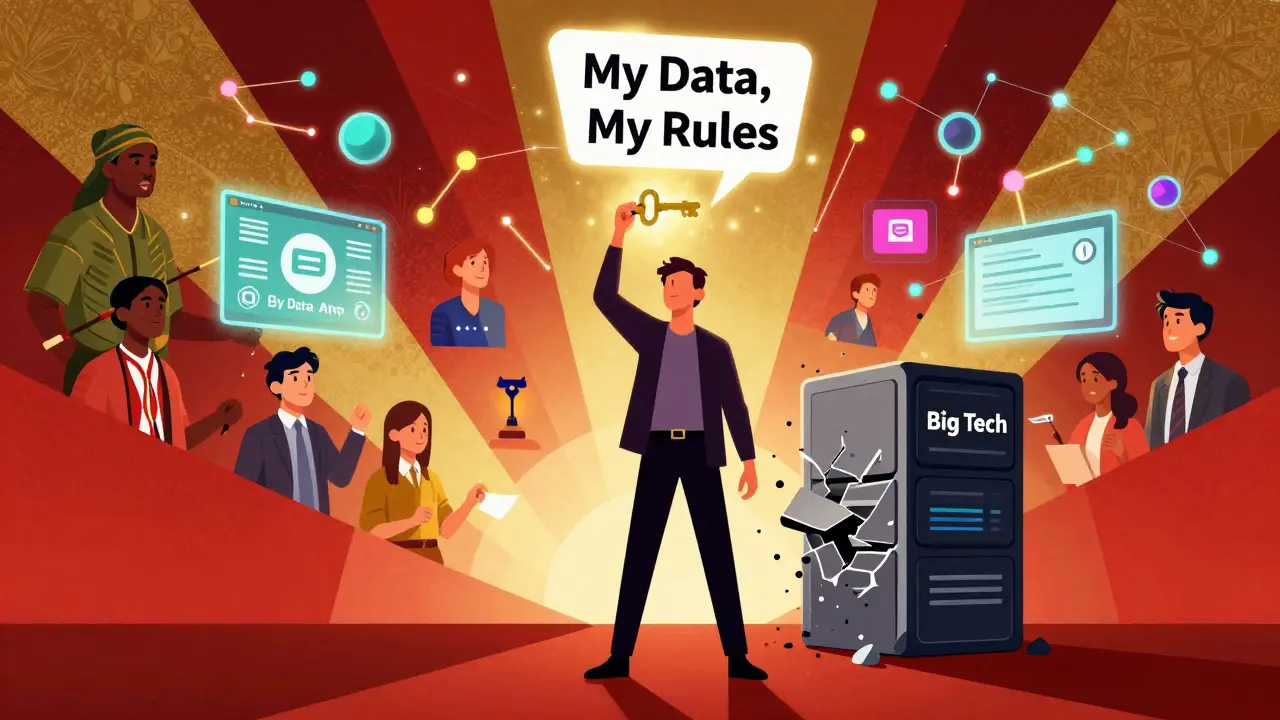
Complete Control Over Your Data
In traditional apps, your data belongs to the company. Facebook knows what you like, your bank tracks every transaction, and your cloud provider stores your files. If they decide to shut you down, change their terms, or get hacked, you lose access - or worse, your data gets stolen. With dApps, you own your data. Everything you do - from sending money to posting content - is stored on a public blockchain that only you control with your private key. No one else can delete your posts, freeze your account, or sell your information. If you lose your key, you lose access. But if you keep it safe, your data stays yours forever. This isn’t theoretical. Platforms like Lens Protocol let users build social profiles that move with them across apps. If one dApp shuts down, your profile, followers, and posts stay intact because they’re tied to your wallet, not a corporate server.Transparency You Can Verify
Ever wonder how a company decides to change its pricing, ban a user, or alter its algorithm? You can’t see it. The code is hidden. The decisions are black boxes. dApps are different. Their code is open-source and live on the blockchain. Anyone can look at it. Anyone can verify what’s happening. If a dApp charges a fee, you can check the smart contract to see exactly how much, when, and why. If a transaction goes through, you can track it on a block explorer - no guesswork. This transparency builds trust without needing a brand name. You don’t have to believe a company’s marketing. You can see the code. You can audit the rules. That’s why DeFi protocols like Aave and Compound gained trust so quickly - users didn’t just take their word for it. They checked the math themselves.No More Downtime
Remember when Twitter went down for hours in 2023? Or when Amazon Web Services had an outage that took down half the internet? Centralized systems rely on a few servers. Break one, and everything collapses. dApps don’t have this problem. They run on thousands of computers around the world. Even if half the nodes go offline, the rest keep running. There’s no single server to crash. No data center to burn down. No IT team to call when things go wrong. This makes dApps incredibly resilient. Games like Axie Infinity kept running during regional internet blackouts because players in other countries kept the network alive. Financial apps like Uniswap never shut down during regulatory pressure - because no single government can shut down a global network of nodes.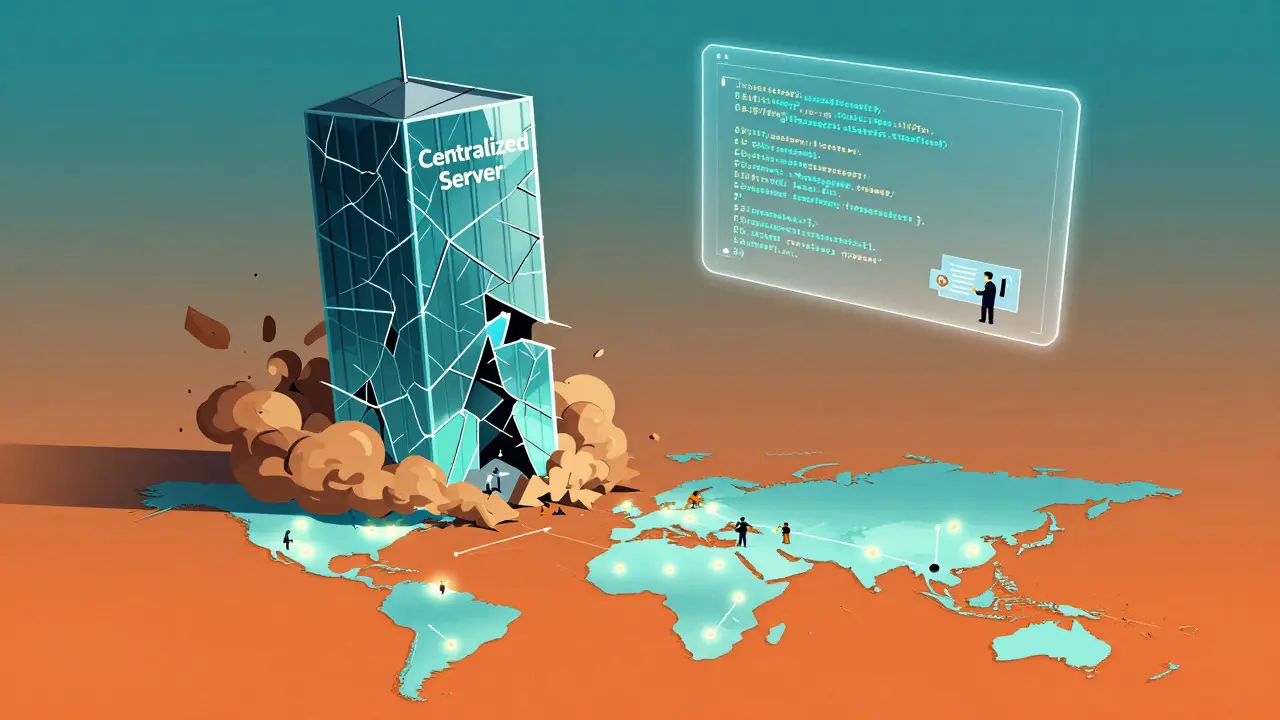
Censorship Resistance
Governments and corporations have long used control over infrastructure to silence voices, block payments, or restrict access. In 2022, several countries blocked access to cryptocurrency exchanges. In 2024, social media platforms banned users for political speech. dApps can’t be censored that way. You can’t shut down a network that exists on 10,000 computers across 80 countries. You can’t block a dApp without blocking the entire internet - which is impossible. This isn’t just about protest. It’s about basic freedom. Farmers in Nigeria use dApps to receive payments without bank approval. Journalists in authoritarian regimes publish reports on decentralized storage networks. Activists fundraise through tokenized campaigns that can’t be frozen. The result? A digital space where access isn’t granted - it’s earned through ownership.Lower Costs, Fewer Middlemen
Think about how much you pay in fees every month. Bank transfer fees. Payment processing fees. Cloud storage fees. App store commissions. All of these exist because someone has to run the servers, hire the staff, and make a profit. dApps remove most of that. No corporate headquarters. No customer service centers. No expensive data centers. Transactions happen directly between users via smart contracts - automated, trustless agreements that execute without human intervention. For example, sending $100 via a traditional bank might cost $10 in fees and take three days. On a dApp like Polygon or Solana, it costs less than $0.01 and settles in seconds. This isn’t a future promise - it’s happening right now. Developers benefit too. Instead of giving 30% of revenue to Apple or Google, they can earn directly from users through token rewards, transaction fees, or community funding. That’s why thousands of developers are building on Ethereum, Arbitrum, and other chains - because they keep more of what they build.Global Access, No Borders
If you live in a country with unstable banking, strict capital controls, or no access to credit cards, traditional apps often lock you out. You need a U.S. phone number. A local bank account. A government ID. dApps don’t care where you live. All you need is an internet connection and a wallet. No application. No approval. No paperwork. A farmer in Kenya can lend money to a small business in Indonesia using a dApp - no bank involved. A student in Venezuela can earn crypto by contributing to open-source projects. This isn’t just convenience. It’s inclusion. Over 1.7 billion adults worldwide are unbanked. dApps are the first digital system that gives them real financial tools - without asking for permission.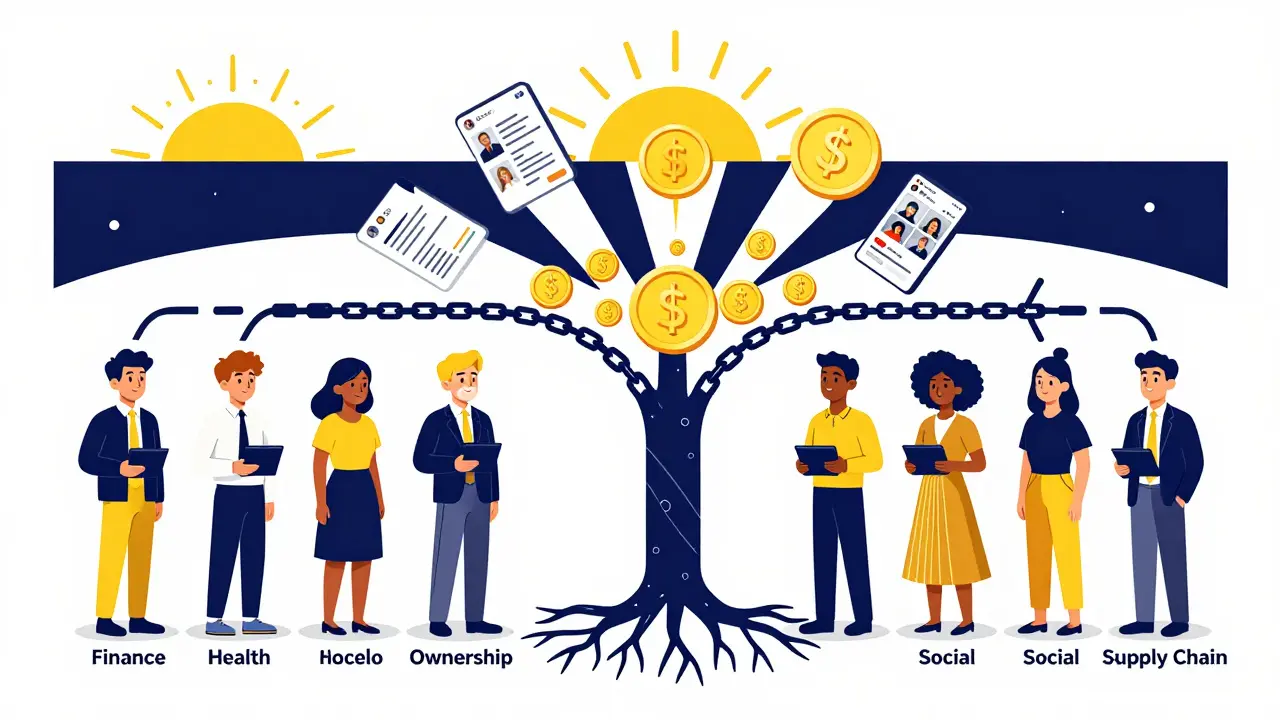
Better Security and Privacy
Centralized apps are honey pots for hackers. One breach - like Equifax in 2017 or Meta in 2021 - and millions of records are stolen. Why? Because all the data is in one place. dApps spread data across thousands of nodes. No single server holds all the information. Even if one node is compromised, attackers can’t get the full picture. Transactions are encrypted and immutable - once recorded, they can’t be changed. Privacy is also stronger. You don’t need to give your real name, email, or phone number to use a dApp. You use a wallet address - a string of letters and numbers that can’t be traced back to you unless you choose to link it. Platforms like Mask Network and Farcaster let users interact anonymously while still building reputation and community. That’s something no Facebook or Twitter could ever offer.Real-World Impact
These aren’t just tech fantasies. They’re real tools changing lives:- Finance: DeFi dApps like Aave and Compound let people earn interest on crypto without a bank - even in countries with 50% inflation.
- Supply Chains: Companies like Walmart use blockchain-based dApps to track food from farm to shelf, reducing contamination risks by 70%.
- Social Media: Mastodon and Lens Protocol let users own their content and monetize it directly - no ads, no data mining.
- Healthcare: dApps like MedRec store medical records on the blockchain, giving patients control over who sees their history.
What’s Holding dApps Back?
Let’s be honest - dApps aren’t perfect yet. User interfaces are still clunky. Wallets can be confusing. Gas fees spike during high demand. And regulation is still a mess. But the core advantages? They’re real. And they’re growing stronger. Every year, more people ditch traditional apps for dApps. Not because they’re trendy. But because they work better. They’re faster. More secure. More fair. The shift isn’t about technology. It’s about power. Who controls your data? Who decides if you can use a service? Who profits from your activity? dApps answer those questions differently. And that’s why they’re here to stay.Are dApps really safer than regular apps?
Yes, in key ways. Regular apps store all your data on company servers - one breach, and millions of records are stolen. dApps spread data across thousands of computers. No single point of failure. Plus, transactions are encrypted and recorded on a blockchain that can’t be altered. That makes tampering nearly impossible. The risk shifts from hacking a server to stealing your private key - which you control.
Do I need crypto to use a dApp?
Most dApps require a crypto wallet and some cryptocurrency to pay for transactions (called gas fees). But you don’t need to trade or invest in crypto. You can use small amounts - sometimes less than $0.10 - just to interact. Some dApps even let you sign in with email and pay fees in stablecoins. The barrier is lowering fast.
Can governments shut down dApps?
Not really. A government can ban people from using dApps within its borders, but it can’t shut down the network. dApps run on global blockchain networks with nodes in over 100 countries. Even if one country blocks access, users elsewhere keep the network alive. That’s why dApps are so hard to censor - there’s no central server to target.
Are dApps only for tech experts?
Not anymore. Early dApps were clunky and required coding knowledge. Today, apps like MetaMask, Rainbow, and Coinbase Wallet have simple interfaces. You can send crypto, join a DAO, or use a dApp social network with just a few clicks. Many dApps now look and feel like regular apps - just without a company in the middle.
What’s the biggest advantage of dApps?
Ownership. With dApps, you own your data, your assets, and your digital identity. You don’t rely on a company to let you in, keep your data safe, or decide what you can do. That shift - from permission to ownership - is why dApps are more than just a new technology. They’re a new way of being online.
Chelsea Boonstra
March 9, 2026 AT 20:32dApps aren't magic-they're just better at not being exploited. Every centralized service is a honeypot for data brokers, hackers, and regulators. You think your bank is safe? They got breached last year and you didn't even know. With dApps, the worst that happens is you lose your private key-and if you're dumb enough to lose that, you deserve to lose everything. No one else is responsible for your security. That's not a flaw. That's the point.
Anshita Koul
March 10, 2026 AT 20:22Ownership. Ownership. OWNERSHIP. This is not just about technology-it's about reclaiming our digital souls! Every time we click 'agree' on a terms-of-service document, we hand over a piece of our identity, our voice, our existence! dApps? They don't ask for permission-they offer power! You don't need a government ID to prove you're human-you just need a wallet and the courage to hold your own keys! This isn't the future-it's the only sane path forward! Let's rise, let's build, let's own!
Allison Davis
March 12, 2026 AT 08:49One thing people overlook: dApps reduce operational overhead for developers. No more paying Apple 30% just to distribute an app. No more dealing with ad networks that track everything. Developers can monetize directly through tokenized engagement, tipping, or subscription models built into the protocol. That’s why we’re seeing a surge in indie projects on Arbitrum and Base-real innovation, not VC-funded clones. The ecosystem is self-sustaining now. It just needs more users to reach critical mass.
Tom Jewell
March 13, 2026 AT 04:38There’s something deeply poetic about this shift. We’ve spent decades building digital castles-towers of data, glass spires of surveillance-and now we’re realizing they were never ours to begin with. dApps don’t promise perfection. They promise autonomy. The quiet dignity of knowing your transaction, your post, your identity, exists not because someone allowed it-but because you chose it. No landlord. No gatekeeper. Just code, consensus, and courage. It’s not about replacing apps. It’s about replacing the idea that someone else should control your digital life. That’s revolutionary. Not because it’s new. But because it’s true.
karan narware
March 13, 2026 AT 18:18Oh wow, another utopian fantasy from the blockchain bros. Let me guess-you also think NFTs are the future of art and that Dogecoin will fund Mars colonies? In India, we have real problems: electricity cuts, internet throttling, banking fraud. You think a dApp will help a farmer in Bihar when his phone dies and he can't access his wallet? You're not solving problems-you're just making them more complicated. And yes, I'm being sarcastic. Because this whole thing is a joke dressed up as liberation.
Michael Suttle
March 14, 2026 AT 12:20EVERYTHING IS A COINBASE SCAM. EVERY SINGLE dApp IS A FRONT FOR THE FED TO TRACK YOU. THEY USE WALLET ADDRESSES TO CREATE A BACKDOOR INTO YOUR LIFE. YOU THINK YOUR KEY IS SAFE? HA. THEY’RE ALREADY COLLECTING YOUR METADATA THROUGH NODES. THE BLOCKCHAIN ISN’T DECENTRALIZED-IT’S A HIVE MIND CONTROLLED BY VITALIK AND THE VENTURE CAPITALISTS WHO OWN THE MINERS. YOU’RE NOT FREE. YOU’RE BEING WATCHED. BY EVERYONE. INCLUDING ME. I KNOW WHAT YOU DID LAST BLOCK.
Jenni James
March 16, 2026 AT 09:22While I appreciate the theoretical elegance of this exposition, I must insist that the author has egregiously underreported the regulatory risks associated with cross-jurisdictional smart contract enforcement. Moreover, the assertion that 'no single government can shut down a global network of nodes' is demonstrably false: China has successfully isolated its domestic blockchain infrastructure through sovereign node governance, and the EU’s MiCA framework imposes de facto control via licensing mandates. To claim dApps are censorship-resistant is to ignore the fact that compliance is now baked into protocol design. This is not liberation-it is regulatory capture in a new aesthetic.
Howard Headlee
March 18, 2026 AT 09:21You’re all missing the forest for the trees. The real win isn’t ownership or transparency-it’s *velocity*. A traditional bank transfer takes 3 days. A dApp transaction? 3 seconds. A customer service ticket? 72 hours. A smart contract payout? Instant. This isn’t about ideology. It’s about time. Time is money. Time is freedom. Time is life. And dApps give it back. Every second saved is a second you didn’t waste waiting for someone else to do their job. That’s why this is exploding. Not because people care about blockchain. But because they’re tired of being treated like idiots by systems that run on PowerPoint slides and corporate jargon. We’re not adopting tech. We’re rejecting incompetence.