Canadian crypto exchange licensing requirements for 2026
 Mar, 30 2026
The Regulatory Reality of Operating in Canada
If you are planning to launch or manage a digital asset platform serving Canadian residents, you are stepping into one of the most structured environments globally. Unlike jurisdictions where rules might change weekly or exist in gray areas, Canada demands clarity, adherence, and transparency. The core issue isn't just about permission to trade; it's about integration into the national financial safety net. Canadian crypto exchange licensing defines the entire operational backbone of your business within North America.
This guide cuts through the jargon to explain exactly what regulators demand. We look at the specific licenses needed, the dual-layer oversight system, and the tangible costs involved. Whether you are an international giant expanding north or a startup building from Toronto, the path requires precision.
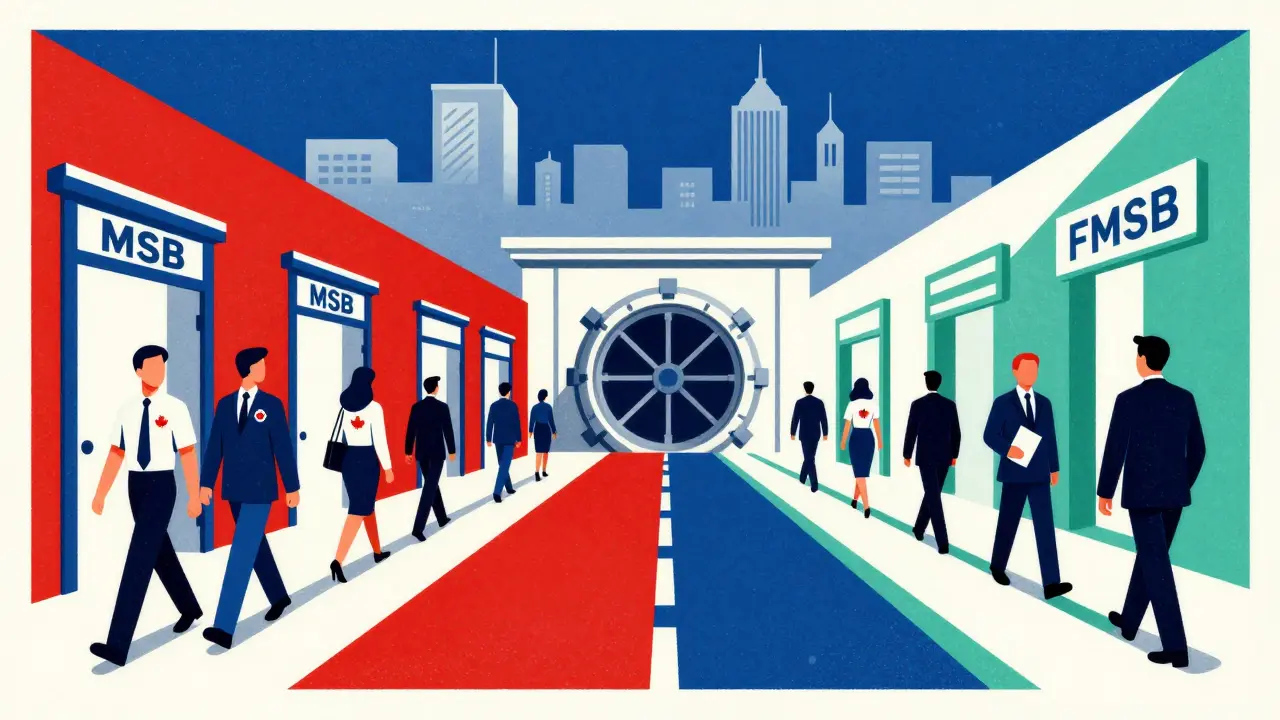
Two Pathways: MSB and FMSB Registration
The foundation of legal operation rests with FINTRAC. You cannot serve Canadian clients without being registered under their purview. However, the specific type of license depends on where your company sits geographically.
Money Services Business (MSB) is a designation required for domestic entities established physically within Canada. The MSB License applies to companies incorporated locally. If you have servers, staff, or a physical office operating out of Canadian soil, this is your primary route.
Conversely, foreign giants do not get a pass just because their headquarters are offshore. They require Foreign Money Services Business (FMSB) registration. This status applies when an international entity provides services to Canadian residents and maintains concrete business relationships here.
| Feature | MSB (Domestic) | FMSB (Foreign) |
|---|---|---|
| Jurisdiction | Canadian-based entities | International entities |
| Regulator | FINTRAC | FINTRAC |
| Requirement | Local incorporation | Demonstrable service to Canadians |
Both paths lead to the same finish line regarding compliance standards. There is no shortcut via the FMSB route; foreign companies face identical reporting obligations as locals.
Dual Oversight: FINTRAC Meets CSA
Many founders make the mistake of stopping at FINTRAC registration. While FINTRAC handles the anti-money laundering piece, there is a second layer of authority watching your products. That is the Canadian Securities Administrators (CSA).
The CSA steps in when your exchange deals with tokens classified as securities. This distinction matters immensely during the application phase. If you offer spot trading on major assets, you focus heavily on FINTRAC. If you trade derivatives, staking rewards, or tokens with equity-like characteristics, you trigger CSA oversight.
In 2023, the landscape shifted dramatically. The CSA announced enhanced Pre-Registration Undertakings (PRU). These weren't suggestions; they were mandatory conditions for continued market access. The deadline fell on March 24, 2023. Platforms that missed this window ceased operations for Canadian users. By 2026, only exchanges holding these PRUs remain active.
The PRU framework introduced strict custody rules. Exchanges can no longer commingle customer funds freely. Segregation of assets became non-negotiable. Furthermore, the rules prohibit pledging or hypothecating custodied assets, a practice some international firms used in other markets. You also need written consent before trading value-referenced cryptoassets, commonly known as stablecoins.
Core Compliance Infrastructure
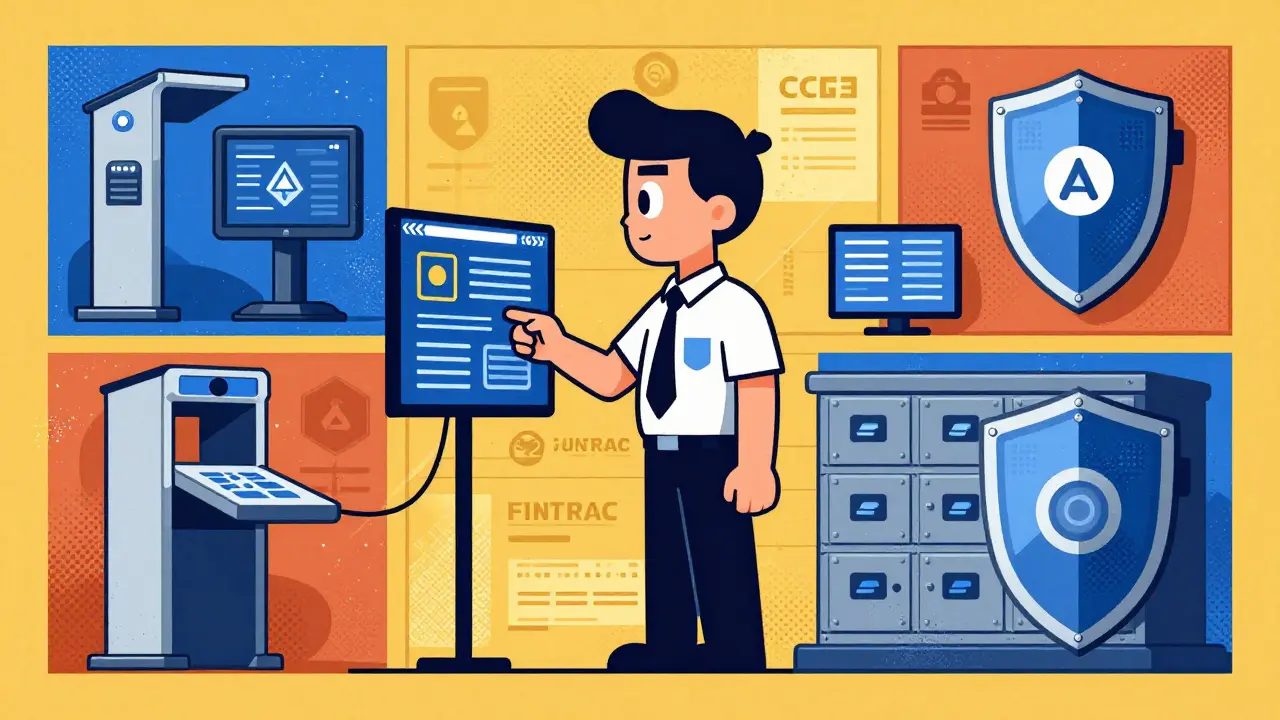
Getting the paper approved is step one. Maintaining the license requires operational discipline. Every application requires proof of robust systems. Regulators don't want to see promises; they want to see infrastructure.
- Appointment of a Compliance Officer: You cannot designate a general manager for this role. You need a dedicated officer responsible for FINTRAC reporting and adherence. This individual acts as the single point of contact for regulatory bodies.
- KYC Protocols: Know Your Customer procedures must be automated and rigorous. Manual verification does not scale or satisfy the requirement. You need identity verification that links real identities to wallet addresses.
- Transaction Monitoring: Systems must flag suspicious activity in real-time. This means setting thresholds for deposits and withdrawals that trigger alerts. Reporting large transactions is mandatory under federal law.
- Cybersecurity Standards: Protecting user data is part of the trust equation. You need documented disaster recovery protocols. If your site goes down or gets breached, you need a pre-written incident response plan.
Risk management strategies must be part of your business plan submission. The regulators review how you handle volatility, liquidity risks, and third-party integrations. Vague answers lead to immediate rejection.
Financial Investment and Timelines
Preparing for this level of scrutiny takes money. Underestimating the budget is a common reason for failure. Legal fees alone can range significantly based on the complexity of your token offerings.
Typically, companies spend between CAD 50,000 and CAD 200,000 for complete license preparation and submission. This covers legal counsel specialized in both securities and money services business laws. Once licensed, the ongoing compliance costs average CAD 100,000 to CAD 500,000 annually. High transaction volumes drive this cost up due to increased reporting requirements and staffing needs.
Patience is critical. The review process generally requires 6 to 12 months from initial submission to final approval. Do not schedule your launch before the green light arrives. Companies typically invest 6-12 months in compliance system development before they even submit the paperwork. Engaging regulators early helps smooth the process.

Market Dynamics in 2026
Fast forward to the present day. The consolidation effect mentioned in earlier industry reports has fully played out. Approximately 15-20 major cryptocurrency exchanges currently maintain active Canadian registrations. In contrast to the era before 2023, when over 40 platforms served Canadian clients, the market is tighter.
Smaller platforms withdrew because they couldn't justify the operational overhead. This left the door open for well-capitalized players. Pension funds and institutional managers have increased allocations to digital assets recently because the regulatory risk is clearer.
We are also seeing developments around decentralized finance (DeFi). Regulators are collaborating on guidance for DeFi protocols and NFT marketplaces. Although these technologies operate differently than centralized exchanges, the expectation is that significant consumer-facing features will eventually fall under similar reporting umbrellas.
Looking ahead toward the end of this year, further guidelines on cross-border transaction reporting are expected. Following trends seen in Europe, Canada continues to emphasize investor protection. The preference for regulatory clarity makes this jurisdiction attractive for legitimate businesses willing to invest in compliance.
Avoiding Common Application Pitfalls
Mistakes during the application phase cause delays that stretch beyond a year. Here are three frequent errors to watch for:
- Assuming Generic KYC Suffices: Standard banking checks aren't enough for crypto. Your AML policies must address specific blockchain risks like mixers or privacy coins.
- Ignoring CSA Scope: Thinking you only need FINTRAC because you aren't selling "stocks." If your tokens qualify as securities under Canadian law, you need CSA registration too.
- Understaffing Compliance: One person handling compliance usually fails audits. Dedicated teams are often required to handle the volume of monitoring required.
Frequently Asked Questions
Can a US company register as an FMSB in Canada?
Yes, US companies can register as a Foreign Money Services Business if they intend to provide services to Canadian residents. However, you must demonstrate a concrete business relationship with the country. Simply allowing Canadian IPs to access your site might trigger requirements depending on your targeting.
What happens if I fail to report large transactions?
Failure to report can result in significant administrative monetary penalties. FINTRAC conducts audits regularly. Repeated negligence can lead to revocation of your registration, effectively forcing you to cease operations in the region.
Do I need separate licenses for different cryptocurrencies?
You do not need separate licenses for each coin. However, you do need separate approvals for different service categories, such as spot trading versus custodial services. Ensure your business plan clearly outlines every specific activity you conduct.
Is it possible to operate without a license using offshore servers?
Operating without a license while serving Canadian clients is illegal regardless of server location. Regulators enforce extraterritorial jurisdiction. If you target Canadian marketing or accept Canadian customers, you require an FMSB or MSB registration.
How long does the FINTRAC review take?
The standard review process takes between 6 to 12 months from submission. This timeline assumes complete documentation. Missing information causes the clock to pause while waiting for your reply.
Sean Carr
March 30, 2026 AT 10:35Designating a dedicated compliance officer is essential for audit success.
Don't try to split duties across the team because regulators reject vague structures.
Keep your reporting lines visible for inspections.
Ashley Stump
March 31, 2026 AT 05:38The government just wants total control over your private funds.
Justin Smith
April 1, 2026 AT 03:16You are conflating regulatory oversight with confiscation attempts.
FINTRAC mandates reporting thresholds rather than seizing assets directly.
The legal framework distinguishes clearly between monitoring transactions and accessing balances.
Lisa Miller
April 2, 2026 AT 21:23Institutional adoption signals clarity in the market landscape today.
It shows that the sector is moving towards standardization globally.
Founders can breathe easier knowing the rules are finally settled.
Colin Finch
April 4, 2026 AT 17:54Regulation often feels like shackles until you realize they are the foundation of trust itself.
Without clear boundaries, the digital wild west attracts predators who prey on the unwary.
Canada seems to have carved out a path where innovation doesn't require sacrificing safety protocols.
Think about how traditional banking survived centuries of evolving rules without collapsing entirely.
This crypto infrastructure mimics that resilience in a modern context effectively.
The distinction between domestic and foreign registration adds a layer of national security too.
It ensures that liability remains within a jurisdiction capable of enforcement mechanisms.
Some argue this stifles creativity, yet history suggests safety breeds genuine innovation eventually.
You cannot build skyscrapers on sand and expect them to stand during storms.
Compliance teams become the architects rather than the obstacles when structured correctly.
I see this as a necessary evolution for global financial integration standards.
Trust is the currency of the future economy more than any coin token could ever be.
The cost of entry acts as a filter keeping bad actors out naturally.
Small operators leaving means those remaining are likely more sustainable long term.
Ultimately we want a system where technology serves people instead of exploiting them blindly.
athalia georgina
April 6, 2026 AT 15:16i heard my uncle worked on simular projects in toronto before.
he said the paper work is reallly annoying even for experienced folks.
you have to submit every tiny detial manually sometimes.
i dont think its as easy as you make it sound honestly.
regulators arent always nice about missing a single box checked off either.
joshua kutcher
April 8, 2026 AT 02:23Startup capital barriers remain significant for legitimate compliance pathways.
I understand how draining the budget impact can be personally.
Please seek community advice to manage the workload during review periods.
Disha Patil
April 8, 2026 AT 10:52The stress of applying is enough to break anyone mentally before approval.
I feel like everyone just vanishes after paying huge fees.
Families lose everything without any explanation from officials.