CoinCola Crypto Exchange Review: What You Need to Know Before Trading
 Mar, 15 2026
Let’s cut through the noise. If you’re thinking about using CoinCola to trade crypto, you’ve probably heard it’s easy, cheap, and works great for P2P trades - especially if you’re in Nigeria, Brazil, or another region with limited banking access. But here’s the truth: CoinCola might look tempting on the surface, but behind the clean app interface and low-fee claims, there are serious red flags that could cost you your money.
What CoinCola Actually Offers
CoinCola is a peer-to-peer (P2P) crypto exchange that lets you buy and sell Bitcoin, Ethereum, USDT, Litecoin, and a few others directly from other users. It also lets you trade gift cards - Amazon, iTunes, Google Play - for crypto. That’s unusual. Most big exchanges like Binance or Coinbase don’t do gift cards. So if you’ve got a $50 Amazon gift card and need Bitcoin fast, CoinCola might seem like a lifesaver.
The platform works on both web and mobile (iOS and Android). It’s designed for people who want to avoid banks. You can pay with mobile money, bank transfers, airtime credits, or even cash deposits. That’s why it’s popular in countries where traditional finance is slow or unreliable. CoinCola claims to handle around 100,000 transactions a month. But no one outside their own blog has verified that number.
The Hidden Fees and Withdrawal Traps
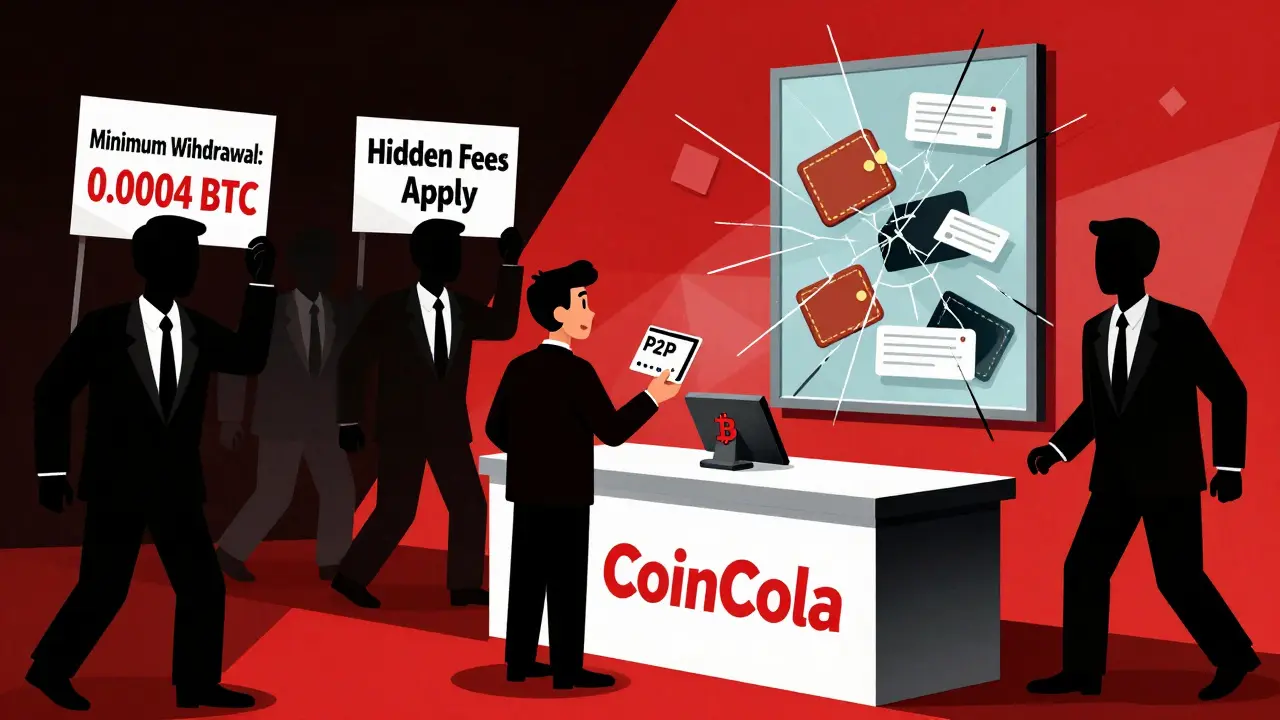
CoinCola says there are no hidden fees. That’s what their marketing says. But users on Trustpilot and Google Play are telling a different story. One user tried to withdraw 0.0003 BTC - less than $20 worth - and was blocked because CoinCola’s minimum withdrawal is 0.0004 BTC. That’s not a bug. That’s a design choice. They’re forcing you to keep small balances locked up.
Another user reported being charged a hidden fee that ate up $800 in USDT they thought they had withdrawn. No explanation. No refund. Just silence. These aren’t isolated cases. Multiple reviews from October 2023 describe the same pattern: small balances disappear, withdrawals get stuck, and customer support doesn’t respond.
Even worse, the platform doesn’t clearly state its fee structure. While they claim vendors pay fees (not traders), users report surprise deductions on withdrawals, deposits, and even internal transfers. There’s no public fee schedule. No transparency. Just promises.
Security Claims vs. Reality
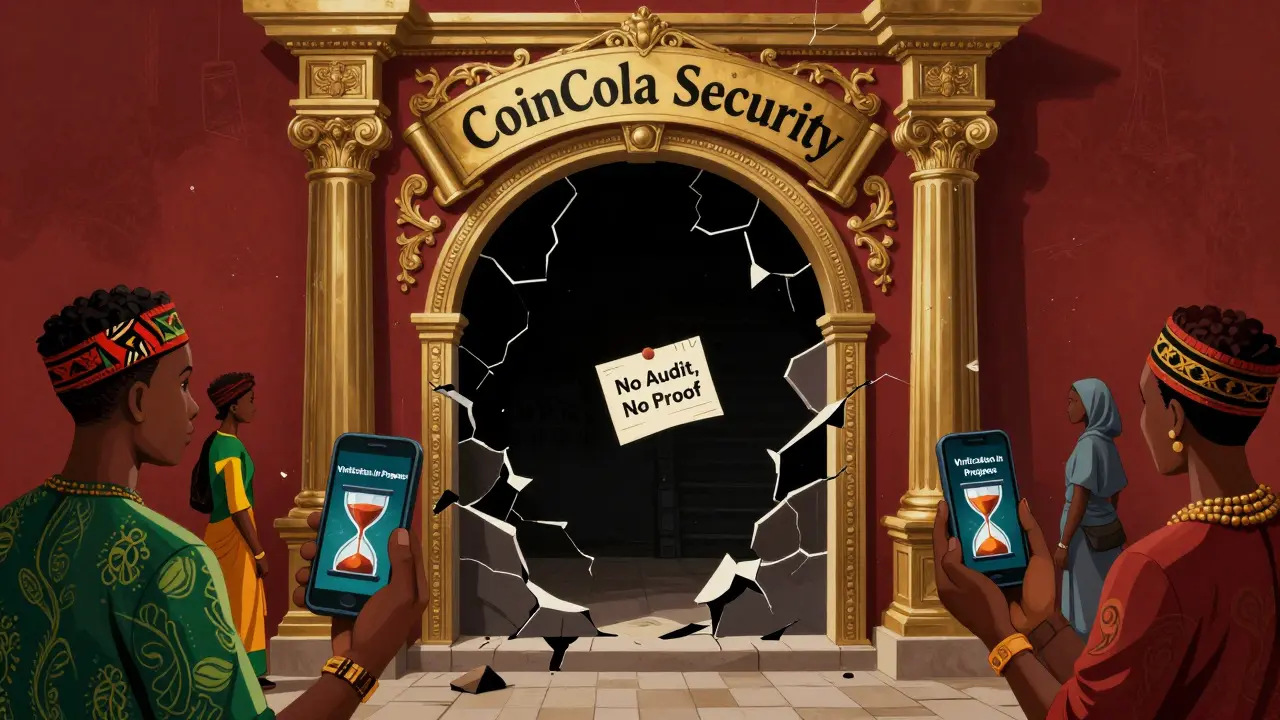
CoinCola says it uses “bank-level encryption,” cold storage, and SSL. They mention a security team with “over 10 years of experience.” Sounds solid, right? But here’s the problem: there’s zero public proof. No third-party audit. No proof of reserves. No published security reports.
Compare that to Binance or Coinbase. Both have been audited by firms like PwC and KPMG. They publish regular proof-of-reserves reports. CoinCola? Nothing. Just words.
And then there’s the escrow system. CoinCola says it holds your crypto until the buyer pays. But multiple users say their funds were frozen during “disputes” - even when they provided proof of payment. One person had 0.01 BTC locked for over three weeks. When they finally got through to support, they were told the case was “still under review.” No deadline. No explanation.
Gift Card Trading: A Double-Edged Sword
CoinCola’s gift card feature is its only real differentiator. If you’ve got an unused iTunes card or a Google Play balance you don’t want, you can swap it for crypto. That’s useful. But the exchange rates? Unclear. The fees? Hidden. The processing time? Sometimes takes 48 hours or more.
And here’s the catch: if the gift card gets flagged as stolen (even if you bought it legitimately), CoinCola freezes your account. No appeal. No refund. Just a message saying “violation of terms.” No way to dispute it. No human to talk to.
That’s not customer service. That’s a black box.
Verification and Support: A Nightmare
Getting verified on CoinCola isn’t quick. Google Play reviews show users waiting over 48 hours just to get their ID approved. Some say they submitted documents three times and still weren’t verified. Meanwhile, the app says “verification in progress” with no update.
Customer support? Mixed reviews. Some users say replies come within hours. Others say they’ve sent 10+ tickets and never got a response. One Trustpilot reviewer wrote: “I’ve tried everything. I’ve emailed, I’ve called, I’ve opened tickets. Nothing. My money is gone.”
There’s no live chat. No phone number. No Twitter account that responds. If you get stuck, you’re on your own.
Who Is CoinCola Really For?
CoinCola isn’t designed for people in the U.S., EU, or other regulated markets. It’s built for regions where banks are unreliable - Nigeria, parts of Latin America, Southeast Asia. In Nigeria, it supports Naira transfers, mobile money, and airtime payments. That’s valuable where traditional crypto on-ramps don’t exist.
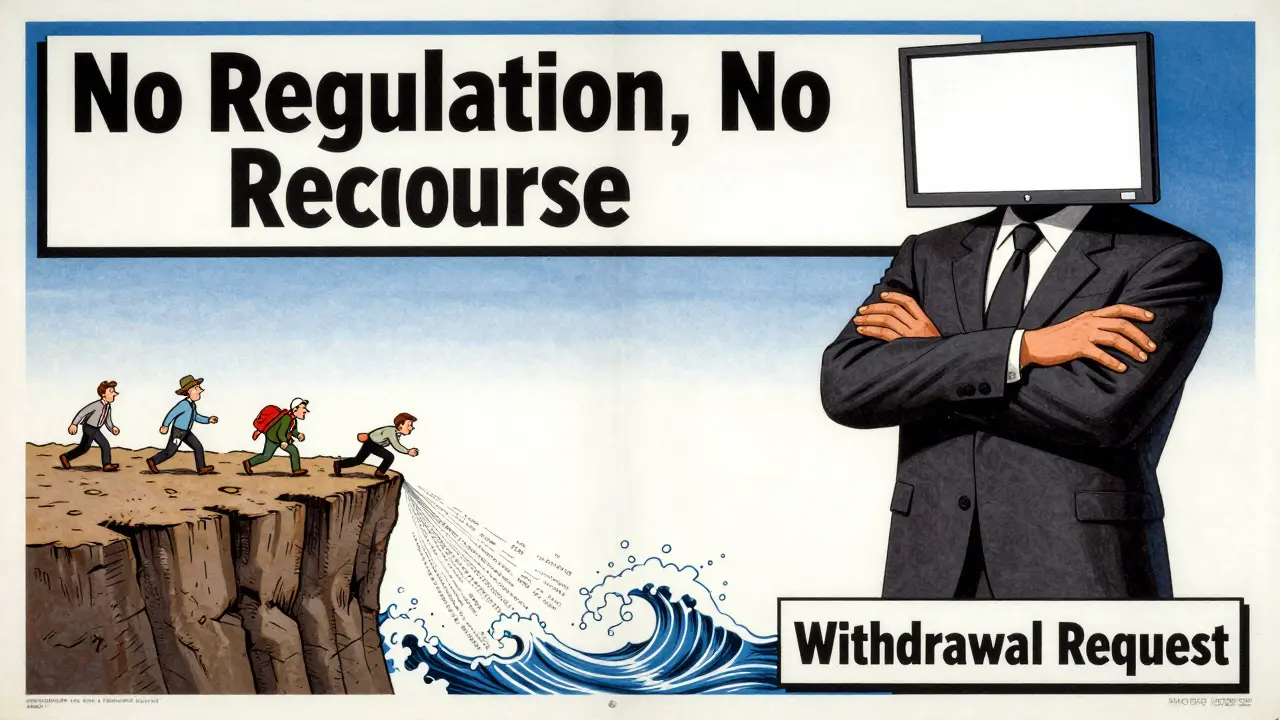
But if you’re in the U.S., Canada, or Europe? You’re taking a huge risk. CoinCola isn’t registered with the SEC, FCA, or any major financial authority. That means:
- No legal recourse if you lose money
- No protection under consumer laws
- No insurance for lost funds
And with over 12 negative reviews on Trustpilot calling it a “SCAM,” you can’t ignore the pattern. This isn’t one bad experience. It’s a systemic issue.
The Bottom Line: Should You Use CoinCola?
If you’re in an emerging market with no other options - and you’re only trading small amounts - CoinCola might work. But treat it like a last-resort tool, not a primary exchange.
Here’s what you should never do:
- Store large amounts of crypto on CoinCola
- Use it as your main trading platform
- Trust their “no fees” claims without testing a small withdrawal first
- Deposit money if you’re in a country with strong consumer protections - you won’t get help
For most people, better options exist. Binance, Kraken, or even Paxful (despite its own issues) offer more transparency, better support, and verifiable security. CoinCola’s gift card feature is unique, but not worth the risk.
If you’ve already used CoinCola and got locked out? You’re not alone. But chances are, you won’t get your money back.
Is CoinCola safe to use?
CoinCola is not considered safe for storing significant crypto balances. While it uses basic encryption and claims cold storage, there’s no third-party audit, no proof of reserves, and no regulatory oversight. Multiple users report frozen accounts, unresponsive support, and hidden fees that block withdrawals. If you use it, treat it as a temporary P2P tool - not a secure wallet.
Can I withdraw my crypto from CoinCola?
Yes, but with major restrictions. The minimum withdrawal for Bitcoin is 0.0004 BTC - meaning any balance below that is locked forever. Users also report withdrawals being delayed or blocked over minor “disputes” or unexplained verification issues. There’s no guarantee your withdrawal will go through, even if you’ve completed all steps.
Does CoinCola charge fees?
CoinCola claims no fees for traders, only for vendors. But users consistently report hidden fees on withdrawals, deposits, and even internal transfers. There’s no public fee schedule. The platform doesn’t disclose how much you’ll actually pay until after you initiate a transaction. This lack of transparency makes it risky.
Is CoinCola regulated?
No. CoinCola is not registered with any major financial authority like the SEC, FCA, or FINCEN. This means users have no legal protection if funds are lost or frozen. It operates outside traditional financial oversight, which increases risk - especially for users outside emerging markets.
Why do people say CoinCola is a scam?
People call CoinCola a scam because of recurring patterns: frozen accounts, unresponsive support, hidden fees, and refusal to release small balances. Over a dozen verified reviews on Trustpilot and Google Play describe losing money with no recourse. While not all users have bad experiences, the volume of complaints and lack of official response suggest systemic issues.
What cryptocurrencies does CoinCola support?
CoinCola supports Bitcoin (BTC), Ethereum (ETH), Tether (USDT), Litecoin (LTC), Bitcoin Cash (BCH), Dash (DASH), and Ripple (XRP). These are the only assets you can trade directly on the platform. It does not support altcoins like Solana, Cardano, or Polkadot.
Can I use CoinCola in the United States?
Technically yes - the app is available in the U.S. But using CoinCola there is strongly discouraged. The platform lacks U.S. regulatory compliance, offers no consumer protections, and has no legal obligation to assist users with disputes. U.S. users have reported being blocked from withdrawals with no explanation. Better, regulated exchanges like Coinbase or Kraken are safer alternatives.
How long does verification take on CoinCola?
Verification can take anywhere from a few hours to over 48 hours, according to user reports. Some users submit documents multiple times and still aren’t approved. There’s no status update or estimated time. If you need fast access, CoinCola is not the right choice.
Does CoinCola have a mobile app?
Yes, CoinCola has official apps for iOS and Android. The iOS app requires iOS 12.0 or later, and the Android app requires Android 5.0 or higher. The interface is simple and easy to navigate, which is why some users rate it highly. But ease of use doesn’t equal safety - many users report the app works fine until they try to withdraw funds.
What payment methods does CoinCola accept?
CoinCola accepts bank transfers, mobile money (like MTN MoMo, Airtel Money), airtime top-ups, and cash deposits in supported regions. It also allows gift card exchanges for Amazon, iTunes, and Google Play. These options make it useful in areas with limited banking access. But in the U.S. or EU, most of these methods aren’t available - and even if they were, the lack of regulation makes them risky.
Use CoinCola only if you understand the risks - and if you’re willing to lose what you put in. For most people, the safer path is to stick with regulated exchanges that have a track record, public audits, and real customer support.
Katrina Smith
March 17, 2026 AT 07:26Anastasia Danavath
March 18, 2026 AT 23:49anshika garg
March 19, 2026 AT 15:16Ross McLeod
March 19, 2026 AT 18:28Tony Weaver
March 20, 2026 AT 21:37Patty Atima
March 20, 2026 AT 22:21Lucy de Gruchy
March 21, 2026 AT 12:40