Compliance-First Approach to Crypto Trading in Restricted Countries
 Sep, 6 2025
Crypto Compliance Checker
Select Your Country
Trading cryptocurrency in a country that restricts it isn’t about finding loopholes-it’s about working within the rules, even when they’re unclear or shifting. If you’re in a place like Bangladesh, Nigeria, or even parts of China, you’re not trying to outsmart the system. You’re trying to stay out of legal trouble while still using crypto for savings, remittances, or investment. That’s the compliance-first approach: prioritize the law before the profit.
What Does ‘Restricted’ Actually Mean?
Not all restrictions are the same. Some countries ban everything-trading, mining, even holding crypto. Others only block banks from touching it. A few allow ownership but forbid using crypto as payment. You can’t treat them all the same. Take Bangladesh. The central bank has made it clear: no crypto trading, no exchanges, no peer-to-peer payments. Violators face legal action under anti-money laundering laws. There’s no gray area. In China, it’s different. You can’t trade on local exchanges like Binance or OKX anymore, and mining was shut down in 2021. But holding crypto in your own wallet? Not illegal. The government just doesn’t want banks involved. That’s a key distinction: trading ban vs. possession allowed. In Indonesia, crypto isn’t legal tender, but it’s treated as a commodity. That means you can buy and sell it on licensed platforms like Pintu or Indodax, but you can’t use it to pay for coffee or rent. The government doesn’t want it replacing the rupiah-but it’s okay if you treat it like gold or oil. This classification creates a legal path: trade it as an asset, not a currency. Nigeria is another case. The Central Bank banned banks from processing crypto transactions in 2021. But millions still trade. How? Peer-to-peer (P2P) platforms like Paxful and Binance P2P. No bank accounts involved. Just cash in hand, mobile money, or bank transfers disguised as something else. It’s risky, but it’s not technically illegal to hold Bitcoin. The law targets financial institutions, not individuals.Self-Custody: The Quiet Compliance Tool
If you’re in a country where exchanges are blocked, your best friend is a non-custodial wallet. That means you control the private keys. No exchange holds your crypto. No bank account is linked. You buy via P2P, send it to your wallet, and hold it there. This isn’t a hack. It’s a compliance tactic. In China, Argentina, and even parts of Africa, regulators don’t monitor individual wallets. They monitor exchanges, payment processors, and banks. If you never touch those systems, you’re not breaking the rules. You’re just using crypto the way it was designed-to be decentralized. But here’s the catch: you need to know how to do this safely. Don’t use sketchy P2P sellers. Use platforms with escrow. Verify identities. Keep records. Even if the law doesn’t require it, you’re protecting yourself from scams. And if the government ever asks-say, during a tax audit or investigation-you can show proof of how you acquired your crypto. That’s compliance.Compliance Isn’t Just About Avoiding Jail
People think compliance means hiding. It doesn’t. It means being transparent where you can. In places like Indonesia and Brazil, regulators don’t want to ban crypto-they want to control it. They want exchanges to know their customers. They want to stop money laundering. That’s why Indonesia requires exchanges to register with Bappebti. Brazil requires them to register with the SEC. If you’re using a licensed exchange in a country that allows it, you’re already compliant. You’ve done KYC. You’ve provided ID. You’ve accepted their terms. That’s more than most people in restricted countries do. And if you’re trading on an unlicensed P2P platform? You’re taking a risk. But if you keep records, avoid large suspicious transfers, and don’t use the crypto for illegal purposes, you’re minimizing exposure. Hong Kong’s new Stablecoins Ordinance, effective August 2025, shows what compliance looks like at scale. Issuers must back every stablecoin with real cash or equivalents. They must allow instant redemption. They must follow AML rules. This isn’t about stopping crypto-it’s about making it safe. And that’s the future: regulated, transparent, accountable crypto.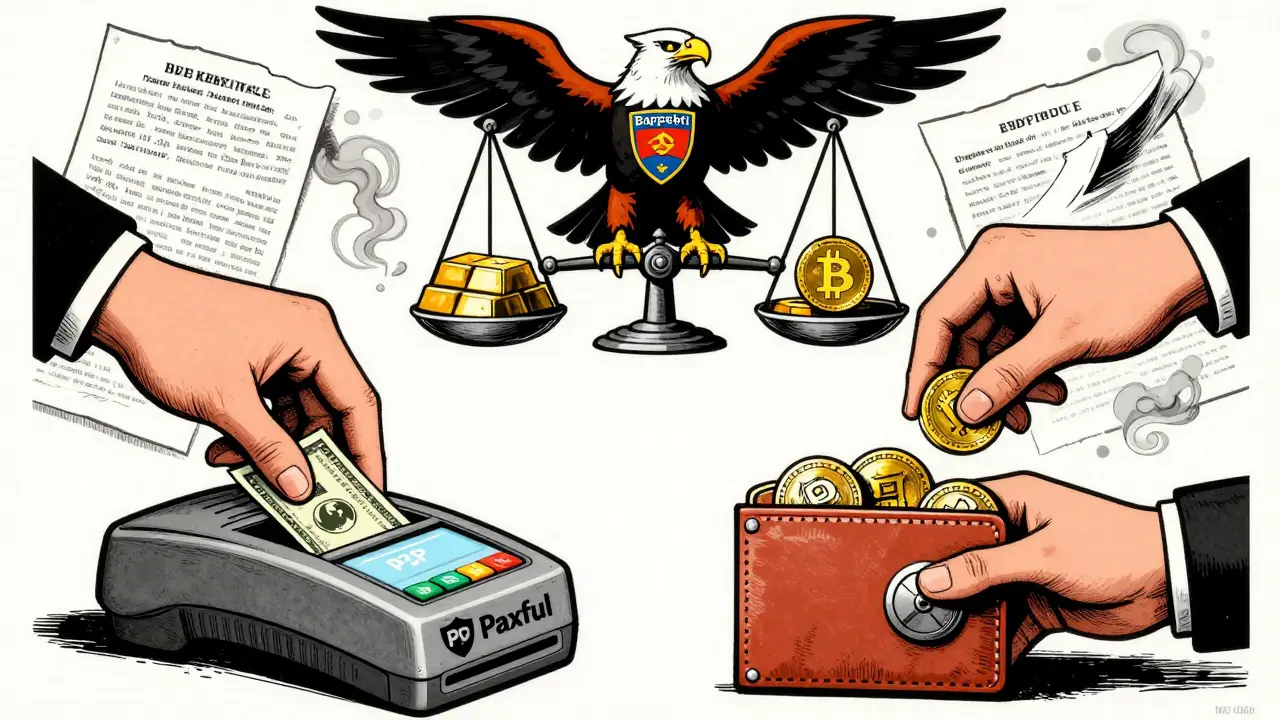
What to Watch: Regulatory Shifts in 2025-2026
The world isn’t staying still. In 2025, 99 countries are either passing crypto laws or updating them, according to the Financial Action Task Force. That’s not a trend-it’s a global reset. Singapore’s FIMA Act, which went fully live in January 2025, gives regulators the power to inspect any crypto business-even if it’s not licensed. That’s huge. It means even offshore platforms dealing with Singaporeans can be shut down. If you’re trading from Singapore, you’re now under the microscope, whether you like it or not. Hong Kong is opening retail access to major crypto assets like Bitcoin and Ethereum, but only through licensed platforms. That’s not a free-for-all. It’s a controlled environment. You can’t just set up a trading bot and call it a day. You need to go through a regulated gatekeeper. Meanwhile, countries like Tanzania and Egypt still say crypto is “not recognized.” But they don’t jail people for holding it. They just warn you: “Don’t use it. We won’t protect you.” That’s not a ban-it’s a disclaimer. You’re on your own. But that still leaves room to operate, as long as you don’t provoke the system.How to Build a Compliance Plan
Here’s how to actually do this, step by step:- Know your country’s exact rules. Is it a full ban? Or just a banking ban? Check official government or central bank websites. Don’t rely on Reddit or Telegram groups.
- Separate your activities. If you’re holding crypto, don’t link it to your bank. Use P2P with trusted sellers. Avoid exchanges that are clearly blocked.
- Use self-custody. Store your crypto in a hardware wallet or a non-custodial app like Exodus or Trust Wallet. Never leave it on an exchange you don’t control.
- Keep records. Save screenshots of P2P trades, wallet addresses, dates, and amounts. If you ever need to prove you didn’t break the law, you’ll need this.
- Don’t use crypto for payments. Even in countries where holding is okay, using it to pay for goods is often banned. Stick to holding and trading.
- Monitor updates. Laws change fast. Subscribe to your country’s financial regulator’s newsletter. Set Google Alerts for “crypto regulation [your country].”

When Compliance Isn’t Enough
Sometimes, the rules are too harsh to work within. If your country bans even personal wallet ownership-like Afghanistan or Nepal-then holding crypto is illegal no matter how careful you are. In those cases, compliance isn’t an option. You’re either not participating, or you’re taking serious legal risk. That’s when geographic arbitrage comes in. Some people relocate to crypto-friendly places like Panama, Bermuda, or Australia. Panama has no capital gains tax on crypto. Australia has clear rules and regulatory sandboxes. Bermuda offers business-friendly licenses. But moving isn’t easy. You need visas, tax residency, and a plan to transfer assets legally. It’s not a quick fix.Why This Matters Beyond the Law
The goal isn’t just to avoid punishment. It’s to help crypto become legitimate. When traders in restricted countries act responsibly-keeping records, avoiding scams, using licensed platforms when available-they show regulators that crypto isn’t just for criminals. It’s for people trying to save money, send cash home, or protect against inflation. Ukraine, Moldova, and Georgia rank highest in crypto adoption, not because they have no rules, but because they have clear ones. People know where they stand. That’s the future every restricted country could have-if users push for transparency instead of secrecy.Final Thought: Compliance Is a Strategy, Not a Compromise
You don’t need to wait for your government to legalize crypto to participate responsibly. You just need to understand the rules, respect them, and work within them. It’s slower. It’s harder. But it’s sustainable. The people who succeed in restricted markets aren’t the ones who gamble on darknet exchanges. They’re the ones who keep receipts, use wallets they control, and stay quiet until the law catches up. Crypto’s future in these countries won’t be built on rebellion. It’ll be built on patience, documentation, and quiet compliance.Is it legal to hold cryptocurrency in China?
Yes, holding cryptocurrency in a personal, non-custodial wallet is not illegal in China. However, trading on domestic exchanges, mining, and using crypto for payments are banned. The People’s Bank of China targets financial institutions and businesses, not individual wallet holders.
Can I use Binance in Nigeria?
Binance’s local exchange services are blocked in Nigeria due to the Central Bank’s 2021 banking ban. However, many Nigerians still use Binance P2P to buy and sell crypto using cash or mobile money. This is a gray area-it avoids banks but carries higher scam risk. Always use escrow and verify sellers.
What’s the difference between a crypto ban and a banking ban?
A full crypto ban prohibits owning, trading, or using cryptocurrency-like in Bangladesh. A banking ban only stops financial institutions from facilitating crypto transactions, but individuals can still hold and trade via P2P-like in Nigeria. The key is knowing whether the law targets people or institutions.
Why do some countries classify crypto as a commodity?
Classifying crypto as a commodity-like in Indonesia and Brazil-lets regulators treat it like gold or oil instead of money. This allows exchanges to operate legally under commodity trading laws, avoids conflicts with currency controls, and lets people trade without using crypto as payment. It’s a middle ground between ban and full legalization.
How can I stay compliant if I live in a restricted country?
Use self-custody wallets, avoid exchanges that are blocked, trade only via trusted P2P platforms with escrow, keep detailed records of all transactions, never use crypto for payments, and monitor official government updates regularly. Legal advice from a local financial lawyer is highly recommended if you’re holding significant amounts.
Are DeFi platforms safer than centralized exchanges in restricted countries?
Not necessarily. DeFi protocols don’t require KYC, so they’re harder for regulators to track-but they’re also riskier. Smart contract bugs, scams, and lack of consumer protection are common. In restricted countries, DeFi can be a compliance tool if you’re avoiding banks, but it’s not inherently safer. Always research protocols before using them.
For those in restricted countries, crypto isn’t about getting rich overnight. It’s about preserving value, sending money home, or protecting savings from inflation. Compliance isn’t a setback-it’s the only way to make sure you’re still in the game five years from now.