CovidToken Airdrop: What You Need to Know (And Why It Might Be a Scam)
 Sep, 2 2025
Crypto Project Scam Checker
Verify Your Project
Enter a cryptocurrency project name to check if it matches legitimate airdrop criteria
WARNING: Potential Scam
SAFE PROJECT
This project appears legitimate based on verified airdrop criteria.
How this works: We check if the project matches legitimate airdrop criteria from trusted sources like CoinGecko, CoinMarketCap, and official airdrop calendars.
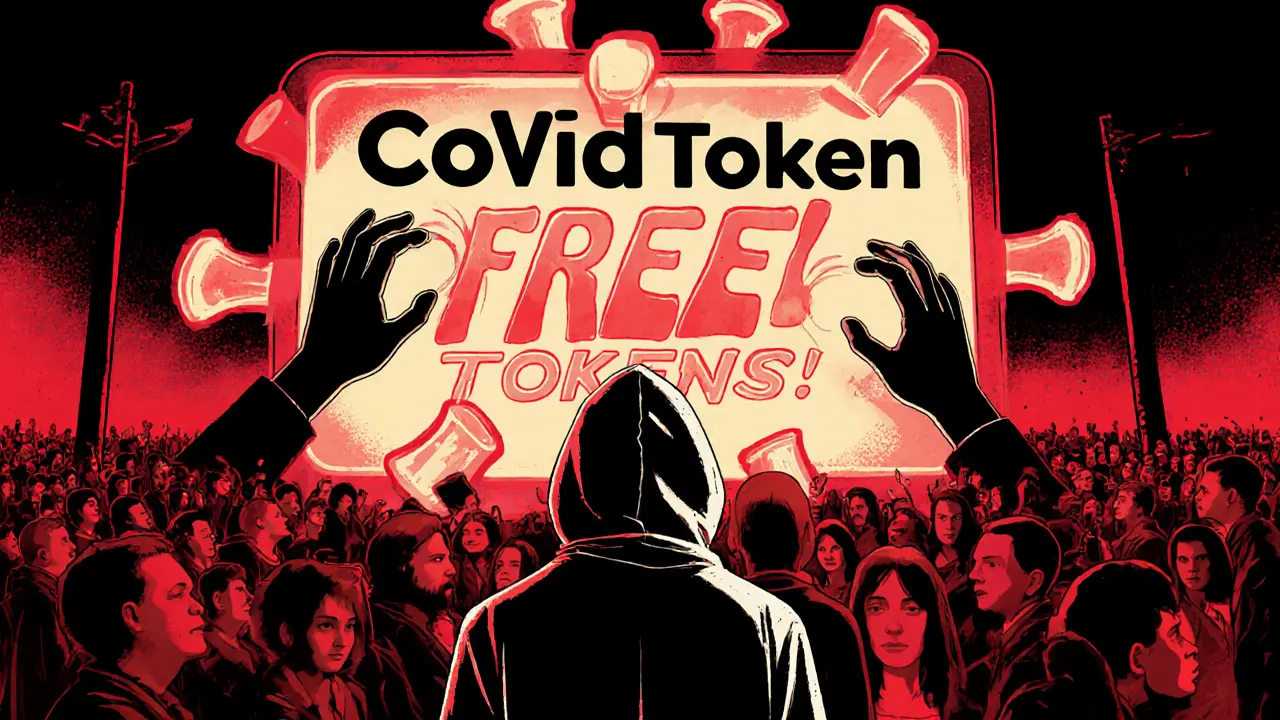
There’s no such thing as a legitimate CovidToken airdrop. Not now, not in 2025, and not ever. If you’ve seen ads, Telegram groups, or YouTube videos promising free tokens from a project called "CovidToken," you’re being targeted by a scam.
Here’s the truth: no reputable crypto project has ever used "Covid" or "CovidToken" in its name for a legitimate airdrop. The idea of a cryptocurrency tied to a global health crisis is not just unethical-it’s a red flag that screams fraud. Crypto scams love to ride on emotional events, and the pandemic was one of the most exploited moments in modern history. Scammers created hundreds of fake tokens during 2020 and 2021 pretending to fund vaccine research, support frontline workers, or "help the economy." Most vanished within weeks. Now, in 2025, they’re recycling the same trick.
Why "CovidToken" Doesn’t Exist
Major crypto tracking platforms like CoinGecko, CoinMarketCap, Airdrops.io, and TokenMetrics have no record of a project called CovidToken. Not a whitepaper. Not a website. Not a blockchain address. Not even a mention in any official 2024 or 2025 airdrop reports. The 36 major airdrops of 2024 included projects like Hyperliquid, Ethena, and Starknet-each with real teams, public roadmaps, and verified communities. None had anything to do with COVID-19.Even the most obscure crypto projects get noticed if they’re real. If CovidToken had even a small team, a GitHub repo, or a Twitter account with more than 500 followers, it would show up in blockchain analytics tools. It doesn’t. That’s not an oversight. That’s proof it’s fake.
How the Scam Works
The typical CovidToken scam follows a simple pattern:- You see a post saying: "Get 10,000 CovidToken for free! Just connect your wallet and share this post!"
- You click a link that takes you to a fake website that looks like a real crypto dashboard-complete with logos, fake counters, and "verified" badges.
- You’re asked to connect your MetaMask or Trust Wallet.
- Once connected, the scammer’s smart contract drains your wallet. Not just the tokens you own-your entire ETH, USDT, or SOL balance.
Some versions ask you to "pay a small gas fee" to claim your tokens. That’s another classic lie. Legitimate airdrops never ask you to pay to receive free tokens. If they do, it’s a trap.
There’s also a variant where scammers create fake Twitter or Telegram accounts pretending to be "CovidToken Team." They post screenshots of fake airdrop winners, use bots to like and retweet, and even hire people to comment "I got mine!" to create false social proof. It’s all theater.
What Real Airdrops Look Like
Legitimate airdrops have three things:- Transparency: They publish their tokenomics, team members (often with LinkedIn profiles), and a clear roadmap.
- Verified channels: Official announcements come from their website domain (like https://projectname.io) and their verified social accounts (blue checkmarks, not just followers).
- No upfront payments: You never pay to receive free tokens. Period.
Take the 2024 Ethena airdrop. It was announced on their official site, required users to hold a specific amount of stETH on Ethereum, and distributed tokens after a snapshot. No one asked for money. No one asked for private keys. And it was covered by Bloomberg, CoinDesk, and The Block.
How to Protect Yourself
If you’re looking for real airdrops in 2025, here’s how to stay safe:- Never connect your wallet to a site you found through a random tweet or Telegram link.
- Always go to the official website by typing it manually-never click links from ads or DMs.
- Check Airdrops.io or CoinGecko’s airdrop calendar for verified projects. If it’s not listed, assume it’s fake.
- Use a burner wallet for any airdrop you’re unsure about. Never use your main wallet with your life savings.
- Search for the project name + "scam" on Google. If people are reporting losses, walk away.
Real airdrops don’t need hype. They don’t need you to retweet. They don’t need you to feel urgent. If they’re pushing you to act now, it’s because they want your money before you think.
Why This Scam Still Works
People are still falling for CovidToken because it preys on trust. During the pandemic, many donated to charities, bought masks, or supported local businesses. Scammers know that people want to help. They twist that desire into a tool for theft.They use phrases like "support pandemic relief" or "funds go to vaccine research"-even though there’s no evidence of any such program. They even fake donation receipts. It’s cruel, but it’s effective.
The same people who lost money to fake NFTs in 2021 are now getting hit again with the same script, just with a new name. Crypto scams evolve, but their tactics never change.

What to Do If You Already Got Scammed
If you connected your wallet to a CovidToken site and lost funds:- Stop using that wallet. Move any remaining funds to a new one.
- Report the scam to the platform where you found it (Twitter, Telegram, etc.).
- File a report with your local cybercrime unit. While recovery is unlikely, tracking helps authorities shut down operations.
- Warn others. Post what happened on Reddit, Twitter, or crypto forums-don’t let someone else fall for it.
There’s no magic tool to recover stolen crypto. Once it’s gone, it’s gone. Prevention is the only real defense.
Legitimate Airdrops to Watch in 2025
If you want real opportunities, here are a few projects with strong track records that might airdrop in 2025:- Starknet: Active community, Layer 2 scaling solution, has airdropped before.
- Monad: High-performance blockchain, growing developer activity.
- Hyperliquid: Decentralized exchange with consistent user growth.
- Abstract: Modular blockchain infrastructure, backed by top VCs.
Follow their official blogs and Twitter accounts. Set up alerts on Airdrops.io. Don’t chase hype. Don’t click links. Just stay informed.
CovidToken is not a project. It’s a trap. And if you’re reading this, you’re one step ahead of the scammers. Don’t look back. Don’t click. Just move on.
Is CovidToken a real cryptocurrency?
No, CovidToken is not a real cryptocurrency. There is no official project, whitepaper, blockchain address, or team behind it. No major crypto tracking platform lists it, and it has never been part of any verified airdrop. It is a scam designed to steal crypto from unsuspecting users.
Can I get free CovidToken tokens?
No, you cannot get free CovidToken tokens because the project does not exist. Any website or social media post offering free tokens is a phishing scam. Connecting your wallet will likely result in your funds being drained. Legitimate airdrops never ask you to pay or connect your wallet to claim rewards.
Why do people still fall for CovidToken scams?
People fall for these scams because they exploit emotional triggers-like the desire to help during a crisis. Scammers use fake logos, fake testimonials, and urgency tactics to make the offer seem real. Many victims believe they’re supporting a good cause, not realizing they’re being manipulated. The scam works because it feels plausible to those who remember the pandemic’s chaos.
How do I spot a fake crypto airdrop?
Look for three things: official website (not a shortened link), verified social media accounts, and no request for money or private keys. Real airdrops are announced on official channels, have clear rules, and take time to roll out. If it’s too good to be true, or if it pressures you to act fast, it’s fake.
What should I do if I already sent crypto to a CovidToken site?
Immediately stop using that wallet and transfer any remaining funds to a new wallet. Report the scam to the platform where you found the link (Twitter, Telegram, etc.). File a report with your local cybercrime authority. Unfortunately, recovering stolen crypto is nearly impossible, but reporting helps track and shut down these operations. Warn others to prevent more people from being scammed.
Angel RYAN
November 26, 2025 AT 15:50Been there. Lost a little ETH. Learned the hard way.
stephen bullard
November 26, 2025 AT 19:32Vaibhav Jaiswal
November 27, 2025 AT 11:38Michael Labelle
November 27, 2025 AT 20:01Joel Christian
November 29, 2025 AT 07:04jeff aza
November 30, 2025 AT 17:19Vance Ashby
December 1, 2025 AT 09:56Felicia Sue Lynn
December 1, 2025 AT 14:48Eddy Lust
December 2, 2025 AT 09:30