Cross-Chain Crypto Transaction Monitoring: How to Track Assets Across Blockchains
 Jan, 25 2026
When you send Bitcoin to Ethereum, it’s not as simple as clicking ‘send’. The asset doesn’t just hop from one chain to another-it gets wrapped, swapped, locked, and reissued. And if you’re trying to track where that money went? Most tools blind you the moment it crosses over. That’s where cross-chain crypto transaction monitoring comes in. It’s not optional anymore. If you run a crypto exchange, a DeFi platform, or even manage institutional crypto holdings, you’re legally required to see every step of a transaction-even when it jumps chains.
Why Cross-Chain Tracking Is Non-Negotiable
In 2021, over $8.6 billion in cryptocurrency was laundered. A big chunk of that moved across chains. Criminals don’t use one blockchain-they use five. They lock BTC on Bitcoin, mint WBTC on Ethereum, swap it for USDT on BNB Chain, then funnel it through a mixer on Solana. Single-chain tools? Useless. They only see the start or the end. They miss the middle. And that’s where the crime hides. Regulators aren’t asking anymore. They’re demanding. The Financial Action Task Force (FATF), FinCEN in the U.S., and AMLA in the EU all require Virtual Asset Service Providers (VASPs) to monitor cross-chain flows. If you can’t trace a transaction from Bitcoin to Ethereum to Polygon, you’re not compliant. And non-compliance means fines, shutdowns, or losing access to traditional banking.How Cross-Chain Monitoring Actually Works
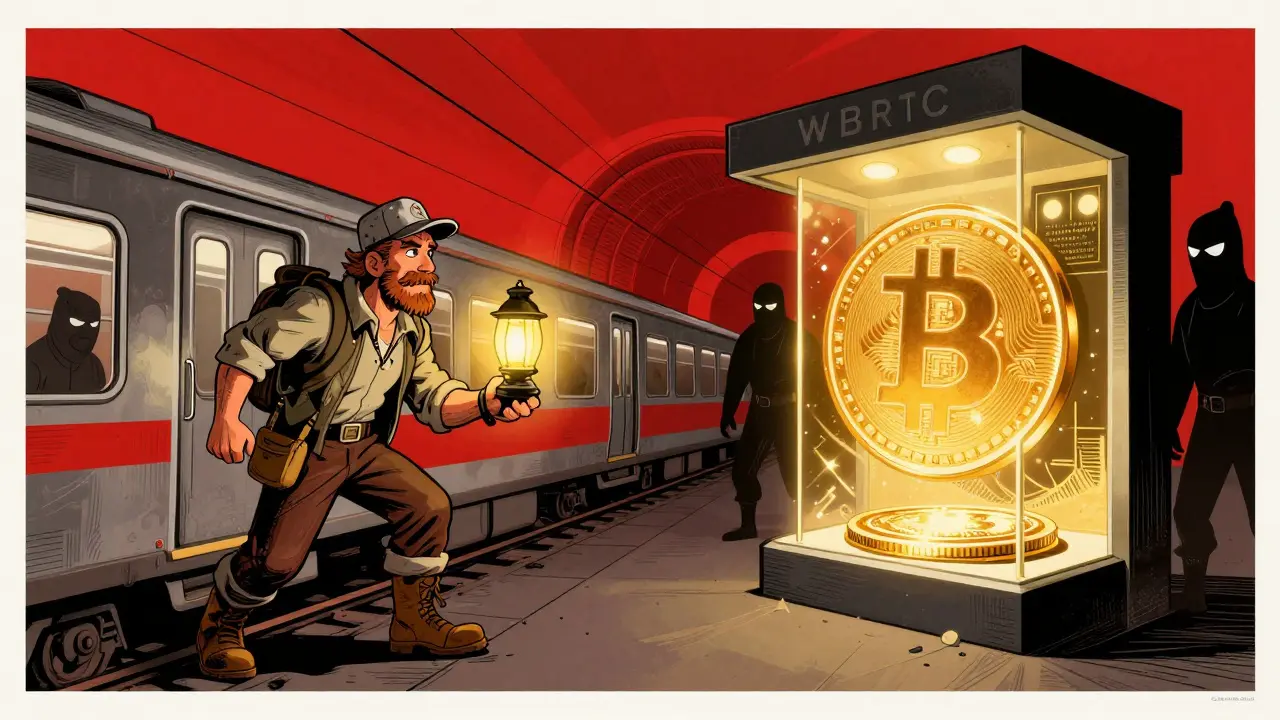
It’s not magic. It’s data. Real-time systems connect to nodes on Bitcoin, Ethereum, Binance Smart Chain, Solana, and others. Every time a new block is added, the system pulls every transaction: who sent what, when, and to which wallet. Then it does something simple but powerful: it links the dots. Take WBTC (Wrapped Bitcoin). When someone wraps 1 BTC, a smart contract locks the original Bitcoin on Bitcoin’s chain and issues 1 WBTC on Ethereum. Monitoring tools detect that lock event and the corresponding minting event. They know those two actions are twins. They’re the same asset, just wearing a different suit. Same goes for atomic swaps-where one crypto is directly exchanged for another across chains without a middleman. These swaps leave footprints on both ledgers. Good monitoring tools catch them. The system doesn’t just collect data. It analyzes it. Wallets with a history of mixing services? Flagged. Addresses that receive small deposits from dozens of sources and then send one large sum elsewhere? Flagged. Wallets that move funds between chains every 48 hours? Flagged. Each gets a risk score. You don’t need to be a blockchain expert to understand it-just know which addresses to avoid.What Tools Can Actually Do This?
Not every analytics platform can track cross-chain activity. Most still treat each blockchain like its own island. But platforms like Scorechain have built specialized engines for this. They monitor over 100 blockchains and tokens, including Bitcoin, Ethereum, Litecoin, XRP, and major stablecoins-all in one dashboard. Scorechain’s Cut The Cord project was built specifically to solve the WBTC and BTC-to-ETH tracking problem. It doesn’t just show you the transaction on Ethereum. It shows you the original Bitcoin address that was locked, the timestamp, the amount, and even the smart contract address that issued the WBTC. You can click through and see the full journey: Bitcoin → Lock → WBTC Mint → Swap → USDT → Withdrawal. That’s the kind of traceability regulators demand. Other tools may show you that a wallet sent 5 ETH to another wallet. But if that ETH came from a bridge that converted BTC to ETH, and the original BTC was from a darknet market, most platforms won’t tell you. Scorechain will. That’s the difference between seeing a transaction-and seeing the story behind it.
The Hidden Risks: Privacy Coins, Mixers, and New Bridges
Cross-chain monitoring is getting harder, not easier. New bridging protocols pop up every week. Some are open-source. Some are anonymous. Some don’t even log transaction IDs. That’s a problem. Criminals exploit these gaps. They use privacy coins like Monero to obscure origins, then swap them into Ethereum-based tokens via unregulated bridges. The trail goes cold. Mixers are another nightmare. Even if you track a transaction from Bitcoin to Ethereum, if the funds passed through a mixer like Tornado Cash, you’re left with a clean wallet address that looks legitimate. But advanced monitoring tools now look at behavior patterns. Did this wallet receive funds from a mixer? Did it send funds to a known darknet market? Did it move across three chains in under an hour? That’s not normal. That’s a red flag. And then there’s DeFi. Swaps on Uniswap, Curve, or ThorChain can happen in seconds. A user can convert BTC to ETH, then ETH to AVAX, then AVAX to SOL-all without touching a centralized exchange. These are called ‘non-custodial cross-chain swaps.’ They leave fewer traces. But they still leave traces. Monitoring systems now track liquidity pool interactions, token approvals, and gas fee patterns to detect these flows.Real-World Use Cases: Exchanges, Banks, and Investors
Crypto exchanges that don’t monitor cross-chain activity can’t get licensed. Period. That’s why over 350 compliance teams worldwide use tools like Scorechain. They screen incoming deposits before they hit user wallets. If a deposit came from a wallet that previously held funds from a ransomware attack on Bitcoin, then moved to Ethereum via a bridge, the system flags it before the user even touches the funds. Banks are starting to require this too. If you’re a crypto company trying to open a bank account, they’ll ask: “Can you prove you monitor cross-chain transactions?” If you say no, you’re out. Institutional investors won’t touch a platform that can’t show full audit trails. They don’t want to be linked to money laundering-even indirectly. Even crypto-native firms need this. A hedge fund holding BTC and ETH needs to know if their assets were ever tied to a sanctioned wallet. A venture capital firm investing in a DeFi protocol needs to know if the protocol’s liquidity pools are being used to launder funds. Cross-chain monitoring isn’t just for compliance-it’s due diligence.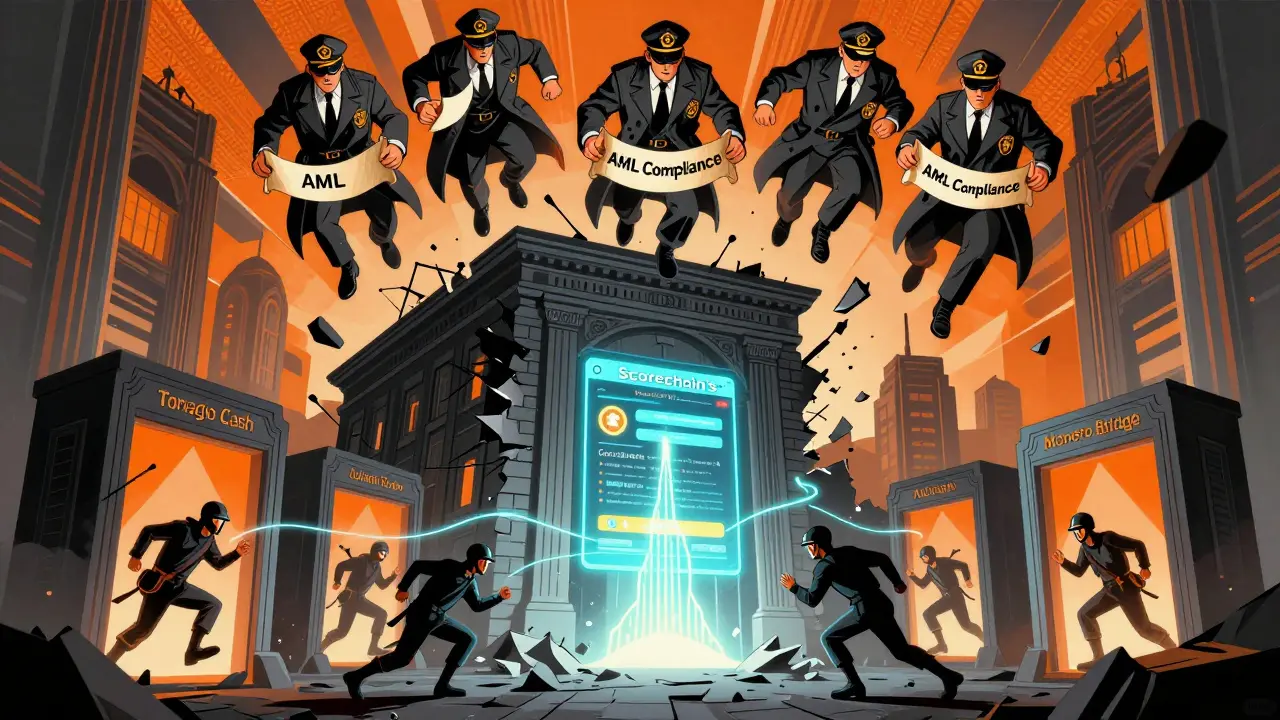
What Happens When You Don’t Monitor?
In 2022, a major U.S.-based crypto exchange was fined $10 million for failing to monitor cross-chain transactions. The regulator found that over $20 million in illicit funds had moved from Bitcoin to Ethereum through a bridge, then out to a mixer. The exchange’s system only looked at Ethereum. They missed the Bitcoin origin entirely. Another case: a European DeFi platform allowed users to swap BTC for USDC without any cross-chain checks. The platform was shut down after a FATF review flagged it as a high-risk entity. Their customers lost access to their funds for months. The platform never recovered. These aren’t edge cases. They’re standard. If you’re not monitoring across chains, you’re already non-compliant. And regulators are getting better at finding the gaps.What You Need to Do Now
If you’re running a crypto business, here’s what you need:- Use a monitoring tool that supports at least Bitcoin, Ethereum, BNB Chain, and major stablecoins.
- Ensure the tool tracks WBTC, renBTC, and other wrapped assets.
- Set alerts for transactions that cross chains in under 10 minutes.
- Require all incoming deposits to be screened against cross-chain risk scores.
- Train your compliance team to recognize bridge patterns-not just wallet addresses.
The Future: AI, Automation, and Global Standards
The next wave of cross-chain monitoring will be powered by AI. Instead of just flagging known bad addresses, systems will learn what normal behavior looks like across chains-and spot the anomalies. If a wallet usually moves $100 every month, then suddenly sends $1 million across four chains in an hour? The system won’t just flag it-it’ll predict it before it happens. Regulators are pushing for global standards. Soon, every VASP will need to report cross-chain flows to a shared database. That’s already happening in the EU. The U.S. is moving fast. The goal? No more blind spots. No more chain-hopping criminals. No more excuses. Cross-chain monitoring isn’t a feature. It’s the baseline. The days of ignoring it are over. If you’re still using tools that only see one chain, you’re already behind. And in crypto, being behind means losing everything.What is cross-chain crypto transaction monitoring?
Cross-chain crypto transaction monitoring is the process of tracking cryptocurrency movements across multiple blockchain networks-like Bitcoin, Ethereum, and Binance Smart Chain-using specialized tools that connect to each chain’s data. It identifies when assets are transferred via bridges, wrapped tokens, or atomic swaps, and links transactions across chains to detect suspicious activity, money laundering, or regulatory violations.
Why can’t regular crypto monitoring tools track cross-chain transactions?
Regular tools only look at one blockchain at a time. If Bitcoin moves to Ethereum via WBTC, a single-chain tool sees only the Ethereum side. It doesn’t know the ETH came from Bitcoin, who sent it, or if the original Bitcoin was linked to a crime. Cross-chain tools connect to multiple chains and match transactions across them, like finding two halves of a puzzle.
Is cross-chain monitoring required by law?
Yes. Regulators like FinCEN, FATF, and the EU’s AMLA require all Virtual Asset Service Providers (VASPs) to monitor cross-chain transactions. Failure to do so results in heavy fines, license revocation, or being cut off from traditional banking. It’s no longer optional-it’s a legal requirement.
What are WBTC and renBTC, and why do they matter?
WBTC (Wrapped Bitcoin) and renBTC are tokens that represent Bitcoin on Ethereum and other chains. When you wrap BTC, your Bitcoin is locked on Bitcoin’s chain and an equivalent amount of WBTC is issued on Ethereum. Monitoring tools must detect both the lock and the mint to track the full journey. These are common tools for laundering funds, so they’re high-risk and must be flagged.
How do criminals hide cross-chain transactions?
Criminals use privacy coins (like Monero), anonymous bridges, mixers (like Tornado Cash), and rapid multi-chain swaps to break the trail. They’ll move funds from Bitcoin to Ethereum, then to Solana, then to a privacy chain, and back again. Advanced monitoring tools look for behavioral patterns-like sudden chain-hopping, small deposits from many sources, or transfers to known bad actors-to uncover these hidden flows.
What happens if my exchange doesn’t monitor cross-chain transactions?
You risk regulatory penalties, loss of banking relationships, and reputational damage. In 2022, a U.S. exchange was fined $10 million for not tracking WBTC transfers from a darknet market. Your users’ funds could be frozen, your business could be shut down, and you could be barred from working with institutions. Compliance isn’t a cost-it’s survival.
Can individuals use cross-chain monitoring tools?
Most tools are built for businesses, not individuals. But you can still protect yourself. Before sending crypto to any exchange or wallet, use a free blockchain explorer like Etherscan or Blockchain.com to check the history of the receiving address. If it’s been linked to mixers, darknet markets, or multiple chains in a short time, avoid it. Your safety depends on knowing where your funds came from-even if you’re not a company.
What’s the difference between a bridge and an atomic swap?
A bridge locks crypto on one chain and issues a token on another (like WBTC). An atomic swap directly exchanges one crypto for another across chains without a middleman. Bridges leave a trail of minted tokens; atomic swaps leave matching trades on both chains. Both are tracked by cross-chain tools, but atomic swaps are harder to detect because they don’t create new tokens-just direct transfers.
How often do cross-chain transactions happen?
Billions of dollars move across chains every month. In 2024, over $120 billion in value crossed between blockchains via bridges and swaps. The volume is growing fast as DeFi, NFTs, and institutional crypto adoption increase. Monitoring systems must handle this scale in real time-delays of even 10 minutes can mean missing a laundering attempt.
What should I look for in a cross-chain monitoring tool?
Look for real-time monitoring across at least Bitcoin, Ethereum, BNB Chain, and major stablecoins. It should detect wrapped tokens (WBTC, renBTC), flag atomic swaps, provide risk scores for addresses, and show full transaction trails across chains. It should also support customizable alerts and exportable reports for compliance audits. Avoid tools that only show one chain or require manual lookups.
Barbara Rousseau-Osborn
January 27, 2026 AT 01:29Jen Allanson
January 28, 2026 AT 12:44Harshal Parmar
January 28, 2026 AT 21:25Darrell Cole
January 29, 2026 AT 05:04Dave Ellender
January 30, 2026 AT 09:55Adam Lewkovitz
January 31, 2026 AT 13:38Clark Dilworth
February 1, 2026 AT 05:43Brenda Platt
February 2, 2026 AT 00:15Arnaud Landry
February 2, 2026 AT 21:46george haris
February 4, 2026 AT 05:24