Crypto Trading Risks in Bangladesh: Legal Bans, Underground Markets & Financial Dangers
 May, 5 2026
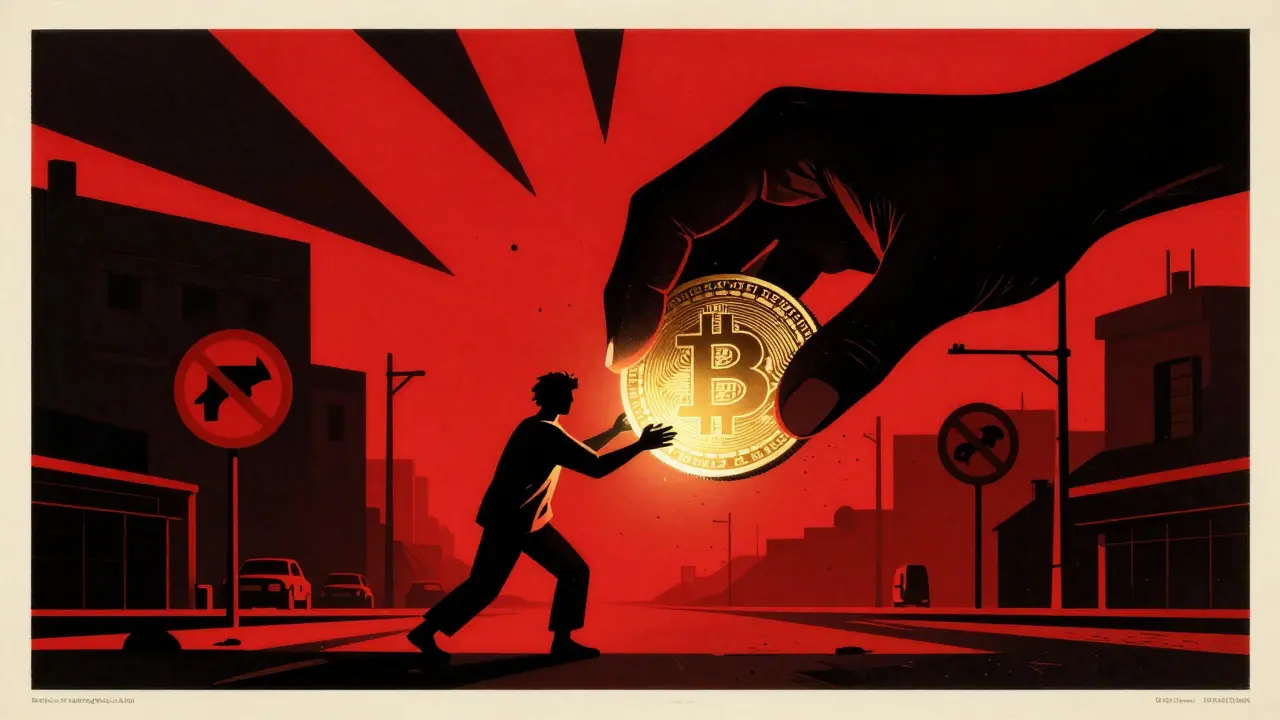
Imagine buying a digital asset that could double your savings overnight, only to find out the government considers it a crime. For citizens in Bangladesh, this isn't just a hypothetical scenario; it is the daily reality of engaging with cryptocurrency. While much of the world debates regulation, Bangladesh has taken a hardline stance. Since 2017, the central bank has declared all crypto activities illegal. Yet, despite this ban, a massive underground economy thrives. If you are a Bangladeshi citizen considering entering this space, you need to understand that the risks go far beyond losing money on a bad trade. You are navigating a minefield of legal prosecution, financial isolation, and operational fraud.
The Legal Wall: Why Crypto Is Banned
To understand the risk, you first have to look at the source of the prohibition. In 2017, Bangladesh Bank, the country's central monetary authority, issued a directive banning the use, trade, and possession of cryptocurrencies like Bitcoin and Ethereum. The reasoning was clear: the government feared money laundering, terrorist financing, and instability in the national currency, the Bangladeshi Taka.
This wasn't just a warning shot. It was a comprehensive ban. Unlike countries that regulate or tax crypto, Bangladesh treats it as an illicit activity. This means that simply holding crypto in a wallet can be construed as a violation of anti-money laundering laws. The legal framework leaves no room for ambiguity-possession, trading, and usage are all prohibited. For a citizen, this creates immediate legal jeopardy. If authorities identify you as a trader, you aren't just facing a fine; you are facing potential criminal charges under strict financial legislation.
What makes this situation particularly tense is the inconsistency in enforcement. On one hand, the law is absolute. On the other, major platforms like Binance and KuCoin remain accessible via app stores in Bangladesh. Users can often sign up with minimal verification. This creates a dangerous illusion of safety. Many citizens assume that because they can download the app, they are safe. They are not. The accessibility of these apps does not equal legal protection. It merely provides the tool for the crime, leaving the user exposed when the net closes.
The Underground Economy: How People Trade Anyway
Prohibition rarely kills demand; it just drives it underground. In Bangladesh, a robust peer-to-peer (P2P) ecosystem has emerged to bypass the ban. Citizens typically acquire crypto through two main channels, each carrying distinct and severe risks.
The first method involves using international credit or debit cards denominated in US dollars. This seems straightforward, but it is a tracking nightmare. Every transaction sent from a Bangladeshi bank account to an overseas exchange is visible to the banking system. Banks are required to monitor for suspicious activity. Sending funds to a known crypto exchange flags your account immediately. This creates a direct paper trail linking you to illegal activity, making you vulnerable to regulatory action and account freezing.
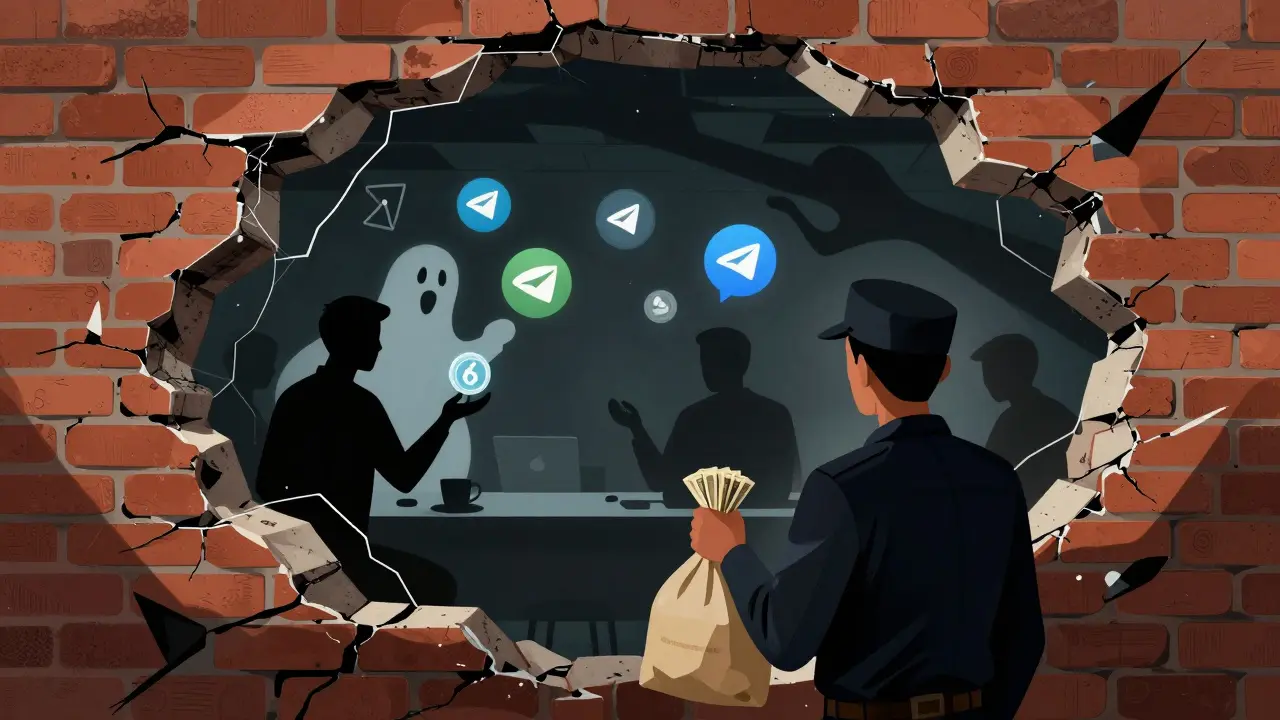
The second, more common method relies on local agents. These are individuals scattered across cities like Dhaka and Chittagong who buy and sell crypto, primarily USDT (Tether) and Bitcoin, in exchange for Bangladeshi Taka. They operate via Telegram groups, WhatsApp chats, or social media pages. They charge small commissions and profit from the spread between buy and sell prices. This system operates entirely outside the formal financial sector. There is no central authority, no taxation, and crucially, no consumer protection. If an agent disappears with your money, or if they send you fake screenshots of a transfer, you have zero legal recourse. You cannot call the police to report fraud for an illegal transaction without incriminating yourself.
Financial Risks: Beyond Market Volatility
In regulated markets, if an exchange goes bankrupt, there are often insurance schemes or legal processes to recover some funds. In Bangladesh’s underground market, such safeguards do not exist. The financial risks here are compounded by the lack of oversight.
Fraud is rampant. Because traders operate in the shadows, scammers know their victims cannot seek help from law enforcement. Phishing attacks, fake exchanges, and impersonation scams are common. Furthermore, price manipulation is easier in fragmented, low-liquidity local markets. Local agents may artificially inflate prices during high demand periods, knowing users have few alternatives.
Then there is the issue of capital flight. A significant portion of this underground trading involves moving Bangladeshi Taka offshore to stablecoin platforms. Reports indicate that offshore stablecoin platforms are processing record volumes of Taka deposits. This contributes to the depletion of foreign reserves and weakens the domestic currency. The government views this not just as individual misconduct, but as a threat to national economic stability. Consequently, the state has an incentive to crack down harder, increasing the risk of sudden, aggressive enforcement actions against individuals.
The 2025 Regulatory Shift: Biometrics and Surveillance
If you thought the landscape was static, think again. As of 2025, the regulatory environment has become significantly more hostile. The government introduced new biometric verification mandates for financial transactions. While aimed at broader financial compliance, these measures have inadvertently squeezed local crypto exchanges and agents.
Local exchanges reported losing 30% of their user base overnight as users fled to less regulated Telegram groups to avoid the three-day ordeal of biometric onboarding. This migration might seem like a win for privacy, but it is actually a trap. Moving from a semi-structured platform to anonymous chat groups drastically increases exposure to fraud. Without any identity verification, anyone can create a fake profile, take your money, and vanish. The "prohibition theater" described by experts is real: restrictions stimulate innovation in circumvention, but they also strip away whatever minimal safety nets existed.
Mining operations have also been explicitly outlawed. Grid operators have banned power-hungry mining farms, forcing miners into complete secrecy. Warehouse landlords in areas like Chittagong quietly retrofit ventilation systems for underground operations. This secrecy increases operational risks. If a raid occurs, participants face not just confiscation of equipment, but criminal charges for operating an illegal business.
Tax Paradox: Owing Money on Illegal Gains
Perhaps the most confusing aspect of the risk profile is taxation. You might wonder, "If it's illegal, do I pay taxes?" The answer is a frustrating yes. The National Board of Revenue applies the general Income Tax Ordinance of 1984 to all cryptocurrency transactions. This means that technically, you owe taxes on your crypto gains.
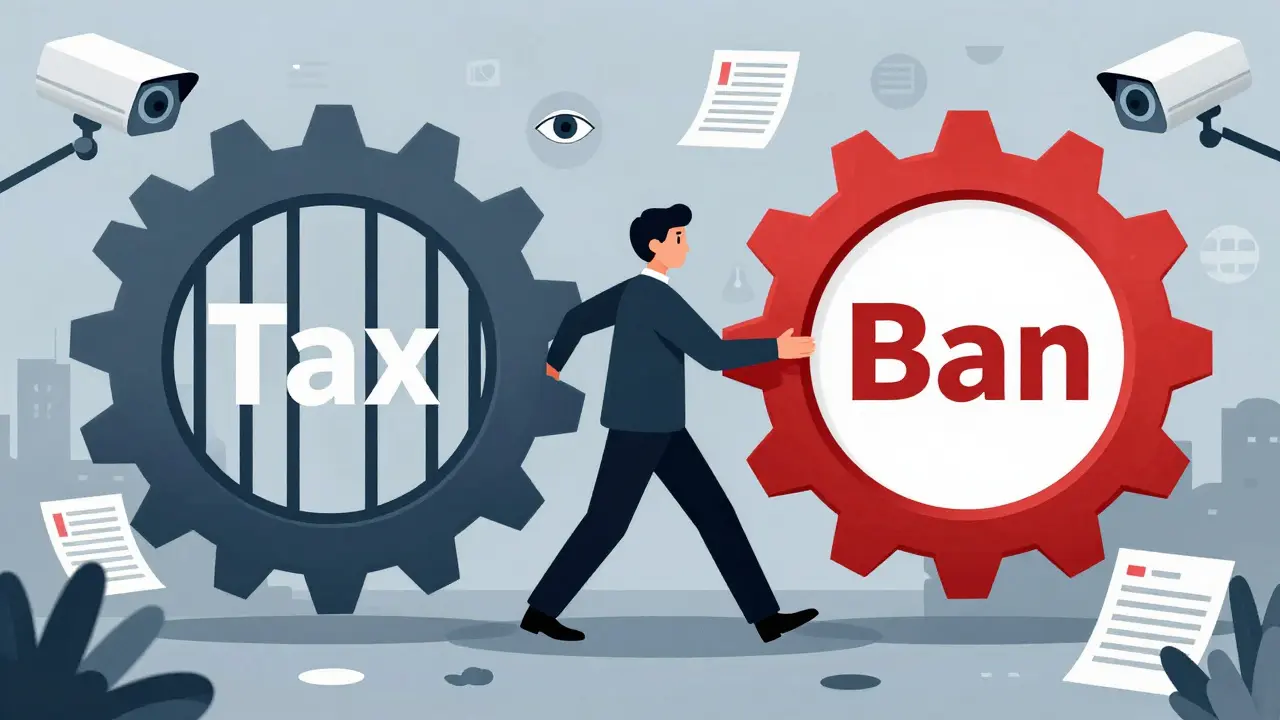
This creates a legal paradox. You are participating in an activity that is banned, yet you are expected to declare it to the tax authority. Failing to report gains exposes you to penalties for tax evasion. Reporting them exposes you to penalties for illegal crypto trading. Citizens are caught in a bind where either choice carries significant legal vulnerability. This uncertainty discourages legitimate financial planning and forces traders to keep their activities hidden, further isolating them from the formal economy.
Socioeconomic Consequences: Banking Exclusion
The risks extend beyond fines or fraud. Engaging in crypto trading can lead to financial marginalization. Financial institutions in Bangladesh are prohibited from engaging with crypto-related entities. If a bank discovers that your account is used for crypto transactions, they may freeze your assets or close your account entirely.
This exclusion has ripple effects. Being cut off from traditional banking services can make it difficult to access mortgages, business loans, or even basic payment processing. In a society where digital banking is increasingly essential for daily life, being blacklisted by banks due to crypto activity can severely impact your socioeconomic status. You risk losing access to the very financial infrastructure you need to build wealth, all while trying to preserve it in digital assets.
| Risk Factor | Bangladesh | India | Pakistan |
|---|---|---|---|
| Legal Status | Illegal (Banned) | Legal (Regulated) | Restricted but Evolving |
| Taxation | Ambiguous (General Income Tax) | 30% Flat Tax + 1% TDS | Variable (Often High) |
| Banking Access | Risk of Account Closure | Available with Compliance | Limited but Possible |
| Consumer Protection | None (Underground Market) | SEBI Regulations Apply | Limited State Oversight |
| Primary Risk | Criminal Prosecution | Tax Liability | Regulatory Uncertainty |
Security Vulnerabilities in the Shadow Market
Without access to compliant, regulated exchanges, Bangladeshi traders must rely on international platforms or local agents. International platforms may not provide adequate consumer protection or dispute resolution mechanisms for users in restricted jurisdictions. If Binance decides to restrict withdrawals from Bangladesh, you have no one to appeal to.
Local agent networks are even more precarious. The prevalence of fraudulent operators is high. The lack of regulatory oversight means no recourse for disputes. Additionally, the underground nature of the market increases exposure to cybersecurity risks. Traders may use less secure methods to hide their activities, such as unverified third-party wallets or insecure communication channels, making them easy targets for hackers and phishing attacks.
Future Outlook: Escalating Risks
Looking ahead, the risks for Bangladeshi crypto traders are likely to increase, not decrease. The government shows no signs of softening its stance. The 2025 framework introduced additional restrictions rather than liberalization. The continued growth of underground trading suggests potential for more aggressive enforcement actions, possibly including broader financial surveillance and harsher penalties.
Citizens considering crypto trading face not only current legal and financial risks but also the possibility of retroactive enforcement. As government monitoring capabilities expand, the window for anonymity shrinks. The fundamental incompatibility between Bangladesh's regulatory approach and cryptocurrency creates an environment where participation is a gamble with high stakes. The house doesn't just win; it can also send you to jail.
Is it legal to own cryptocurrency in Bangladesh?
No. Since 2017, the Bangladesh Bank has banned the possession, trade, and use of cryptocurrencies. Owning crypto is considered a violation of anti-money laundering laws and can lead to criminal prosecution.
Can I use Binance or KuCoin in Bangladesh?
While these apps may be available on app stores, using them to trade is illegal. The availability of the app does not grant legal protection. Transactions can be tracked by banks, leading to account freezes or legal action.
What happens if I get scammed by a local crypto agent?
You have no legal recourse. Because the transaction itself is illegal, you cannot report the fraud to the police without admitting to committing a crime. Local agent networks operate without regulation or consumer protection.
Do I have to pay taxes on crypto gains in Bangladesh?
Technically, yes. The National Board of Revenue applies the general Income Tax Ordinance to crypto transactions. However, reporting these gains exposes you to penalties for illegal trading, creating a legal paradox.
Will my bank close my account if they find out I trade crypto?
Yes. Financial institutions are prohibited from engaging with crypto-related activities. If your account is flagged for crypto transactions, the bank may freeze your assets or terminate your relationship, leading to financial exclusion.
Are there any safe ways to invest in crypto from Bangladesh?
There are no legally safe ways to engage in crypto trading within Bangladesh. All methods carry significant legal, financial, and operational risks due to the total ban imposed by the central bank.