CryptoMarket Crypto Exchange Review: A Latin America Focus in 2025
 Dec, 19 2025
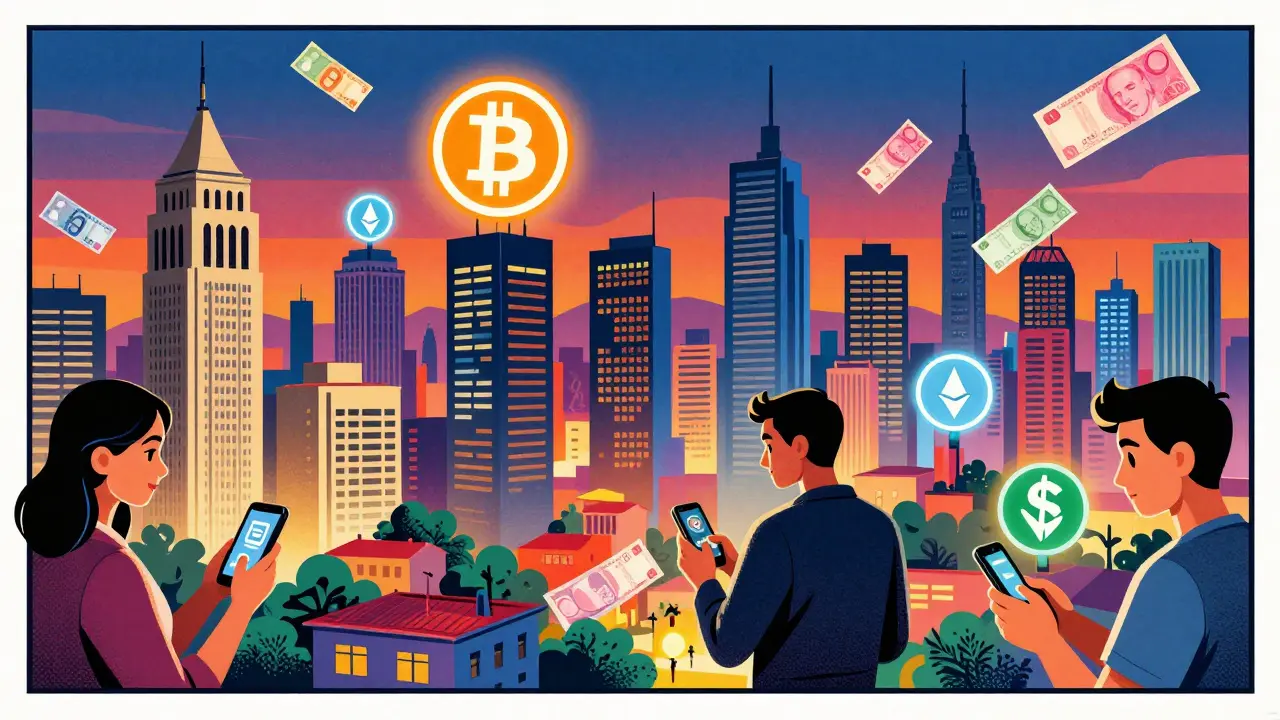
If you live in Latin America and want to buy Bitcoin or Ethereum without jumping through hoops, CryptoMarket might be one of the few exchanges that actually makes sense for you. Unlike global giants like Binance or Coinbase, CryptoMarket wasn’t built for New York or London. It was built for Santiago, Buenos Aires, São Paulo, and Mexico City - places where banks move slowly, wire transfers take days, and people need fast, affordable ways to get into crypto using their local money.
With nearly 150,000 users across the region, CryptoMarket has carved out a real niche. It’s not the biggest exchange in the world, but it’s one of the most practical for everyday users in South and Central America. The platform started as a way to make Ethereum trading easier in the region - and it’s since expanded to support Bitcoin, Stellar Lumens, and EOS. But its real strength isn’t the number of coins it offers. It’s how easily you can turn pesos, reals, or pesos into crypto without needing a U.S. bank account or a passport.
What You Can Buy and How
CryptoMarket lets you trade using local currencies: Chilean Peso (CLP), Argentine Peso (ARS), Brazilian Real (BRL), Mexican Peso (MXN), and even Euro (EUR). That’s rare. Most exchanges force you to deposit dollars first, then convert - adding fees and delays. CryptoMarket skips that. You link your local bank account or use a local payment method like PIX in Brazil or SPEI in Mexico, and buy crypto directly.
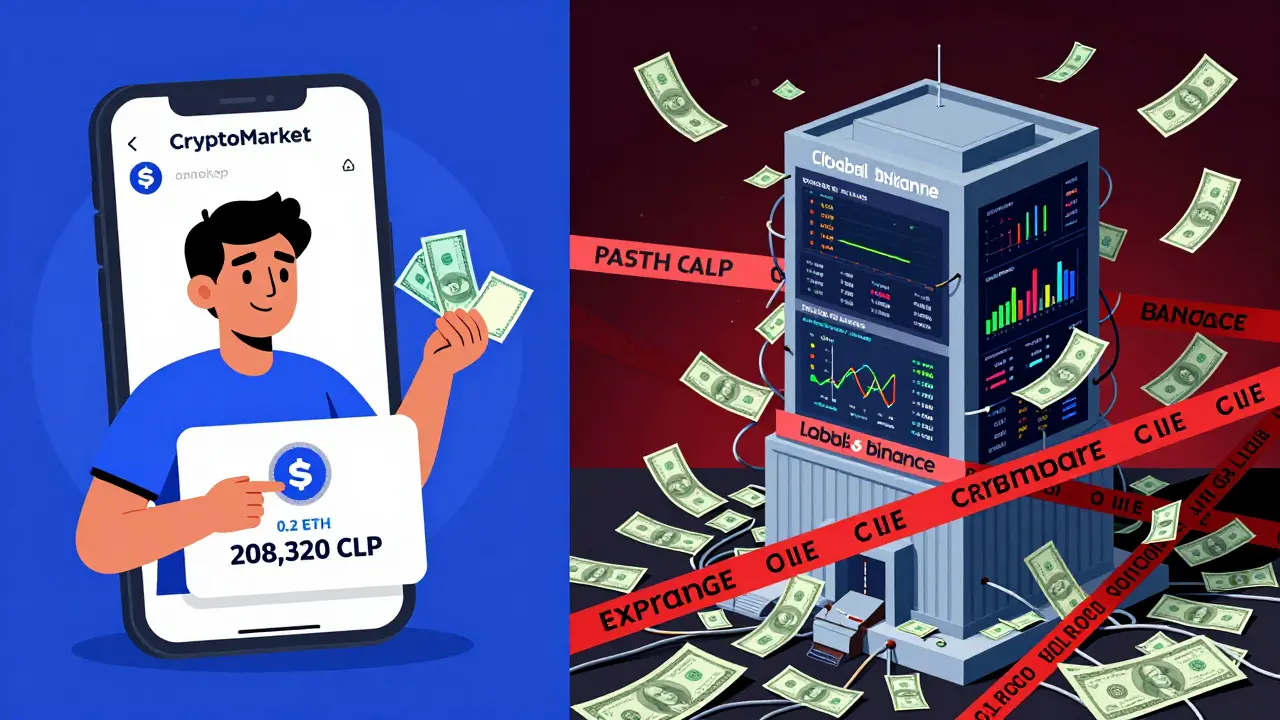
The trading model is a standard order book. You see green buy orders and red sell orders. For example, one seller might list 0.2022 ETH for 208.320 CLP per Ether. If you buy it, you pay about 42,122 CLP total. No hidden layers. No complex interfaces. Just clear prices and real-time matching. It’s simple, which is exactly what most users in the region need.
Fees: Transparent, But Not Always Low
CryptoMarket doesn’t publish exact fee schedules publicly, which is a red flag for experienced traders. But based on user reports and transaction logs, trading fees appear to hover between 0.5% and 1.5% per trade. Deposit fees are usually free when using local bank transfers. Withdrawals to external wallets cost around 0.0005 BTC or 0.01 ETH - comparable to other regional exchanges.
Compare that to Coinbase, which charges up to 3.99% for card purchases, or Kraken, which offers 0.4% for high-volume traders. CryptoMarket isn’t the cheapest, but it’s not the most expensive either. For users who don’t trade daily, the convenience of local currency support often outweighs the slightly higher fees.
Security: What We Know, What We Don’t
This is the biggest gap. There’s no public information about CryptoMarket’s security measures. No details on cold storage percentages, two-factor authentication options, or whether they’ve ever been hacked. That’s a problem. In 2025, a single breach can wipe out trust overnight - like the Bybit hack in February that lost $195 million. Even though Bybit recovered, users pulled out $5.7 billion in panic.
CryptoMarket hasn’t reported any major security incidents, but absence of news isn’t proof of safety. If you’re putting in significant funds, you need to know: Are your assets stored offline? Is withdrawal whitelisting enabled? Can you enable SMS or authenticator-based 2FA? The platform doesn’t answer these questions clearly on its site.
User Experience: Built for Real People, Not Traders
The app and website are clean, slow to load sometimes, but easy to use. No cluttered dashboards. No confusing margin trading tabs. You open the app, tap “Buy,” pick your coin, enter your amount in local currency, and confirm. That’s it. The UI doesn’t try to be a professional trading terminal. It’s designed for someone who wants to buy $50 worth of Bitcoin to send to a family member in Colombia - not for someone running arbitrage bots.
Customer support is another mixed bag. Most users report responses within 24-48 hours via email or in-app chat. But there are no live agents, no phone support, and no Spanish or Portuguese-speaking help desks listed on the website. If you’re stuck with a failed transfer or a frozen account, you’re on your own until someone replies.
Regulation: The Wild West
CryptoMarket doesn’t list any regulatory licenses. It’s not registered with the SEC, FINMA, or any European authority. That’s normal for regional exchanges in Latin America, where crypto regulations are still patchy. But it’s also risky. In 2025, Brazil and Argentina started cracking down on unlicensed platforms. If CryptoMarket gets flagged, your funds could be frozen overnight.
Some users say the platform complies with local AML laws - they require ID verification for deposits over 500,000 CLP or equivalent. That’s a good sign. But without public documentation, you’re trusting them on faith.

How It Stacks Up Against Global Exchanges
Here’s a quick comparison:
| Feature | CryptoMarket | Coinbase | Kraken | Binance US |
|---|---|---|---|---|
| Supported Fiat Currencies | CLP, ARS, BRL, MXN, EUR | USD, EUR, GBP, CAD | USD, EUR, CAD, GBP | USD, EUR |
| Cryptocurrencies Offered | 4 (BTC, ETH, XLM, EOS) | 235 | 350+ | 158 |
| Trading Fees | 0.5%-1.5% | 0.5%-3.99% | 0%-0.4% | 0%-0.6% |
| Local Bank Support | Yes (regional) | No | No | No |
| Regulatory Status | Unclear | Licensed (U.S.) | Licensed (U.S.) | Licensed (U.S.) |
| Best For | Latin American users needing local currency deposits | U.S. users, beginners | Advanced traders, low fees | High-volume U.S. traders |
If you’re in Brazil and want to buy ETH using your bank account, CryptoMarket is one of the only options. Coinbase? You’d need to wire dollars first - which costs $15-$30 and takes 3-5 days. That’s not practical for someone buying crypto to pay for groceries or send remittances.
Who Should Use CryptoMarket?
You should consider CryptoMarket if:
- You live in Latin America and want to buy crypto with your local currency
- You’re not a day trader - you just want to hold Bitcoin or Ethereum long-term
- You don’t need hundreds of altcoins
- You value simplicity over advanced tools
You should avoid CryptoMarket if:
- You need 24/7 live support
- You trade frequently and want sub-0.5% fees
- You’re storing large sums and demand full transparency on security
- You want to trade altcoins like Solana, Dogecoin, or Shiba Inu
The Bottom Line
CryptoMarket isn’t perfect. It’s not as secure as Kraken, not as feature-rich as Binance, and not as regulated as Coinbase. But it doesn’t need to be. It’s built for a different kind of user - someone who doesn’t care about leverage or staking rewards. They just want to buy crypto with their local money, without jumping through international banking hoops.
For that specific job, it works. It’s not flashy. It’s not the cheapest. But if you’re in Colombia, Peru, or Ecuador, and you’ve tried everything else, CryptoMarket might be the most honest option left.
Just remember: never put more money into any exchange than you’re willing to lose. Especially when you don’t know how secure it is.
Is CryptoMarket safe to use in 2025?
There’s no public record of a major hack or security breach at CryptoMarket, but the platform doesn’t disclose its security practices. It doesn’t say how much of user funds are stored offline, whether it uses multi-sig wallets, or if it offers two-factor authentication. Without this information, you’re relying on trust, not proof. Use it for small to medium amounts - not life savings.
Can I buy Bitcoin with pesos on CryptoMarket?
Yes. CryptoMarket supports buying Bitcoin (BTC) using Chilean Peso (CLP), Argentine Peso (ARS), Brazilian Real (BRL), and Mexican Peso (MXN). You can link your local bank account and purchase BTC directly without converting to USD first.
Does CryptoMarket support Ethereum trading?
Yes. CryptoMarket started as South America’s first Ethereum-focused exchange and still offers ETH trading. You can buy, sell, and withdraw Ethereum using local currencies. ETH remains one of its most popular assets.
How do I withdraw crypto from CryptoMarket?
To withdraw, go to the wallet section, select the cryptocurrency, enter the external wallet address, and confirm. Withdrawal fees are around 0.0005 BTC or 0.01 ETH. Processing time is typically under 30 minutes, but can take longer during high network traffic.
Is CryptoMarket better than Binance for Latin America?
Binance doesn’t support direct deposits in local Latin American currencies like ARS or BRL. You’d need to use a third-party P2P platform or a bank transfer in USD - which adds complexity and cost. CryptoMarket lets you deposit directly. For most users in the region, that makes it easier and cheaper - even if Binance has more coins and lower fees.
What happens if CryptoMarket shuts down?
If the exchange shuts down, there’s no guarantee you’ll get your funds back. Unlike regulated U.S. exchanges that hold insurance or are covered by FDIC-like protections, CryptoMarket operates without public regulatory oversight. Treat it like a digital wallet you control - not a bank. Withdraw your crypto to your own hardware wallet if you plan to hold long-term.
If you’re looking for a simple, local-friendly way to get into crypto in Latin America, CryptoMarket delivers - if you’re okay with its blind spots. For everyone else, look elsewhere.
Kevin Karpiak
December 21, 2025 AT 07:01Amit Kumar
December 22, 2025 AT 00:33Helen Pieracacos
December 22, 2025 AT 18:34Dustin Bright
December 24, 2025 AT 01:12Melissa Black
December 25, 2025 AT 23:58chris yusunas
December 27, 2025 AT 14:16