FinTech Law and Cryptocurrency in Mexico: What You Need to Know in 2025
 Jul, 6 2025
Mexican Fintech Compliance Cost Calculator
Compliance Cost Estimator
Calculate estimated startup and operational costs for Mexican fintech businesses based on current regulations
FinTech Law in Mexico Isn’t Just Rules-It’s a Survival Guide
If you’re running a fintech business or using cryptocurrency in Mexico, you’re not just dealing with banks or apps-you’re navigating one of Latin America’s strictest financial legal systems. The FinTech Law, passed in 2018, didn’t just open the door for digital finance. It built a whole new building with security cameras, metal detectors, and fingerprint scanners at every entrance.
Before this law, companies offering digital payments, lending, or crypto services operated in a gray zone. Now, they must be licensed by the National Banking and Securities Commission (Comisión Nacional Bancaria y de Valores, CNBV) and follow rules that apply to banks. That means you can’t just launch a wallet app and start taking money. You need a compliance officer, a chief information security officer, cloud backups for foreign software, and a full audit trail of every transaction. The cost? Often over $200,000 just to get started. For small startups, that’s a wall.
Cryptocurrency Is Legal-But Only If You’re Not a Bank
Here’s the twist: you can buy Bitcoin, Ethereum, or any other crypto in Mexico. You can hold it. You can send it to a friend. You can even use it to pay for goods if a store accepts it. But if you’re a company-especially one handling money-you’re locked out of the crypto game unless you jump through a dozen legal hoops.
The Bank of Mexico (Banxico) doesn’t ban crypto. It just says financial institutions can’t hold it, trade it, or offer crypto services without approval. That means banks like BBVA or Banamex can’t let you buy Bitcoin through their app. Neobanks like Nu or Mercado Pago can’t offer crypto wallets either. The law treats crypto like a volatile asset-not a currency-and restricts its use to non-bank individuals.
So if you’re a regular person, you’re fine. If you’re a business trying to build a crypto exchange, payment processor, or lending platform using crypto? You’re stuck. The only legal path is applying for a fintech license under the 2018 law-and even then, crypto isn’t officially listed as an allowed service. That’s why most Mexican crypto platforms operate offshore, with Mexican users accessing them through VPNs or third-party gateways.
Anti-Money Laundering Rules Are Everywhere-Even for Small Transactions
Every company that touches money in Mexico must follow the same anti-money laundering (AML) rules as a traditional bank. That includes verifying your identity with an official ID, checking if you’re a Politically Exposed Person (PEP), and tracking every transaction you make-even if it’s $20.
The Financial Intelligence Unit (FIU) requires all fintech firms to report any transaction over $1,500 USD that looks unusual. That could mean sending money to a country with weak AML rules, making frequent small deposits to avoid detection, or using cash to buy crypto. If you’re a freelancer getting paid in Bitcoin and converting it to pesos through a local exchange, you’re being monitored.
And you can’t just delete your records after a transaction. The law forces companies to keep all customer data-IDs, transaction logs, communication records-for at least five years. That’s longer than most tax records. For small businesses, this isn’t just paperwork. It’s a data storage nightmare. One Mexican fintech founder told me they spent $40,000 just on encrypted servers to meet this requirement.

Why Mexico’s Rules Are Falling Behind the Market
Mexico was the first country in Latin America to pass a fintech law. That sounds impressive. But in 2025, it’s starting to look like a first-generation smartphone in a 5G world.
Colombia and Brazil have moved faster with open finance systems. That means banks there must share customer data (with permission) with third-party apps. If you want a loan, an app can pull your bank history, income, and spending habits to approve you in minutes. In Mexico? You still need to fax documents. The law doesn’t require data sharing. It doesn’t even define what open finance is.
That’s why Mexican fintechs are stuck. Nu and Stori have grown big, but they’ve done it by working around the law-not because the law helped them. They can’t offer crypto. They can’t easily lend to small businesses. They can’t compete with Brazilian apps that give users instant credit based on their phone usage.
Experts call it “Fintech Law 2.0.” It’s not a rumor. It’s a demand. The current rules were written for 2018. Back then, only 200 fintechs existed in Mexico. Now, there are over 1,000. The law hasn’t changed. The market has exploded.
Small Businesses Are Paying the Price
The biggest losers? Small and medium businesses (SMEs). Mexico has over 4 million SMEs. Nearly 70% of them don’t have access to formal credit. Traditional banks won’t lend to them because they don’t have enough paperwork. Fintechs could help-but they can’t.
Why? Because the law doesn’t allow fintechs to use alternative data to assess risk. No phone bills. No social media activity. No sales history from Mercado Libre. Only bank statements. So if you run a small taco stand and get paid in cash every day? You’re invisible to the system.
Even warehouse financing-where fintechs lend money using inventory as collateral-is hard to scale because the law doesn’t clearly define digital asset-backed lending. Banks won’t touch it. Regulators don’t know how to classify it. So the money stays locked up.
One founder in Guadalajara told me he raised $2 million to lend to local artisans. But after 18 months, he could only approve 12 loans because every application required manual review. No automation. No AI. No data sharing. Just paperwork. That’s not innovation. That’s bureaucracy.
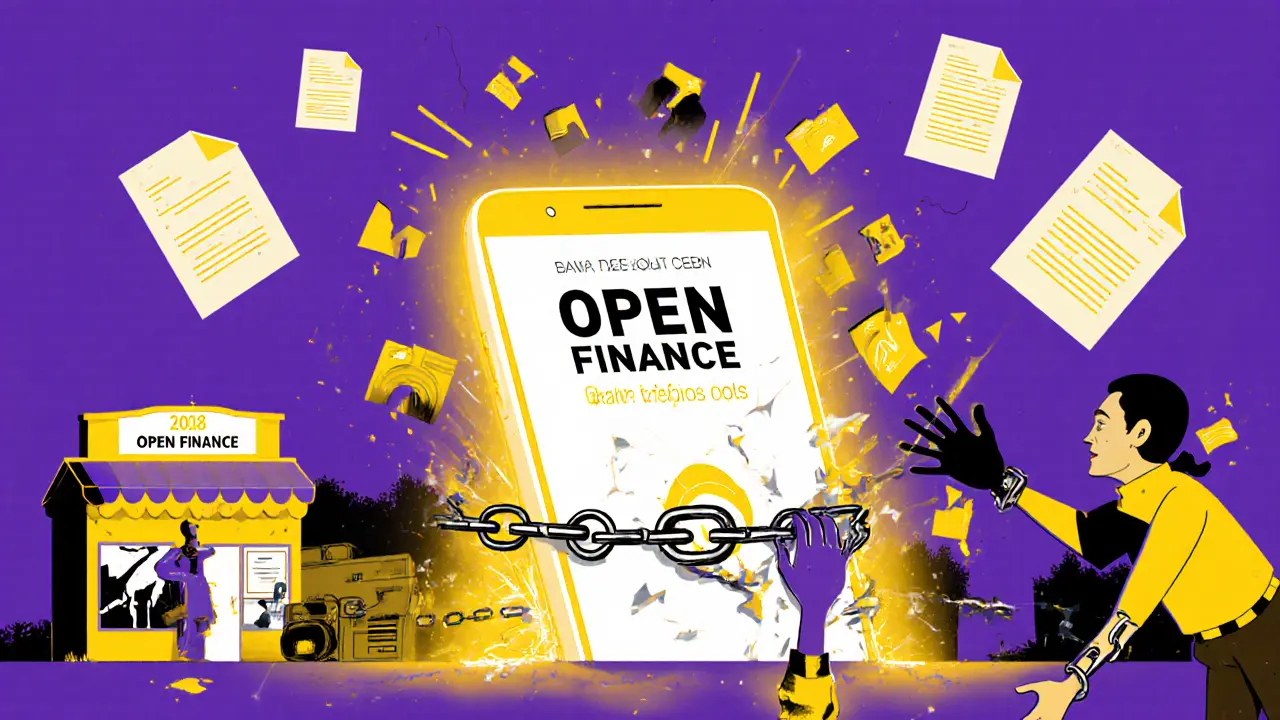
What’s Changing in 2025? (And What’s Not)
There are signs of movement. In early 2025, Mexico updated its Securities Market Law to make it easier for fintechs to raise capital through public offerings. That’s good news for companies like Stori or Kueski that want to go public.
But for everyday users? Not much. The CNBV has said they’re studying crypto regulation. They’ve held public consultations. They’ve met with industry leaders. But no new law has been drafted. No timeline has been set. The CNBV still says crypto is a “virtual asset,” not a financial instrument-and that’s a legal dead end for innovation.
Meanwhile, cross-border payments are getting harder. If you’re a Mexican freelancer getting paid in US dollars via PayPal or Stripe, you now need to report every transfer to Banxico. The thresholds are lower. The penalties are higher. And the penalties aren’t just fines-they can include freezing your account or blocking future transactions.
What Should You Do If You’re in Mexico’s Fintech Space?
Here’s the reality: if you’re a user, you’re mostly safe. Buy crypto. Use it. Send it. Just don’t expect your bank to help you.
If you’re a startup? Don’t try to build a crypto exchange in Mexico. Build it in Argentina or Colombia. Then serve Mexican users from there. It’s easier than fighting the system.
If you’re a fintech founder? Focus on what the law allows: digital payments, lending using traditional data, and crowdfunding. Don’t waste money on crypto features. They’ll be blocked. Instead, build tools for SMEs. Help them get loans using their sales records. Connect them to warehouse financing. That’s where the real need is-and where regulators might actually help.
And if you’re a lawyer or compliance officer? Get ready. The next 12 months will be busy. Every company will need a full audit. Every vendor contract will need review. Every employee will need training. The cost of compliance isn’t going down. It’s going up.
Bottom Line: Mexico’s Fintech Law Is a Shield-But Not a Sword
The law protects users. It stops fraud. It forces transparency. That’s good.
But it also freezes innovation. It blocks competition. It keeps small businesses out of the financial system. And it makes Mexico’s fintech scene look like a museum exhibit-impressive, but not moving forward.
2025 won’t bring a revolution. But it might bring pressure. As more Mexican users turn to foreign platforms, regulators will have to choose: lock them out, or catch up. So far, they’re choosing to wait.
Janice Jose
November 26, 2025 AT 05:32It's not about regulation-it's about accessibility.
Vijay Kumar
November 27, 2025 AT 02:27Mexico's law isn't a shield. It's a cage.
Rachel Thomas
November 29, 2025 AT 00:55SHIVA SHANKAR PAMUNDALAR
November 29, 2025 AT 22:35Meanwhile, kids in Oaxaca are using Telegram bots to trade crypto because it's easier than filling out a bank form.
This isn't innovation. It's institutional cowardice.
Shelley Fischer
December 1, 2025 AT 02:02Calling it a 'museum exhibit' is emotionally satisfying but analytically reductive. Real reform is slow, bureaucratic, and necessary. The alternative is chaos.