Firebird Finance Review: Is This Multi-Chain DEX Aggregator Worth Your Time?
 Apr, 21 2026
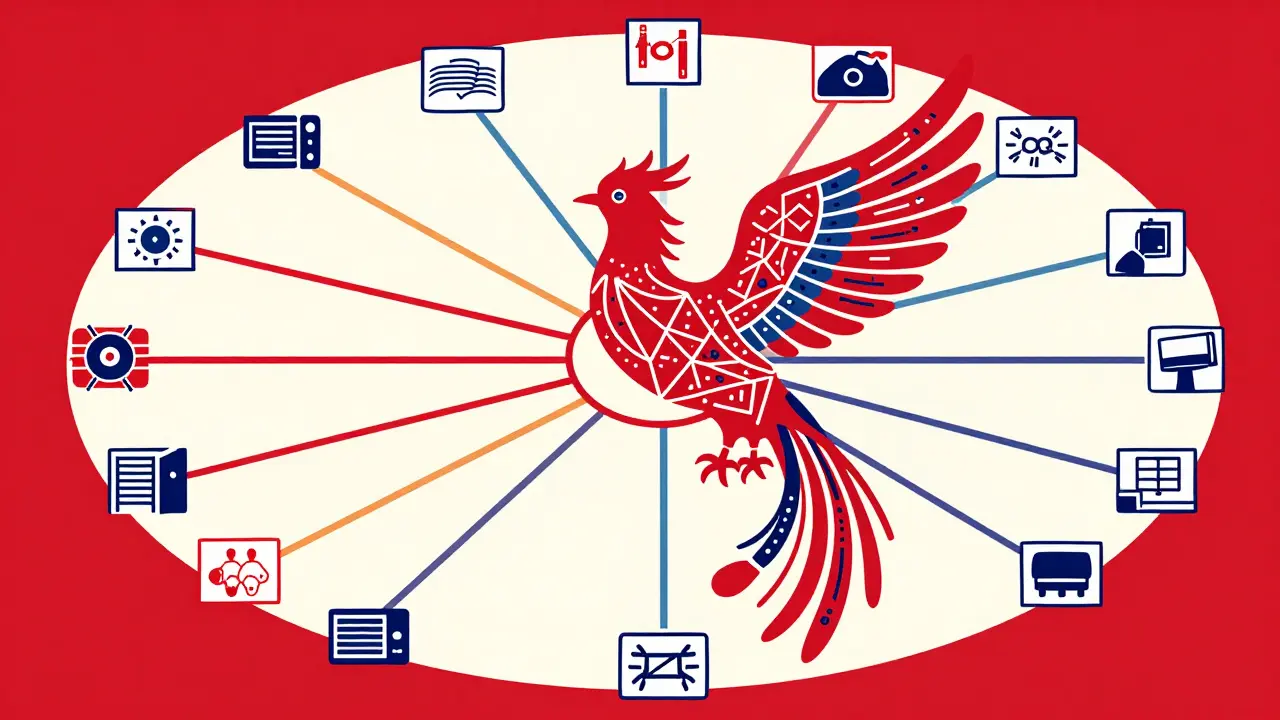
Finding the best price for a token swap in the decentralized world usually feels like a full-time job. You end up with ten different tabs open, checking prices on Uniswap, then Curve, then maybe a niche chain exchange, only to realize you're losing a chunk of your profit to slippage. This is where Firebird Finance is a multi-chain decentralized finance (DeFi) aggregator that acts as a single gateway to over 140 different decentralized exchanges (DEXs). By using a routing algorithm, it scans the market to find you the cheapest path for your trade, meaning you don't have to manualy hunt for the best rate.
How Firebird Finance Actually Works
At its core, Firebird Finance isn't a standalone exchange where liquidity is held in one pool. Instead, it's an intermediary. Think of it like a travel comparison site, but for crypto swaps. When you want to trade a token, the platform's flagship technology, OneSwap, analyzes the order books and liquidity pools of integrated platforms like Uniswap and Curve to execute the trade where you get the most tokens back.
The system is built for speed and efficiency. The platform claims a "get started in 5 minutes" onboarding process, which is a breath of fresh air for those tired of complex DeFi setups. By aggregating liquidity across multiple blockchains, it reduces the risk of "single-chain dependency," which is a fancy way of saying you aren't stuck if one specific network becomes congested or unstable.
The Token Economy: FBA and HOPE
Most DeFi platforms use a single token, but Firebird uses a dual-token model to separate utility from governance. Understanding the difference is key if you're looking to earn passive income.
- FBA is the primary utility token. Its main job is to facilitate cashback rewards. When you swap tokens through the aggregator, you can earn FBA back, effectively lowering your trading costs.
- HOPE is the governance token. This is where things get interesting for long-term holders. You can lock your HOPE tokens for periods ranging from one week up to four years to receive mHOPE.
Holding mHOPE gives you two major perks: voting power on how the platform evolves (1 mHOPE = 1 vote) and a slice of the trading fees generated by the OneSwap exchange. However, if you're looking at the charts today, you'll notice a red flag: current trading data for HOPE shows zero volume and price on some trackers. This suggests that while the architecture is there, the actual market liquidity for the token is currently struggling, which is a significant risk for speculators.
| Feature | Firebird Finance | Standard DEX Aggregators |
|---|---|---|
| Integrated DEXs | 140+ | Varies (usually 20-60) |
| Reward System | Dual-token Cashback (FBA) | Usually none or single token |
| Yield Tools | Farms-as-a-Service & Vaults | Direct LP Provision |
| Governance | mHOPE Locking Mechanism | Standard Token Voting |
Beyond Swapping: Vaults and Farming
If you're not just trading but looking to grow your portfolio, Firebird offers a few tools that move beyond simple swaps. The first is Farms-as-a-Service. For those who find manual yield farming-moving assets between pools and claiming rewards-too tedious, this feature automates the process across multiple chains. It's essentially an automated strategy layer that lets you chase the best yields without spending your whole day staring at a screen.
Then there are the secure vaults. These act as storage hubs where you can park your assets while still earning a return. The combination of cross-chain liquidity and automated farming makes the platform appealing to users who want the benefits of DeFi without the PhD-level knowledge of how every single smart contract works.

How It Stacks Up Against the Competition
Firebird is entering a crowded room. You have giants like 1inch and ParaSwap who have been dominating the aggregator space for years. Compared to them, Firebird's main edge is the sheer number of integrated exchanges (140+) and the cashback incentive via FBA.
However, trust in DeFi is built on transparency and activity. While community sentiment is overwhelmingly bullish (around 86% based on RootData votes), the lack of trading volume for the HOPE token creates a contradiction. A platform can have a great UI and a brilliant routing algorithm, but if the native token isn't liquid, the incentive to "lock and earn" becomes a gamble rather than a strategy.
The Verdict: Who is this for?
If you're a DeFi power user who trades across five different chains and is tired of high slippage, Firebird Finance is a powerful tool. The ability to access 140+ DEXs from one dashboard is a genuine productivity win. The cashback feature is a nice cherry on top for those who trade high volumes.
But if you're a beginner, be careful. Cross-chain operations still carry risks, and the current state of the HOPE token means you shouldn't treat this as a safe "savings account." It's a high-utility tool for swapping, but as an investment vehicle, it requires a much more cautious approach.
What is the difference between FBA and HOPE tokens?
FBA is a utility token used for cashback rewards on swaps. HOPE is a governance token that can be locked to become mHOPE, granting voting rights and a share of the platform's trading fees.
How many exchanges does Firebird Finance aggregate?
Firebird Finance integrates over 140 decentralized exchanges (DEXs), including major platforms like Uniswap, Curve, and Balancer, to find the best possible swap rates.
Is Firebird Finance suitable for beginners?
Yes, it features an intuitive interface designed for a 5-minute setup. However, users should still understand the basics of multi-chain wallets and gas fees to avoid mistakes.
What is mHOPE and how do I get it?
mHOPE is a modified version of the HOPE token. You get it by locking your HOPE tokens for a set period, ranging from one week to four years.
What are the risks associated with Firebird Finance?
The primary risks include the low trading volume of the HOPE token and the general smart contract risks associated with interacting with over 140 different external DEXs.
Kathleen Bergin
April 23, 2026 AT 05:08Everyone knows that 1inch is way better than this because they actually have the volume to back up their claims.
Mike Krasner
April 23, 2026 AT 05:43imagine actually believing a routing algorithm saves you money when the gas fees on these chains eat your whole portfolio anyway lol
Gloris Young
April 24, 2026 AT 02:43This looks like a handy tool for anyone trying to simplify their DeFi journey. Appreciate the breakdown!
Keith Garcia
April 24, 2026 AT 08:27The sheer audacity of presenting a token with zero volume as a viable investment vehicle is truly breathtaking 🙄. It is an absolute travesty that we still entertain these phantom economies in the name of innovation. My intellect recoils at the thought of "locking" assets into a void 🌌. Simply pedestrian 💅.
Tara Aman
April 25, 2026 AT 00:54I totally agree that the cashback part sounds like a great way to keep trading costs down! Let's see if it actually helps in the long run!
Benjamin Forg
April 26, 2026 AT 17:52who really thinks these aggregators arent just honeypots for the elites to track every single swap we make across chains no one is safe when the code is a black box
Matthew Morse
April 28, 2026 AT 12:45too many dexs just means more points of failure for a bridge hack to wipe you out
Jagdish Sutar
April 29, 2026 AT 05:06It is wonderful to see tools that make DeFi more accessible to people from all backgrounds. The automated farming could really help those who are just starting to learn about yield strategies. Welcome to the ecosystem everyone!
Alex Wan
April 29, 2026 AT 12:37OH MY GOODNESS! This is laandmarky shift in how we percieve liquidity! It is truly an exultant time to be involved in the blockchain revolution!! I am simply overhwhelmed by the possiblity of inclusive finance for all mankind!
We must embrace this technolgy with open arms and guidance for the uninitated! It is simply divine that we can now reduce slippge across so many chains!! My heart beats fast just thinking about the efficiency gains! Truly a marvel of modern enginerring! Let us all collaborate to make this work for every single person regardless of thier starting point! It is a glorious new dawn for DeFi!!
Alex Hunter
April 30, 2026 AT 10:27If you are new to this, just remember that "automated" doesn't always mean "safe." It is a great way to save time, but make sure you double-check the vault audits before putting in a significant amount of capital. A little caution goes a long way in this space.