Future of Under-Collateralized DeFi Loans: How DeFi Is Breaking Free From Overcollateralization
 Dec, 12 2025
DeFi Loan Collateral Calculator
Calculate Your DeFi Loan Collateral
See how much crypto you need to lock as collateral for a loan based on current and future DeFi lending ratios.
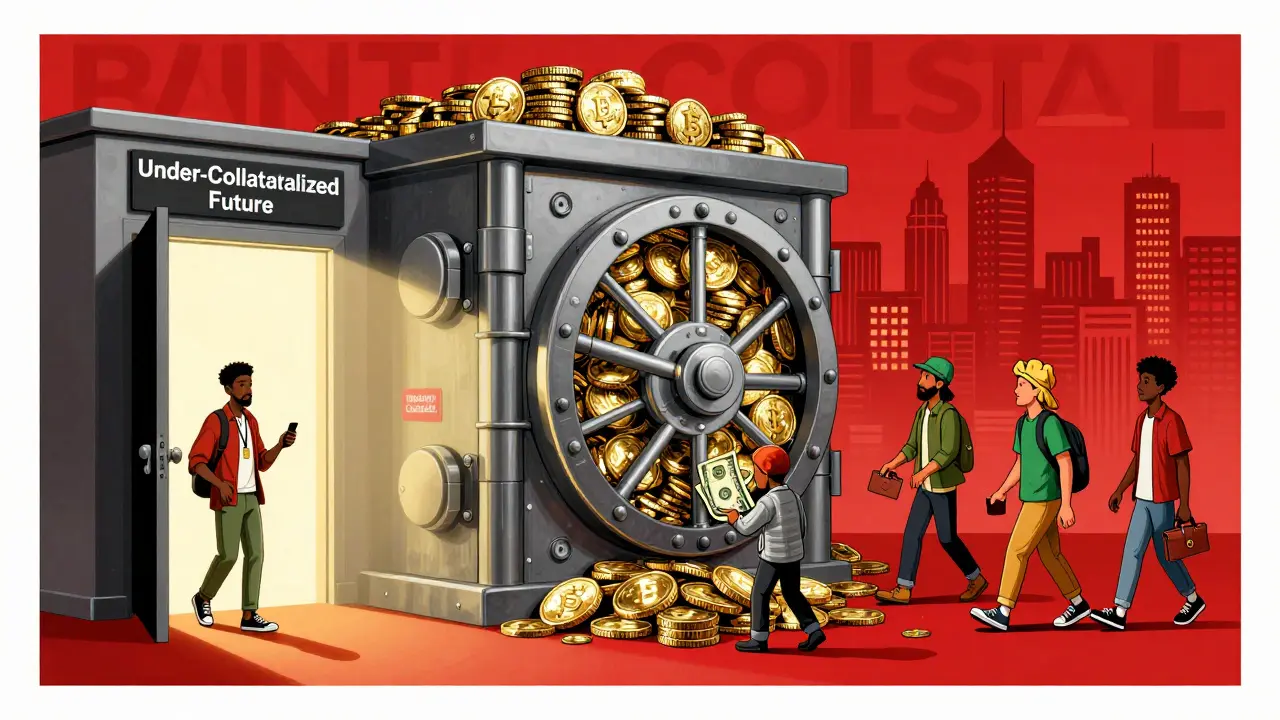
Right now, if you want to borrow $10,000 in DeFi, you need to lock up at least $12,500 in crypto as collateral. That’s the rule on Aave, Compound, and almost every major lending platform. It’s safe-but it’s also broken. Why? Because if you needed that $10,000 loan in the first place, you probably didn’t have $12,500 in crypto to spare. That’s the paradox at the heart of today’s DeFi lending: it only works for people who already have plenty of crypto. And that’s not financial inclusion. That’s exclusion dressed up in blockchain code.
The Overcollateralized Trap
DeFi lending was supposed to be the democratized alternative to banks. No credit checks. No paperwork. Just smart contracts. But the system we got demands you prove you’re rich before you can borrow. It’s like a bank saying, “We’ll give you a mortgage-if you already own three houses.” The numbers don’t lie. As of Q1 2025, DeFi lending protocols held over $25 billion in total value locked. That sounds huge-until you compare it to the $178 billion in unsecured personal loans in the U.S. alone. Credit cards, student loans, and personal lines of credit serve hundreds of millions of people globally. DeFi serves maybe a few hundred thousand. And most of them aren’t borrowing to buy groceries or pay rent. They’re borrowing to buy more crypto. It’s a loop: deposit ETH, borrow USDC, buy more ETH, deposit it again. Leverage stacking. Not financial access. This isn’t innovation. It’s optimization for the already privileged.Why Under-Collateralized Loans Are the Next Big Thing
Under-collateralized DeFi loans mean borrowing $10,000 with only $5,000-or even $1,000-as collateral. Or no collateral at all. Sounds risky? It is. But traditional finance does it every day. Banks lend you money based on your income, job history, and credit score. DeFi doesn’t have access to any of that. Yet. The breakthrough isn’t in the loan-it’s in the data. Technologies like DECO is a privacy-preserving protocol that allows smart contracts to verify off-chain data-like bank statements or employment records-without exposing the raw data itself. DECO lets DeFi protocols ask: “Can you prove you earn $60,000 a year?” without seeing your pay stub. No KYC. No central authority. Just cryptographic proof. Imagine this: You’re a freelance developer in Nigeria. You get paid in USDT every month. You’ve never had a bank account. But your wallet has 18 months of consistent deposits. A DeFi protocol could analyze your on-chain behavior-transaction frequency, stablecoin holdings, repayment history-and assign you a reputation score. No ID needed. No bank. Just code. That’s not science fiction. It’s already being tested in pilot programs by teams at Chainlink and other infrastructure providers. The goal? To build a system where your digital footprint becomes your credit score.How Under-Collateralized Lending Works (Without Trust)
The biggest fear around under-collateralized loans is default. If you don’t lock up enough collateral, what stops someone from borrowing $100,000 and disappearing? Current solutions combine three layers:- On-chain reputation systems - Track your past loan behavior. Did you repay on time? Did you borrow often? Your wallet’s history becomes your credit history.
- Off-chain data verification - Tools like DECO or Chainlink Oracles let protocols verify income, employment, or tax filings without touching personal data.
- Insurance pools - Borrowers pay a small fee into a shared insurance fund. If someone defaults, the fund covers the loss. Lenders get higher yields because they’re compensated for risk.

Who Benefits? Everyone Except the Middlemen
Under-collateralized DeFi doesn’t just help borrowers. It helps lenders too. Right now, lenders in DeFi earn 3-8% APY on stablecoins. It’s safe, but low. With under-collateralized loans, lenders can earn 10-15% by taking on calculated risk. The insurance pool absorbs the losses. The protocol uses algorithmic pricing to adjust rates based on borrower reputation. High-reputation borrowers get lower rates. Low-reputation borrowers pay more. It’s fair. It’s dynamic. It’s market-driven. And for the unbanked? It’s life-changing. A farmer in Indonesia with a smartphone and a crypto wallet could get a $500 loan to buy seeds. A student in Brazil could borrow $2,000 for tuition without a co-signer. A small business owner in Mexico could access working capital without a bank branch in sight. This is the original promise of DeFi: open access. Not for the wealthy. For everyone.The Roadblocks Are Real
This isn’t easy. The biggest challenge? Building trust without identity. Reputation systems can be gamed. Sybil attacks-where one person creates hundreds of wallets-are a real threat. That’s why protocols are combining on-chain behavior with off-chain data. A wallet that shows 12 months of consistent income from a verified employer is harder to fake than one that just receives random deposits. Regulators are watching. If DeFi starts offering unsecured loans without KYC, governments will push back. The U.S. SEC, EU’s MiCA, and other bodies will demand accountability. The industry’s response? Self-regulation. Reputation scores tied to verified data. Transparent default rules. Insurance pools audited on-chain. Another problem: liquidity. Right now, lenders want safety. They’ll put money into Aave because it’s backed by 150% collateral. Convincing them to lend to someone with 50% collateral requires better risk modeling-and better education.
What’s Next? The Hybrid Future
The future isn’t all or nothing. It’s a spectrum. You might start with 125% collateral. Then, after three on-time repayments, your requirement drops to 100%. Then 75%. Then 50%. Your reputation grows. Your access grows. Your interest rate drops. It’s like a credit card that rewards you for paying on time-except it’s automated, global, and open to anyone with a wallet. We’ll see hybrid protocols emerge: some loans fully collateralized, some partially, some not at all. Users choose based on their risk tolerance and reputation. Lenders choose based on yield and safety. By 2027, under-collateralized DeFi lending could handle $5 billion in loans. By 2030? $50 billion. That’s not a stretch. It’s just the next step in the evolution of money.Final Thought: It’s Not About Crypto. It’s About Access.
The real revolution isn’t blockchain. It’s not smart contracts. It’s not even yield farming. It’s access. DeFi’s biggest failure so far is that it didn’t serve the people who needed it most. It served those who already had wealth. Under-collateralized lending flips that. It says: “You don’t need to own crypto to use it. You just need to be trustworthy.” That’s not just better finance. That’s fairer finance.What is an under-collateralized DeFi loan?
An under-collateralized DeFi loan is a loan where the borrower puts up less collateral than the loan amount-sometimes significantly less. For example, borrowing $10,000 with only $3,000 in crypto as security. This contrasts with traditional DeFi loans, which require 125-200% collateral. Under-collateralized loans rely on reputation, on-chain behavior, and off-chain data verification instead of massive collateral to manage risk.
Why don’t current DeFi platforms offer under-collateralized loans?
Current platforms like Aave and Compound use over-collateralization because they have no way to verify a borrower’s income, credit history, or intent. Without trusted data sources, the only way to prevent defaults is to demand more collateral than the loan value. Under-collateralized lending requires new tools-like DECO or Chainlink Oracles-that can securely verify off-chain data without breaking decentralization. These are still being developed and tested.
How can DeFi lend without KYC and still be safe?
DeFi uses reputation and behavior instead of identity. If your wallet has a history of timely repayments, consistent income deposits, and active participation in DeFi protocols, you build a trust score. Tools like DECO let protocols verify your real-world income without seeing your personal documents. Insurance pools cover losses from defaults, and bad actors are blacklisted across platforms. It’s not perfect-but it’s working in early tests.
Who is most likely to benefit from under-collateralized DeFi loans?
The unbanked and underbanked-people without access to traditional banks. This includes freelancers in emerging markets, gig workers, small business owners in regions with weak financial infrastructure, and even crypto holders who don’t want to sell their assets but need cash. It also benefits lenders seeking higher yields than what stablecoin savings offer today.
Will under-collateralized DeFi loans be regulated?
Yes, eventually. Regulators are already watching DeFi closely. If under-collateralized lending grows, authorities will demand transparency, risk controls, and consumer protections. The industry’s best defense is building self-regulating systems: auditable insurance pools, reputation-based lending, and verifiable data. Protocols that act responsibly now will have a better chance of gaining legal acceptance later.
Can I try under-collateralized DeFi loans today?
Not widely yet. A few experimental protocols are testing the concept in private or limited public tests, but no mainstream platform offers it to everyone. Keep an eye on projects building on Chainlink’s DECO, Morpho’s reputation systems, or Nexus Mutual’s insurance models. The first public launch is expected in late 2026 or early 2027.
Patricia Whitaker
December 13, 2025 AT 08:46Wow. So now we’re just gonna pretend that credit scores don’t exist because crypto? Cool. I’ll believe it when I see a Nigerian freelancer get a $500 loan without a single KYC step and not get rug-pulled by the ‘reputation score’ algorithm that’s probably trained on 300 white guys in Austin. This is just Wall Street with a blockchain hoodie.
Jessica Eacker
December 14, 2025 AT 08:52I’ve been watching this space for years and honestly? This is the first time DeFi feels like it might actually mean something for people who aren’t just flipping ETH. The reputation system idea? Genius. No ID needed, just proof you show up and pay. That’s how you build trust in a world that’s been built on exclusion. I’m not saying it’s perfect but it’s the first real step toward financial dignity for billions. Keep building.
Candace Murangi
December 14, 2025 AT 11:55My cousin in Manila runs a tiny food stall. She uses crypto to get paid by tourists. No bank. No credit card. Just a phone and a wallet. I showed her this article and she just laughed and said, ‘So you’re saying I can borrow money to buy more rice without showing my passport?’ I told her yeah, maybe soon. She said, ‘Then I’ll start repaying in lumpia.’ That’s the future right there. No jargon. Just food, trust, and a smartphone.
Albert Chau
December 14, 2025 AT 18:32Undercollateralized loans? More like under-responsible loans. You think a reputation score can’t be gamed? Try 100 wallets funded by one person with a bot farm. And ‘insurance pools’? That’s just a fancy way of saying ‘we’re all gonna lose money together.’ This isn’t innovation. It’s a Ponzi with a whitepaper.
Abhishek Bansal
December 14, 2025 AT 20:52lol this whole thing is just a bank but now you get banned from crypto instead of getting sued. who cares. i’ll just use my 500 wallets to get free usdc. game over.