How Crypto Exchanges Detect and Block Multi-Layered VPN Usage
 Mar, 2 2026
When you use a VPN to access a crypto exchange like Binance or Coinbase from a country where trading is restricted, you might think you’re invisible. But you’re not. Crypto exchanges don’t just check your IP address anymore-they watch everything. Your typing rhythm. Your login times. Your browser settings. Even how your mouse moves. This isn’t science fiction. It’s real, and it’s getting smarter every day.
Why Crypto Exchanges Block VPNs
Crypto exchanges aren’t blocking VPNs because they hate privacy. They’re doing it because governments are forcing them to. Countries like China, Russia, and Turkey have banned or heavily restricted cryptocurrency trading. If an exchange lets users from those regions trade using a VPN, it risks fines, legal action, or being shut down entirely. So exchanges have to prove they’re following the rules. And that means catching anyone trying to sneak in.It’s not just about legality. It’s about money. A single regulatory penalty can cost millions. Exchanges like Binance and Kraken have teams dedicated to compliance. They’d rather lose a few users than risk losing their entire business.
The Five Layers of VPN Detection
Modern crypto exchanges don’t rely on one trick. They stack detection methods like layers of armor. Here’s how they do it:- IP Address Blacklisting - This is the oldest trick. Exchanges maintain huge lists of known VPN server IPs. If you connect from an IP that’s been flagged as NordVPN, ExpressVPN, or even a lesser-known provider, you’re blocked before you even log in. These lists are updated daily, sometimes hourly.
- Deep Packet Inspection (DPI) - Even if your IP isn’t on the list, your traffic still gives you away. DPI looks at how data flows. VPN traffic has patterns-consistent packet sizes, specific encryption headers, unusual timing. Machine learning models trained on millions of connections can spot these patterns even in encrypted traffic.
- DNS and Time Zone Mismatches - If your IP says you’re in Singapore but your DNS server is in Germany, that’s a red flag. Same with time zones. If you log in at 3 a.m. local time but your trading activity matches U.S. market hours, the system flags you.
- Browser Fingerprinting - Your browser leaks info. Screen resolution, installed fonts, plugins, even how fast your CPU responds. If your fingerprint doesn’t match the location you claim, you’re suspicious. This works even if you’re using a clean browser profile.
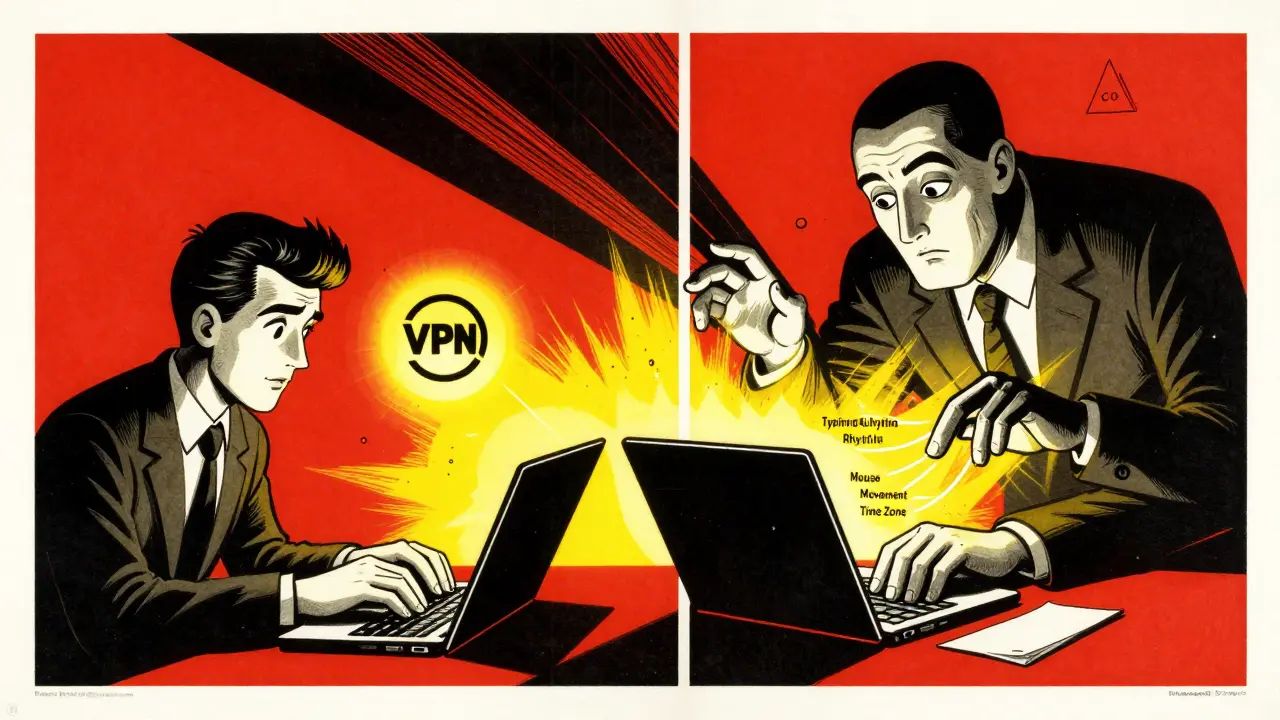
- Behavioral Analysis - This is the newest and most dangerous layer. Exchanges track how you interact with the platform. Do you type fast? Do you hover over buttons? Do you deposit and withdraw within minutes? These patterns are unique to humans-and even more unique to bots or automated tools often used with VPNs.
Together, these layers create a net that’s hard to slip through. One layer might miss you. But if three or four flag you? Your account gets locked.
Which Exchanges Are the Strictest?
Not all exchanges are equal when it comes to VPN detection. Here’s how they stack up:| Exchange | IP Blocking | DPI Enabled | Behavioral Analysis | Device Fingerprinting | Success Rate Against Premium VPNs |
|---|---|---|---|---|---|
| Binance | Yes | Yes | Yes | Yes | 85-90% |
| Coinbase | Yes | Yes | Yes | Yes | 80-85% |
| Kraken | Yes | Yes | Yes | Yes | 75-80% |
| Bybit | Yes | Partial | Partial | Yes | 60-70% |
| LocalBitcoins | Minimal | No | No | No | 10-20% |
Binance leads the pack. It uses every tool available, including machine learning models trained on millions of flagged sessions. Coinbase follows closely, with strong integration between KYC data and network behavior. Kraken is slightly less aggressive but still highly effective. Smaller exchanges like Bybit are catching up, but LocalBitcoins and other P2P platforms still operate with minimal detection-partly because they rely on peer-to-peer trust, not centralized control.
Can You Beat It?
Some users swear they’ve found a way around detection. They switch servers. They use Double VPN. They route traffic through Tor. But here’s the truth: most of these tricks don’t work anymore.Double VPN? Binance sees it. The traffic pattern is too predictable. Tor over VPN? Exchanges now recognize Tor exit node signatures. Even premium services like NordVPN and ExpressVPN have high failure rates-especially on Binance and Coinbase. Users report getting blocked within minutes of connecting, even on paid plans.
Free VPNs? Forget it. They’re almost 100% blocked. Their IPs are shared, outdated, and listed in every exchange’s database. Plus, they often leak DNS or have poor encryption-making them easy to catch.
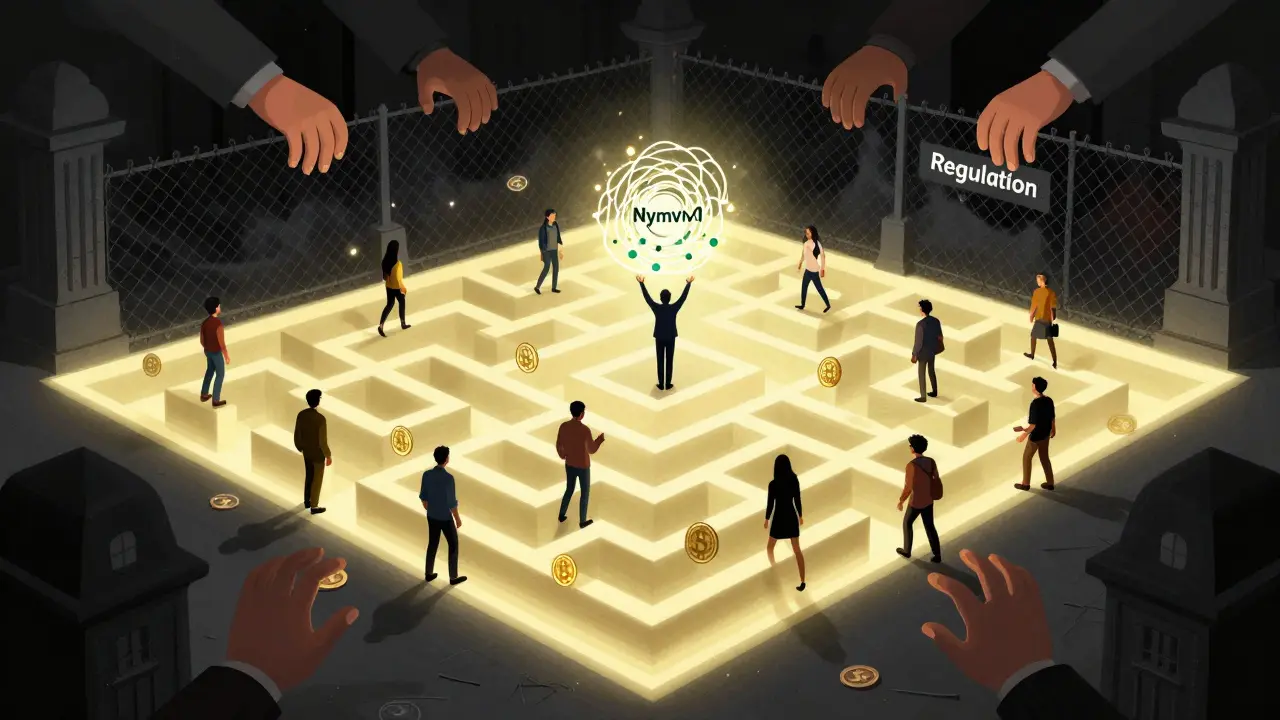
The only services that still have a fighting chance are niche privacy-focused networks like NymVPN is a decentralized mixnet-based privacy network that routes traffic through hundreds of community-run nodes, making it nearly impossible for centralized systems to trace origin points. Unlike traditional VPNs, Nym doesn’t use fixed IPs. It scrambles traffic across a mesh network. It’s slow. It’s complex. But it’s designed to defeat exactly what exchanges are trying to detect.
What Happens When You Get Caught?
Getting flagged doesn’t mean instant deletion. Usually, it starts with a warning: “Suspicious activity detected. Verify your identity.”If you’ve completed KYC, they’ll ask for more documents. If you haven’t? Your account gets frozen. Deposits stop. Withdrawals get delayed. Sometimes, they’ll ask you to log in from your home country. If you can’t? You’re locked out.
Some users report losing funds entirely after repeated detection attempts. Exchanges aren’t supposed to do this-but in gray regulatory zones, they often do. There’s no appeal process. No customer service hotline. Just silence.
The Future: AI, Biometrics, and Decentralized Exchanges
The arms race isn’t slowing down. Next up:- Typing Biometrics - Exchanges are testing software that analyzes how you type your password. Your rhythm is unique. Even if you use a different device, your typing pattern stays the same.
- Mobile Device Tracking - If you log in from a VPN but your phone’s GPS says you’re in a different country, you’re flagged. Two-factor authentication now checks location across devices.
- Blockchain Forensics - If your wallet has ever interacted with a known darknet market or a flagged exchange, that history follows you-even if you change IPs.
Meanwhile, decentralized exchanges (DEXs) like Uniswap or PancakeSwap don’t care about your location. No KYC. No IP checks. No tracking. That’s why they’re growing fast in restricted countries. But regulators are catching on. Some governments are now targeting wallet providers and DeFi protocols. The next wave of detection might not be on exchanges-it might be on your wallet.
What Should You Do?
If you’re in a restricted country:- Don’t rely on free or mainstream VPNs. They’re dead ends.
- Use a DEX if you can. They’re harder to regulate.
- Keep your KYC documents updated. If you’re flagged, having verified identity helps.
- Don’t mix personal and trading accounts. One flagged device can ruin both.
- Understand the risk. If you’re caught, you might lose access permanently.
There’s no perfect solution. The system is designed to make bypassing hard. The question isn’t whether you can beat it-it’s whether the risk is worth it.
Can crypto exchanges detect if I’m using a VPN even if I have a premium service like NordVPN?
Yes. Premium services like NordVPN and ExpressVPN are still detected by major exchanges like Binance and Coinbase. These platforms maintain updated lists of known VPN IPs and use deep packet inspection to identify encrypted traffic patterns. Even if your IP isn’t blocked, your connection behavior-like unusual login times or mismatched DNS-can trigger detection. Success rates for premium VPNs are dropping below 20% on the strictest exchanges.
Why do some exchanges allow VPNs while others block them?
It depends on their regulatory exposure. Exchanges based in the U.S., EU, or Singapore face strict rules and must comply with regional laws. Blocking VPNs helps them avoid fines. Smaller or offshore exchanges, especially those operating in unregulated markets, may not have the infrastructure or legal pressure to enforce detection. Some even encourage it to attract users from restricted countries.
Do I need to worry about VPN detection if I only trade on decentralized exchanges (DEXs)?
Not directly. DEXs like Uniswap or PancakeSwap don’t require login, KYC, or IP checks. But if you use a centralized wallet (like MetaMask) that’s linked to your real identity or has a history tied to a flagged IP, regulators could still trace activity back to you. The detection risk shifts from the exchange to your wallet and transaction patterns.
Can a VPN hide my wallet address from being tracked?
No. Wallet addresses are recorded on public blockchains. A VPN changes your IP, not your transaction history. If your wallet has ever interacted with a regulated exchange, that history stays. Exchanges can now link wallet activity to geographic patterns-even if you switch IPs. Your wallet is traceable regardless of your network setup.
What happens if I get my account banned for using a VPN?
Your account will likely be frozen. Deposits and withdrawals stop. You may be asked to verify your identity with additional documents. If you can’t prove you’re in a permitted region, your funds may remain locked indefinitely. Most exchanges don’t offer appeals, and customer support often ignores requests from flagged accounts.
VPN detection by crypto exchanges isn’t going away. It’s getting better. The only real escape is moving to decentralized systems-but even those are under pressure. Stay informed. Stay cautious. And remember: if something feels too easy to bypass, it probably isn’t.
Amanda Markwick
March 3, 2026 AT 05:20Honestly, this post hits right in the soul. I used to think VPNs were just a tool for privacy, but now I see them as a digital arms race we didn’t ask for. It’s not about breaking rules-it’s about surviving in a world where your behavior is mined like ore. I’ve switched to a DEX and honestly, it’s liberating. No forms. No anxiety. Just me and the blockchain. It’s raw. It’s real. And yeah, it’s slower. But I’d rather be free than compliant.
Also, NymVPN? Game changer. Not perfect, but it’s the first thing that doesn’t feel like a trap. The mesh network thing? It’s like whispering through a crowd instead of yelling into a microphone.
We’re not hackers. We’re just people trying to keep our money safe from overreaching systems. And that’s not wrong.
Keep pushing for decentralization. The future isn’t in bypassing-it’s in rebuilding.
Nicki Casey
March 3, 2026 AT 07:18It is profoundly disingenuous to suggest that individuals seeking to circumvent state-sanctioned financial controls are acting in good faith. The United States, along with its allied regulatory bodies, has established a framework predicated on transparency, accountability, and the rule of law. To deliberately obfuscate one’s geographic origin via layered obfuscation technologies is not an exercise in privacy-it is an act of civil disobedience masquerading as personal liberty. Moreover, the normalization of such behavior erodes the very foundations of international financial compliance. Binance’s detection mechanisms are not merely technical-they are moral. The fact that users perceive these systems as adversarial reveals a deeper cultural rot: the belief that anonymity trumps responsibility. This is not innovation. This is evasion. And evasion, when systemic, becomes corruption.
Let us not confuse the right to privacy with the right to evade oversight. The two are not synonymous. One is a pillar of democracy. The other is a loophole exploited by those who wish to operate beyond the reach of democratic institutions.
maya keta
March 4, 2026 AT 10:27OMG I just had a full-on epiphany reading this. Like, I knew crypto exchanges were sneaky, but I didn’t realize they were *this* deep. We’re talking neural net behavioral profiling now-like, they’re building a psychological profile of you based on how you hover over the sell button. That’s not surveillance, that’s *psychological warfare*. And don’t even get me started on DNS mismatches-my brain literally exploded when I read that. I’ve been using ExpressVPN for years and I’m still getting flagged? BRO.
But here’s the tea: NymVPN is the only real move. It’s not even a VPN. It’s a decentralized ghost network. Like, your traffic gets chopped into 127 pieces and shuffled through 300 random nodes run by stoners in Latvia and grad students in Osaka. No IP. No pattern. No fingerprint. Just chaos. And chaos is the new privacy. I’m switching tomorrow. Also, if you’re still using MetaMask with a KYC’d wallet? You’re basically giving them your birth certificate in a digital envelope. Stop. Just stop.
Curtis Dunnett-Jones
March 5, 2026 AT 20:47The sophistication of modern cryptocurrency exchange compliance systems represents a paradigm shift in digital identity verification. The integration of behavioral biometrics, deep packet inspection, and blockchain forensics constitutes a multi-layered defense architecture that is both technically robust and legally defensible. It is imperative to recognize that these mechanisms are not punitive in nature; rather, they are necessary safeguards against systemic financial risk. The notion that users can evade detection through consumer-grade VPN services is not only technologically naive but economically irresponsible. The cost of regulatory non-compliance, as evidenced by recent enforcement actions against major platforms, exceeds hundreds of millions of dollars annually. Therefore, the deployment of these detection protocols is not merely prudent-it is existential for the continued operation of licensed entities. Users who persist in circumventing these controls are not exercising privacy rights-they are exposing themselves to irreversible financial and legal consequences. The solution lies not in evasion, but in adaptation: embrace decentralized infrastructure, maintain strict operational hygiene, and recognize that the future of finance is permissionless, not clandestine.
Sean Logue
March 7, 2026 AT 19:45Yo, I’ve been using Binance from Thailand for like 3 years. I used to think NordVPN was magic. Then one day-poof. Account locked. No warning. No email. Just ‘suspicious activity.’
Turns out, my laptop’s keyboard layout was set to US English, but I was logging in at 2 a.m. Bangkok time. That’s what did me in. Not the IP. Not the DNS. Just… typing. Like, my fingers have a signature now. That’s wild.
Switched to Phantom wallet + Uniswap. No login. No KYC. Just send ETH, swap, go. Took me a week to get used to it. But now? I feel way safer. No one’s watching me type. No one’s tracking my mouse. Just me, my seed phrase, and a whole lot of peace of mind.
PS: If you’re still using a VPN to access DEXs? You’re overcomplicating it. DEXs don’t care where you are. Your wallet does.
Colin Lethem
March 8, 2026 AT 18:08Wait, so if my typing rhythm is unique, does that mean my ‘lazy’ typing style-where I mash the spacebar instead of hitting it properly-makes me look like a bot? Because I type like a confused raccoon on a keyboard. Would that get me flagged? Also, what if I just use voice-to-text? Would they detect the cadence of my voice? This is getting into Black Mirror territory.
lori sims
March 8, 2026 AT 20:54I love how this post reads like a spy thriller but also a user manual. It’s terrifying and beautiful at the same time. We’re living in a world where your coffee order, your mouse scroll speed, and your sleep schedule are all being used to decide if you’re ‘allowed’ to own money.
And yet… I still believe in the weird, beautiful chaos of crypto. Not because it’s easy. But because it’s honest. You can’t lie to a blockchain. It just records. No judgment. No bias. Just truth.
I use a DEX. I use a hardware wallet. I don’t care if they know I’m in the Philippines. I care that they can’t freeze what’s mine.
Let them track my keystrokes. I’ll keep moving my coins.
Reggie Fifty
March 9, 2026 AT 22:44This is exactly what happens when you let anarchists with laptops run financial systems. The U.S. government has spent decades building a regulatory infrastructure to prevent money laundering, tax evasion, and illicit activity-and now we have a bunch of tech bros acting like they’re in a cyberpunk RPG, thinking they can outsmart sovereign nations with a $5/month VPN. It’s not just stupid. It’s dangerous. You think NymVPN is magic? It’s probably a front for Russian intelligence. Or Chinese. Or both. Every ‘privacy tool’ is a backdoor if the right people are behind it. You’re not protecting your assets-you’re handing them over to someone worse. And when your wallet gets drained, don’t come crying to me.
Kristi Emens
March 11, 2026 AT 10:19Thanks for writing this. It’s rare to see the human side of compliance explained so clearly. I used to work in fintech compliance, and I can confirm: the pressure on exchanges is insane. One misstep, and the whole company collapses. Thousands of jobs gone. Pension funds frozen. It’s not about control-it’s about survival.
That said, I’m not convinced the current system is sustainable. Behavioral tracking is invasive. It’s not just about fraud-it’s about profiling. What happens when this data gets sold? When it’s used for credit scoring? When it’s used to deny loans based on your typing speed?
I’m not advocating for evasion. I’m advocating for transparency. If exchanges are going to monitor us, they should be required to disclose exactly what they collect, how it’s used, and how long it’s stored. Otherwise, we’re not building a financial system. We’re building a surveillance state with crypto logos on it.