How to Avoid Crypto Restrictions in Russia in 2026
 Jan, 28 2026
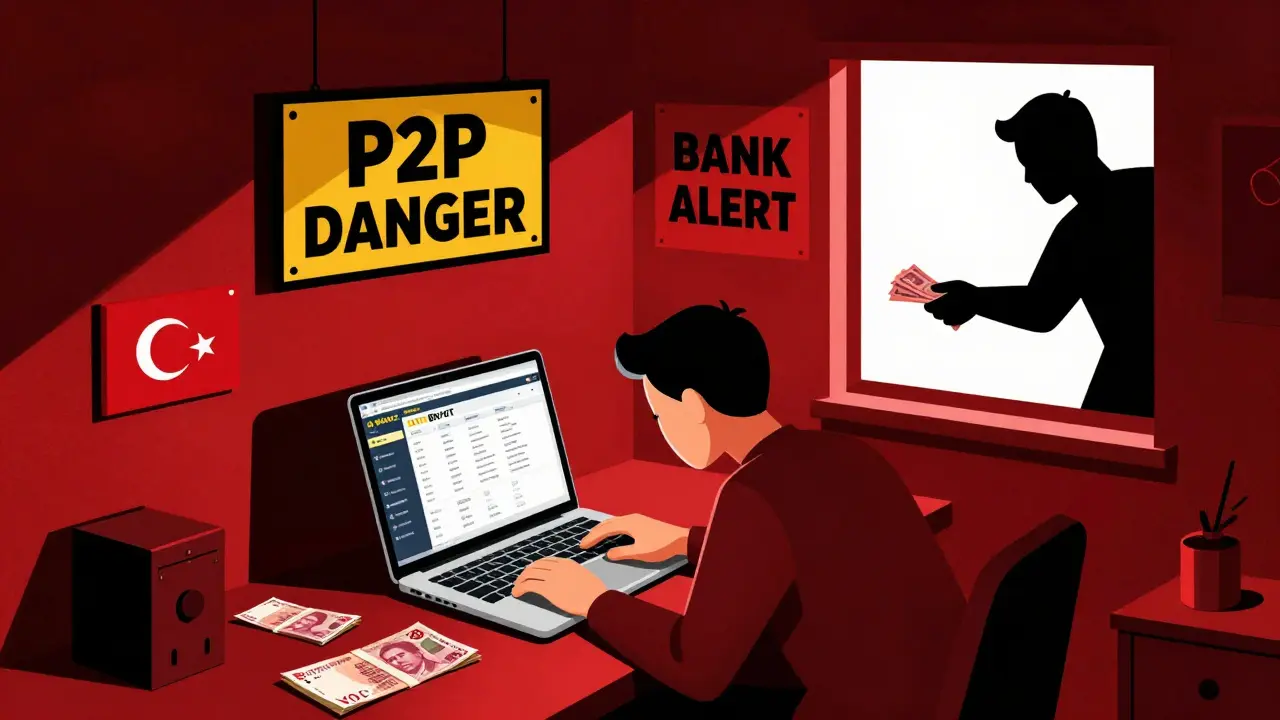
If you're in Russia and trying to use cryptocurrency, you're not breaking the law just by holding Bitcoin or Ethereum. But if you try to buy, sell, or trade it locally? You're walking into a legal minefield. The Russian government doesn't ban owning crypto - it bans using it. And the rules aren't just confusing. They're actively enforced.
What’s Actually Illegal in Russia Right Now?
The Central Bank of Russia doesn’t want you using Bitcoin to pay for groceries, send money to family abroad, or trade on local exchanges. Since 2020, the Digital Financial Assets Law made it clear: crypto isn’t legal tender. But what most people don’t realize is that the ban isn’t just about payments. It’s about control.Here’s what gets you flagged:
- Using peer-to-peer (P2P) platforms like LocalBitcoins or Paxful to buy crypto with rubles
- Depositing crypto into a Russian exchange - there are almost none left anyway
- Withdrawing cash from an ATM after a crypto deposit, especially if it’s over ₽50,000 in a day
- Using QR codes instead of cards for payments - this triggers fraud alerts
- Transferring over ₽200,000 via the Faster Payments System after buying crypto
Banks are required to freeze accounts for 48 hours if any of these patterns show up. And fines? Up to 200,000 rubles (about $2,200) for illegal mining. That’s not a warning. That’s a penalty.
So How Do People Still Use Crypto in Russia?
Simple: they use foreign platforms. And they do it quietly.Most Russians who trade crypto use international exchanges like Binance, Kraken, or Bybit. They fund their accounts with rubles through P2P trades on platforms like OKX or Bybit’s peer-to-peer market - but they never do it through a Russian bank. Instead, they use third-party payment processors, crypto-to-cash services abroad, or even cash deposits at foreign ATMs.
Here’s how one user in Novosibirsk does it: he buys USDT on Bybit using a Turkish crypto-to-cash service. He gets cash delivered to a friend in Istanbul, sends it to a relative in Georgia, and then uses a Georgian bank account to transfer rubles back to his Russian account via a third-party intermediary. It’s slow. It’s messy. But it works.
There’s also a growing underground network of crypto brokers who accept cash in person. You find them through Telegram channels or encrypted forums. They’ll buy your Bitcoin for rubles, but they’ll never do it over the internet. Face-to-face. No digital trail. These brokers operate on trust and cash. One wrong move - a police raid, a tip-off - and you’re out of business.
The State’s Own Crypto: The Digital Ruble and Sanctioned Stablecoins
While regular Russians are blocked from using crypto, the government is quietly building its own version.The digital ruble - set to launch in full rollout by mid-2026 - isn’t just a digital version of cash. It’s a surveillance tool. Every transaction will be tracked, timestamped, and logged by the Central Bank. No anonymity. No bypassing. Just total control.
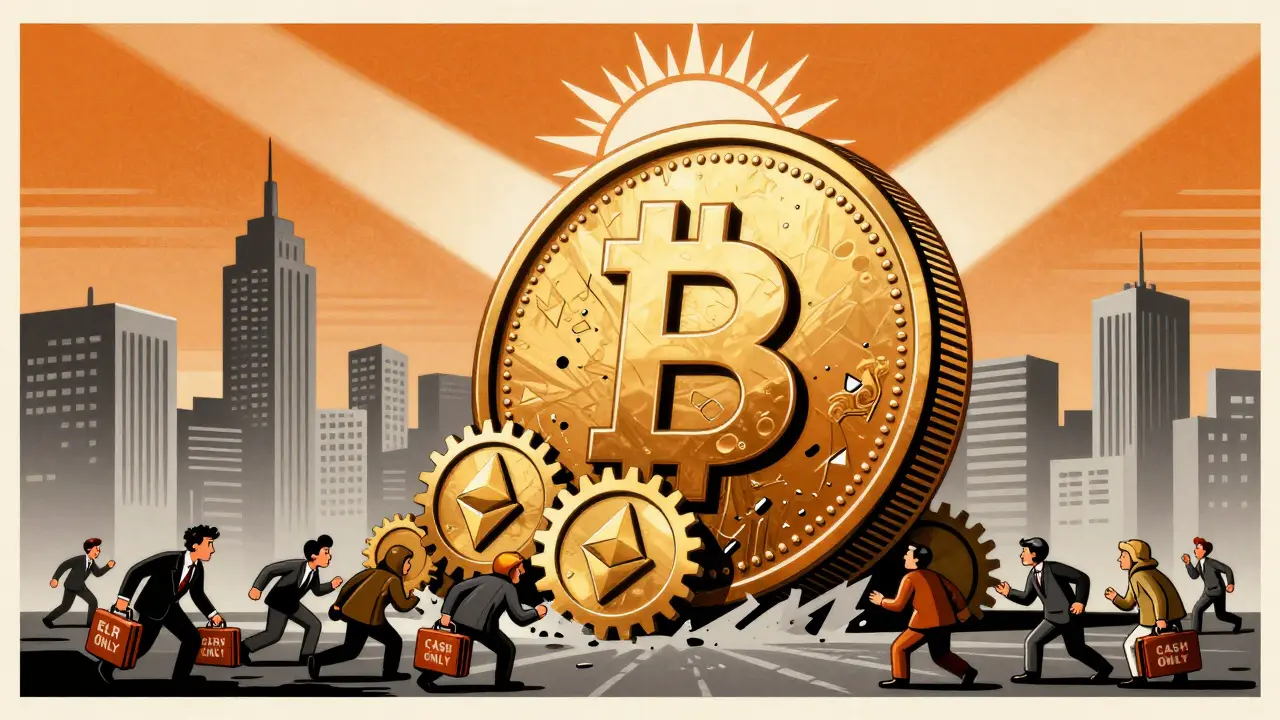
At the same time, Russia has created a legal loophole for big businesses: the Experimental Legal Regime (ELR). This lets approved companies use Bitcoin, Ethereum, and other cryptocurrencies for international trade - but only to bypass Western sanctions. Think of it as a government-sanctioned backdoor.
One of the biggest success stories? A7A5, a ruble-backed stablecoin. In July 2025 alone, it processed $41.2 billion in cross-border transactions. That’s not small change. That’s how Russian oil and gas companies are still getting paid by buyers in India, China, and Turkey. And guess what? Ordinary citizens can’t touch it. Only licensed entities with government approval can use A7A5.
So here’s the reality: the state is using crypto to survive sanctions - but it’s making sure you can’t.
What About Mining? Is That Still Legal?
Yes. Mining is the only crypto activity that’s fully legal - and heavily regulated.Since 2024, Russia has required all mining operations to register with the Federal Tax Service. You need to prove you have a licensed power contract, a business license, and a dedicated server location. No home mining rigs allowed. No hidden rigs in basements.
Why? Because mining uses electricity. And the government wants to control who uses it, how much, and where. Some regions, like Siberia and the Far East, actually encourage mining because they have cheap power. But even there, you need paperwork. And you need to pay taxes on your crypto earnings - in rubles, not Bitcoin.
So if you’re thinking of setting up a mining farm, you can. But you’ll need lawyers, accountants, and a lot of patience.
What’s the Risk of Getting Caught?
The penalties aren’t just financial. They’re personal.In 2025, the U.S. Treasury sanctioned Garantex, one of Russia’s biggest crypto exchanges. Then the Secret Service, working with German and Finnish police, shut down its servers and froze over $26 million in crypto. Two executives were arrested - one in India, the other still on the run.
Now, Garantex’s customers were moved to a new platform called Grinex. But that doesn’t mean it’s safe. The U.S. Department of State is offering up to $5 million for information leading to the arrest of Garantex’s founders. That’s not a warning. That’s a bounty.
And if you’re caught using crypto to send money out of Russia? You could face account freezes, fines, or even criminal charges under anti-money laundering laws. The government doesn’t need proof you’re laundering - just suspicion.

Is There a Legal Way Out?
Yes - but only for a tiny group.The Experimental Legal Regime (ELR) lets “highly qualified investors” - people with over 6 million rubles in assets and a certified financial background - trade crypto derivatives and hold digital assets legally. But this isn’t for students, freelancers, or small business owners. It’s for hedge funds, oligarchs, and state-connected firms.
If you’re not in that group? There’s no legal path to using crypto for daily transactions inside Russia. Not yet.
What’s Coming in 2026?
The digital ruble is the endgame.Once it’s fully live, the Central Bank will have full visibility into every digital transaction in Russia. No more anonymous wallets. No more untraceable transfers. No more crypto bypassing the system.
Some experts believe the finance ministry might push for looser rules - they’ve already asked for broader access to crypto for economic growth. But the Central Bank is digging in. They want total control. And they’re not backing down.
By late 2026, using crypto for anything other than international trade under ELR could become nearly impossible. The digital ruble will replace cash, cards, and crypto as the only legal way to move money.
What Should You Do?
If you’re in Russia and want to keep using crypto:- Use only foreign exchanges - no Russian platforms
- Fund your account with cash or third-party payment services, never direct bank transfers
- Avoid P2P trades that involve Russian banks or ATMs
- Never use crypto to pay for goods or services inside Russia
- Keep records of all transactions - even if you’re not required to
- Don’t trust Telegram groups promising “100% safe” crypto services
And if you’re thinking about moving money out of Russia? Crypto isn’t the easy way anymore. The government is watching. The banks are reporting. The U.S. is hunting. And the digital ruble is coming.
Right now, crypto in Russia isn’t about freedom. It’s about survival. And survival means playing the game by rules you didn’t write - and hoping you don’t get caught.
Jeremy Dayde
January 30, 2026 AT 02:28Man i read this whole thing and just sat there staring at my screen like what the actual fuck is happening in russia
its one thing to regulate money but this is like the government building a prison out of blockchain
they let big corporations use crypto to dodge sanctions but regular people get fined for buying usdt with rubles
its not even about legality anymore its about control
theyre scared of decentralization because it cant be monitored
and now theyre rolling out this digital ruble like its the future when its really just a surveillance tool with a better ui
imagine having every coffee purchase logged by the central bank
no anonymity no privacy just pure digital serfdom
and dont get me started on how theyre punishing miners for using electricity like its some kind of crime
the irony is theyre literally using crypto to survive sanctions while banning everyone else from using it
its like the state is a drug dealer who says you cant buy the product but i can sell it to my friends
and the worst part is theyre gonna make this digital ruble mandatory by 2026
so if you want to buy bread youll need government approved digital cash
no crypto no cash no nothing
just a screen telling you you spent 127 rubles on milk at 14:23 on a tuesday
im not even mad its just terrifying
Steven Dilla
January 31, 2026 AT 07:30THIS IS WHY THE WEST IS WEAK 😤
RUSSIA IS WINNING BY USING CRYPTO TO BYPASS SANCTIONS WHILE BANNING ITS OWN PEOPLE 🤡
THEY’RE NOT LAWFUL THEY’RE HYPOCRITICAL 😡
AND YOU THINK THE U.S. IS BAD? AT LEAST WE DON’T HAVE A DIGITAL RUBLE 🤬
THEY’RE BUILDING A SURVEILLANCE STATE AND CALLING IT ‘FINANCIAL STABILITY’ 🤦♂️
IF YOU’RE IN RUSSIA AND STILL USING CRYPTO YOU’RE A BRAVE SOUL 🙌
THEY’LL ARREST YOU FOR HAVING A MINING RIG IN YOUR BASEMENT BUT LET OIL BARONS MOVE $41 BILLION IN A7A5 🤯
THIS IS NOT GOVERNANCE THIS IS TYRANNY WITH A TECH LAYER 🚨
josh gander
February 1, 2026 AT 07:07Look i know this sounds dystopian but honestly this is the future we’re all hurtling toward
the digital ruble isn’t just a currency its a behavioral lock-in
every time you spend rubles you’re feeding data back to the state
and the worst part? people are gonna get used to it
they’ll say ‘well at least it’s convenient’ and forget what they’ve lost
the fact that miners have to register like they’re running a bakery is wild
like yeah you’re using power but so is every household with a fridge
why single out crypto?
because it’s the only thing they can’t fully own
and the p2p brokers doing cash handoffs in alleys? that’s the real crypto spirit
no exchanges no banks just trust and sweat
and the $5 million bounty on garantex founders? that’s not justice
that’s a war cry from a government that’s losing the ideological battle
if you’re in russia and you’re using crypto quietly
you’re not breaking the law
you’re keeping human freedom alive
and if you think the digital ruble is the endgame
you’re wrong
it’s just the beginning of the resistance
because people will always find a way to move value without permission
even if it means flying to georgia to send cash to a cousin who then wires it back
it’s messy
it’s slow
but it’s free
and that’s worth more than any government-approved blockchain
keep going
you’re not alone
Akhil Mathew
February 2, 2026 AT 02:48Interesting how the russian government is using crypto as a weapon against the west but denying its own citizens the same tools
the digital ruble is clearly designed to replace cash entirely
but why not just allow regulated crypto use instead of forcing people into underground networks?
the p2p cash brokers are the real innovation here
they’re building a parallel financial system out of trust and face-to-face deals
and the fact that a7a5 is processing billions but only for licensed entities
shows this isn’t about financial security
its about political control
imagine being a freelancer in moscow
you get paid in btc but you can’t convert it without risking your account
so you wait months to find someone who’ll take cash in exchange
and still get taxed on it in rubles
the system is designed to punish the middle class
while the elite get special access
this isn’t capitalism
its state-controlled capitalism with crypto as a tool for the few
and the digital ruble? it’s the ultimate tool for social engineering
if you spend too much on books
you get flagged
if you buy crypto through a friend in turkey
you get fined
its a nightmare
but honestly
it’s just the next step in the global trend toward digital surveillance
we’re all headed this way
the question is
will we fight it
or just accept it as ‘convenient’
Ramona Langthaler
February 3, 2026 AT 02:10lol russia is such a joke
they ban crypto for normal people but let oligarchs use it to dodge sanctions
classic communist hypocrisy
and now they want to force everyone to use their digital ruble like its some kind of miracle
fuck that
if you're in russia and still using crypto you're a rebel
and if you're not
you're a sheep
the digital ruble is just a fancy tracking chip
and the fact that they're fine with a7a5 but ban p2p
proves they don't care about money
they care about control
they're scared of decentralized tech
because it can't be censored
so they make it illegal for you
but legal for their cronies
pathetic
and the mining regs?
you need a business license to run a rig?
what is this 1984 with more servers?
the us is better than this
but honestly
we're heading the same way
just slower
and we're letting it happen
because we're too lazy to care
Rico Romano
February 3, 2026 AT 08:39It’s rather telling how the author frames this as some kind of libertarian tragedy when in reality, Russia’s approach is the only rational response to a global financial system that weaponizes dollar hegemony.
Letting citizens trade crypto freely would be economic anarchy.
The digital ruble isn’t surveillance-it’s monetary sovereignty.
And the fact that sanctioned entities are permitted to use crypto for international trade? That’s not hypocrisy-it’s statecraft.
Meanwhile, the West’s financial infrastructure is crumbling under its own contradictions.
Why should Russia permit private actors to undermine its monetary policy when the U.S. is freezing foreign reserves and issuing sanctions like candy?
The real tragedy isn’t the ban on crypto-it’s the naive belief that decentralization can coexist with national security.
And those ‘underground brokers’? They’re not heroes.
They’re enablers of illicit capital flight.
The state is not the villain.
It’s the only institution preventing total financial collapse.
Anyone who calls this tyranny doesn’t understand what sovereignty means.
It’s not about control.
It’s about survival.
christal Rodriguez
February 4, 2026 AT 07:04