How Venezuelans Use Crypto to Survive Hyperinflation
 Apr, 5 2026
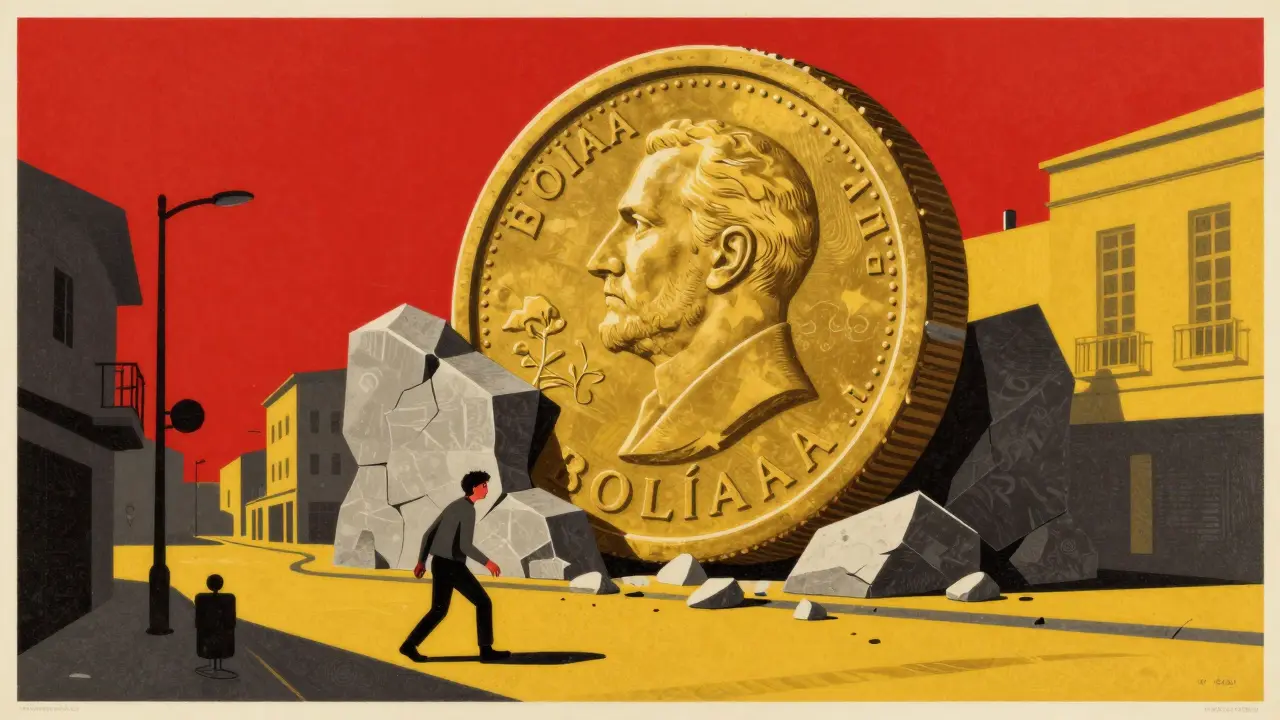
Imagine waking up to find that the money in your wallet lost 26% of its value in a single month. For people in Venezuela, this isn't a nightmare-it's Tuesday. When your local currency, the bolívar, becomes essentially worthless, you don't look for a "hot new investment" in the crypto market; you look for a way to buy eggs and pay rent without your savings evaporating by lunchtime. In this environment, hyperinflation is a rapid, out-of-control increase in prices that destroys the purchasing power of a national currency. For millions of Venezuelans, digital assets have shifted from speculative gambles to essential survival tools.
The Shift from Speculation to Survival
In most of the world, people buy Bitcoin hoping it will go to the moon. In Caracas, they use it so they don't crash to earth. With annual inflation hitting 229% as of May 2025, the traditional banking system has effectively failed. When the bolívar loses over 70% of its value in a few months, holding cash is a liability. This is why the hyperinflation crisis has pushed Venezuela to rank 13th globally in crypto adoption.
Most users aren't trading complex derivatives. Instead, they are using crypto for three basic "jobs": preserving the value of their paycheck, receiving money from family abroad, and paying for daily goods. It's a practical application of blockchain technology where the primary goal is stability, not profit. When you're dealing with an economic meltdown of this scale, a digital wallet is simply a safer place to keep your money than a traditional bank account.
The Rise of "Binance Dollars" and Stablecoins
While Bitcoin gets the headlines, the real hero of the Venezuelan street economy is the stablecoin. Specifically, USDT (Tether) has become the unofficial currency of the country. Because USDT is pegged 1:1 to the US Dollar, it provides the price stability that the bolívar lacks. In many circles, people don't even call it Tether anymore; they call them "Binance Dollars," named after the platform where most of the trading happens.
The preference for USDT is largely technical. Most Venezuelans use the TRC-20 network (built on the Tron blockchain) because the transaction fees are significantly lower than those on the Ethereum network. When you're transferring small amounts for a grocery bill, a $20 fee is a dealbreaker; a few cents is manageable.
| Currency Type | Stability | Primary Use Case | Local Perception |
|---|---|---|---|
| Venezuelan Bolívar | Extremely Low | Immediate small payments | "Worthless" |
| Physical US Dollar | High | Large purchases / Savings | Gold standard |
| USDT (Stablecoin) | High | Daily P2P commerce & Remittances | "Binance Dollars" |
| Bitcoin (BTC) | Moderate/Volatile | Long-term hedge / Payments | Digital Gold |
Navigating a Triple-Rate Economy
If you walk into a shop in Caracas, you'll realize that one price tag is a lie. Venezuela currently operates with three simultaneous exchange rates. First, there's the official rate set by the Central Bank of Venezuela (BCV), which is often unrealistic. Then there's the "dólar negro" or black market rate, handled via cash. Finally, there's the USDT peer-to-peer (P2P) rate.
Merchants are increasingly ignoring the government rates and pricing their goods based on the USDT rate. It's not uncommon to see receipts that list totals in "Binance dollars." This represents a bottom-up dollarization of the economy. Since the government hasn't officially legalized the US dollar as a primary currency, the blockchain provides a loophole that allows the market to set its own prices based on actual demand and supply.
Bypassing the Broken Banking System
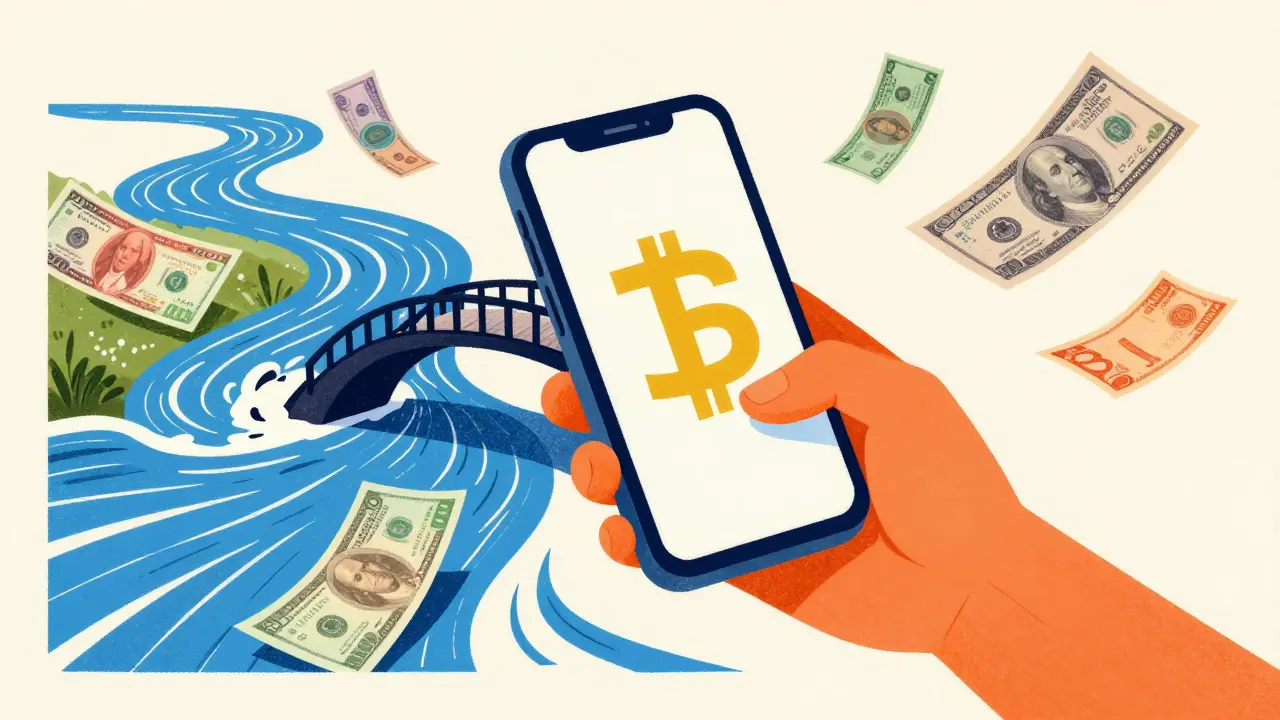
For many, the most critical use of crypto is remittances. In 2023, remittances totaled about $5.4 billion, and a growing slice-roughly 9%-now moves through crypto channels. Traditional wire transfers are slow, expensive, and often blocked by sanctions or dysfunctional local banks. Sending USDT to a family member's phone takes seconds and avoids the predatory fees of legacy remittance companies.
To turn these digital assets back into spendable cash or goods, Venezuelans have built a sophisticated P2P network. They use Binance and other P2P platforms to find buyers. If they don't need cash, they use crypto directly. From street vendors selling empanadas to university tuition payments, the adoption has trickled down to every level of society. It's a decentralized financial system born out of necessity, where trust in a piece of code is higher than trust in a central government.
The Hard Truth: Crypto is a Band-Aid, Not a Cure
It's easy to see crypto as a miracle solution, but it doesn't fix the underlying rot. While blockchain technology helps an individual protect their salary, it doesn't stop the power grid from failing or fix the collapse of the oil industry. The Venezuelan government's own attempt to create a state-backed coin, the Petro, failed miserably because the public didn't trust the people issuing it. It was officially discontinued in 2024, proving that for crypto to work, it must be decentralized and independent of the state.
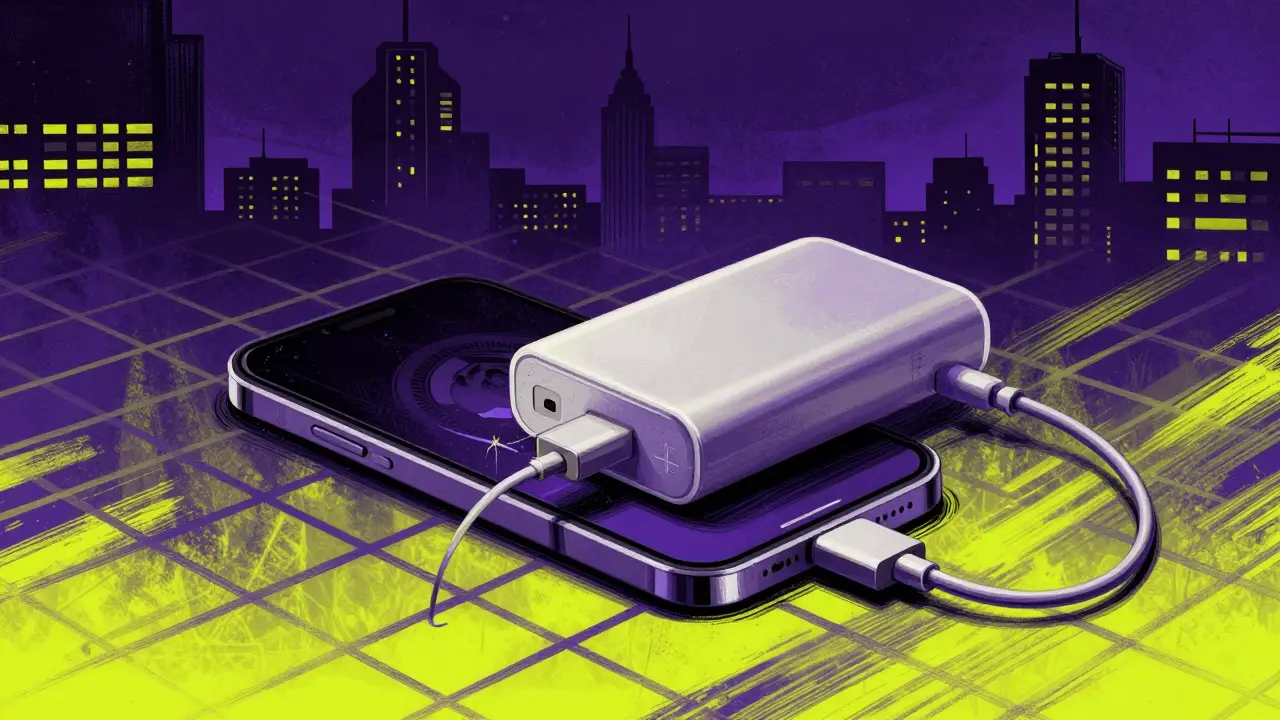
There are also real risks. Users are vulnerable to the stability of centralized stablecoin issuers and the occasional regulatory crackdown on mining. Furthermore, the digital divide is real. While many have smartphones, power outages and spotty internet can make it impossible to complete a transaction at the exact moment you need to buy food. This creates a precarious balance where the most "stable" financial tool depends on a very unstable electrical grid.
How to Get Started (The Venezuelan Method)
For those in similar crisis zones, the "Venezuelan blueprint" for crypto adoption usually follows these steps:
- Get a Smartphone: Basic technical literacy is all that's required. You don't need to be a coder to use a P2P app.
- Open a P2P Account: Platforms like Binance are the primary gateways for converting local currency into USDT.
- Prioritize Stablecoins: Avoid volatile assets for daily spending. Stick to USDT to ensure that the $10 you earn today is still $10 tomorrow.
- Use Low-Fee Networks: Always check the network (e.g., using TRC-20 instead of ERC-20) to avoid losing a chunk of your payment to "gas fees."
- Build a Trusted Circle: Use social media and messaging groups to find reliable P2P traders for cash-outs.
Why is USDT more popular than Bitcoin in Venezuela?
Because Bitcoin is volatile. If you use Bitcoin to pay rent and the price drops 10% overnight, you can't afford your home. USDT is pegged to the US Dollar, providing a stable store of value that behaves like a digital dollar, which is exactly what people need during hyperinflation.
Is using cryptocurrency legal in Venezuela?
The legal landscape is a gray area. While the government has conducted crackdowns on mining operations and occasionally targeted exchanges, they generally tolerate the use of dollar-backed crypto for daily transactions because the economy would collapse even further without it.
What happened to the Petro?
The Petro was a state-backed cryptocurrency launched in 2018. It failed because it was centralized and controlled by the government-the very entity people were trying to avoid. It was discontinued in 2024 due to low adoption and a total lack of public trust.
How do people handle power outages when using crypto?
It's a major challenge. Many users rely on mobile data and power banks. In some cases, merchants and customers agree on a price and a transaction time, or they use a trust-based system where a payment is verified once the connection is restored.
Does crypto help with US sanctions?
Yes, cryptocurrency allows individuals and some businesses to move funds across borders without relying on the traditional SWIFT banking system, which is heavily impacted by sanctions. This makes it a vital tool for receiving remittances from the diaspora.
Hugo Lopez
April 6, 2026 AT 01:23It is truly heartwarming to see how people adapt and support one another during such trying times. Using tech to keep families connected and fed is a beautiful thing! 🌟🙏
Carmelita Gonzales
April 7, 2026 AT 23:25my cousins in caracas mentioned this. the stress of the bolivar is just too much for most people to handle
Joshua Aldrich
April 8, 2026 AT 16:21Tether and Tron are basically a lifsaver here. its wild how the tech actually serves a purpose when the govt fails. i think more people should look into how stablecoins work for other crisis zones too. maybe it helps in places with high corruption or just bad monetry policy in general. i've seen similar trends in other parts of south america where the currency just tanks overnight. its basically digital survivalism at this point lol. honestly the fact that people prefer a piece of code over their own central bank tells u everything u need to know about trust in institutions. its a bleak reflection of the world but a win for decentralization. i just hope the internet grid holds up because if the power goes out permanently the digital wallet is just a fancy brick. that is the real risk nobody talks about enough. we assume the net is always there but in a total collapse that's the first thing to go. still way better than holding paper that's worth less than the ink printed on it.
Sonya Bowen
April 9, 2026 AT 23:31Decentralization serves as a safety net when institutional trust erodes. It is a practical adaptation to systemic failure.
Emma Pease-Byron
April 10, 2026 AT 12:09Oh, how quaint. We are pretending that relying on a centralized entity like Tether is "decentralized." The irony of replacing one unstable government with a private company that refuses to provide full audits is simply delicious. I'm sure the residents of Caracas feel very secure knowing their entire survival hinges on the whim of a few executives in a boardroom. Truly a revolutionary leap forward in financial stability.
Diana Martín Prieto
April 12, 2026 AT 02:15I totally agree with the point about low-fee networks. Using TRC-20 is a game changer for small transactions. For anyone else in a similar spot, definitely look into P2P marketplaces to avoid those predatory fees that banks love to charge. It's all about community trust and finding reliable partners to make the system work for the little guy.
Susan Payne
April 12, 2026 AT 23:30The utter desperation of a populace reduced to using "Binance Dollars" is a tragedy of the highest order. It is an absolute disgrace that an entire nation's economy has devolved into a digital flea market because of gross incompetence. One can only imagine the sheer chaos of trying to buy a simple loaf of bread with a smartphone while the power flickers. It is simply ghastly.
Manisha Sharma
April 13, 2026 AT 10:11Typical westerners trying to explain economics. India has better systems anyway and our digital rupee will be far superior to these random coins. This whole thing is just a failure of state and not a success of crypto. people act like this is a miracle but its just a patch for a sinking ship. very basic logic failure here