International Tax Reporting Standards for Blockchain and Crypto Businesses
 Dec, 14 2025
International Tax Reporting Compliance Checker
Calculate Your Reporting Requirements
Answer these questions to determine which international tax reporting standards apply to your crypto activities.
Your Reporting Requirements
Warning: Critical Compliance Issue
When you run a crypto business or hold digital assets across borders, the last thing you want is a surprise tax bill-or worse, a penalty from a foreign government. That’s why international tax reporting standards aren’t just for big banks anymore. They’re now the backbone of compliance for anyone dealing with cryptocurrency, DeFi, or cross-border blockchain transactions. These rules don’t care if you think your Bitcoin is ‘private’ or your wallet is ‘anonymous.’ If you’re moving money across countries, you’re under the microscope.
What Exactly Are International Tax Reporting Standards?
These aren’t vague guidelines. They’re binding rules created by the OECD, backed by over 100 countries, and enforced through legal penalties. The two biggest pillars are the Common Reporting Standard (CRS) and the Foreign Account Tax Compliance Act (FATCA). CRS is global-it targets tax residents in any participating country. FATCA is U.S.-centric but has worldwide reach because it punishes foreign institutions that don’t comply.Under CRS, banks, crypto exchanges, and even custodial wallet providers must identify account holders who are tax residents outside their home country. They then report details like your name, address, tax ID, account balance, and any income-dividends, interest, or gains from selling crypto. FATCA does something similar but only for U.S. persons. If you’re a U.S. citizen living in Germany and holding Ethereum on a German exchange, that exchange must report you to the IRS.
It’s not optional. If you’re a crypto platform operating in Spain, Japan, or Canada, you’re legally required to collect this data. And if you don’t? Fines can hit €50,000 or more. Some jurisdictions even shut down non-compliant platforms.
How Blockchain and Crypto Fit Into CRS and FATCA
You might think blockchain is invisible to tax authorities. It’s not. The OECD and G20 explicitly included digital asset service providers in CRS updates as of 2023. That means exchanges like Binance, Kraken, Coinbase, and even decentralized platforms with centralized custody functions are now reportable entities.Here’s how it works in practice:
- If you open a crypto account with a regulated exchange in the Netherlands and you’re a tax resident of Australia, the exchange must report your holdings and transactions to the Dutch tax authority, who then shares it with Australia.
- If you hold crypto in a non-custodial wallet but use a U.S.-based DeFi aggregator like Yearn Finance, and you’re a non-U.S. person, FATCA doesn’t apply-but CRS might, depending on where the aggregator is legally registered.
- If you’re a U.S. citizen using a non-U.S. exchange, your account is still reportable under FATCA, even if you never filed a Form 8938 or FBAR.
Many crypto users assume that because they use a self-custody wallet, they’re off the radar. That’s a dangerous myth. Tax authorities don’t just track exchanges-they track on-chain activity through analytics firms like Chainalysis and Elliptic. If your wallet interacts with a regulated exchange that reports to CRS, your identity and transaction history are already in the system.
Country-by-Country Reporting and Multinational Crypto Firms
If you run a blockchain company with offices in the U.S., Singapore, and Germany, you’re not just dealing with CRS. You’re also subject to Country-by-Country Reporting (CbCR). This rule forces multinational enterprises to disclose where they earn revenue, pay taxes, and employ staff. For crypto firms, that means breaking down income from trading fees, staking rewards, NFT sales, and mining operations by jurisdiction.Let’s say your company makes $12 million in fees from U.S. users, $8 million from EU users, and $5 million from Asia. CbCR requires you to file a report showing how much tax you paid in each region. If you paid zero tax in Singapore but booked all profits there, tax authorities in the U.S. and EU will flag it. That’s not just an audit risk-it’s a reputational disaster.
Transfer pricing rules also apply. If your U.S. entity pays your Singapore team for ‘software development’ at inflated rates to shift profits, tax agencies will challenge it. They now have tools to compare your company’s tax rate across borders. If your effective tax rate in Ireland is 3% but your U.S. rate is 21%, you’ll need a solid, documented reason why.
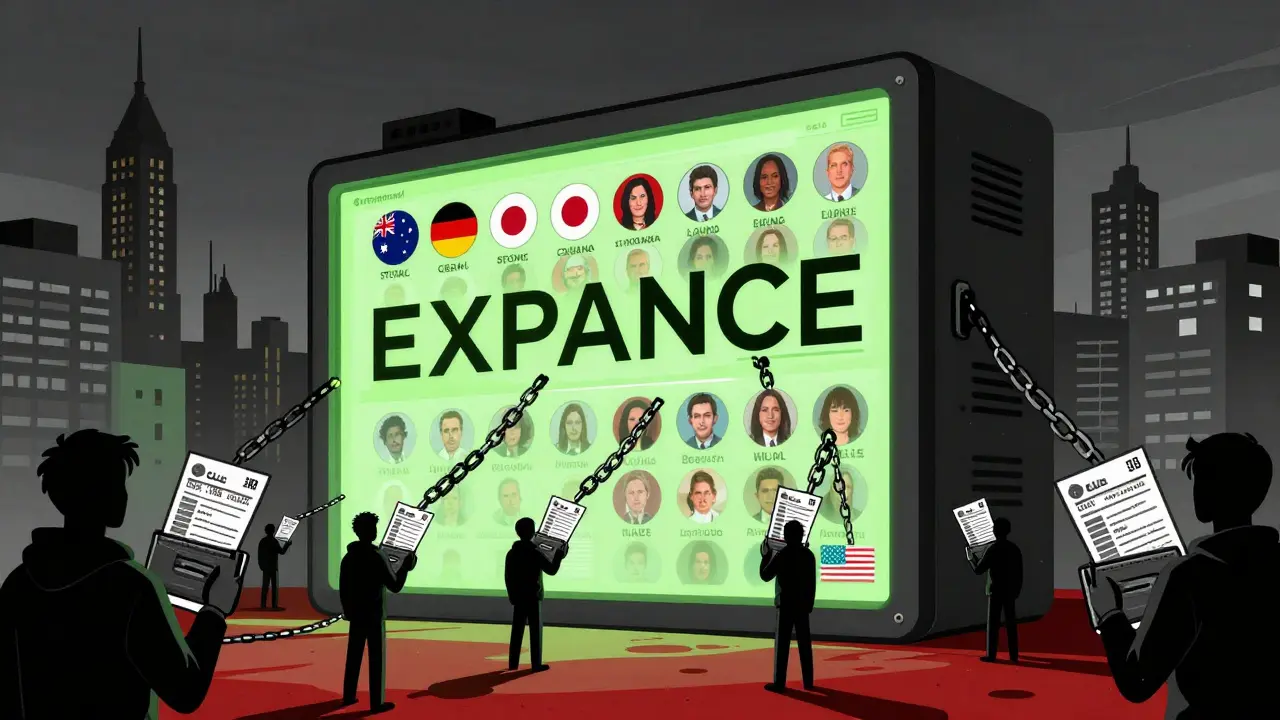
Technology Is the Only Way to Stay Compliant
Trying to track crypto transactions across 10+ jurisdictions manually? You’ll fail. The volume of transactions, the variety of tokens, the changing tax rules in each country-it’s impossible without automation.Leading crypto compliance platforms now integrate directly with CRS and FATCA requirements. They:
- Automatically classify users by tax residency using self-certification forms and ID verification
- Track wallet balances and transaction history across exchanges and DeFi protocols
- Generate standardized CRS and FATCA reports in the exact format each country requires
- Update in real time as new jurisdictions join or change rules
Platforms like Chainalysis, Koinly, and CoinTracker now offer CRS-ready reporting modules. They don’t just count your crypto-they map it to the OECD’s data schema. That’s what tax authorities are asking for. If your system can’t spit out a report in the CRS XML format, you’re not compliant.
Penalties Are Real-and Getting Worse
In 2024, the EU fined a major crypto exchange €1.2 million for failing to report over 12,000 non-resident accounts. In the U.S., the IRS collected $1.7 billion in penalties and back taxes from crypto users who didn’t disclose foreign accounts. These aren’t isolated cases.Here’s what happens if you ignore reporting:
- For individuals: IRS fines of up to $10,000 per unreported foreign account (FBAR), plus 40% penalty on underpaid taxes.
- For crypto platforms: Loss of banking relationships, suspension of payment processors, or outright shutdown by regulators.
- For companies: CbCR non-compliance can trigger transfer pricing adjustments that increase your tax bill by 20-50% overnight.
And it’s not just money. Non-compliance can block you from listing on major exchanges, partnering with traditional banks, or even entering new markets. Investors and partners now demand proof of tax compliance before they sign anything.
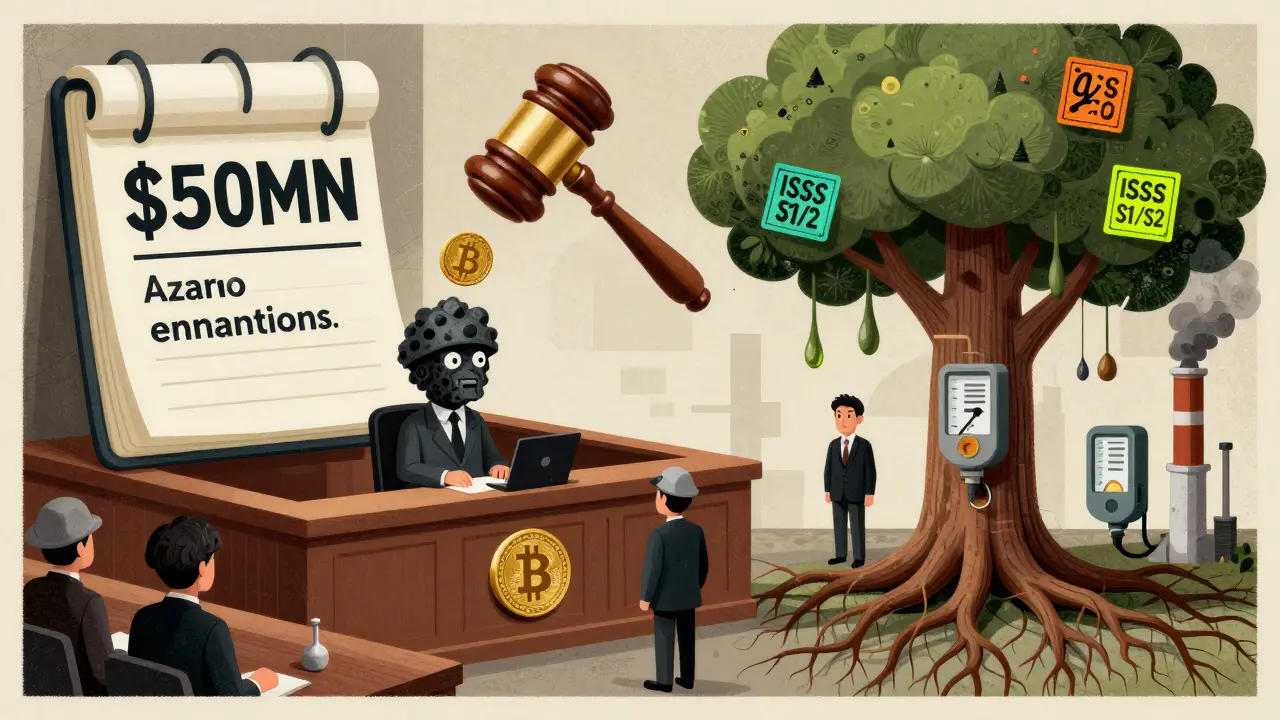
The New Frontier: Sustainability Reporting Meets Tax Compliance
Here’s something most crypto businesses overlook: tax reporting is no longer just about money. The International Sustainability Standards Board (ISSB) now requires companies to report carbon emissions, energy use, and environmental impact as part of financial disclosures. And guess what? Tax authorities are starting to use this data.For example, if your mining operation in Kazakhstan uses coal-powered electricity and reports $50 million in profits but zero environmental costs, tax agencies may question whether you’re artificially inflating profits by ignoring externalities. Some countries are now tying tax incentives to sustainability performance. If you’re not reporting your energy footprint, you might lose deductions.
The ISSB’s IFRS S1 and S2 standards are now mandatory for large companies in the EU, UK, Canada, and Japan. If your crypto firm is doing business there, you need to report Scope 1, 2, and even Scope 3 emissions. That means tracking the energy used by your miners, data centers, and even employee commutes.
What You Need to Do Right Now
If you’re involved in crypto or blockchain across borders, here’s your action list:- Identify where your users and operations are located. Use IP addresses, KYC data, and bank details to determine tax residency.
- Confirm if your platform is classified as a Financial Institution under CRS. If you custody assets or facilitate trading, you likely are.
- Implement automated compliance software that generates CRS and FATCA reports. Don’t rely on spreadsheets.
- Review your corporate structure. Are you routing profits through low-tax jurisdictions without economic substance? You’re at risk.
- Start tracking energy usage and carbon emissions-even if you’re not legally required yet. It’s coming.
- Train your finance and legal teams. Tax compliance is no longer a back-office task-it’s core to your business model.
Ignoring international tax rules won’t make them disappear. It’ll just make your next audit a lot more expensive.
Do I need to report crypto if I use a non-custodial wallet?
Yes-if you interact with a regulated exchange or service that reports under CRS or FATCA, your wallet activity can be traced back to you. Tax authorities don’t need to see your wallet directly-they get your identity from the exchange you used to buy or sell crypto. If you move funds from Coinbase (which reports to the IRS) to a self-custody wallet, the IRS already knows you own that wallet.
Is Bitcoin treated differently than Ethereum for tax reporting?
No. Under CRS and FATCA, all digital assets are treated the same. Whether it’s Bitcoin, Ethereum, or a meme coin, if it’s held in a reportable account, it’s reported. Tax authorities classify crypto as property or financial assets, not currency, so all gains and income are subject to reporting regardless of the token type.
What happens if I move to another country and don’t tell my crypto exchange?
You’re at high risk. Exchanges use IP addresses, bank account details, and ID verification to determine residency. If you move from Canada to Mexico but keep your Canadian address on file, your exchange will report you to Canada. If Canada and Mexico exchange data (they do), you’ll get a tax notice for income you didn’t declare in Mexico. Failing to update your residency status is considered intentional non-compliance.
Do small crypto traders have to comply with CRS?
If you’re an individual, CRS doesn’t require you to file-it requires the exchange to report you. So yes, even if you only trade $500 a month, if you’re a non-resident using a CRS-participating exchange, your data is being sent to your home country. Small traders aren’t exempt. The reporting threshold is zero.
Can I avoid reporting by using a decentralized exchange (DEX)?
Not if you use a DEX that connects to a centralized on-ramp. If you buy ETH with USD via Coinbase, then swap it on Uniswap, Coinbase still reports your initial purchase. Tax authorities can trace the chain from your identity to your wallet. Purely peer-to-peer swaps without any KYC are rare and risky-you’re still legally required to report income in your home country, regardless of how you acquired the asset.
Anselmo Buffet
December 15, 2025 AT 12:54Been using crypto for years and never thought about tax reporting until now. Guess I’m lucky I didn’t move money across borders.
Abhishek Bansal
December 16, 2025 AT 15:36Oh wow so now even my decentralized wallet is being tracked? Next they’ll be monitoring my private key on a napkin.
Eunice Chook
December 17, 2025 AT 10:35CRS doesn’t care if you’re anonymous-it cares if you’re stupid enough to think anonymity exists. Welcome to reality.
Scot Sorenson
December 19, 2025 AT 02:51Let me get this straight-some guy in Singapore runs a crypto firm, books all profits there, pays 3% tax, and the IRS just shrugs? Nah. They’ll come for your offshore shell like it’s a Halloween costume.
Madison Surface
December 21, 2025 AT 02:03I’m a small trader who just buys a little ETH every month. I don’t even know what CRS stands for. But now I’m terrified. What if my exchange reports me and my home country doesn’t even tax crypto? Do I just get flagged for nothing? I feel like I’m being watched by a system I didn’t consent to. And honestly? It’s exhausting. I just wanted to invest, not become a compliance nerd.
I get that rules exist for a reason-but when the rules feel like they’re designed to trap regular people instead of catching real tax evaders, it makes you question everything. Why does my $200 trade matter so much to a government thousands of miles away? I’m not hiding money. I’m trying to build something better. But right now, it feels like the system wants to punish curiosity.
I’ve talked to friends who moved abroad and kept their old addresses on exchanges. They got letters. Not warnings. Letters. With penalties. And now they’re stuck in legal limbo because they didn’t update a form. It’s not about ignorance-it’s about how little support there is for people who aren’t lawyers or accountants.
And don’t even get me started on the environmental stuff. I use solar-powered mining rigs. But if I report that, will they still tax me more because I’m ‘not green enough’? It’s like we’re being punished for existing in a space that’s still too new for the rules to fit.
I wish there was a simple way to say, ‘Hey, I’m trying. Can you just help me get this right?’ Instead, it feels like we’re all guilty until proven innocent. And the burden is on us to figure out a maze built by people who don’t even use crypto.
I’m not anti-regulation. I’m pro-clarity. And right now, there’s none.
JoAnne Geigner
December 22, 2025 AT 04:54JoAnne here-just wanted to say thank you to Madison for voicing what so many of us feel. I’ve been in crypto since 2017, and I’ve watched this space go from wild west to bureaucratic nightmare… and honestly? I miss the wild west. At least then, we were all just figuring it out together. Now it’s like we’re being policed by robots with spreadsheets. But I’m not giving up. I’ve started a small Discord group for small-time crypto users who just want to do the right thing without hiring a CPA. We share templates, explain CRS in plain English, and help each other file. No one should feel alone in this. If you’re reading this and you’re scared? You’re not alone. We’ve got your back.
Jessica Petry
December 22, 2025 AT 14:25Of course the ‘inclusive mentor’ is here to cry about how hard it is to comply. Meanwhile, real tax evaders are laughing from their Swiss vaults. You didn’t build anything. You just bought tokens. Stop acting like you’re a martyr.