Loopring Exchange Crypto Exchange Review: Low Fees, High Security, But Limited Assets
 Nov, 8 2025
Loopring Fee Calculator
This calculator helps you determine the exact fees for trading on Loopring. Enter your trade details to see the fee structure for maker and taker orders, plus withdrawal costs. Remember: Loopring charges 0% maker fees and 0.10% taker fees, plus a 0.002 ETH withdrawal fee.
Most crypto exchanges make you hand over your keys. Loopring doesn’t. That’s the big difference. If you’re tired of trusting centralized platforms with your Bitcoin or Ethereum, Loopring offers a real alternative: a decentralized exchange that lets you trade directly from your wallet-no deposits, no withdrawals, no custody risk. But is it actually easy to use? And does it work well in practice? Let’s break it down.
How Loopring Works (Without the Jargon)
Loopring isn’t like Binance or Coinbase. You don’t sign up, verify your ID, or deposit coins into their system. Instead, you connect your wallet-MetaMask, WalletConnect, or any EVM-compatible one-and trade using something called a zkRollup. Think of it like this: Loopring takes hundreds of trades happening off-chain, bundles them into one proof, and then locks that proof onto Ethereum. This keeps everything secure, but cuts fees and speeds things up dramatically.Unlike Uniswap or SushiSwap, which use automated market makers (AMMs), Loopring runs on an order book. That means you can set exact prices for buys and sells, just like on a traditional exchange. If you want to buy 0.5 ETH at $3,100, you put in that order. Someone else can match it. No slippage. No weird pricing. It’s more familiar if you’ve ever used a centralized exchange before.
And here’s the kicker: Loopring supports up to 16 trades in a single atomic swap. That’s not just one trade-it’s a chain of trades that all happen or none do. If one part fails, the whole thing cancels. No partial fills. No lost funds. It’s a clever way to handle complex trades without needing to trust anyone.
Fees: Maker-Free, But Withdrawals Hurt
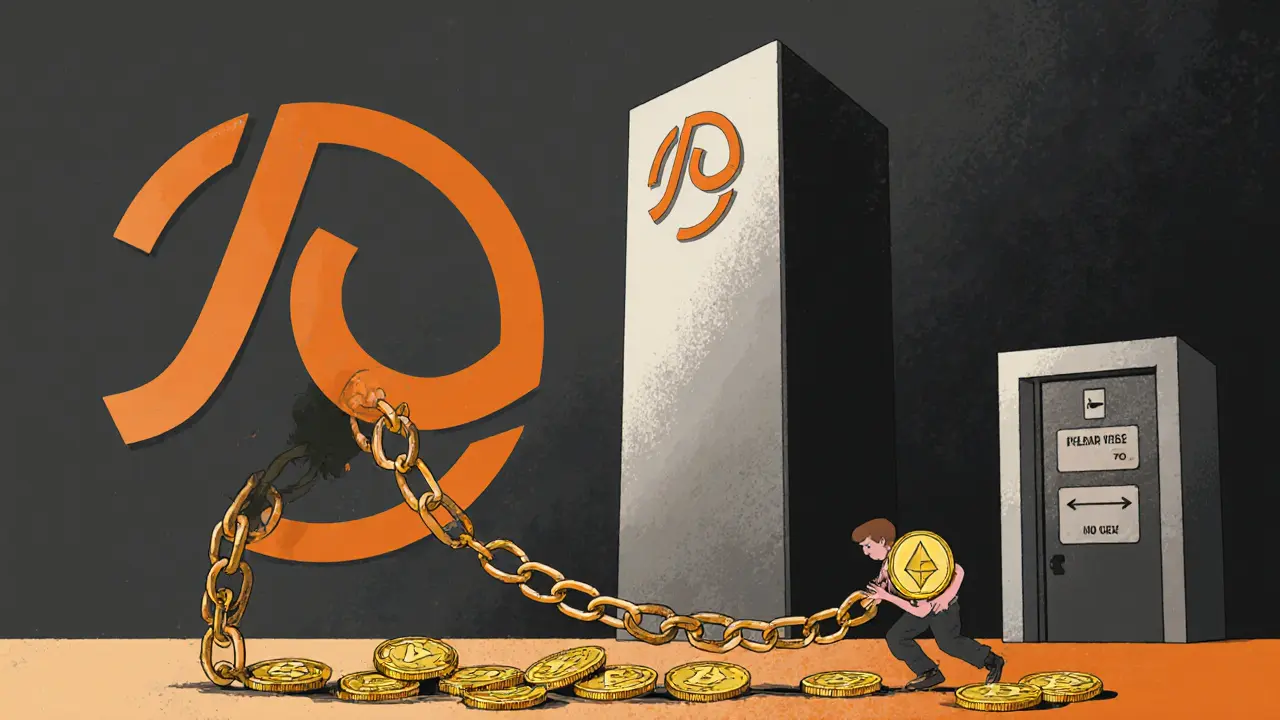
Loopring’s fee structure is one of its strongest points. Taker fees? 0.10%. Maker fees? Zero. That’s better than most centralized exchanges, which often charge 0.2% or more for takers. If you’re placing limit orders and waiting for price action, you pay nothing just for putting your order out there.But here’s where it gets messy: withdrawals. Loopring charges 0.002 ETH to pull your assets back to Ethereum mainnet. That’s about $5-$7 depending on ETH’s price. Compare that to Joyso or EtherDelta, which charge under 0.001 ETH. For small traders moving $50 or $100, that fee feels like a punch in the gut. It’s fine if you’re holding large amounts, but if you’re just dipping your toes in? You’ll feel it.
And yes, you still need ETH in your wallet to pay for Layer-1 gas when you first deposit or withdraw. Loopring handles the trading off-chain, but the final settlement? That’s on Ethereum. So you can’t avoid ETH entirely.
What You Can Trade
Loopring supports over 100 tokens-all ERC-20. That means Ethereum-based coins only. No Bitcoin. No Solana. No Polygon. No BNB. Nothing outside the Ethereum ecosystem. If you’re trading stablecoins like USDC, DAI, or ETH itself, you’re good. But if you want to trade Solana or Avalanche tokens? You’ll need another exchange.This isn’t a flaw per se-it’s a design choice. Loopring is built to be a Layer-2 scaling solution for Ethereum. It’s not trying to be the biggest DEX. It’s trying to be the most efficient one for Ethereum users. That’s a narrow focus, and it shows.
Security: Your Keys, Your Coins
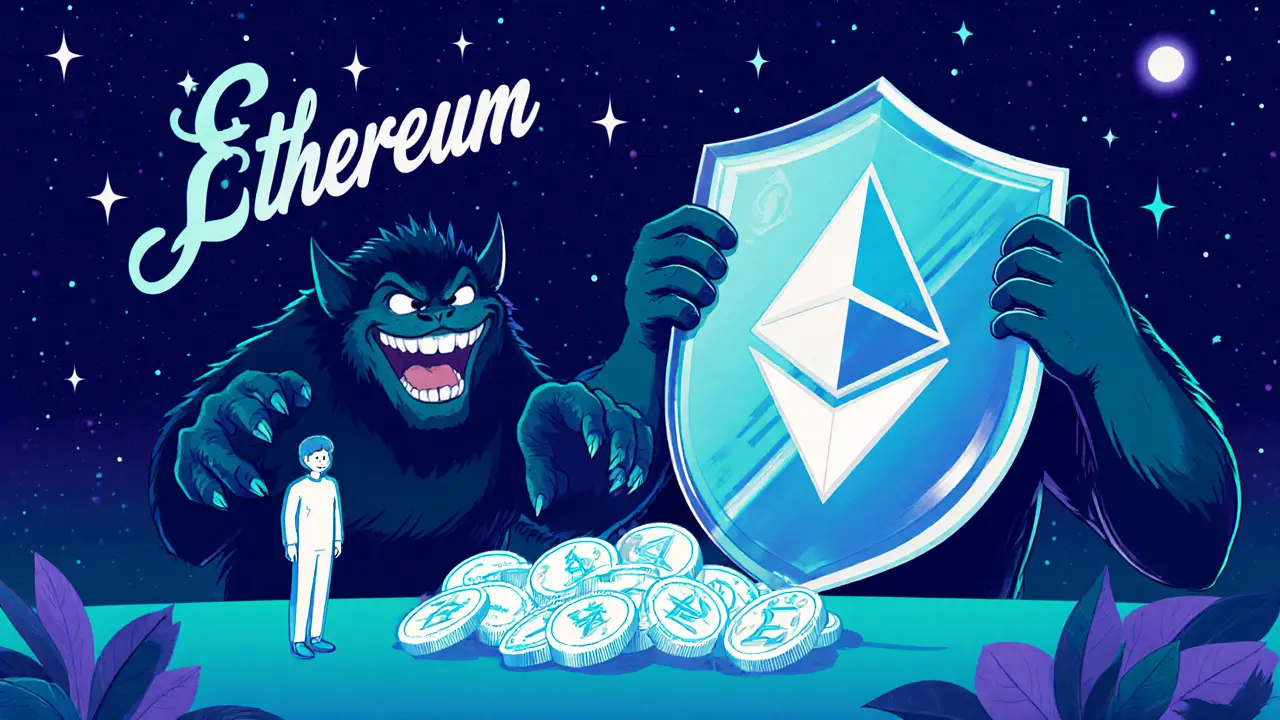
Loopring is non-custodial. That means no one holds your crypto-not the team, not the servers, not even the blockchain. You control your private keys. Every trade is verified by a zero-knowledge proof. That’s a fancy way of saying: the system mathematically proves your trade happened correctly, without revealing your data. It’s like having a notary who can confirm a contract is valid without seeing what’s inside.There’s been no major hack or exploit on Loopring’s protocol since launch in 2017. The code is open-source. Audits have been done by reputable firms. And because it’s built on Ethereum, it inherits the same security as the most trusted blockchain in crypto.
If you’re worried about losing your funds to a centralized exchange going bust? Loopring removes that risk entirely. You’re not trusting a company. You’re trusting math.
Usability: For the Tech-Savvy
Loopring’s interface is clean, but it’s not beginner-friendly. If you’ve never used a DEX before, you’ll need to learn what an order book is, how to set limit orders, and why you need to approve tokens before trading. The documentation is solid, but it assumes you already know what a wallet is and how gas works.There’s no mobile app. You have to use a browser. That’s fine if you’re on a laptop, but not ideal if you want to check prices on the go. The platform doesn’t have chat support. Community help is available on Discord and Telegram, but response times vary.
For experienced DeFi users, Loopring feels smooth. Trades execute fast. Gas costs are low during trading. The UI is responsive. But if you’re new to crypto? Start with Uniswap or Coinbase first. Come back to Loopring once you’re comfortable with wallets and tokens.
How It Compares to Other DEXs
| Feature | Loopring | Uniswap | Curve | OKX DEX |
|---|---|---|---|---|
| Type | Order Book | AMM | AMM (Stablecoins) | Hybrid (Custodial) |
| Taker Fee | 0.10% | 0.30% | 0.02-0.04% | 0.10-0.20% |
| Maker Fee | 0% | 0% | 0% | 0.10% |
| Withdrawal Fee (ETH) | 0.002 ETH | Network gas only | Network gas only | 0.001 ETH |
| Asset Support | ERC-20 only | ERC-20 only | ERC-20 only | Multi-chain |
| Security Model | Non-custodial | Non-custodial | Non-custodial | Custodial |
Loopring wins on fees for makers and offers better price discovery than AMMs. But Uniswap has far more liquidity and supports more tokens. Curve is unbeatable for stablecoin swaps. OKX DEX gives you multi-chain support but keeps your coins in custody. So Loopring isn’t the best at everything-it’s the best for one thing: secure, low-fee Ethereum trading with an order book.
Is Loopring Worth It?
If you’re an active Ethereum trader who wants to avoid centralized exchanges, Loopring is one of the best options out there. The zero maker fees, high-speed trades, and full non-custodial control make it ideal for frequent traders. If you’re holding LRC, you can even earn rewards by staking it in the protocol’s liquidity pools.But if you’re a casual user who just wants to swap ETH for USDC once a month? Stick with Uniswap. The withdrawal fee is too high to justify unless you’re trading regularly. And if you want to trade Bitcoin or Solana? Loopring won’t help you.
Loopring isn’t for everyone. But for the right person-the person who values control, hates paying fees, and understands how wallets work-it’s a powerful tool. It’s not flashy. It doesn’t have memes or influencers pushing it. But it’s built on solid tech that actually works.
What’s Next for Loopring?
The LRC token price has been volatile. In October 2025, it traded around $0.09, down 11% from the previous month but up 5% in the last week. Analysts are split: some think it could hit $0.50 if Layer-2 adoption explodes. Others say it’ll stay under $0.15 unless Loopring adds non-Ethereum assets or partners with major DeFi protocols.Right now, Loopring’s biggest hurdle isn’t technology-it’s awareness. Most new crypto users have never heard of it. It doesn’t have the marketing budget of Uniswap or the brand recognition of Coinbase. But as Ethereum fees stay high and users get tired of custodial risks, more people will look for alternatives. Loopring is ready.
Its future depends on two things: making the interface easier for newcomers, and expanding beyond Ethereum. If they do that, Loopring could become the go-to DEX for serious traders. If not? It’ll remain a niche tool for the technically minded.
Can I trade Bitcoin on Loopring?
No. Loopring only supports ERC-20 tokens on the Ethereum blockchain. You cannot trade Bitcoin, Solana, BNB, or any non-Ethereum asset on Loopring. If you need to trade Bitcoin on a decentralized exchange, you’ll need to use a different platform like Bisq or a wrapped Bitcoin (WBTC) on Ethereum-based DEXs.
Is Loopring safe to use?
Yes, Loopring is considered very safe. It’s non-custodial, meaning you always control your private keys. Trades are verified using zero-knowledge proofs, which ensure accuracy without exposing your data. The protocol has been audited multiple times and has never been hacked. As long as you keep your wallet secure, your funds are protected.
Why is the withdrawal fee so high?
Loopring charges 0.002 ETH for withdrawals because it costs gas to submit a zero-knowledge proof to the Ethereum mainnet. While trading happens off-chain for free, moving funds back to Ethereum requires a transaction on Layer-1. This fee covers that cost. Some competitors charge less because they use different scaling methods, but none offer the same level of security and order book functionality.
Do I need to hold LRC to use Loopring?
No, you don’t need LRC to trade on Loopring. You can use any ERC-20 token to trade. However, holding LRC gives you access to reduced trading fees and staking rewards. Staking LRC in the protocol’s liquidity pools can earn you additional tokens, but it’s optional.
How does Loopring compare to Uniswap?
Loopring uses an order book model, so you can set exact prices and avoid slippage. Uniswap uses automated market makers (AMMs), which can cause price changes during large trades. Loopring has lower maker fees (0% vs. Uniswap’s 0%) and faster trades, but Uniswap has much higher liquidity and supports more tokens. Loopring is better for precision trading; Uniswap is better for quick swaps.
Can I use Loopring on my phone?
There’s no official Loopring mobile app. You must use a browser on your phone, connected to a wallet like MetaMask. The interface works on mobile browsers, but it’s not optimized for touch. For a smoother experience, use Loopring on a desktop or laptop.
If you’re serious about decentralized trading and hate paying fees, Loopring is one of the few platforms that actually delivers on its promises. It’s not perfect, but it’s honest. No hype. No promises of moonshots. Just secure, low-cost trading on Ethereum. For the right user, that’s worth more than any flashy interface.
Savan Prajapati
November 26, 2025 AT 10:12Loopring's withdrawal fee is a scam. 0.002 ETH? For what? I can swap on Uniswap for less gas and not deal with this mess.
Abby cant tell ya
November 27, 2025 AT 12:34Oh sweet mother of blockchain, another ‘non-custodial’ platform that makes you feel like you’re debugging Linux in 2003. If I wanted to read whitepapers before buying USDC, I’d go back to college.
Susan Dugan
November 27, 2025 AT 16:25Y’all are missing the forest for the trees. Loopring isn’t for casuals-it’s for people who want to trade like a pro without handing their keys to some CEO’s offshore server. Yeah, the UI’s clunky, yeah, withdrawals hurt-but when your $50k portfolio isn’t vaporized because some exchange got hacked? That’s peace of mind you can’t buy.
I’ve used Uniswap, Sushi, even OKX DEX. Loopring’s order book is the only one that lets me place a 0.5 ETH limit order at $3100 and actually get filled without slippage eating my lunch. And zero maker fees? That’s free money if you’re swing trading.
Yeah, no mobile app. Yeah, you need ETH for gas. But guess what? That’s how crypto works. If you want one-click swaps and memes, go buy Dogecoin on Robinhood. Loopring’s for the ones who still believe in decentralization, not just the hype.
And before you say ‘but what about Bitcoin?’-it’s Ethereum-only by design. It’s not trying to be Binance. It’s trying to be the cleanest, most efficient way to trade ERC-20s. And honestly? It’s winning.
Stake your LRC. Get fee discounts. Don’t be scared of the gas. It’s a tax on sovereignty. Pay it once, trade forever.
Janice Jose
November 29, 2025 AT 05:47I get why people hate the withdrawal fee, but if you’re trading under $200, maybe you shouldn’t be on a Layer-2 in the first place? Loopring’s meant for active traders, not weekend speculators. I’ve used it for months and never lost a cent. That’s more than I can say for some centralized exchanges I won’t name.
Brian Bernfeld
November 30, 2025 AT 18:49Look, I used to think DeFi was just a bunch of overcomplicated nonsense-until I tried Loopring. I was tired of seeing my ETH vanish because some ‘secure’ exchange had a ‘security incident.’ Then I connected my wallet, placed a limit order, and watched it execute without touching a single centralized server. No KYC. No delays. No ‘we’re holding your funds for compliance.’
Yeah, the interface isn’t TikTok-friendly. Yeah, you need to know what gas is. But so what? You don’t need a PhD to drive a car-you just need to know how to turn the key. Loopring’s like that. It’s not for everyone, but if you’ve got a wallet and a brain? You can use it.
And the zero maker fees? That’s not a feature-it’s a revolution. On Binance, you pay 0.1% just to put an order out. Here? You get paid nothing. That’s the power of competition. That’s the power of open tech.
Don’t let the lack of a mobile app scare you. Use your browser. It works. And if you’re worried about security? The audits are public. The code is open. The team hasn’t rug-pulled. That’s more than I can say for 80% of the ‘altcoins’ trending on Twitter.
Loopring doesn’t need influencers. It doesn’t need memes. It just needs people who care about owning their assets. And honestly? That’s the future.
fanny adam
December 2, 2025 AT 09:09Are we seriously celebrating a platform that requires users to pay 0.002 ETH in gas to withdraw their own funds-while simultaneously claiming to be ‘decentralized’? This is a classic bait-and-switch: ‘You control your keys’-but only if you’re willing to pay a toll every time you leave the gated community. The entire model is predicated on Ethereum’s centralization of transaction finality. If Layer-1 gas spikes, Loopring becomes a luxury for the wealthy. This isn’t financial freedom-it’s financial elitism disguised as innovation.
Furthermore, the claim that ‘no major hack has occurred’ is statistically meaningless. Zero-knowledge proofs are not infallible; they are complex mathematical constructs subject to implementation flaws. The fact that this protocol has operated without incident for six years does not prove its invulnerability-it merely proves that it has not yet been targeted by sufficiently sophisticated actors. The next exploit could be catastrophic-and the developers will likely blame ‘user error’ or ‘misconfigured wallets.’
And let’s not ignore the cultural arrogance: ‘If you don’t understand wallets and gas, go use Uniswap.’ This is not inclusion. This is gatekeeping under the banner of ‘technical purity.’ Real decentralization should empower the novice, not punish them for not being a blockchain engineer.
SARE Homes
December 4, 2025 AT 00:02LOL. ‘Zero maker fees’? That’s cute. You’re paying in gas, time, and sanity. And ‘non-custodial’? You’re still trusting a team of devs who could theoretically front-run your orders, manipulate the zk-proofs, or just disappear tomorrow. And don’t even get me started on LRC-another garbage token with no utility except to make the founders rich. You think this is ‘honest’? It’s a glorified middleman with a fancy math coat of paint. If you’re not trading $10k+ per week, you’re just donating your time and ETH to their vanity project.
Also-NO MOBILE APP? IN 2025? Who even uses a laptop to trade anymore? This isn’t innovation-it’s a relic. And the fact that people are defending it like it’s the second coming? Pathetic.
Ian Esche
December 5, 2025 AT 02:41Loopring’s the real deal. If you’re American and you’re complaining about gas fees, you’re part of the problem. We built Ethereum. We built the tech. If you want convenience, go back to Wall Street. This isn’t about being easy-it’s about being free. And if you can’t handle a little gas to keep your crypto safe? Then you don’t deserve to own it.