Metaverse Gaming and Entertainment: How Blockchain is Redefining Digital Play
 Dec, 5 2025
Play-to-Earn Earnings Calculator
Calculate Your Metaverse Earnings
Estimate potential earnings from play-to-earn metaverse games based on daily play time and token values.
Your Estimated Earnings
Daily Earnings
$0.00
Monthly Earnings (30 days)
$0.00
Yearly Earnings (365 days)
$0.00
Note: Based on average metaverse game earnings like Axie Infinity and The Sandbox. Actual values vary by game and market conditions.
Imagine logging into a game not just to play, but to live. To walk through a digital city where your avatar wears clothes you bought with real money, attend a concert by a real artist happening right now, and sell the sword you forged last night for a profit. This isn’t science fiction-it’s metaverse gaming, and it’s here in 2025.
What Metaverse Gaming Really Means
Metaverse gaming isn’t just another type of video game. It’s a persistent, shared, 3D world where your actions have lasting consequences. Unlike traditional games that reset when you log off, metaverse worlds keep going. Your house still stands. Your rare item still belongs to you. Your friends are still there, even if you’re offline. This shift comes from blending VR headsets, haptic suits, and motion tracking with always-on digital environments. You don’t just control a character-you become them. A simple handshake in Decentraland can feel real because your gloves vibrate. A jump in Fortnite isn’t just a button press-it’s your whole body moving in space. And it’s growing fast. The global metaverse market is on track to hit $103.6 billion in 2025, with gaming making up the biggest slice. Why? Because people aren’t just playing-they’re socializing, working, and earning inside these worlds.How Blockchain Powers Ownership
Here’s the game-changer: blockchain gives you real ownership. In traditional games, everything you buy-skins, weapons, land-is locked inside the game’s servers. The company can delete it, ban you, or shut down the game tomorrow. You never owned it. You just rented it. Blockchain changes that. Using NFTs (non-fungible tokens), your in-game items become unique digital assets stored on a public ledger. That dragon helmet you got from a rare drop? It’s yours. You can sell it on OpenSea. Trade it for Ethereum. Use it in another game that supports the same standard. No middleman. No gatekeeper. Games like Axie Infinity and The Sandbox let players earn cryptocurrency by playing. This is called play-to-earn (P2E). In the Philippines, some players earn more from their Axie teams than from their day jobs. In Brazil, teens are building virtual real estate empires. It’s not a gimmick-it’s a new economy. And it’s not just about money. NFTs let you prove authenticity. A limited-edition jersey from a virtual concert? Only 500 exist. You own one. That’s scarcity in a digital world that used to be infinite.Platforms Leading the Way
You don’t need a $1,000 VR rig to enter the metaverse. Some of the biggest metaverse experiences are already on your phone or PC. Roblox has over 70 million daily users. Kids aren’t just playing games-they’re designing them, hosting concerts, and selling virtual shirts. A virtual Louis Vuitton bag sold for $1,500 on Roblox last year. That’s real commerce. Fortnite hosted a Travis Scott concert that drew 12 million live viewers. Not on YouTube. Not on Twitch. Inside the game. People stood in a crowd, jumped, danced, and watched fireworks explode around them. It wasn’t a stream. It was an event. Decentraland lets you buy land as NFTs. One plot sold for $2.4 million. People are building virtual malls, art galleries, and casinos. Brands like Adidas and Samsung have storefronts there. You can walk in, try on NFT sneakers, and buy them with crypto. These aren’t isolated experiments. They’re early signs of a new internet-one where everything you do online has permanence, value, and identity.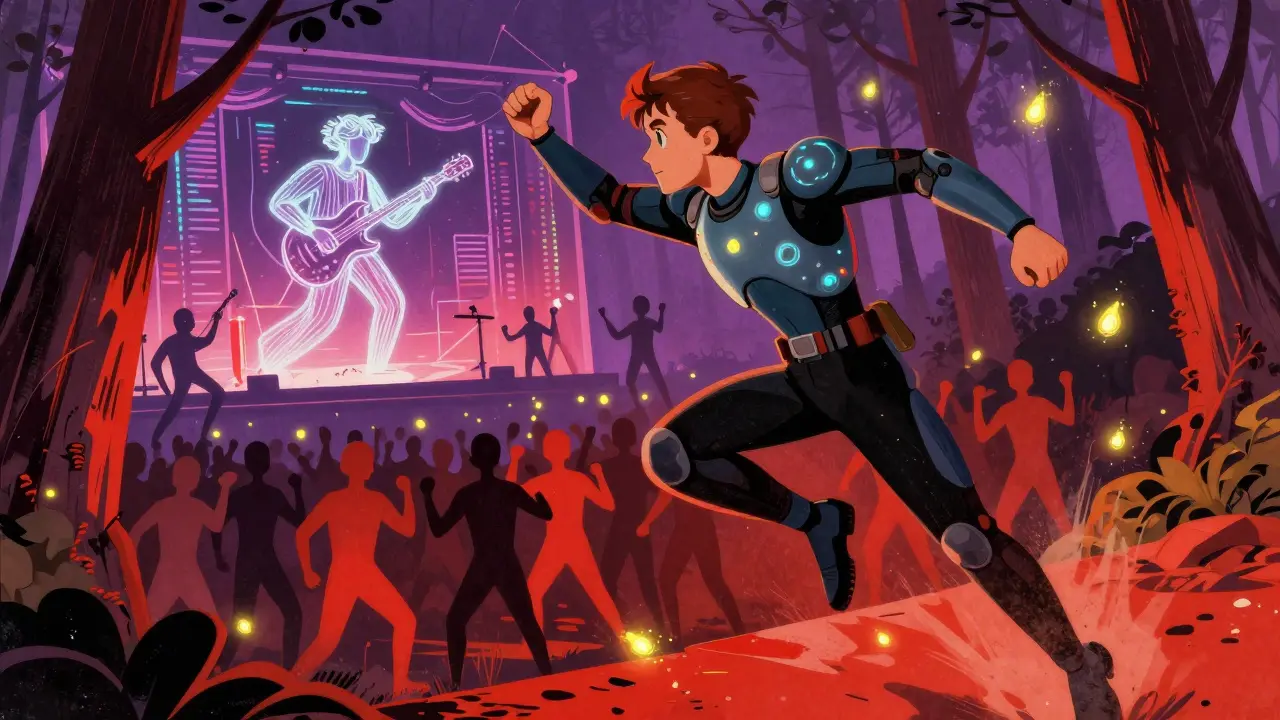
It’s Not Just About Games
Metaverse entertainment goes beyond shooting aliens or racing cars. It’s concerts, classes, therapy sessions, and even weddings. In 2024, a woman in Seoul got married in The Sandbox. Her guests came from 12 countries. They wore digital tuxedos and danced on floating islands. The ceremony was recorded as an NFT. Her parents, who couldn’t travel, felt like they were there. Musicians are releasing albums as NFTs with exclusive in-world experiences. Imagine owning a song that unlocks a private concert in a virtual forest you can visit anytime. That’s not a bonus-it’s the new standard. Even education is moving in. Medical students practice surgeries in VR metaverses. Architecture students walk through buildings they designed before they’re built. The line between play and purpose is vanishing.Challenges You Can’t Ignore
This isn’t all perfect. The tech still has rough edges. VR headsets are expensive. Not everyone can afford one. Motion sickness still affects some users. Battery life on AR glasses is terrible. The infrastructure needed to run these worlds is massive-think data centers, fiber optics, and cloud power. Then there’s the money side. Some P2E games collapse when the token value drops. Players lose everything. Scams are common. Fake land sales. Rug pulls. Fake concerts. The Wild West vibe is real. Privacy is another concern. Your facial expressions, voice tone, even your eye movements can be tracked. Who owns that data? Is it sold? Used for ads? Regulated? Right now, the answer is: not enough. And accessibility? Most metaverse worlds assume you’re young, tech-savvy, and physically able. Older users, people with disabilities, or those in rural areas with slow internet? They’re often left out.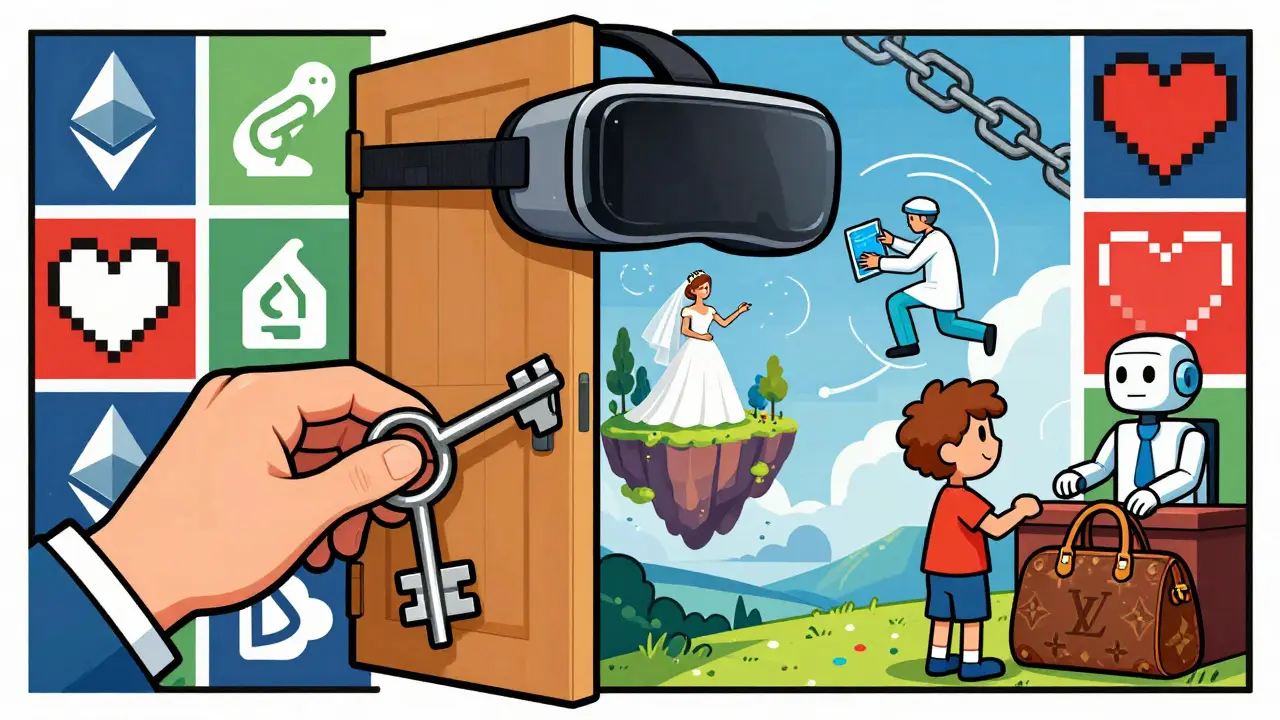
Stanley Wong
December 6, 2025 AT 05:11So I’ve been in Decentraland for about six months now and honestly it’s weird how normal it feels to walk into a virtual art gallery and pay for a piece with crypto like it’s cash at a flea market
My avatar’s got a jacket I bought from a guy in Manila who was selling it because he needed rent money and now I wear it to every concert
People don’t just log in to play anymore they log in to exist and that’s the real shift
I’ve had full conversations with strangers who live in different time zones and somehow it feels more real than texting my cousin who lives three blocks away
And the best part? Last week I sold a pair of virtual sneakers I got from a limited drop and used the ETH to pay for my coffee subscription
It’s not magic it’s just the next version of how humans connect and trade and express themselves
And yeah the tech’s clunky and the scams are everywhere but so was the early internet and look where that went
I’m not saying everyone should dive in but if you’re still treating this like a game you’re missing the point
Brooke Schmalbach
December 7, 2025 AT 14:48Let’s cut through the hype. The metaverse is a vaporware fantasy dressed up in blockchain glitter. NFTs are just JPEGs with a ledger entry. The $2.4 million land sale? That’s a billionaire playing Sims with inflated numbers. Fortnite concerts? Cute. But they’re scripted spectacles with zero permanence. Play-to-earn? Most of those games are Ponzi schemes disguised as economies. Axie Infinity collapsed because the token was designed to fail. The only people winning are the devs and the early whales. VR headsets are still $500 for a device that gives you motion sickness. And don’t get me started on privacy - your eye movements and voice modulation are being harvested by companies who don’t give a damn about your digital identity. This isn’t the future. It’s a speculative bubble with better graphics.
Madison Agado
December 8, 2025 AT 11:06There’s something deeply human about this whole thing. We’ve always built worlds - first with stories, then with maps, then with games. Now we’re building worlds that remember us. That’s not just technology, that’s longing
Think about it: when you buy a digital shirt, you’re not buying pixels. You’re buying a piece of your identity made visible. When you attend a concert in VR, you’re not watching a recording - you’re sharing space with thousands of strangers who feel the same awe
And yes, the system is broken. Scams exist. Access is unequal. But isn’t that true of every revolution? The printing press didn’t start with literacy for all. The internet didn’t begin with net neutrality
What’s happening here is the slow birth of a new kind of belonging. One where your worth isn’t tied to your bank account but to your presence, your creations, your connections
Maybe the metaverse won’t last. But the impulse behind it - to be seen, to belong, to own a piece of your own story - that’s not going anywhere
Tisha Berg
December 8, 2025 AT 18:11I’ve watched my grandma log into Roblox to attend her granddaughter’s birthday party in a virtual castle. She didn’t know what an NFT was. She didn’t need to. She just saw her grandkid smiling in a sparkly dress and waved back
That’s the real win here. Not the money. Not the tech. The connection
People think metaverse means high-end gear and crypto wallets. But for a lot of us, it’s just a way to be together when the world keeps us apart
My neighbor in rural Kansas can’t afford a VR headset. But she can join a virtual book club on her tablet. She reads to kids in a digital storytime circle. They draw pictures and send them as digital cards
It’s simple. It’s quiet. But it matters
We don’t need to turn everything into a marketplace to make it meaningful
Joe West
December 9, 2025 AT 22:56Just wanted to add a real-world data point - I work in education tech and we’ve started using VR metaverses for neurodivergent students. One kid with severe social anxiety wouldn’t speak in class for years. But in a quiet virtual forest space with a few avatars and no faces showing? He gave his first presentation. He’s been doing it every week since
It’s not about the fancy gear. It’s about control. In the metaverse, you choose how much of yourself to show. That’s powerful
And yeah, the blockchain part? It’s still messy. But the core idea - giving people agency over their digital space - that’s gold. We’re not just gaming. We’re healing. We’re learning. We’re becoming
Chris Mitchell
December 11, 2025 AT 13:43Ownership isn’t a feature. It’s the foundation. Without blockchain, the metaverse is just a theme park with better lighting. With it, it’s a nation.