OceanEx Crypto Exchange Review: Pros, Cons, and Is It Worth Using in 2026?
 Mar, 21 2026
When you’re looking for a crypto exchange, you want speed, security, and enough coins to trade. But what if the platform you’re considering only offers 20 cryptocurrencies, blocks users from your country, and has withdrawal delays? That’s OceanEx. Launched in November 2018 and based in the Cayman Islands, OceanEx isn’t another Binance or Coinbase. It’s a niche player with a very specific focus: the VeChain ecosystem. If you’re deep into VET, VTHO, or VeChain-related projects, OceanEx might be worth a look. But for most traders, it’s a risky gamble.
What Makes OceanEx Different?
OceanEx doesn’t try to be everything to everyone. It’s built around the VeChainThor a blockchain platform focused on supply chain transparency and enterprise solutions network. Its native token, OCE the native utility token of OceanEx, used for fee discounts, staking rewards, and governance voting, gives users real benefits - up to 90% off trading fees, 50% off withdrawal fees, and access to exclusive staking programs. This isn’t just a loyalty card. It’s a core part of how the platform operates.
Unlike bigger exchanges that list hundreds of coins, OceanEx keeps it tight. You’ll find Bitcoin, Ethereum, and a few major altcoins, but most of the selection revolves around VeChain tokens. That’s great if you’re already invested in that ecosystem. Not so great if you want to trade Solana, Polygon, or Cardano. You’ll need another exchange for those.
Security: Strong on Paper, But What About Real-World Use?
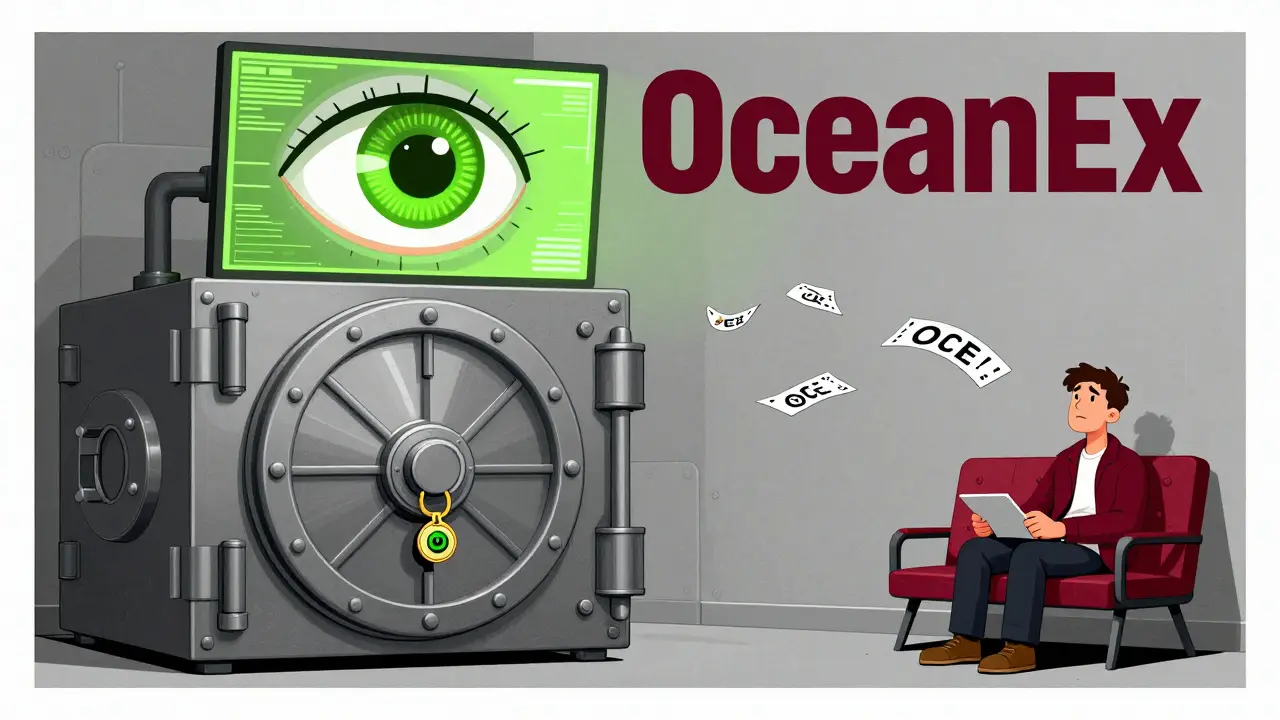
OceanEx markets itself as an AI-powered exchange with bank-level SSL encryption and machine learning tools that detect attacks in real time. They claim no successful hacks since launch - a rare feat in crypto. Their security rating from Traders Union is 9.75 out of 10. That’s higher than many top exchanges.
They use cold storage for most funds, support two-factor authentication (2FA), and are regulated in Quebec and Newfoundland and Labrador. That’s legit. But here’s the catch: no investor protection fund. If the exchange gets hit by a hack or goes under, you’re not getting reimbursed. No insurance. No safety net. That’s a red flag for anyone trading more than pocket change.
Also missing? Facial recognition, withdrawal whitelisting, and multi-signature wallets for large accounts. These are standard on exchanges like Kraken or Binance. OceanEx doesn’t offer them. You’re trusting their system - and their team - with your assets.
Trading Experience: Simple, But Limited
The interface is clean. Mobile apps for iOS and Android work well. You can place limit orders, market orders, and use API trading if you’re into bots. The trading pairs are simple: mostly USDT, BTC, and VET. That’s easy to understand.
But here’s the problem: liquidity. As of late 2025, OceanEx’s daily trading volume hovers around $15 million. Compare that to Binance’s $30 billion. That’s a 2,000x difference. Low volume means wider spreads, slippage on big orders, and difficulty exiting positions quickly. If you’re trying to trade $10,000 worth of a lesser-known coin on OceanEx, you might not find buyers. Or you might get a terrible price.
They do offer an OTC desk for large trades, but it’s not clear how accessible it is for non-institutional users. Most retail traders will be stuck with the regular order book - and that’s thin.
Fees: Low on Paper, High in Practice
OceanEx says fees are low. And they are - if you’re a member of the OCE Club. With enough OCE tokens staked, you can slash trading fees by up to 90%. That’s powerful. But if you’re not already holding OCE, you’re paying full fees - which are higher than average.
Withdrawal fees are another issue. Users report fees that seem arbitrary, especially for altcoins. One trader withdrew 500 VET and paid $12 in fees. That’s 2.4% - far above industry norms. And delays? Common. Some users wait 3-5 business days for withdrawals to process. That’s not normal for a 24/7 crypto platform.
Staking and Earning: The Real Draw
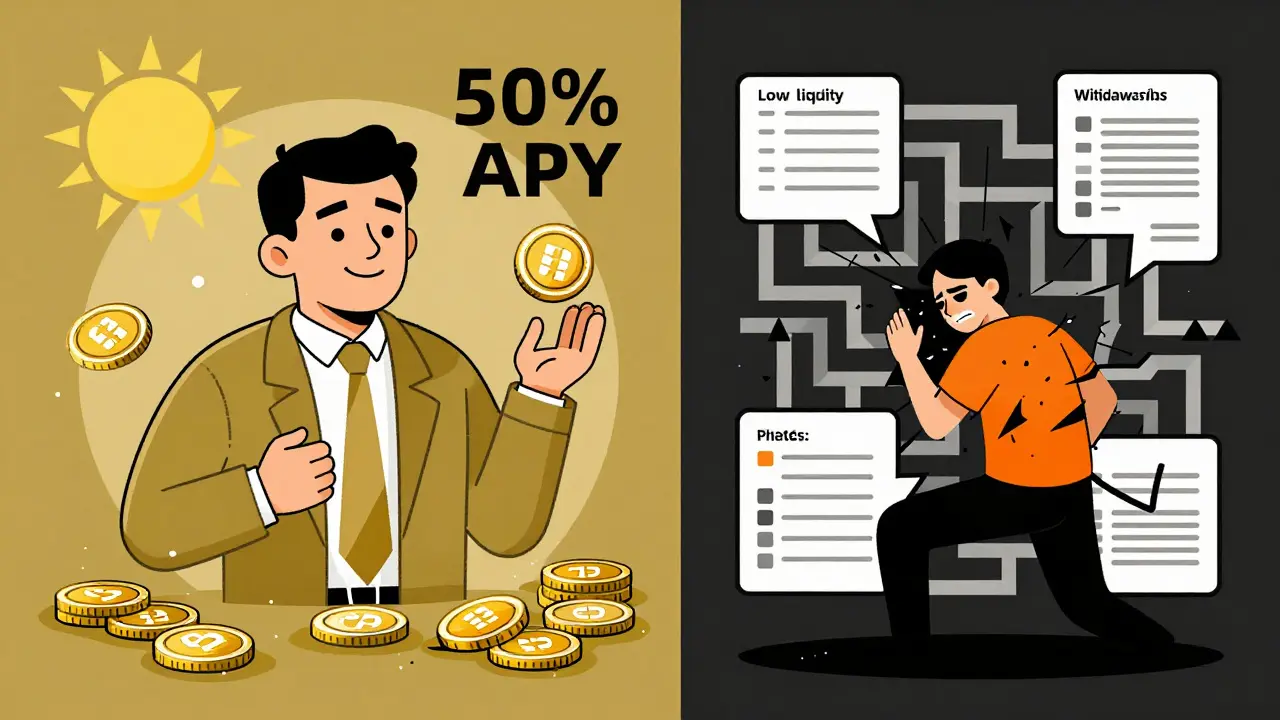
If you’re looking to earn, OceanEx’s Crypto Farm might be its strongest feature. They offer up to 50% APY on OCE staking. That’s eye-popping. But here’s the catch: you’re staking OCE, the exchange’s own token. If VeChain’s value drops, or if OceanEx loses users, OCE could crash. High yield often means high risk.
They also have a referral program that gives you up to 50% of the trading fees your referrals pay. That’s a solid perk - if you know people who trade crypto.
Who Is OceanEx For? (And Who Should Avoid It)
Here’s the truth: OceanEx isn’t for beginners. It’s not for casual traders. It’s not even for most serious investors.
It’s for one group: VeChain enthusiasts. If you’re building a dApp on VeChain, holding VET for enterprise use cases, or already have a portfolio heavy in VeChain tokens - then OceanEx gives you a dedicated home. The OCE token discounts, the deep integration, and the low slippage on VET pairs make sense here.
But if you’re from the USA, China, Iran, North Korea, or Venezuela - you can’t even sign up. OceanEx blocks 29 countries. That’s not just a policy - it’s a dealbreaker for most.
And if you want to trade more than 20 coins? You’ll need another exchange. You’ll end up moving funds back and forth - paying fees each time. That’s not efficient.
Customer Support and Accessibility
OceanEx offers 24/7 live chat, email support, and a detailed FAQ. That’s good. But user reports say responses are slow, and complex issues often go unanswered. No phone support. No community forum. No demo account to test the platform before depositing. That’s a problem.
Deposit options? You can use crypto transfers or buy with a credit card via Simplex and Banxa. But fiat on-ramps are limited. No direct bank transfers. No PayPal. No Apple Pay. That’s outdated for 2026.
Final Verdict: Niche Tool, Not a Main Exchange
OceanEx isn’t broken. It’s just not built for you - unless you’re already deep into VeChain. Its security is solid. Its OCE token utility is real. And its staking rewards are tempting.
But its low liquidity, limited coin selection, withdrawal delays, and geographic restrictions make it a risky choice for anyone else. You’re trading convenience for specialization - and that’s a trade only a few should make.
If you’re serious about VeChain, use OceanEx as a secondary exchange. Keep your main funds on a larger, more liquid platform. Use OceanEx to trade VET, stake OCE, and take advantage of the fee discounts. Don’t put your life savings here. Don’t rely on it for quick exits. And never assume your withdrawals will be instant.
For everyone else? Look elsewhere. There are better options with more coins, higher liquidity, and fewer headaches.
Is OceanEx safe to use?
OceanEx has strong security measures - no hacks since 2018, cold storage, 2FA, and regulation in Canadian provinces. But it lacks investor protection funds, multi-sig wallets, and facial recognition. It’s safer than many small exchanges, but not as secure as top-tier platforms like Kraken or Coinbase. Use it only for amounts you can afford to lose.
Can I use OceanEx in the USA?
No. OceanEx blocks users from 29 countries, including the United States. Even if you use a VPN, your account may be frozen or banned. The platform explicitly restricts access from U.S. residents due to regulatory uncertainty.
What coins can I trade on OceanEx?
OceanEx supports around 20 cryptocurrencies, mostly centered around the VeChain ecosystem. You’ll find Bitcoin (BTC), Ethereum (ETH), USDT, VET, VTHO, and a few others like LTC and XRP. But you won’t find Solana, Avalanche, Polygon, or most newer tokens. If you’re not focused on VeChain, this exchange will feel very limited.
How does the OCE token work?
OCE is OceanEx’s native token. Holding and staking OCE gives you discounts: up to 90% off trading fees, 50% off withdrawal fees, and the ability to vote on new coin listings. You can also earn up to 50% APY by staking OCE in the Crypto Farm. But remember - OCE’s value depends on OceanEx’s success. If the exchange loses users, OCE could drop hard.
Why are withdrawals so slow on OceanEx?
Users report withdrawal delays of 2-5 business days, especially for altcoins. This is likely due to manual review processes, low liquidity for certain tokens, and limited staffing. Unlike major exchanges that automate withdrawals, OceanEx relies on manual checks for security - which creates bottlenecks. If you need fast access to funds, this exchange isn’t reliable.
Is OceanEx better than Binance or Coinbase?
No, not for most users. Binance and Coinbase offer hundreds of coins, higher liquidity, faster withdrawals, better customer support, and global access. OceanEx only beats them if you’re deeply invested in VeChain and want to maximize OCE token benefits. For everyone else, it’s a step backward.
Ananya Sharma
March 21, 2026 AT 09:57Justin Credible
March 22, 2026 AT 07:37Brijendra Kumar
March 23, 2026 AT 23:34Dheeraj Singh
March 24, 2026 AT 13:30Kayla Thompson
March 24, 2026 AT 13:51Florence Pardo
March 25, 2026 AT 19:59Mike Yobra
March 26, 2026 AT 12:29Tammy Stevens
March 27, 2026 AT 01:09Alicia Speas
March 28, 2026 AT 05:22