Online Voting with Blockchain Technology: Can It Really Secure Elections?
 Jan, 12 2026
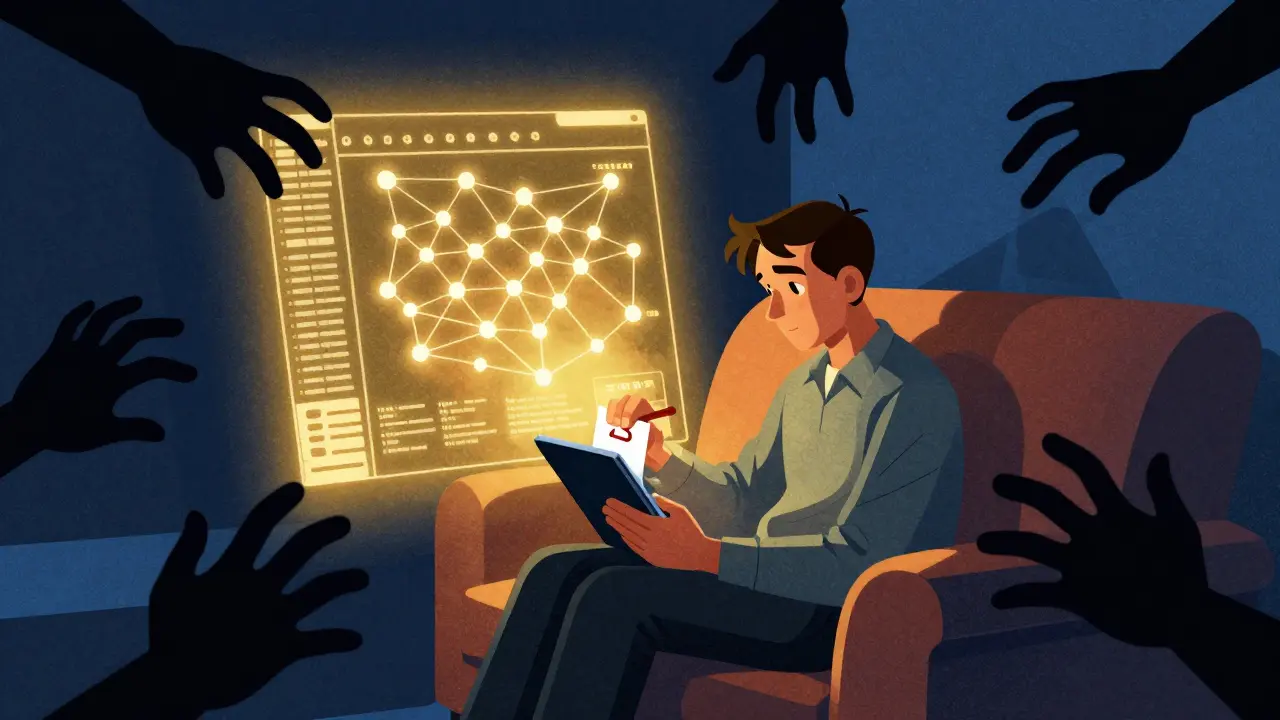
Imagine casting your vote from your couch, knowing it can’t be changed, lost, or stolen. That’s the promise of blockchain voting. No more long lines, no more hanging chads, no more doubts about whether your vote counted. Just a digital ballot, locked forever on a public ledger. Sounds perfect, right? But here’s the catch: while the idea is simple, the reality is anything but.
How Blockchain Voting Actually Works
At its core, blockchain voting isn’t magic. It’s code. Every vote becomes a transaction-like sending Bitcoin, but instead of dollars, you’re sending a choice. When you vote, your selection is encrypted, tied to a unique digital ID, and added to a block. That block links to the one before it using cryptographic hashes. Once it’s there, it can’t be altered. No one can delete your vote. No one can change it. And because the ledger is copied across hundreds or thousands of computers worldwide, there’s no single point of failure.
Smart contracts handle the counting. These are self-executing programs that run when certain conditions are met. In a blockchain election, once voting closes, the contract automatically tallies the votes without human intervention. Systems like BELEM use this to track votes in real time, ensuring transparency. Voters don’t see their own vote on the public chain-they don’t need to. Their digital wallet holds a ballot token that proves they voted, but keeps their choice private.
The architecture comes in two flavors. One is a multi-owner chain, where no single group controls the system. Think of it like a group of banks verifying each other’s transactions-no one gets to cheat because everyone’s watching. The other is a single-owner chain, where one organization runs the whole thing. That sounds easier, but it defeats the whole point of decentralization. If one company controls the system, you’re just trading paper ballots for a corporate server.
The Allure: Why People Think Blockchain Voting Is the Future
Proponents point to real wins. Voter turnout could climb. People who can’t get to polling stations-disabled voters, military personnel overseas, those living abroad-could finally participate. Costs drop. No need for paper, printers, poll workers, or storage facilities. Counting happens in minutes, not days. And because every vote is permanently recorded, audits become simple. You don’t need to recount paper ballots-you just check the blockchain.
The Brookings Institution says blockchain could end voter fraud. And honestly, that’s tempting. We’ve all heard stories of ballots disappearing, machines glitching, or people being turned away. Blockchain’s immutability seems like the antidote. Transparency is another big draw. Anyone can verify the total number of votes cast without seeing who voted for whom. That’s called end-to-end verifiability. It’s not theoretical-researchers at the University of Minnesota Morris and others have tested prototypes that prove it’s technically possible.
For small-scale elections, it already works. Corporate boardrooms use it. Student unions in Canada and Switzerland have run blockchain polls. Local governments in West Virginia and Utah tested pilot programs for overseas military voters. The results? Faster, smoother, and-critically-no major breaches reported.
The Hard Truth: Why Experts Are Warned Off
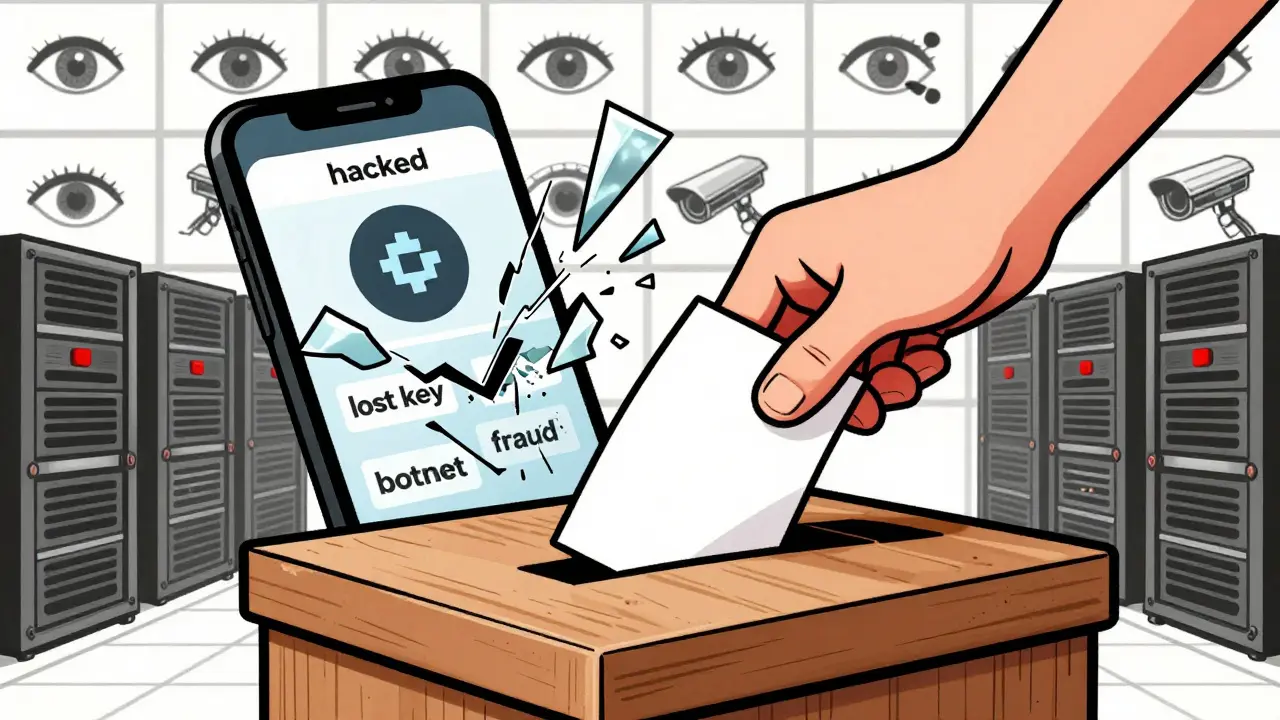
But here’s what no one talks about: the blockchain doesn’t protect your phone. It doesn’t stop malware. It doesn’t prevent someone from hacking your email to steal your login. And it doesn’t stop a nation-state from flooding the network with fake identities.
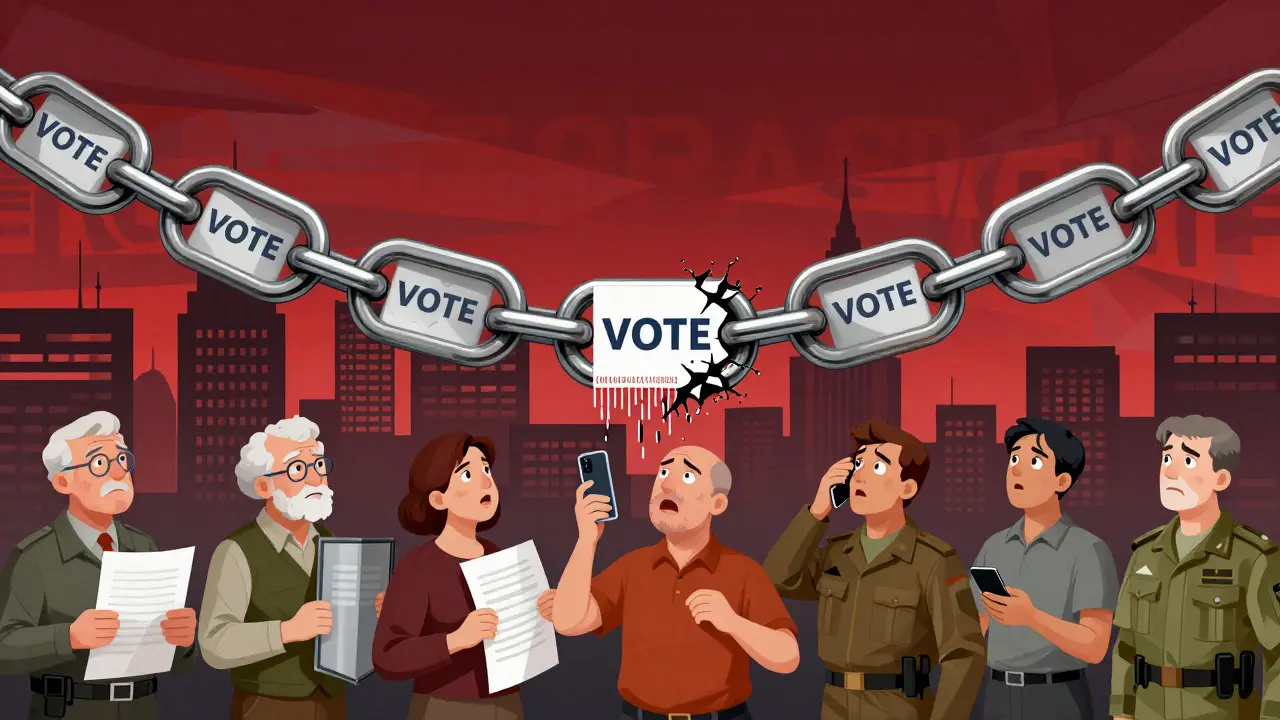
David Jefferson from the U.S. Vote Foundation puts it bluntly: “Blockchain doesn’t fix the weakest link in the chain.” That link is you. Your device. Your internet connection. Your password. If someone takes over your computer before you vote, they can change your vote-then send the altered ballot to the blockchain. The ledger will accept it. It doesn’t care if it’s fake. It only cares if the signature matches.
MIT’s Digital Currency Initiative warns that online voting, blockchain or not, opens the door to massive, undetectable fraud. Imagine a botnet that casts 10 million fake votes in a single night. The blockchain records them all. No one knows which are real. No one can undo them. And because votes are anonymous, you can’t trace them back. That’s not security-that’s chaos.
Denial-of-Service attacks are another nightmare. If hackers overwhelm the voting servers with traffic, the system crashes. Voters can’t access it. Polls get delayed. People lose faith. And guess what? Blockchain doesn’t stop this. A blockchain network with 1,000 nodes is no harder to knock offline than a website with 1,000 servers. The technology adds no extra defense.
Then there’s the human problem. Most people don’t know what a private key is. They don’t know how to secure a digital wallet. If you lose your key? Your vote is gone. Forever. No customer service. No password reset. And if you’re elderly, low-income, or not tech-savvy? You’re locked out. The very people who need accessible voting the most are the ones blockchain voting could disenfranchise.
Real-World Failures and Limited Successes
West Virginia’s 2018 pilot let overseas military members vote via a mobile app called Voatz. At first, it looked like a win. Voters loved the convenience. But security researchers quickly found flaws. The app had unencrypted data, weak authentication, and could be manipulated by attackers with physical access to phones. One team replicated a vote alteration in under 20 minutes. The state kept using it anyway-until 2020, when they quietly dropped it.
Switzerland’s city of Zug ran a blockchain voting trial for residents. It worked. But only because they limited it to a few hundred people, used government-issued digital IDs, and required in-person device setup. That’s not scalable. That’s not democracy. That’s a controlled lab experiment.
Meanwhile, Estonia’s e-voting system-which isn’t blockchain-based-has been under fire for years. Experts found vulnerabilities that could allow vote manipulation without leaving a trace. If a system that’s been refined for over a decade still has holes, what hope does a brand-new blockchain system have?
The Bigger Picture: Technology vs. Democracy
Here’s the uncomfortable truth: democracy isn’t about efficiency. It’s about trust. And trust doesn’t come from code. It comes from paper, witnesses, public observation, and the ability to recount.
Hand-marked paper ballots aren’t sexy. They’re slow. They cost money. But they’re simple. You see your vote. You put it in a box. You walk away. No one can hack a ballot you hold in your hand. No one can alter it remotely. That’s why election security experts-from the U.S. Vote Foundation to the National Academies of Sciences-still say paper is the gold standard.
Blockchain voting doesn’t fix the problems of democracy. It just moves them. Instead of trusting poll workers, you now have to trust app developers. Instead of trusting a ballot box, you trust a server farm in a data center you’ve never seen. That’s not progress. That’s a swap.
Where Blockchain Voting Might Actually Work
That doesn’t mean blockchain voting is useless. It just doesn’t belong in national elections. Not yet. Maybe never.
It’s perfect for low-risk, high-convenience settings:
- Corporate shareholder votes
- Union elections
- Student government ballots
- Community association decisions
- Small-town referendums with verified digital IDs
In these cases, the stakes are lower. The voter pool is smaller. The risk of large-scale fraud is minimal. And if something goes wrong? You can just redo the vote.
For these uses, blockchain adds real value: speed, transparency, and reduced cost. No need for mail-in ballots that get lost. No need for physical meetings. Just a secure, verifiable system that works.
The Road Ahead: What Needs to Change
If blockchain voting ever makes it to public elections, three things must happen:
- Universal digital identity-every voter must have a government-issued, unhackable digital ID tied to their real-world identity. No one can vote twice. No one can fake it.
- End-to-end voter verification-voters must be able to confirm their vote was recorded correctly, without revealing their choice. This requires new protocols that don’t exist yet.
- Zero-trust security-every device, network, and app in the voting chain must be audited, hardened, and monitored in real time. No single point of failure.
Right now, none of that exists at scale. And until it does, blockchain voting is a solution looking for a problem it can’t safely solve.
Final Thought: Don’t Trade Security for Convenience
Technology should serve democracy-not replace it. Blockchain is powerful. But power without wisdom is dangerous. We’ve seen what happens when we rush tech into critical systems. Equifax. SolarWinds. Colonial Pipeline. All had great promises. All failed in real-world use.
Online voting with blockchain sounds futuristic. But elections aren’t experiments. They’re the foundation of freedom. If we get it wrong, there’s no undo button. No recount. No do-over.
For now, the safest way to vote is still the oldest one: paper, ink, and a box you can watch.
Can blockchain voting prevent election fraud?
Blockchain can prevent tampering with votes once they’re cast-but it can’t stop fraud before that. Hackers can compromise voter devices, impersonate voters, or flood the system with fake identities. The blockchain only records what’s sent to it. It doesn’t verify if the vote is legitimate.
Is blockchain voting already being used in the U.S.?
Yes, but only in limited pilots. West Virginia tested it for overseas military voters in 2018 and 2020 using the Voatz app. Utah and Michigan have also run small-scale trials. All were restricted to specific groups and never used for general elections. Most have since been discontinued due to security concerns.
Why do experts say paper ballots are still the best option?
Paper ballots are simple, tangible, and verifiable by humans. You can see your vote, physically count it, and audit it without relying on software. No code means no hacks. No servers mean no outages. No digital keys mean no voter exclusion. For high-stakes elections, this simplicity is the strongest form of security.
Can blockchain voting increase voter turnout?
Some studies suggest it might, especially for overseas voters or those with mobility issues. But evidence is mixed. Other research shows convenience doesn’t always equal participation-and that digital barriers can exclude older, poorer, or less tech-literate voters. The risk of undermining trust in results may outweigh any turnout gains.
Are there any countries using blockchain voting successfully?
Estonia has the most advanced e-voting system, but it’s not blockchain-based. Switzerland and Denmark have tested blockchain for local elections with small, verified groups. No country uses it for national elections. Most pilot programs remain experimental and are not considered secure enough for large-scale use.
What’s the biggest technical challenge for blockchain voting?
The biggest challenge is ensuring vote secrecy while allowing verification. If you can prove your vote was counted correctly, you shouldn’t be able to prove who you voted for. That’s called end-to-end verifiability without coercion resistance. No system has solved this at scale yet.
Could blockchain voting be hacked remotely?
Yes. If an attacker controls your device or network, they can alter your vote before it’s sent to the blockchain. Since the blockchain only records what’s submitted, it can’t tell the difference between a real vote and a manipulated one. Remote hacking of voter devices is the biggest threat-not the blockchain itself.
Why isn’t blockchain voting used for corporate elections if it’s secure?
It is used-just not because it’s “secure.” It’s used because it’s convenient and cheap. Corporate votes have low stakes, small voter pools, and controlled environments. Voters are verified through company systems. The risk of fraud is minimal. That’s why it works there-but not in public elections with millions of unvetted voters.
Lauren Bontje
January 13, 2026 AT 17:22Stephanie BASILIEN
January 15, 2026 AT 06:46Deb Svanefelt
January 17, 2026 AT 01:36Telleen Anderson-Lozano
January 17, 2026 AT 09:08Haley Hebert
January 18, 2026 AT 23:00Jill McCollum
January 20, 2026 AT 05:48Hailey Bug
January 20, 2026 AT 19:35Dustin Secrest
January 22, 2026 AT 05:30Josh V
January 24, 2026 AT 03:47Stephen Gaskell
January 25, 2026 AT 11:32