Oracle Data Verification Methods: How Enterprise Systems Ensure Data Integrity
 Mar, 19 2026
When companies move critical data between systems-like moving patient records from a clinical trial into a financial reporting tool-they don’t just hope it arrives correctly. They verify. And in enterprise environments, Oracle’s data verification methods are among the most widely used tools to make sure that happens. These aren’t simple checks. They’re sophisticated, rule-based systems built into Oracle Cloud applications that catch errors before they cause compliance issues, financial losses, or patient safety risks.
What Oracle Data Verification Actually Does
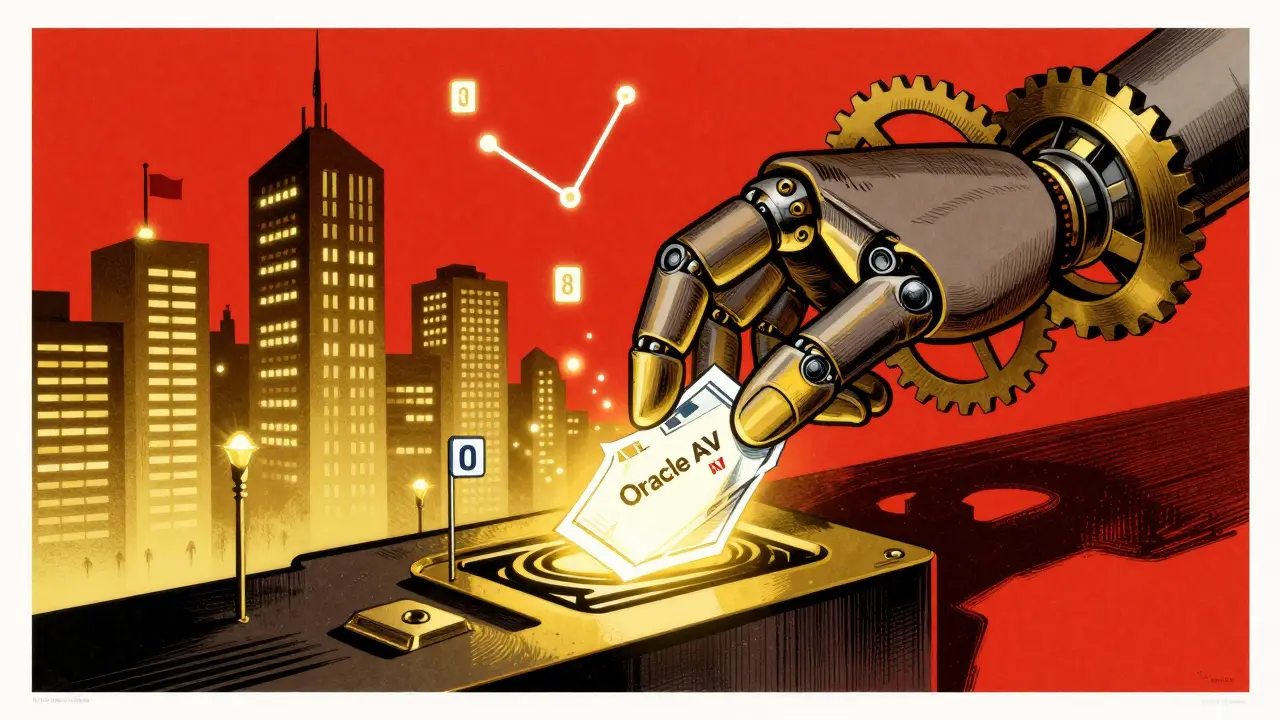
At its core, Oracle’s data verification is about matching real-world data against trusted sources. Imagine you’re entering a customer’s address into Oracle Fusion Cloud Applications. The system doesn’t just accept what you typed. It compares it against a global database of validated addresses. If the street number is off by one digit, it flags it. If the city name is spelled differently, it suggests the correct version. This isn’t spell-check. It’s precision validation.
Oracle’s Address Verification processor (AV) handles this with three modes:
- Verify (Best Match): 1 to 1 - returns only the single most accurate match
- Verify (Allow Multiple Results) - gives you all possible matches if the input is unclear
- Search: 1 to Many - lets you cross-reference addresses across countries
Each result comes with one of 11 verification status codes. For example:
- 0 = Verified Exact Match
- 3 = Verified Small Change (e.g., "St." instead of "Street")
- 8 = Identified Large Change (e.g., wrong zip code)
- 10 = Unrecognized (completely invalid)
These aren’t just labels. They feed into a deeper scoring system called AccuracyCode: V (Verified), P (Partially verified), U (Unverified), A (Ambiguous), and C (Conflict). This lets analysts quickly see which data needs attention.
Why This Matters in Regulated Industries
Oracle’s verification tools aren’t optional in healthcare, banking, or pharmaceuticals. They’re mandatory.
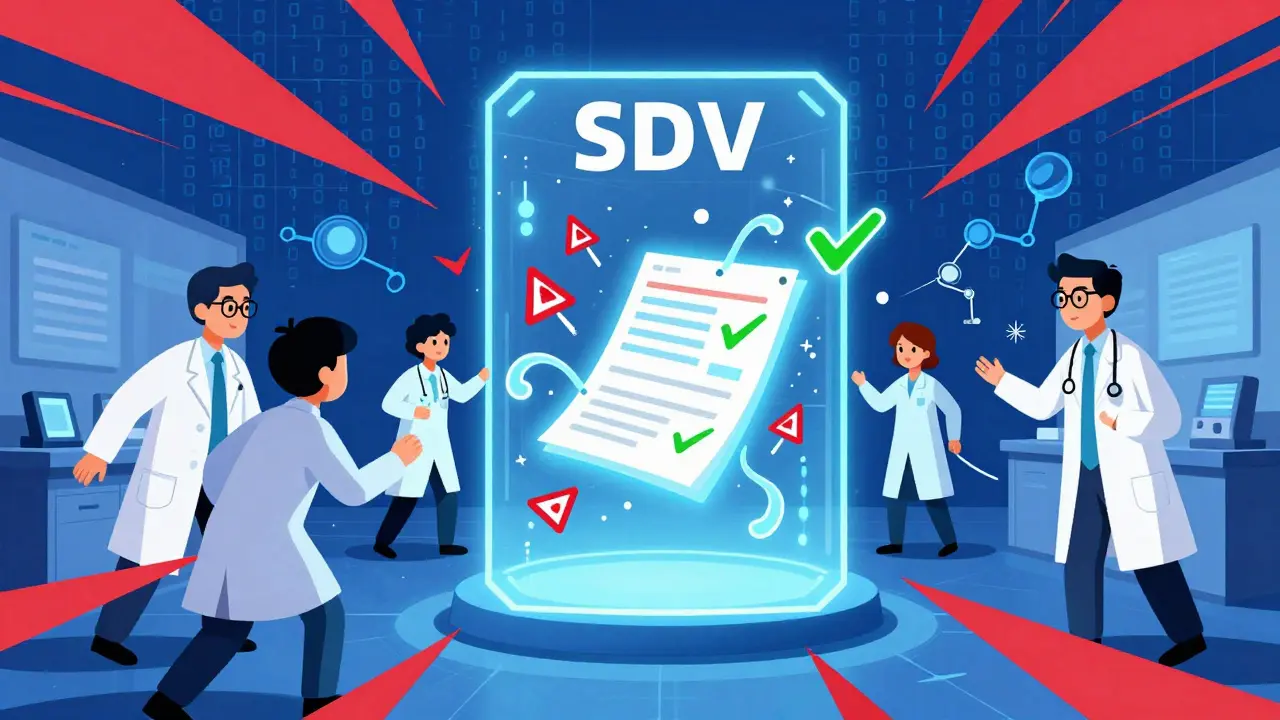
In clinical trials, Oracle Clinical One’s Source Data Verification (SDV) ensures that only critical data points-like adverse events or dosage levels-are checked. This cuts verification time by 60-70%. Pfizer’s 2022 implementation cut query resolution time by 40%, meaning faster approvals and fewer trial delays.
In banking, Oracle Banking Transaction Verification doesn’t just check account numbers. It validates API request headers, endpoint authenticity, and transaction timestamps. Bank of America’s 2023 rollout reduced payment processing errors by 75%. That’s not a minor improvement-it’s a risk reduction.
These systems also help meet regulations like the SEC’s 2023 Rule 17a-4(f), which demands exact, tamper-proof records of financial transactions. Oracle’s verification logs create an audit trail that’s machine-readable and legally defensible.
How It Works Behind the Scenes
Setting up Oracle verification isn’t plug-and-play. It requires deliberate configuration:
- Create a dedicated validation user (typically named MyFAWValidationUser) with no special characters or spaces in the password
- Ensure identical privileges exist in both Oracle Fusion Data Intelligence and Oracle Fusion Cloud Applications
- Set up Source Credentials via Console > Data Validation > Source Credentials
- Build validation sets that define which columns, metrics, and subject areas to compare
One of the most common mistakes? Trying to validate data that was extracted before the pipeline was configured. Oracle’s documentation warns that this produces false results. Always start from the initial extract date.
Performance is impressive: systems can process up to 1 million records per hour. But only if the underlying data types match. A mismatch between a string field and a numeric field causes 38% of implementation failures, according to Oracle Support data. The fix? Custom SQL transformations to standardize formats before validation.
Where Oracle Excels-and Where It Falls Short
Oracle’s biggest strength? Deep integration. If you’re using Oracle Fusion Applications, the verification tools work out of the box. In a 2023 survey of 200 enterprise clients, 95% needed little to no configuration. That’s a huge time-saver.
But here’s the catch: if your data lives outside Oracle’s ecosystem-say, in a Microsoft SQL Server or an AWS Redshift warehouse-things get messy. Gartner’s Q4 2023 report found that 32% of Oracle customers using non-Oracle data sources ran into integration issues. Informatica and Talend support over 150 connectors; Oracle tops out at around 50.
International addresses are another weak spot. Oracle’s Address Verification hits 85-90% accuracy in North America and Europe, but drops to 70-75% in parts of Asia, Africa, and Latin America. Providers like Loqate outperform it in those regions.
And the learning curve? Steep. Oracle University’s certification program requires 40-60 hours of training for experienced analysts. Users report that while the verification status codes are detailed, interpreting them without training is like reading a technical manual in a foreign language.
What’s Next: AI and Blockchain
Oracle isn’t standing still. The May 2024 release of Fusion Data Intelligence 22B introduced AI-powered discrepancy suggestions. It now auto-recommends fixes for 65% of common errors-like correcting mismatched currency codes or duplicate customer IDs.
Even more significant is the upcoming Q3 2024 release of Oracle Clinical One 24C. It will introduce blockchain-based verification trails for clinical trial data. This means every data change, who made it, and when, gets permanently recorded on an immutable ledger. No more disputes over whether a lab result was altered.
By 2025, Oracle plans to add generative AI that can automatically write validation rules based on data patterns. Imagine pointing the system at a new dataset and saying, “Find the inconsistencies.” The AI learns from historical corrections and builds the rules itself.

Real User Experiences
On Gartner Peer Insights, Oracle’s data verification tools have a 4.1/5 rating from 147 reviews. The most praised feature? The ability to drill down into exact discrepancies. One financial consultant said it saved 20+ hours a week during their ERP migration.
But complaints are real. A senior data architect at a Fortune 500 manufacturer spent three months resolving security conflicts caused by needing the same user privileges across two separate environments. Another user on Reddit said inconsistent error messages made troubleshooting data type mismatches nearly impossible.
And then there’s the documentation. A 2024 survey found 62% of users called it “comprehensive but difficult to navigate.” You’ll find the answers, but you’ll have to dig.
Final Thoughts
Oracle’s data verification methods aren’t for everyone. If you’re fully on Oracle Cloud, they’re powerful, precise, and built for compliance. They reduce errors by up to 90% in internal benchmarks and have proven themselves in high-stakes industries.
But if your data lives across multiple clouds, legacy systems, or non-Oracle platforms, you’ll hit friction. The integration gaps are real. The training burden is high. And for international data, alternatives may serve you better.
The future of data verification isn’t just about catching mistakes anymore. It’s about predicting them. Oracle’s move toward AI and blockchain trails shows they’re building toward that. Whether you’re in banking, clinical research, or manufacturing-if your data’s worth protecting, Oracle’s verification tools are one of the most robust ways to do it.
What are the 11 verification status codes in Oracle Enterprise Data Quality?
Oracle Enterprise Data Quality uses 11 status codes to classify data validation results: 0 (Verified Exact Match), 1 (Verified Multiple Matches), 2 (Verified Matched to Parent), 3 (Verified Small Change), 4 (Verified Large Change), 5 (Added), 6 (Identified No Change), 7 (Identified Small Change), 8 (Identified Large Change), 9 (Empty), and 10 (Unrecognized). These codes help analysts understand exactly how a record was modified or flagged during validation.
Can Oracle Data Verification work with non-Oracle data sources?
Yes, but with limitations. Oracle’s verification tools are optimized for Oracle Cloud applications and support around 50+ connectors. For non-Oracle systems like Microsoft SQL Server, AWS Redshift, or Snowflake, integration can be challenging. Gartner reported that 32% of users experienced connectivity issues. Competitors like Informatica offer over 150 connectors and smoother third-party integration.
Why does Oracle require a special validation user called MyFAWValidationUser?
The MyFAWValidationUser is a dedicated service account used by Oracle Fusion Data Intelligence to perform automated validation tasks across environments. It must have identical privileges in both Fusion Data Intelligence and Oracle Fusion Cloud Applications. The password must not contain special characters or spaces to avoid authentication failures. This setup ensures secure, consistent access without exposing user credentials.
How accurate is Oracle’s address verification globally?
Oracle’s Address Verification processor achieves 85-90% accuracy in North America and Europe, where address formats are standardized. Accuracy drops to 70-75% in regions like Asia, Africa, and Latin America due to less structured postal systems. Local providers like Loqate often outperform Oracle in these areas. For global operations, organizations may need to supplement Oracle’s system with region-specific validation tools.
What’s new in Oracle’s 2024-2025 roadmap for data verification?
Oracle’s 2024-2025 roadmap includes three major updates: AI-powered discrepancy suggestions (already in Fusion Data Intelligence 22B), blockchain-based verification trails for clinical trial data (coming in Clinical One 24C), and generative AI that auto-generates validation rules from data patterns (planned for 2025). These moves aim to shift from reactive error detection to predictive data quality assurance.
Marie Vernon
March 20, 2026 AT 01:12Just wanted to say how much I appreciate posts like this - clear, detailed, and actually useful. I work in healthcare data migration and Oracle’s SDV has been a game-changer for us. No more guessing whether a lab result was entered wrong or just misread. The AccuracyCode system alone saves us hours every week.
It’s not perfect, but it’s the most reliable tool we’ve had. Kudos to the team behind this.
Ross McLeod
March 21, 2026 AT 23:05Let’s be real - Oracle’s verification is a beast when you’re locked into their ecosystem, but the moment you try to integrate with anything outside their walled garden, it turns into a 3-month nightmare of custom SQL, permission conflicts, and undocumented API quirks. I’ve seen teams burn through two engineers just to get a simple Redshift-to-Fusion pipeline working. And don’t even get me started on the MyFAWValidationUser password restrictions - no spaces, no special chars, and somehow it still fails 30% of the time for no discernible reason. It’s like Oracle designed this to keep consultants employed.
Yes, it works. But it shouldn’t be this hard.
Jessica Beadle
March 22, 2026 AT 15:15AccuracyCode V/P/U/A/C is the only reason this system isn’t completely unusable. The status codes themselves are useless without context - 8 (Identified Large Change) could mean a zip code error or a country swap, and the system doesn’t differentiate. And yet, Oracle’s documentation treats these like gospel. I spent 11 hours last week debugging a false positive on a German address because the system flagged ‘Straße’ as ‘Large Change’ instead of recognizing it as standard German orthography. No one at Oracle seems to care about non-American data formats. This isn’t verification - it’s cultural bias with a dashboard.
Taylor Holloman.
March 24, 2026 AT 02:23Man, I’ve been on both sides of this - used Oracle for 5 years, then switched to Informatica for a hybrid cloud project. Honestly? The 95% ‘out of the box’ claim is true… if your entire data stack is Oracle. But once you throw in a Snowflake warehouse, a legacy SQL Server, and a couple of homegrown Python scripts? It’s like trying to plug a USB-C cable into a PS/2 port.
The AI suggestions in 22B? Actually kind of cool. Auto-corrected a bunch of duplicate customer IDs I didn’t even know existed. But the documentation? Still a maze. I found the answer to my problem buried in a 2018 PDF appendix. No one updates this stuff. And yet… I still use it. Because when it works, it works like magic.
Bryan Roth
March 25, 2026 AT 14:22Let me tell you something - if you’re in pharma or banking and you’re not using Oracle’s verification tools, you’re playing Russian roulette with compliance. I’ve seen audits where companies got fined $2M because they relied on Excel and manual checks. Oracle doesn’t just catch errors - it creates a legally defensible trail. That’s worth every hour of setup.
Yes, the learning curve is steep. Yes, the non-Oracle integration is rough. But if your data is tied to patient safety or regulatory filings? You don’t get to pick the easy path. You pick the safe one. And Oracle’s still the safest bet out there.
sai nikhil
March 26, 2026 AT 09:54