Pakistan's 2,000 MW Electricity Allocation for Crypto Mining: What It Means and Why It Matters
 Oct, 7 2025
Pakistan Crypto Mining Profit Calculator
Input Parameters
Pakistan Electricity Advantage
2,000 MW of dedicated power allocation
$0.08/kWh electricity rate (vs. $0.15-0.20 for households)
17,000 BTC/year potential mining output
Estimated Annual Results
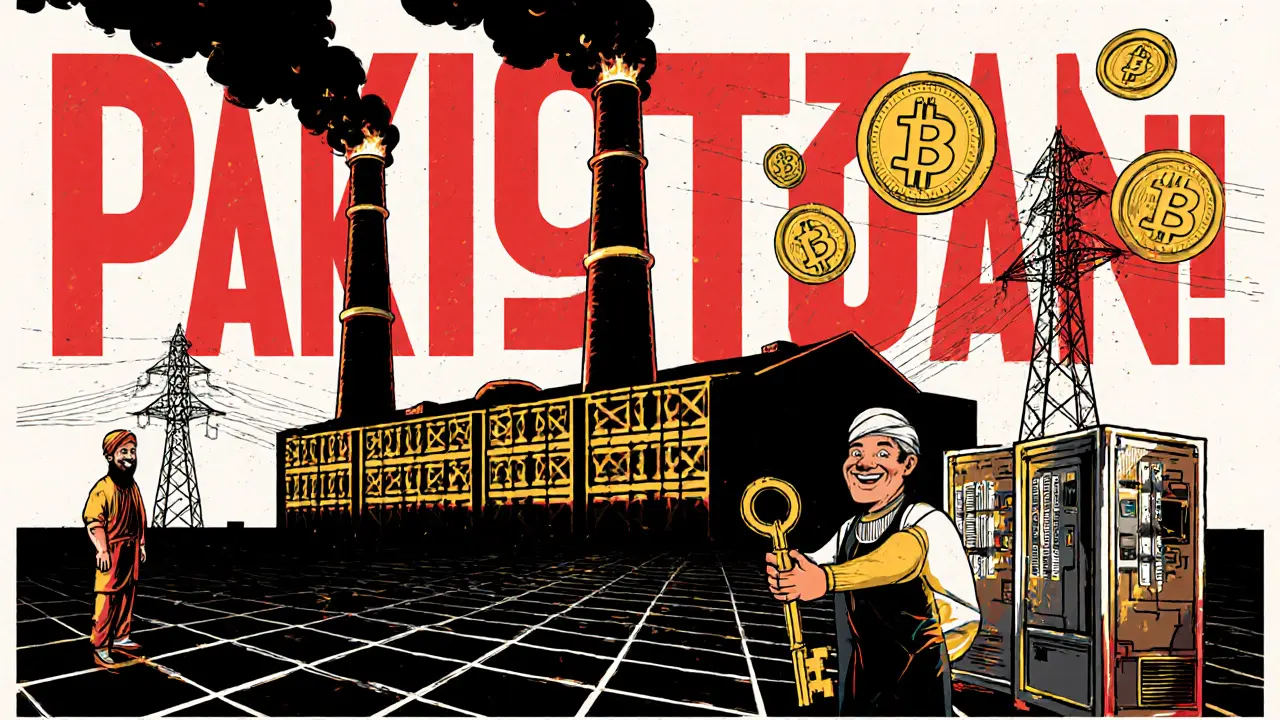
Pakistan just gave 2,000 megawatts of electricity to crypto mining - and no one saw it coming.
Most countries treat cryptocurrency mining as a problem to shut down. Pakistan decided to turn it into a solution. In May 2025, the government announced it would allocate 2,000 MW of surplus power specifically for Bitcoin mining and AI data centers. That’s not a small experiment. It’s one of the largest state-backed crypto mining projects ever launched - bigger than any private operation in the U.S. or Canada, and completely opposite to China’s 2021 ban.
Why? Because Pakistan has too much electricity and not enough buyers. The country sits on 7,000 MW of unused power, mostly from coal plants running at just 15% capacity. These plants cost the government 2.8 trillion Pakistani rupees a year to keep idle. Meanwhile, households and businesses pay high electricity rates. Mining rigs, on the other hand, don’t care when the lights go out - they just need cheap, steady power. So Pakistan said: let’s use the waste.
How much money could this actually make?
The math is simple and staggering. With 2,000 MW of power, Bitcoin miners could generate up to 17,000 BTC per year, according to mining analyst Daniel Batten. At current prices, that’s roughly $1.8 billion in annual output. Even if Bitcoin drops 50%, that’s still $900 million - more than what Pakistan earns from some of its top exports.
The real kicker? Electricity for miners will cost about 23-24 Pakistani rupees per kWh - around $0.08. That’s half the rate miners pay in Texas and a third of what they pay in Germany. In places like Kazakhstan or Russia, miners fight for grid access during winter. In Pakistan, they’re being handed the keys.
And it’s not just Bitcoin. The same power will run AI data centers, which need massive computing power for training models. That means Pakistan isn’t just selling electricity - it’s selling computing power as a service to global tech firms.
Who’s running this?
The Pakistan Crypto Council (PCC), created in March 2025 under the Ministry of Finance, is in charge. Its leadership includes Finance Minister Muhammad Aurangzeb and Special Assistant to the Prime Minister on Blockchain, Bilal Bin Saqib. This isn’t some backroom deal - it’s a formal government body with direct access to the Prime Minister’s office.
The PCC isn’t working alone. Binance co-founder Changpeng Zhao is advising them. That’s not just a name drop - it’s a signal to global investors that this is legit. Major mining hardware suppliers like Bitmain and MicroBT are already scouting locations in Lahore, Karachi, and Islamabad. There are already 22 existing data centers in those cities, run by companies like PTCL, Multinet, and Cybernet. They’re being upgraded to handle mining loads.
The University of Turbat even launched a 1MW solar-powered data center in June 2023 - a trial run for what’s coming next. Pakistan isn’t just using coal. It’s building renewable infrastructure to support this.
Why the IMF is nervous
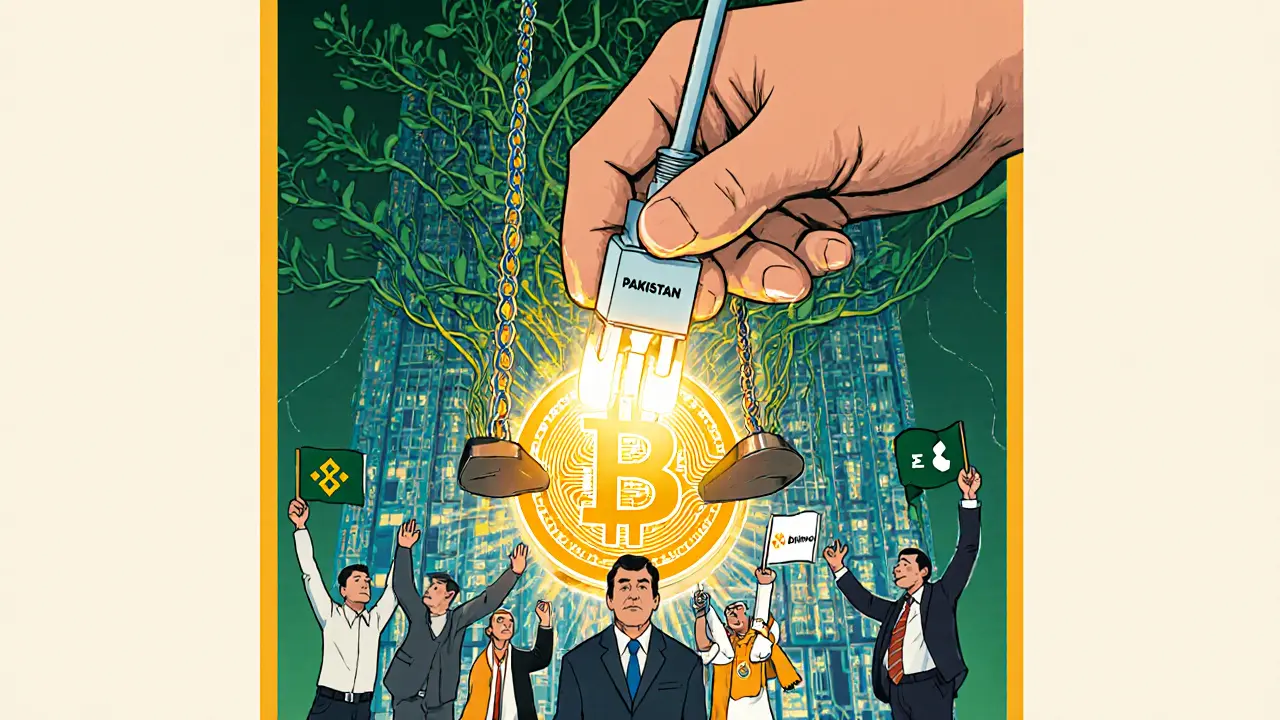
Not everyone is cheering. The International Monetary Fund (IMF) is deeply concerned. Their main issue? Subsidies.
The IMF argues that giving miners electricity at $0.08/kWh while regular users pay $0.15-$0.20 creates an unfair advantage. They’ve asked: How will Pakistan phase this out? What happens when the subsidy ends? They’ve seen this before - energy subsidies for industry rarely lead to long-term growth, just short-term distortion.
But Pakistan’s response is simple: this isn’t a subsidy. It’s a revenue stream. The government isn’t losing money - it’s turning idle assets into cash. Before, those coal plants were a liability. Now, they’re earning. The IMF wants market rates. Pakistan says: let’s make the market.
Both sides are still talking. In July 2025, the Power Division confirmed talks are ongoing. No final agreement yet. But the project is moving forward anyway. Pilot sites are already being built.
What about regulation?
Pakistan didn’t just flip a switch. In April 2025, it rolled out its first-ever national cryptocurrency policy. It defined legal crypto companies, set AML/KYC rules, and created a licensing system. This wasn’t done in secret. It was modeled after FATF guidelines to help Pakistan get off the global grey list.
Now, any crypto miner operating in Pakistan must register, report transactions, and comply with financial oversight. That’s a big deal. Many countries ban mining because they can’t control it. Pakistan is trying to control it - and profit from it.
They’ve also launched a government-held Bitcoin reserve, announced at the Bitcoin 2025 conference in Las Vegas. It’s small for now - just a few hundred BTC - but it’s symbolic. Pakistan isn’t just hosting miners. It’s becoming a crypto nation.

What’s next?
Phase 1 is 2,000 MW. Phase 2? Possibly 5,000 MW. If this works, Pakistan could become the Saudi Arabia of crypto mining - not because of oil, but because of unused power.
Other countries are watching. Nigeria, Egypt, and Indonesia all have surplus energy and struggling grids. If Pakistan succeeds, they’ll copy it. That’s why this isn’t just a local story - it’s a global turning point.
For miners, it’s the best deal in the world right now. Cheap power. Clear rules. Government backing. No taxes on mining profits yet. No cap on hardware imports. Just a clean slate.
For Pakistan, it’s a gamble. But not the kind you make when you’re desperate. This is the kind you make when you’re ready to reinvent yourself.
Can it really work?
Yes - if they don’t mess it up.
The biggest risks? Grid instability. If too many miners turn on at once, could it crash the system? Pakistan’s grid operators are working with U.S. and European smart grid firms to install load-balancing tech. They’re also building dedicated sub-stations for mining zones.
Another risk? Corruption. Will the best deals go to well-connected firms? The PCC says all bids will be public and competitive. Time will tell.
And then there’s the long game: what if Bitcoin’s price crashes? What if AI demand slows? Pakistan’s plan doesn’t rely on one coin or one tech. It’s selling computing power. That’s the real product.
They’re not just mining Bitcoin. They’re mining opportunity.
What this means for you
If you’re a miner: Pakistan is now the most attractive location on Earth. The electricity rate alone makes it worth relocating - if you can navigate the setup.
If you’re an investor: This is a high-risk, high-reward play. The government is moving fast, but the IMF is still watching. Watch for Phase 1 results in late 2025. If mining output hits 10,000 BTC by year-end, this becomes a model.
If you’re just curious: This changes everything. For the first time, a developing country isn’t begging for tech investment - it’s offering it on its own terms. And it’s using energy waste to do it.
Rachel Thomas
November 26, 2025 AT 07:52Sierra Myers
November 28, 2025 AT 03:06SHIVA SHANKAR PAMUNDALAR
November 29, 2025 AT 18:22Shelley Fischer
December 1, 2025 AT 01:29Evelyn Gu
December 3, 2025 AT 00:22Michael Fitzgibbon
December 4, 2025 AT 10:51Komal Choudhary
December 6, 2025 AT 06:26Wilma Inmenzo
December 6, 2025 AT 21:57imoleayo adebiyi
December 8, 2025 AT 20:14SHASHI SHEKHAR
December 9, 2025 AT 08:45