Popular dApps in 2025: Top Decentralized Applications Guide
 Mar, 27 2026
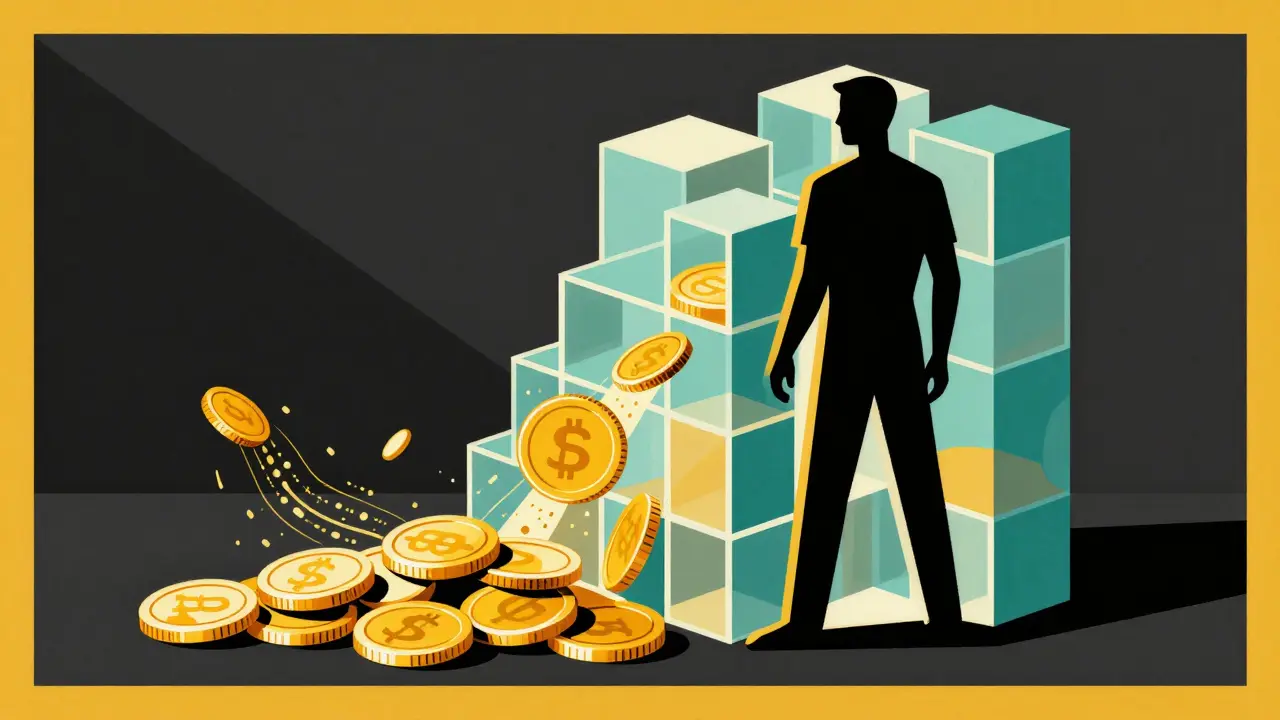
Decentralized applications, commonly called dApps, completely transformed how we interact with the internet in 2025. While you might remember blockchain mostly from Bitcoin hype cycles, 2025 was the year utility took over speculation. Instead of just storing coins, people started using these apps to swap money, buy digital art, play games, and even store files. If you're looking to navigate the Web3 landscape, knowing which platforms actually hold up against real-world use cases is crucial. This guide breaks down the heavy hitters that defined the ecosystem last year and explains why they remain essential tools today.
Why dApps Took Over in 2025
The shift wasn't just about technology; it was about friction. Traditional centralized services required trust in corporations to keep your data safe and your funds liquid. In 2025, smart contracts on networks like Ethereum, Solana, and Layer 2 solutions like Arbitrum and Base removed most of that headache. You didn't need to worry about a bank freezing your account or a server going offline. The code itself enforced the rules.
This stability led to massive adoption numbers. By the middle of 2025, there were over 355 distinct DeFi (Decentralized Finance) applications alone across major chains. We moved past the stage where only tech experts could use these tools. User experiences improved drastically, allowing average people to perform complex financial maneuvers without needing a computer science degree. The ecosystem finally had its "killer apps"-software so useful that you couldn't imagine going back to centralized versions.
Leading the Charge: Uniswap v4
When discussing decentralized exchanges, one name dominates the conversation. Uniswap is a protocol for automated liquidity provision on Ethereum and Layer 2 networks. Also known as Uniswap v4, the latest iteration changed the game with its customizable liquidity pools. Unlike older models where every pool operated on the same fixed rules, v4 introduced "hooks." These allow developers to customize trading logic, meaning you could create a pool that automatically rebalances during high volatility or charges different fees based on time of day.
The impact was immediate. In terms of sheer volume, Uniswap processed daily trading figures exceeding $2 billion. To put that in perspective, that rivals some smaller traditional stock brokerages. Its ability to bridge between Ethereum and various Layer 2 networks meant users saved significant amounts on gas fees while retaining deep liquidity. It became the default choice for institutional traders who needed reliability, proving that dApps could handle high-stakes financial activity.
How to Swap Efficiently: Alternatives to Uniswap
While Uniswap leads in liquidity, it isn't always the cheapest option for everyone. PancakeSwap is a popular decentralized exchange built on Binance Smart Chain offers a compelling alternative. Built on the BNB Chain, it provides similar trading capabilities but significantly lower transaction fees and faster confirmation times. For retail traders making smaller swaps, the savings add up quickly compared to Ethereum's mainnet costs.
| Platform | Primary Chain | Daily Volume | Key Feature |
|---|---|---|---|
| Uniswap v4 | Ethereum / L2 | $2B+ | Hooks Technology |
| PancakeSwap | Binance Smart Chain | $500M+ | Low Fees |
| dYdX | Cosmos / Ethereum | $1B+ | Perpetual Futures |

The Art of Ownership: NFT Marketplaces
If DeFi handles the money, NFTs handle ownership. OpenSea is the world's largest marketplace for non-fungible tokens solidified its position in 2025 as the gateway to digital collectibles. It wasn't just about JPEGs anymore; the platform integrated royalty tracking systems that ensured creators got paid when their art resold. This feature solved a massive grievance artists had about platforms cutting out the original creator.
The infrastructure supported everything from gaming skins to virtual real estate deeds. OpenSea allowed users to set up their own mini-marketplaces within the ecosystem, creating a fractal effect where communities could trade assets independently. With monthly transaction volumes reaching hundreds of millions of dollars, it proved that digital ownership had found a sustainable economic model beyond hype.
Gaming Worlds: Play-to-Earn Realities
The gaming sector saw the steepest learning curve but also the most passionate communities. Axie Infinity is a blockchain-based game where users breed and battle fantasy creatures continued to lead the pack. What made Axie stand out in 2025 wasn't just the gameplay, but the DAO governance model embedded in it. Players literally voted on the direction of the economy and game balance.
Millions of daily active users engaged with the game, particularly in Southeast Asia and Latin America where the earnings potential served as a vital supplementary income source. While earning potential fluctuates with tokenomics, the social infrastructure remained robust. Alongside Axie, Decentraland is a virtual reality platform run entirely by the community offered immersive metaverse experiences. Users bought land as NFTs and hosted events, using MANA cryptocurrency for transactions.
Infrastructure Tools That Keep the Lights On
You can't build skyscrapers on sand. Several dApps operate in the background to ensure the others function smoothly. Chainlink is a decentralized oracle network providing reliable data feeds to smart contracts remains the backbone of DeFi. Without Chainlink's LINK tokens incentivizing node operators, smart contracts couldn't verify real-world prices, weather data, or sports results. It effectively bridges the gap between off-chain data and on-chain execution.
Similarly, storage matters. Filecoin is a decentralized storage system designed to store humanity's most important information led the charge in keeping data censorship-resistant. Using its FIL token economy, it incentivized users to sell spare hard drive space to the network. This peer-to-peer architecture kept vast amounts of historical blockchain data accessible, ensuring transparency.
Privacy Browsing as a Daily Tool
Not all dApps are for trading; some are for safety. Brave Browser is a privacy-focused web browser that blocks third-party trackers bridged the gap between Web2 and Web3. By implementing a Basic Attention Token (BAT) reward system, it flipped the ad model. Instead of advertisers stealing attention, users opted in to see ads and got paid in crypto.
With built-in VPNs, firewalls, and private search engines, it became the default choice for anyone worried about surveillance capitalism. The inclusion of an AI assistant further cemented its place in daily workflows. Community feedback consistently showed appreciation for the ad-blocking capabilities, even if BAT earnings varied based on browsing habits.
Navigating the Learning Curve
Despite improvements, onboarding remains a hurdle. New users typically spend 10-15 hours mastering platforms like Axie Infinity before they feel comfortable managing in-game assets. For DeFi protocols like Compound or Synthetix, understanding concepts like impermanent loss and collateralization ratios takes around 8-12 hours of study. Don't let this scare you off-community resources on Discord and YouTube are more robust than ever, offering step-by-step guides for specific wallets and interactions.
Risks still exist. Connecting to a malicious website can drain your wallet instantly. Always verify URLs, especially for dApps that look identical to legitimate ones. Scammers often clone interfaces to trick users into approving malicious smart contract calls. Stick to the official links provided by community forums or verified aggregators to minimize exposure.
What to Expect Next
Looking ahead from early 2026, the trend points toward deeper integration. Layer 2 solutions continue to scale, promising even lower costs for Uniswap and other heavy users. Regulatory clarity is slowly emerging in major jurisdictions, encouraging institutions to participate more openly. As we move forward, the line between "regular" apps and dApps will blur further, making decentralized identity and finance invisible parts of our daily lives.
What exactly is a dApp?
A dApp (decentralized application) is software that runs on a blockchain network rather than a single company's server. It uses smart contracts to enforce rules automatically, meaning no central authority can control the data or shut it down. Examples include Uniswap for trading and OpenSea for buying NFTs.
Which dApp is the biggest in 2025?
Uniswap v4 is widely considered the leading dApp regarding volume and usage, processing over $2 billion daily in trades across Ethereum and Layer 2 networks.
Are dApps safe to use?
They are generally secure due to open-source audits, but risks include phishing scams and smart contract bugs. Never click unknown links, and only connect your wallet to sites you trust absolutely.
Do I need a lot of money to start?
No. Many dApps require very small deposits. Gas fees on Layer 2 networks can be under $1. Gaming apps like Axie may need upfront asset purchases, but many browsers like Brave are free to use.
Can I earn money using dApps?
Yes. You can earn through yield farming on DeFi platforms, trading spreads, selling NFTs created by yourself, playing Play-to-Earn games, or by simply browsing the web with Brave Browser and earning BAT tokens.
Jeannie LaCroix
March 28, 2026 AT 19:18The whole system is completely broken right now! Everyone keeps saying utility is over speculation but look at the gas prices on Ethereum mainnet during peak hours. You literally cannot move your funds without paying a fortune in fees. It feels like they designed this ecosystem specifically to punish average people who don't have thousands of dollars ready to burn. I remember when we first talked about decentralization and the promise was that money would be free. Now you need a PhD in computer science just to swap tokens safely without getting liquidated. The article mentions Uniswap processing two billion dollars daily which sounds impressive on paper until you realize how much slippage you lose in the process. People are pretending everything is stable while the codebases are full of vulnerabilities waiting to be exploited by hackers with no conscience. We trust corporations less than before yet we blindly trust anonymous developers writing un-audited smart contracts on Layer Two networks. It is absolutely insane that we call this progress when half the time you end up locked in liquidity pools forever. The marketing machine spins these narratives about killer apps while real users lose their savings on bridges. No one ignores the fact that centralized servers actually work better for ninety percent of normal tasks. This narrative has been recycled since two thousand twenty and nothing fundamental changed for the consumer experience. They claim frictionless adoption exists but I have seen wallets get drained faster than anyone can react. I refuse to accept this as normal life when we have established banking systems that function without constant threats. The technology is cool but the implementation remains fundamentally flawed beyond repair.
Kevion Daley
March 29, 2026 AT 23:30Your emotional outburst ignores the actual math behind why volatility exists. 😐 Liquidity provision requires risk capital that you fail to acknowledge in your rage. Uniswap v4 hooks mitigate slippage significantly compared to older models that you seem to prefer. Most retail traders lack the nuance to understand custom trading logic parameters. 🙄 Stop complaining about complexity when you likely haven't audited a single contract yourself. Gas fees fluctuate based on network demand which is a natural market phenomenon. 🤷♂️
Tammy Stevens
March 30, 2026 AT 01:50You gotta love how the hooks architecture allows for dynamic fee tiers based on volatility conditions. It really changes the game for yield farming strategies on L2 solutions. I have seen massive improvements in capital efficiency since the upgrade launched last year. Impermanent loss is still a factor but auto-rebalancing pools help manage exposure much better. Just remember to check the smart contract addresses before approving transactions on any DEX interface. Slippage tolerance settings should always be under five percent unless you are doing large arbitrage trades. Network congestion on Arbitrum can spike unexpectedly so monitor mempool status before executing orders. Staking rewards on governance tokens provide a nice hedge against token inflation rates too. Don't sleep on cross-chain bridges either because swapping assets between chains adds another layer of security protocols.
Leona Fowler
March 30, 2026 AT 13:17Auto-rebalancing mechanisms do offer theoretical benefits for passive income generation strategies. Real world testing data suggests performance varies depending on market depth availability. Developers typically recommend monitoring pool utilization ratios to prevent liquidity fragmentation issues. Cross-chain bridging introduces additional vector risks regarding oracle validation delays. Proper wallet hygiene remains the primary defense against unauthorized signature approvals.
Misty Williams
March 31, 2026 AT 20:29Security protocols must never be compromised for the sake of convenience or potential financial gain. One must always verify the integrity of the URL before connecting a digital wallet to any external service provider. Negligence in this regard leads directly to the loss of hard earned personal savings without recourse. Ethical responsibility dictates that users prioritize protection over aggressive yield generation tactics. Scammers actively clone legitimate interfaces to deceive unsuspecting individuals into signing malicious transactions. Trusting community forums exclusively often exposes users to social engineering campaigns designed by bad actors. A rigorous verification process is mandatory for every single interaction on decentralized platforms.
Anand Makawana
April 1, 2026 AT 08:37While caution is prudent!!! The innovation pipeline is moving at unprecedented speeds across all verticals!!!!! Risk management frameworks are improving continuously with every iteration cycle!!!!! We must remain vigilant but also embrace the technological paradigm shift happening now!!!!! Blockchain finality guarantees are stronger than ever due to formal verification methods!!!!! Do not let fear obscure the immense opportunities available!!!!! Collaboration among node operators ensures robustness!!!!!
kavya barikar
April 2, 2026 AT 21:43It works fine for basic swaps.
Cordany Harper
April 2, 2026 AT 22:25Yeah sometimes simple is best until you really dive into the advanced features. Just stick to the verified aggregator tools and keep your private keys safe offline. If you see anything weird pop up on the screen just walk away immediately. It helps to join a few trusted discord channels for real time alerts too. Everyone learns at their own pace so take your time exploring.
DarShawn Owens
April 3, 2026 AT 03:49Welcome to the community here and I hope you find plenty of value in these resources. Getting started can feel overwhelming but many people have walked this path successfully before you. Patience goes a long way when figuring out the nuances of Web3 navigation tools. Feel free to share any hurdles you encounter since we learn together.