Real-World DePIN Applications: How Blockchain Is Powering Physical Infrastructure
 Nov, 30 2025
DePIN Earnings Calculator
Calculate Your Potential Earnings
Estimate how much you could earn by contributing to DePIN networks with your physical resources.
Imagine your neighbor’s Wi-Fi router suddenly becomes part of a global internet network-and they get paid in crypto for it. That’s not science fiction. It’s happening right now through DePIN applications, a real-world use of blockchain that’s quietly rebuilding how we share physical resources. Unlike crypto projects that live only online, DePIN connects digital incentives to real things: antennas, solar panels, hard drives, and even electric vehicles. It’s blockchain meeting the physical world, and it’s solving problems big companies have failed to fix.
What Exactly Is DePIN?
DePIN stands for Decentralized Physical Infrastructure Networks. At its core, it’s a system where people are rewarded with cryptocurrency for contributing physical resources to a shared network. Instead of a single company owning all the cell towers or cloud servers, thousands of individuals contribute their spare bandwidth, storage, or energy-and get paid for it. The whole thing runs on blockchain, smart contracts, and tokens. No middlemen. No corporate approval. Just code and incentives.Think of it like Uber, but for infrastructure. You don’t need a license from a government agency or a contract with a telecom giant. If you have a hotspot, a spare hard drive, or a home solar setup, you can plug into the network and start earning. The blockchain keeps track of who contributed what, when, and how much. Smart contracts automatically pay out rewards when conditions are met-like when your hotspot sends data or your drive stores a file.
How DePIN Works: The Three Pillars
Every DePIN network runs on three simple but powerful pieces:- Blockchain - The public ledger that records every transaction, contribution, and payment. Nothing gets erased. Everything is visible.
- Smart contracts - Self-executing code that handles payments, verifies usage, and enforces rules without human intervention.
- Tokens - Digital rewards given to participants. These can be spent within the network, traded, or held as an investment.
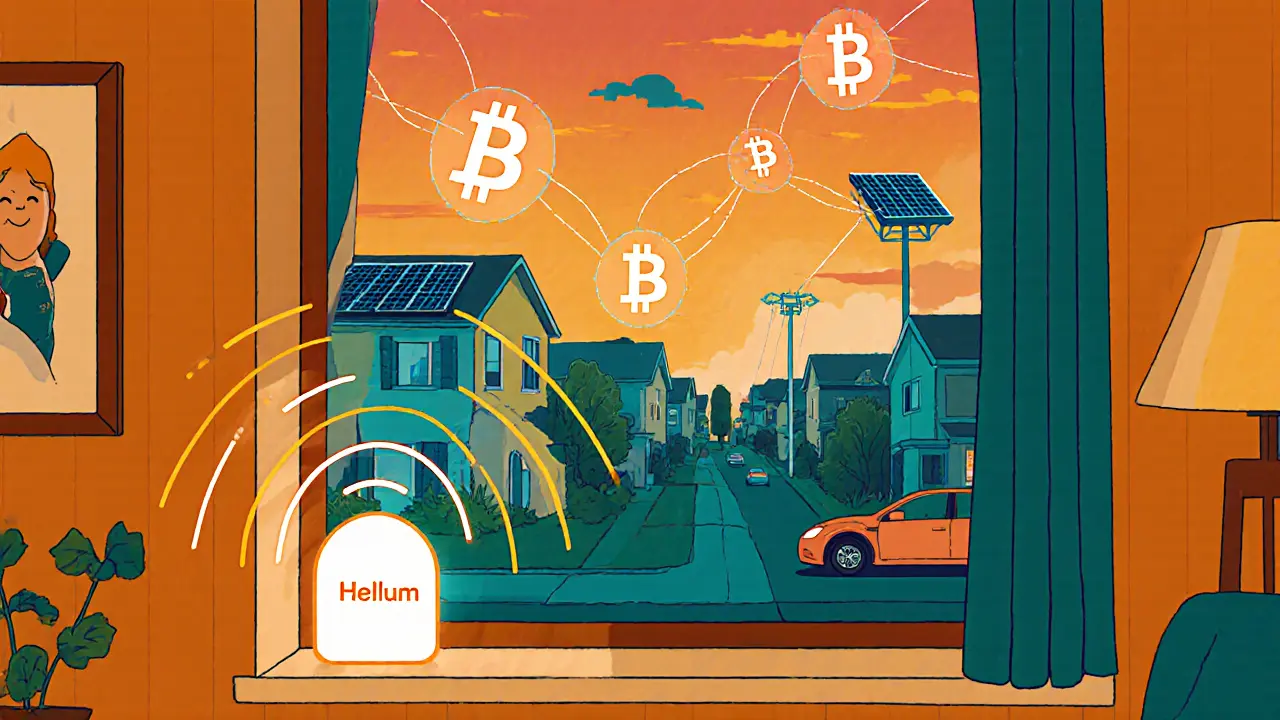
Here’s how it plays out in real life: You install a Helium hotspot in your living room. It broadcasts wireless coverage. Other users connect to it. Your hotspot earns HNT tokens. You can cash those out, or use them to pay for internet access elsewhere on the network. The system grows because everyone has skin in the game.
Real-World DePIN Applications You Can Use Today
DePIN isn’t theoretical. It’s already running in five major areas-and changing how we access basic services.1. Decentralized Wireless Networks
Helium is the biggest example. Launched in 2019, it’s now the largest decentralized wireless network on Earth. Over 2 million hotspots have been deployed by regular people-homeowners, small businesses, even farmers in rural areas. These hotspots create LoRaWAN coverage for IoT devices like smart sensors, trackers, and environmental monitors.
In places where AT&T or Verizon won’t build towers-rural Montana, small towns in Appalachia-Helium fills the gap. Farmers track livestock. Cities monitor air quality. All without paying a monthly fee to a telecom monopoly. Contributors earn HNT tokens, which have been worth over $30 at peak. The network now covers over 80% of the U.S. population.
2. Decentralized Cloud Storage
Centralized cloud storage-like Amazon S3 or Google Drive-costs billions to run and is vulnerable to outages and censorship. DePIN fixes that with networks like Filecoin and Storj.
With Filecoin, you rent out unused space on your home PC or NAS drive. Your data is split into pieces, encrypted, and stored across hundreds of other users’ devices. If one drive fails, the system automatically rebuilds the data from others. It’s cheaper than AWS, more private than Google Drive, and impossible to shut down because no single company controls it.
Companies like Web3 startups and indie developers already use Filecoin to host websites, apps, and NFT metadata. The cost? As low as $0.005 per GB per month-less than a tenth of what Amazon charges.
3. Peer-to-Peer Energy Trading
Picture this: You have solar panels on your roof. On sunny days, you produce more power than you use. Instead of selling it back to the utility company at pennies on the dollar, you sell it directly to your neighbor using a DePIN energy network like Power Ledger or LO3 Energy.
Blockchain tracks how much energy you generate and how much your neighbor uses. Smart contracts automatically transfer tokens from their wallet to yours. No utility bill. No middleman. No delays. In Brooklyn, a pilot project called Brooklyn Microgrid lets residents trade solar power in real time. Participants save 20-30% on energy bills. And because it’s decentralized, the grid stays up even during blackouts.
4. Shared Computing Power
Training AI models or running complex simulations used to require expensive cloud servers. Now, networks like Render Network and Golem let you rent out your GPU-whether it’s in a gaming PC or a workstation.
Animation studios use Render Network to render 3D scenes for a fraction of the cost. Researchers use Golem to run climate models without waiting weeks for university supercomputers. Contributors earn GLM or RNDR tokens. The network scales on demand: when demand spikes, more people join to earn. When demand drops, they stop. No contracts. No overhead.
5. Decentralized Mobility and Transportation
DePIN is even entering transportation. Projects like Hivemapper let drivers earn tokens by recording road data with their phones or dashcams. That data builds a free, open-source map-better than Google Maps in many rural areas. Drivers get paid for every mile they drive and every road they map.
Other networks are testing vehicle-to-grid systems. Electric cars with bidirectional charging can feed power back into the grid during peak demand. In return, owners earn tokens. It turns your Tesla into a mobile battery-and a revenue stream.

The DePIN Flywheel: How These Networks Grow Themselves
What makes DePIN different from old-school startups? It doesn’t need venture capital to scale. It grows on its own through a self-reinforcing loop called the DePIN flywheel.- Incentivize participation - You get paid to contribute your hardware.
- Attract more users - Better coverage, faster speeds, lower prices bring in more people.
- Network expands - More contributors mean more capacity, which means better service.
- Token value rises - As the network becomes more useful, demand for its token increases, attracting investors and developers.
This loop creates exponential growth. Helium added its first million hotspots in four years. The second million took just 11 months. Filecoin’s storage capacity has grown over 1,000% since 2020. These aren’t hype cycles-they’re real infrastructure being built by real people.
Why DePIN Beats Centralized Systems
Traditional infrastructure has three big flaws:- Single points of failure - One server crash can take down a whole cloud service.
- High costs - Building and maintaining towers, data centers, and grids is expensive.
- Lack of access - Big companies ignore rural or low-income areas because they’re not profitable.
DePIN fixes all three. Because the network is distributed, there’s no single point to hack or break. Costs are slashed because participants use their own hardware. And since anyone can join, even remote areas get coverage. In the U.S., over 20 million people still lack reliable broadband. DePIN networks are already covering those areas-not because a corporation decided to, but because neighbors wanted to help each other.

Who Benefits From DePIN?
Everyone.
- Homeowners turn idle hardware into income.
- Small businesses get affordable internet, storage, and computing power.
- Developers build apps on infrastructure that can’t be shut down.
- Communities gain control over their own connectivity and energy.
- Developing regions skip the expensive legacy grid and go straight to decentralized solutions.
There’s no gatekeeper. No application form. No credit check. If you have a router, a hard drive, or a solar panel, you’re already part of the next infrastructure layer.
The Future of DePIN Is Already Here
DePIN isn’t coming. It’s already here. In Missoula, a local tech group just launched a community Wi-Fi mesh using Helium hotspots. In Texas, a group of farmers uses Filecoin to store crop data. In California, a solar co-op trades energy with neighbors using blockchain.
These aren’t experiments. They’re working models. And they’re growing fast. By 2027, analysts estimate DePIN networks will handle over $10 billion in annual infrastructure value.
The old way-centralized, slow, expensive-is crumbling. The new way-decentralized, community-powered, token-incentivized-is taking over. You don’t need to be a tech expert to join. You just need to have something to give. And in return, you get more than money. You get ownership. You get resilience. You get a say in how the world’s infrastructure works.
What’s the difference between DePIN and regular blockchain projects?
Regular blockchain projects like Bitcoin or Ethereum focus on digital transactions-sending money, trading tokens, or running smart contracts in the digital world. DePIN connects blockchain to physical infrastructure. It rewards people for contributing real-world hardware like Wi-Fi hotspots, storage drives, or solar panels. DePIN turns your unused physical resources into network services.
Do I need special equipment to join a DePIN network?
It depends on the network. For Helium, you need a hotspot device, which costs $200-$400. For Filecoin or Render, you can use your existing PC or NAS drive with a compatible hard drive. Some networks even let you participate using just a smartphone. You don’t need to buy anything if you already have spare storage, bandwidth, or computing power.
Are DePIN networks secure?
Yes, and more secure than most centralized services. Data is encrypted and split across hundreds of devices. No single entity controls the network, so there’s no central server to hack. Smart contracts handle payments automatically, reducing fraud risk. The blockchain records every interaction, making tampering nearly impossible. In fact, DePIN networks have fewer outages and breaches than Amazon Web Services or Google Cloud.
Can I make real money from DePIN?
Absolutely. Helium hotspot operators in high-demand areas earn $50-$200 per month in HNT. Filecoin contributors can make $10-$50 per TB of storage per month. Render Network users with powerful GPUs earn $50-$300 monthly. These aren’t side gigs-they’re sustainable income streams. The key is consistency and location. The more useful your contribution, the more you earn.
Is DePIN just for tech people?
No. DePIN is designed for everyday people. You don’t need to know how blockchain works to run a hotspot or rent out storage. Most platforms have simple apps that guide you through setup in under 10 minutes. Farmers, teachers, retirees, and students are already participating. It’s not about coding-it’s about sharing what you already have.