Adaptive Mining Difficulty: How Crypto Networks Adjust to Keep Mining Fair
When you mine cryptocurrency, you’re competing against thousands of others to solve complex math problems. But what if everyone suddenly got faster hardware? That’s where adaptive mining difficulty, a system that automatically adjusts how hard it is to mine new blocks to maintain a steady pace. It’s the invisible hand that keeps Bitcoin and other Proof of Work chains running smoothly. Without it, blocks would be mined too fast, flooding the network, or too slow, causing delays and congestion.
This system doesn’t just exist on Bitcoin. It’s built into most major Proof of Work blockchains like Litecoin and Bitcoin Cash. Every 2,016 blocks (roughly every two weeks), Bitcoin checks how long it took to mine the last batch. If miners solved them too quickly—say, in 10 days instead of 14—the difficulty goes up. If it took too long, it drops. It’s not magic. It’s math. And it’s why mining stays competitive, even as machines get more powerful. You can’t just buy a better rig and dominate forever. The network fights back.
But adaptive mining difficulty isn’t perfect. When countries like Angola banned mining, or Pakistan started allocating massive power to miners, the global hash rate shifted suddenly. That caused temporary spikes and drops in difficulty. Some miners got left behind. Others cashed in. It’s why you see wild swings in profitability—not because the price changed, but because the difficulty adjusted after a shock. And when a chain like Bitcoin Gold got 51% attacked, the difficulty didn’t stop it. That’s because difficulty adjusts based on time, not security. It doesn’t know if you’re mining honestly or not.
Staking has taken over as the greener alternative, but mining still runs critical parts of crypto. And as long as it does, adaptive mining difficulty will keep the game fair. Not because it’s perfect, but because it’s the only system that works at scale without central control. You’ll see this concept come up again and again in posts about energy use, mining bans, and why some coins die when their difficulty gets too high. The real question isn’t whether you can mine—it’s whether the network can still keep up with you.
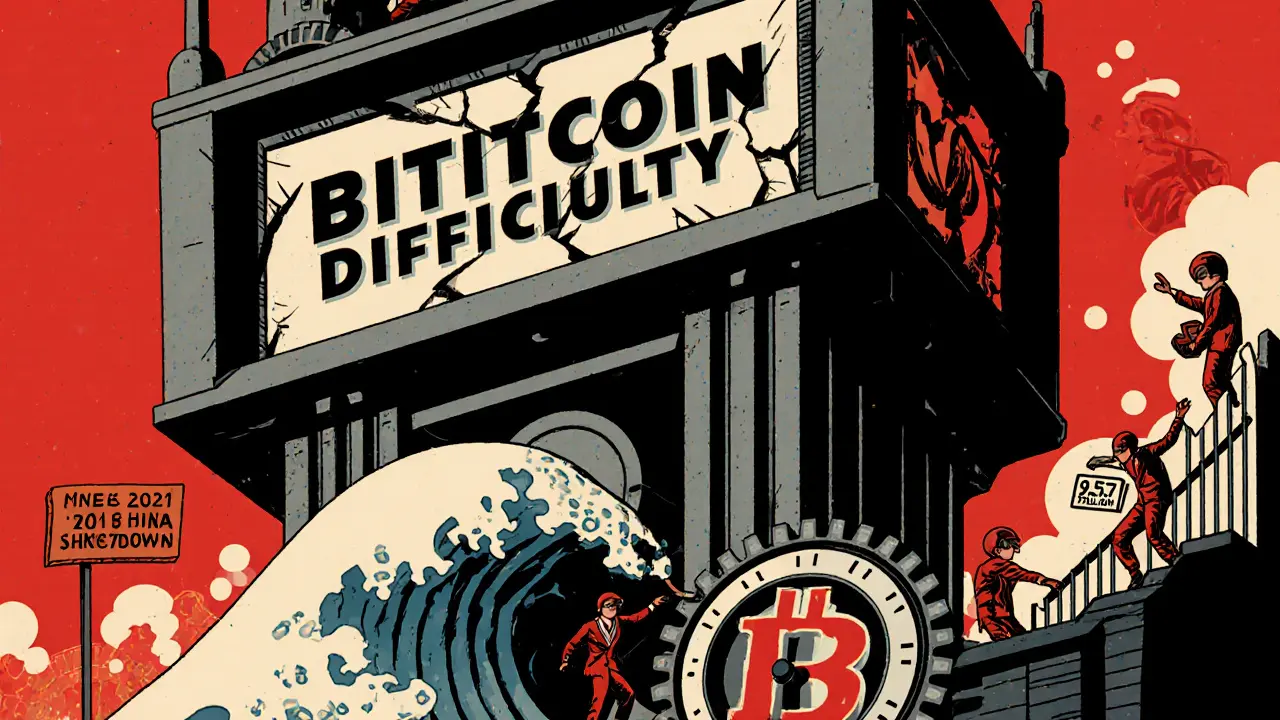
Future of Adaptive Mining Difficulty in Blockchain Networks
Adaptive mining difficulty is transforming blockchain networks by replacing slow, fixed adjustments with real-time tuning. It improves security, cuts energy waste, and prevents attacks - making Proof of Work sustainable for the future.
Read More