Dead Crypto Coins: What They Are, Why They Die, and How to Avoid Them
When a cryptocurrency stops moving, stops talking, and stops mattering, it becomes a dead crypto coin, a token with no active development, zero trading volume, and no real users. Also known as a zombie cryptocurrency, it looks alive on some fake charts—but in reality, it’s just a digital ghost. These aren’t just low-priced coins. They’re projects that vanished, abandoned by their teams, ignored by the community, and erased from any real use case. You’ll see them on sketchy listing sites with inflated prices, fake social media buzz, and claims of "coming back soon." But if no one’s trading it, no one’s building on it, and no one’s even talking about it, then it’s already dead.
What kills a crypto? Usually, it’s a mix of bad planning, no real utility, or outright fraud. Take Deutsche Mark (DDM), a token with no circulating supply and zero backing, marketed as a "stablecoin" but built on lies. Or UniWorld (UNW), a blockchain project that shut down completely, leaving behind fake prices and empty wallets. These aren’t unlucky failures—they’re red flags dressed up as opportunities. Then there are the ones that never had a chance: Buggyra Coin Zero (BCZERO), a token tied to truck racing with zero adoption, zero volume, and no team. Or FERMA SOSEDI (FERMA), a token only usable on a single, obscure gaming site with under 200 holders. They all share the same fate: silence.
Dead crypto coins don’t just disappear quietly. They’re often used in scams—fake airdrops, pump-and-dump schemes, or phishing traps pretending to "revive" them. The CovidToken airdrop, a non-existent project used to trick people into giving up private keys is a perfect example. And when you see a token with a name like Cosmic Universe Magick (MAGICK), a gaming token with wild volatility and no real ecosystem, ask yourself: is this a game, or a gamble dressed up as tech?
Some of these coins started with hype—raised money, promised moonshots, posted flashy videos. But without a working product, a real team, or a reason to exist beyond speculation, they collapse. The market doesn’t care about pretty whitepapers. It cares about usage. And when usage dies, so does the coin.
Below, you’ll find real cases of dead crypto coins—exposed, analyzed, and broken down. No fluff. No guesses. Just facts about what happened, why it failed, and how to spot the next one before you lose money. These aren’t just stories. They’re warnings.
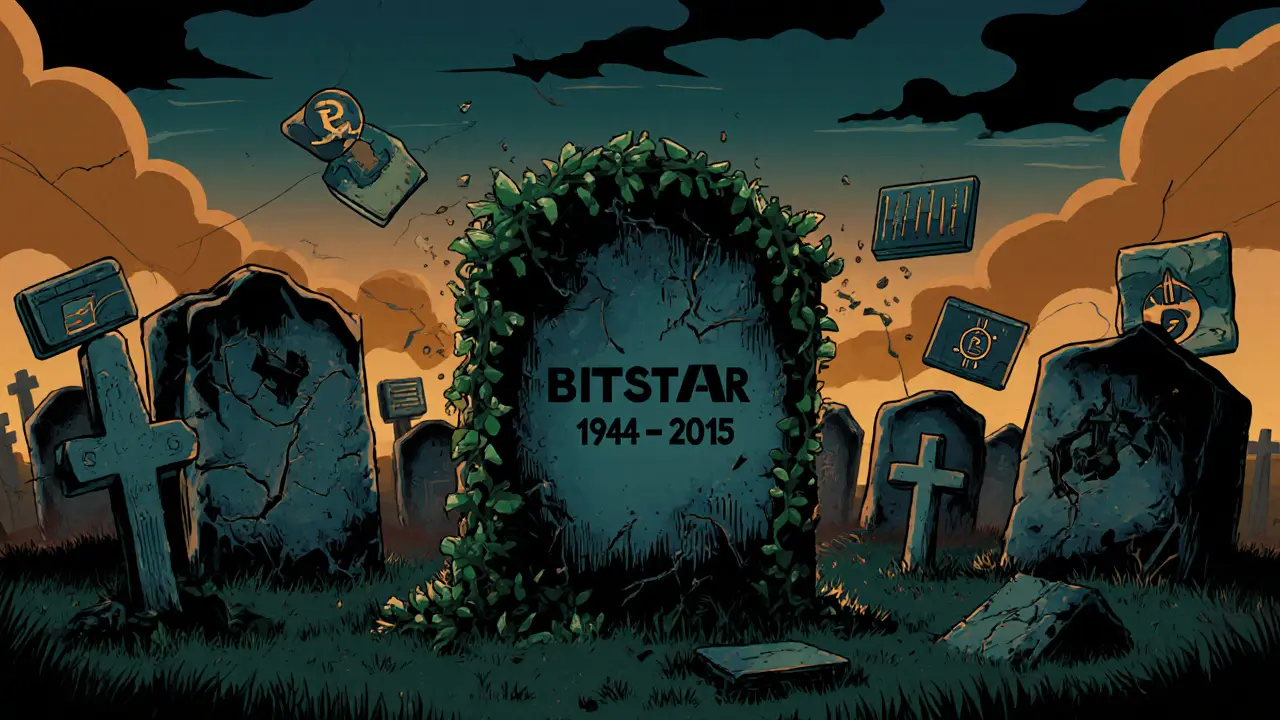
What is Bitstar (BITS) crypto coin? The truth about a dead cryptocurrency
Bitstar (BITS) is a dead cryptocurrency with zero trading volume, no exchange support, and no active development. Learn why it's not worth your time or money.
Read More