Regulated Crypto Exchange: What It Is and Why It Matters
When you use a regulated crypto exchange, a cryptocurrency trading platform that follows official financial rules set by government agencies. Also known as a licensed crypto platform, it’s required to verify your identity, protect your funds, and report suspicious activity—unlike shady platforms that vanish overnight. Most crypto exchanges today aren’t regulated. They operate in the shadows, with no oversight, no customer protection, and no accountability. That’s why so many people lose money to fake platforms like LocalTrade or PayCash Swap—places with no history, no reviews, and no legal responsibility when things go wrong.
What makes a regulated crypto exchange, a cryptocurrency trading platform that follows official financial rules set by government agencies. Also known as a licensed crypto platform, it’s required to verify your identity, protect your funds, and report suspicious activity—unlike shady platforms that vanish overnight. different? It has to follow rules like KYC (Know Your Customer) and AML (Anti-Money Laundering). It keeps customer money in separate accounts, not mixed with company cash. It gets audited. It reports to bodies like the SEC in the U.S., FINTRAC in Canada, or the FCA in the UK. If it breaks the rules, it gets fined or shut down. That’s why platforms like Coinbase and Kraken are trusted—they’ve spent years building compliance into their systems. Meanwhile, unregulated exchanges like LocalTrade and PayCash Swap avoid these rules on purpose. They don’t want oversight. They want to disappear before anyone notices they’re stealing.
Regulation doesn’t mean perfection. Even regulated exchanges can have outages, delays, or bad customer service. But they’re far less likely to be scams. In countries like Canada and Singapore, rules are tight enough that exchanges must prove they’re secure before they can even operate. In places like Angola or Iran, governments ban mining or restrict trading altogether—not because crypto is evil, but because they’re trying to control financial chaos. That’s why global adoption maps show clear patterns: countries with clear rules have higher adoption. People feel safe using crypto when they know there’s a legal safety net.
Look at what’s happening in the posts below. You’ll see real examples of what happens when exchanges aren’t regulated—like EQONEX shutting down with user funds gone, or LocalTrade being linked to stolen money. You’ll also see how regulations shape markets: Canada’s province-by-province rules, Iran’s crypto survival tactics, and the FATF blacklist pushing nations into crypto out of desperation. These aren’t abstract ideas. They’re daily realities for millions. If you’re serious about crypto, you don’t just want a platform that works—you want one that can’t just vanish. That’s the difference between a regulated crypto exchange and every other option out there.
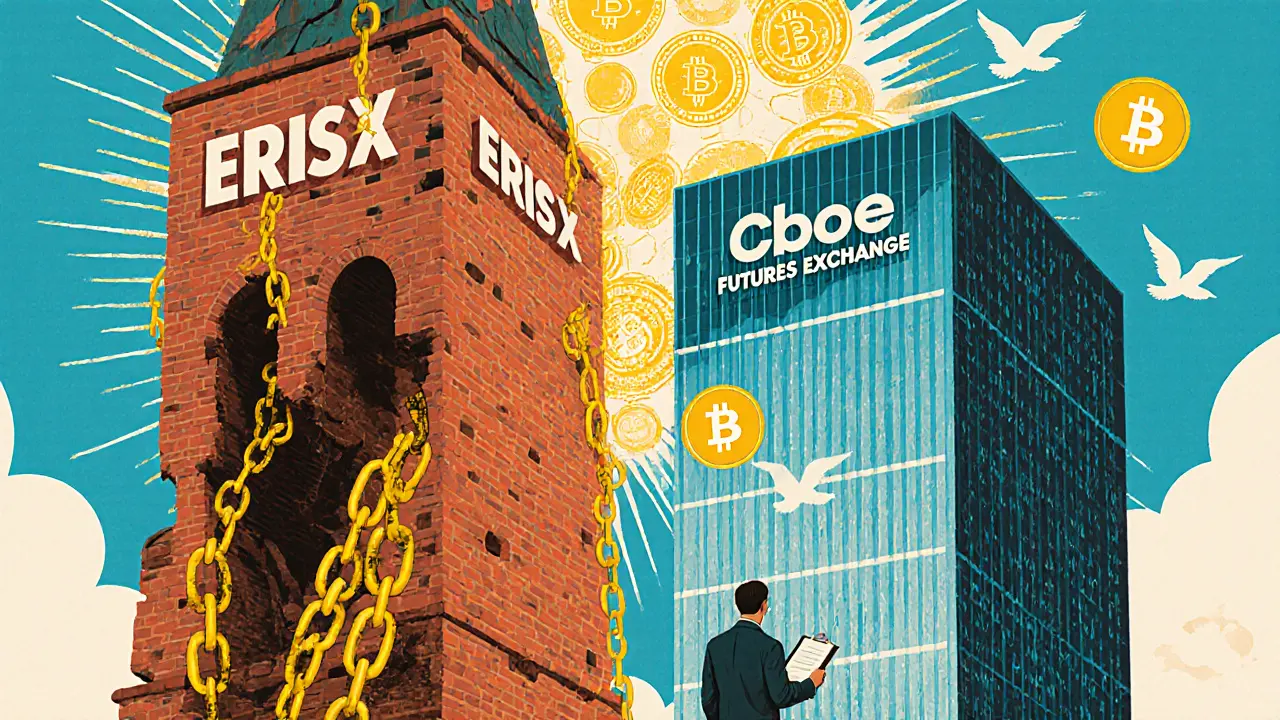
ErisX Crypto Exchange Review: What Happened and Where It Stands in 2025
ErisX was a regulated crypto derivatives exchange that shut down in 2025 after being fully merged into Cboe Futures Exchange. Learn what happened, why it matters, and where to trade crypto futures legally in the U.S. today.
Read More