Wall Street Bull: What It Really Means for Crypto Markets Today
When people talk about the Wall Street Bull, the symbol of aggressive financial growth and institutional confidence in markets. Also known as market optimism, it's no longer just a statue in Manhattan—it's a force driving billions into cryptocurrency. This isn't about hype or memes anymore. It's about ETFs, pension funds, and hedge funds finally stepping into crypto—not as a gamble, but as an asset class.
The Bitcoin ETF, a regulated financial product that lets investors buy Bitcoin through traditional stock brokers changed everything. In 2025, over $50 billion flowed into these ETFs in the U.S. alone. That’s not retail traders buying on Binance—it’s BlackRock, Fidelity, and State Street putting real capital behind Bitcoin. And when Wall Street moves, prices react. The crypto adoption, the real-world use of digital assets by businesses, governments, and individuals isn’t just growing in Nigeria or Ukraine anymore—it’s happening in Chicago, London, and Tokyo, because institutions now treat crypto like bonds or stocks.
But here’s the catch: the Wall Street Bull doesn’t care about memecoins or unverified airdrops. It cares about regulation, liquidity, and transparency. That’s why projects like Deutsche Mark (DDM) or UniWorld (UNW) vanish when the bull charges—they have no real infrastructure, no compliance, no audit. Meanwhile, tokens tied to real use cases—like Pakistan’s 2,000 MW mining initiative or Canada’s provincial crypto laws—get noticed. The bull doesn’t just lift prices. It filters out the noise.
What you’ll find below isn’t a list of random crypto posts. It’s a mirror of what happens when Wall Street meets blockchain. You’ll see how sanctions push Iran toward Bitcoin, how Angola’s mining ban backfired, and why exchanges like LocalTrade and PayCash Swap disappear when regulators wake up. You’ll learn why the Wall Street Bull isn’t your friend if you’re chasing ghost tokens—but it’s your best ally if you know how to play the long game.
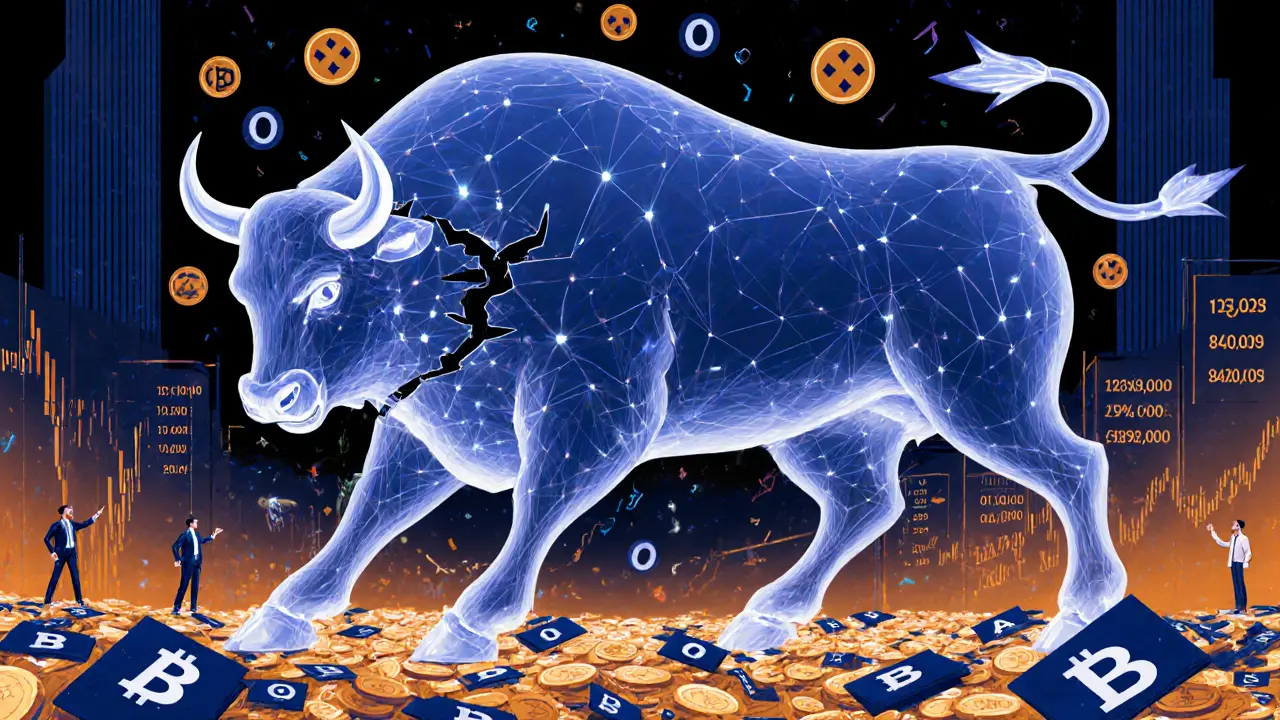
What is Wall Street Bull (BULL) crypto coin? Real price, supply issues, and why it's a high-risk asset
Wall Street Bull (BULL) is a Solana-based crypto token with zero circulating supply and a 99.4% drop from its peak. It has no real use, no community, and no future. Don't invest.
Read More