Thailand SEC Crypto Regulations for Exchanges: What You Need to Know in 2025
 Dec, 27 2025
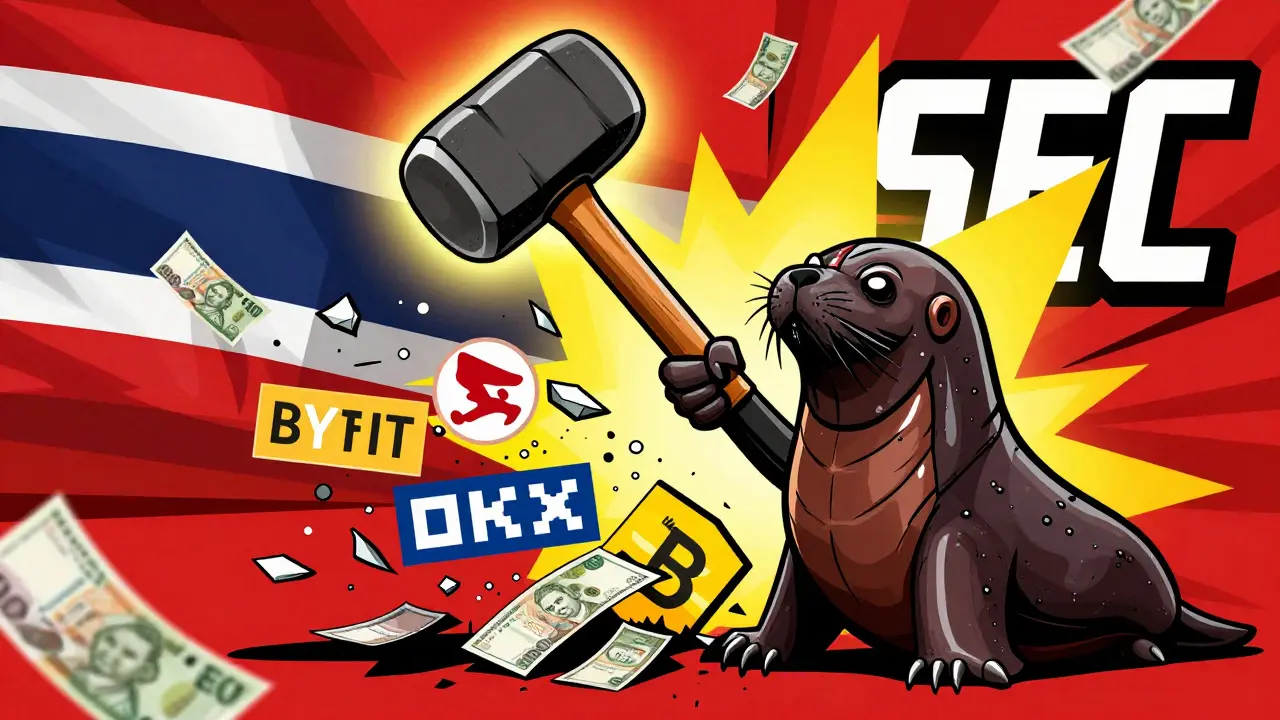
Thailand’s crypto market changed overnight in April 2025. If you traded on Bybit, OKX, or Binance before then, you probably noticed your app stopped working in Thailand. No warning. No grace period. Just gone. That’s because the Thailand SEC cracked down hard on unlicensed crypto exchanges - and this time, they meant it.
Why Thailand Shut Down Foreign Crypto Exchanges
In early 2025, reports of crypto scams surged. Thai investors lost millions to fake platforms promising 20% monthly returns. Some were hosted on offshore sites that didn’t even have a physical office. The SEC didn’t just want to regulate - they wanted to stop fraud before it happened. So they passed two emergency decrees that redefined what it means to serve Thai customers. The rules aren’t just about where a company is based. They’re about what the platform does to reach Thai users. If you speak Thai, accept baht, use a .th domain, or run Google ads targeting Bangkok, you’re now legally required to get a license from the Thai SEC. No exceptions.The Seven Rules That Determine If You’re Targeting Thailand
The SEC laid out seven clear signs that a foreign exchange is serving Thai users. If you hit even one, you need a license:- Your website or app is partially or fully in Thai
- You use a .th or .ไทย domain
- You accept payments in Thai baht or through Thai bank/e-wallet accounts
- You say Thai law governs your terms or Thai courts handle disputes
- You pay for search ads targeting Thai users
- You have staff or offices in Thailand to support users
- You do anything else the SEC later says counts
What Licensed Exchanges Can and Can’t Do
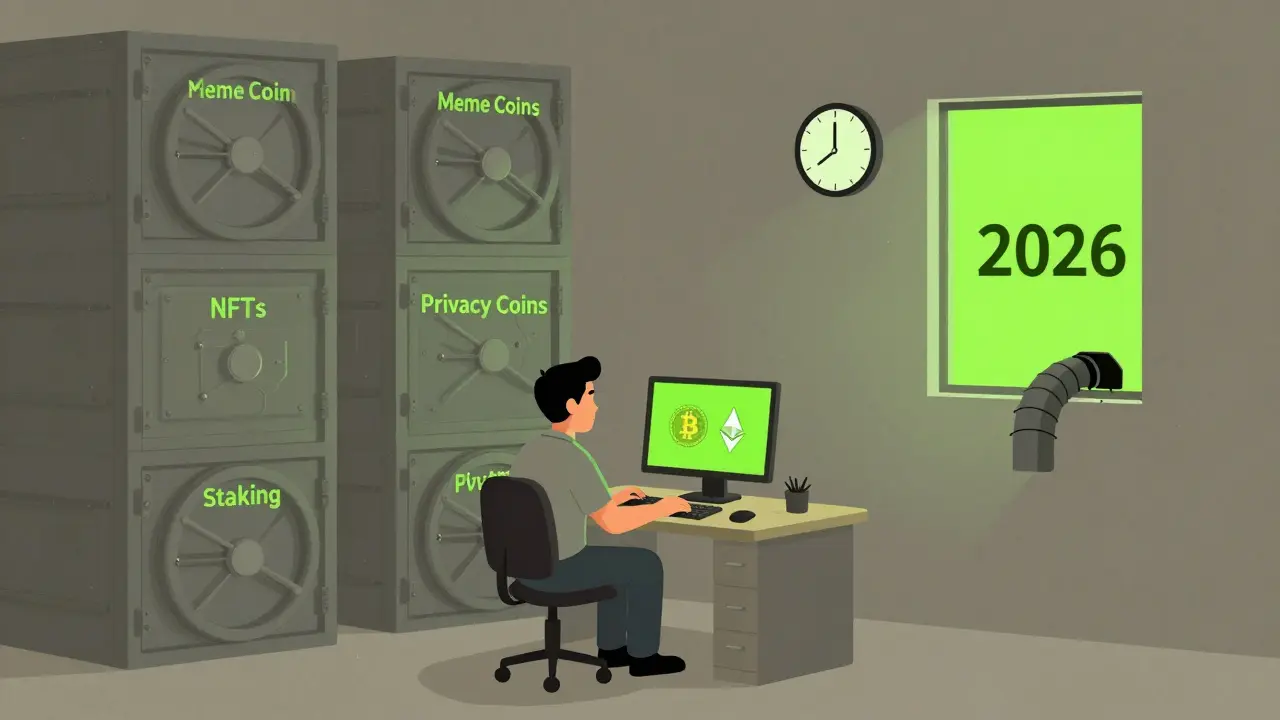
As of June 2025, only nine exchanges hold licenses. Bitkub is the biggest. Others include Zipmex, Satang, and Binance Thailand. But being licensed doesn’t mean free rein. Here’s what they’re banned from doing:- Trading meme coins like Dogecoin or Shiba Inu
- Offering fan tokens or NFTs
- Allowing privacy coins like Monero or Zcash
- Advertising crypto as payment for goods or services
- Running staking programs that promise fixed returns
- Providing wallet services or lending crypto for interest
Costs and Barriers to Getting Licensed
Want to apply? Here’s what it takes:- One-time application fee: ฿1,000,000 ($27,400)
- Annual license fee: ฿500,000 ($13,700)
- Minimum capital: ฿50 million ($1.37 million)
- Proof of AML/CFT systems meeting FATF standards
- Source code audit from an SEC-approved firm
- Real-time transaction monitoring system
What’s Changed for Thai Traders
The impact on users has been mixed. On one hand, scams dropped 37% in Q2 2025. More people feel safe. On the other hand, liquidity dried up. Withdrawal limits are capped at ฿500,000 per day ($13,700). Trading fees jumped from 0.1% to 0.25%. Coin selection shrank to a fraction of what it was. Reddit and Pantip.com are full of complaints. One user wrote: “I used to trade Solana, Polygon, and 50 other coins. Now I’m stuck with Bitcoin and Ethereum. My portfolio is frozen.” Another said: “I pay more in fees just to move money out. It’s like paying a toll to play in your own market.” But there are wins too. “I haven’t seen a single scam message since the foreign exchanges left,” said a user with 142 upvotes on Pantip. Security improved. Customer support works. Disputes get resolved.
How Thailand Compares to Other Countries
Thailand’s rules are stricter than Singapore’s. MAS lets foreign exchanges operate if they register - no full licensing needed. Japan’s system is similar to Thailand’s, but doesn’t block foreign sites instantly. China bans everything. The EU’s MiCA rules are more detailed on stablecoins and offer license portability across countries. Thailand’s biggest edge? Speed. The government can shut down a site in hours. Their biggest weakness? Rigidity. No room for innovation. No path for DeFi or tokenized assets. And no way for tourists or expats to trade legally while visiting.What’s Next for Thailand’s Crypto Market
The SEC isn’t done. By late 2025, they plan to update the law to cover DeFi platforms - the ones that run without a company behind them. In 2026, they’ll test connecting licensed exchanges to Thailand’s central bank digital currency (CBDC). And by 2026, they’re expected to launch ETFs for altcoins like Solana and Cardano - potentially unlocking $3 billion in new investment. Meanwhile, the government is spending ฿2.1 billion ($57.6 million) on blockchain projects through 2027. They want to be a regional fintech hub - just not one where scammers can hide.Is This Good or Bad for Crypto?
It’s both. Thailand’s rules protect ordinary people. They’ve stopped fraud cold. But they’ve also stifled choice. Traders who want flexibility, low fees, or access to new tokens now use VPNs. Chainalysis estimates 35% of Thai crypto activity has moved offshore. The market is still growing - $1.2 billion in Q1 2025, up 7.2% year-over-year. But the growth is now inside the cage. Licensed exchanges are safer. But they’re also slower, pricier, and far less exciting. If you’re a Thai resident, you trade on a licensed exchange - or you don’t trade at all. If you’re a foreign exchange, you either comply fully or get blocked. No gray area. No loopholes. This isn’t regulation for innovation. It’s regulation for safety. And for now, Thailand chose safety every time.Are foreign crypto exchanges banned in Thailand?
Yes, if they serve Thai users without a license. Exchanges like Bybit, OKX, and unlicensed Binance operations were blocked in April 2025 after failing to obtain Thai SEC licensing. The rules are based on behavior - not location. If a platform uses Thai language, accepts baht, or targets Thai customers through ads, it must be licensed or face immediate blocking.
How many crypto exchanges are licensed in Thailand as of 2025?
As of June 2025, nine exchanges hold full licenses from the Thai SEC. The largest is Bitkub, followed by Satang, Zipmex, and Binance Thailand. All others, including major international platforms, are blocked unless they’ve completed the licensing process - which very few have done.
Can I trade Bitcoin and Ethereum in Thailand?
Yes. Bitcoin and Ethereum are the only two cryptocurrencies approved for ETFs and trading on licensed Thai exchanges as of 2025. They’re also the most liquid and widely available tokens on local platforms. All other coins must be on the SEC’s approved list of 35 tokens, which excludes meme coins, NFTs, and privacy coins.
What are the withdrawal limits on Thai crypto exchanges?
Most licensed Thai exchanges cap daily withdrawals at ฿500,000 (about $13,700 USD). This limit was set to reduce the risk of large-scale fraud and money laundering. Traders who need higher limits must apply for special approval, which is rarely granted. This is one of the most common complaints from serious traders.
Do Thai crypto exchanges charge higher fees than international ones?
Yes. Transaction fees on licensed Thai exchanges average 0.25%, compared to 0.1% or less on international platforms like Binance or Kraken. This is due to higher compliance costs, limited competition, and the need to maintain strict KYC and AML systems. Some users pay extra just to move funds out.
Can I use a VPN to access foreign crypto exchanges in Thailand?
Technically yes - but it’s a legal gray area. The Thai government blocks unlicensed sites, but doesn’t criminalize individuals for using VPNs. However, using foreign exchanges means you lose all local protections. If you get scammed or lose funds, there’s no Thai regulator to help you. Many users do it anyway for better liquidity and lower fees.
Will Thailand allow DeFi and staking in the future?
Not yet. Staking with guaranteed returns is banned. DeFi platforms are not currently licensed and are not recognized under the 2025 rules. However, the SEC plans to amend the Digital Asset Business Act in late 2025 to address DeFi. Any future allowance will likely require strict KYC, no anonymous protocols, and full transparency - making true decentralized finance nearly impossible under Thai law.
Are NFTs and meme coins allowed on Thai exchanges?
No. NFTs, meme coins like Dogecoin or Shiba Inu, and fan tokens are explicitly banned from trading on all licensed Thai exchanges. The SEC views these as high-risk, speculative assets with no intrinsic value. This ban is part of their broader effort to protect retail investors from volatile, unregulated tokens.
What happens if a Thai exchange breaks the rules?
Penalties are severe. Fines can reach up to ฿100 million ($2.7 million), and executives face up to 10 years in prison. The SEC can also revoke licenses immediately. In 2025, one licensed exchange lost its license after failing a surprise audit for not properly verifying user identities. They were shut down within 48 hours.
Is Thailand’s crypto market growing despite the restrictions?
Yes. The Thai crypto market was valued at $1.2 billion in Q1 2025, up 7.2% from the previous year. Even with restrictions, 4.7 million Thai adults - 23% of the adult population - now use crypto. The shift from foreign to local exchanges has increased market stability, and new ETFs planned for 2026 could bring in billions more. Growth is slower, but more secure.
dayna prest
December 28, 2025 AT 15:06So Thailand just turned its crypto market into a museum exhibit? 🤦♀️ 'Safety first' sounds great until you realize you can't trade anything fun anymore. Now I'm supposed to be excited about Bitcoin and Ethereum like they're the only two spices in the kitchen? Give me meme coins or give me death.
Brooklyn Servin
December 28, 2025 AT 18:37Let’s be real - this isn’t regulation, it’s crypto apartheid. 🇹🇭 banned Dogecoin but let’s not pretend they’re protecting people. They’re protecting banks. And the fact that they can shut down a site in HOURS without a court order? That’s not governance, that’s digital dictatorship. And yet... I get why. I’ve seen Thai Reddit threads where people lost life savings to fake staking apps. So it’s a tragic trade-off. No joy, no chaos, just beige financial safety. 😔
Phil McGinnis
December 30, 2025 AT 17:05Thailand has demonstrated a level of sovereign discipline that Western democracies lack. The United States allows hedge funds to manipulate meme stocks while citizens lose their retirement funds. Thailand does not permit such moral decay. This is not oppression - it is order. And order, unlike chaos, endures.
Ian Koerich Maciel
January 1, 2026 AT 14:38While I appreciate the intent behind Thailand’s regulatory framework - protecting retail investors from predatory schemes - the execution raises serious concerns regarding financial autonomy. The 0.25% fee structure, coupled with daily withdrawal caps, effectively penalizes responsible users in the name of security. Moreover, the exclusion of DeFi and NFTs appears to be a technologically regressive stance, potentially isolating Thailand from global innovation. A nuanced, phased approach might have preserved both safety and progress.
Andy Reynolds
January 3, 2026 AT 12:56Look, I get why people are mad about the limits - I used to trade 50 coins too. But I also know a friend who lost $18k to a Telegram scam that looked like Binance. After the crackdown? Zero scams. Zero. That’s worth something. Maybe we don’t have to choose between freedom and safety. Maybe we can build something better - like Thai exchanges adding more coins slowly, or letting staking with clear disclaimers. It’s not perfect, but it’s a start. Let’s not throw the baby out with the bathwater. 🙏
Alex Strachan
January 4, 2026 AT 05:19So Thailand banned meme coins... but still lets people buy lottery tickets? 😂 I mean, if you’re gonna protect people from ‘speculative assets,’ maybe start with the national lottery that has worse odds than Shiba Inu. At least crypto’s decentralized. The lottery? Just the government stealing your money with better branding.
Rick Hengehold
January 4, 2026 AT 08:41VPN users are on their own. No refunds. No recourse. If you break the law, you pay the price. Simple.
Antonio Snoddy
January 4, 2026 AT 22:34Think about it - what is freedom, really? Is it the freedom to gamble your life savings on a token named after a dog? Or is it the freedom from the crushing weight of financial anxiety, the sleepless nights, the family arguments over whether ‘this time it’s different’? Thailand chose the latter. They chose peace over panic. They chose dignity over dopamine. And yes, it’s boring. But isn’t that the point? Civilization isn’t built on chaos. It’s built on restraint. And restraint... is the highest form of courage.
Ryan Husain
January 6, 2026 AT 02:00Thailand’s approach is a model of centralized clarity - a rare example of a government acting decisively in the interest of its citizens. While other nations dither with regulatory sandboxes and compliance loopholes, Thailand has drawn a line in the sand. This is not anti-innovation; it is anti-exploitation. The 35 approved tokens represent a curated, responsible entry point into digital assets. The future of finance may lie not in wild west markets, but in disciplined, transparent ecosystems. Let us not confuse restriction with repression.
Rajappa Manohar
January 6, 2026 AT 23:14thailand is smart. no scam, no stress. but why no dogecoin? its my fav. 😔