Top Proof of Stake Cryptocurrencies in 2025
 Sep, 18 2025
Staking Rewards Calculator
Your Staking Estimate
Key Considerations
Real yield vs. APR: High APR coins like Cosmos (25.17%) may seem attractive, but token inflation can reduce actual value. Always check tokenomics.
Network Stability: Solana's 5 crashes in 2025 demonstrate how network reliability affects returns. Consider uptime metrics.
Projected Returns
Risk Assessment:
Why Proof of Stake Dominates Crypto in 2025
By 2025, Proof of Stake (PoS) isn’t just an alternative to mining-it’s the standard. Over 18% of the entire crypto market runs on PoS, with a combined value of $716.88 billion. That’s not a trend. That’s a takeover. Ethereum’s switch in 2022 started it, but now every new blockchain launches with PoS built-in. Why? Because it’s faster, cheaper, and uses 99.95% less energy than Bitcoin’s old mining system. If you’re still thinking crypto means big rigs and electricity bills, you’re already behind.
Ethereum: The Unshakable Leader
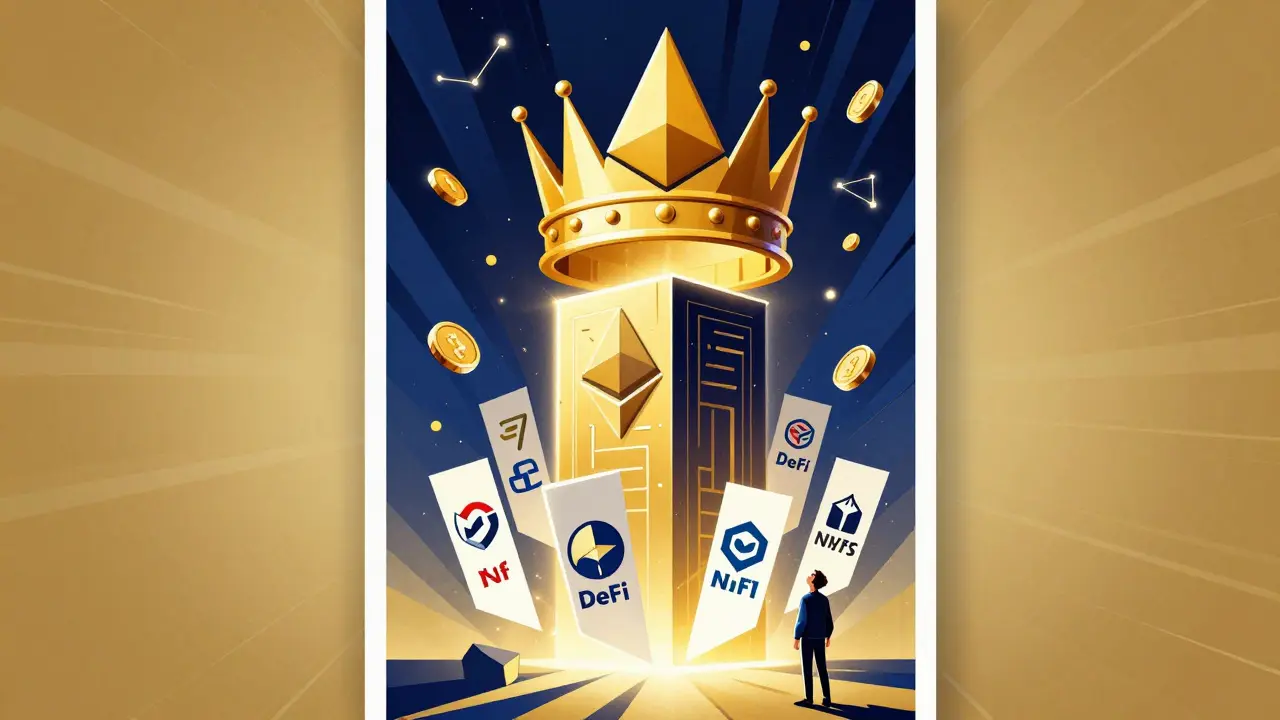
Ethereum (ETH) still holds the crown. With a market cap of $518.74 billion and over 17.8 million ETH staked, it’s the backbone of DeFi, NFTs, and enterprise blockchains. You don’t stake ETH for the rewards-2.48% APR is modest-but for security and access. Running a full validator needs 32 ETH (about $137,000), which puts it out of reach for most. But you don’t need to run a node. Platforms like Lido and Rocket Pool let you stake any amount and get liquid staking tokens (like stETH) that you can trade or use in other apps. The real value? Ethereum’s ecosystem. More developers, more apps, more users. It’s not the highest yield, but it’s the most trusted.
Solana: Speed Meets Simplicity
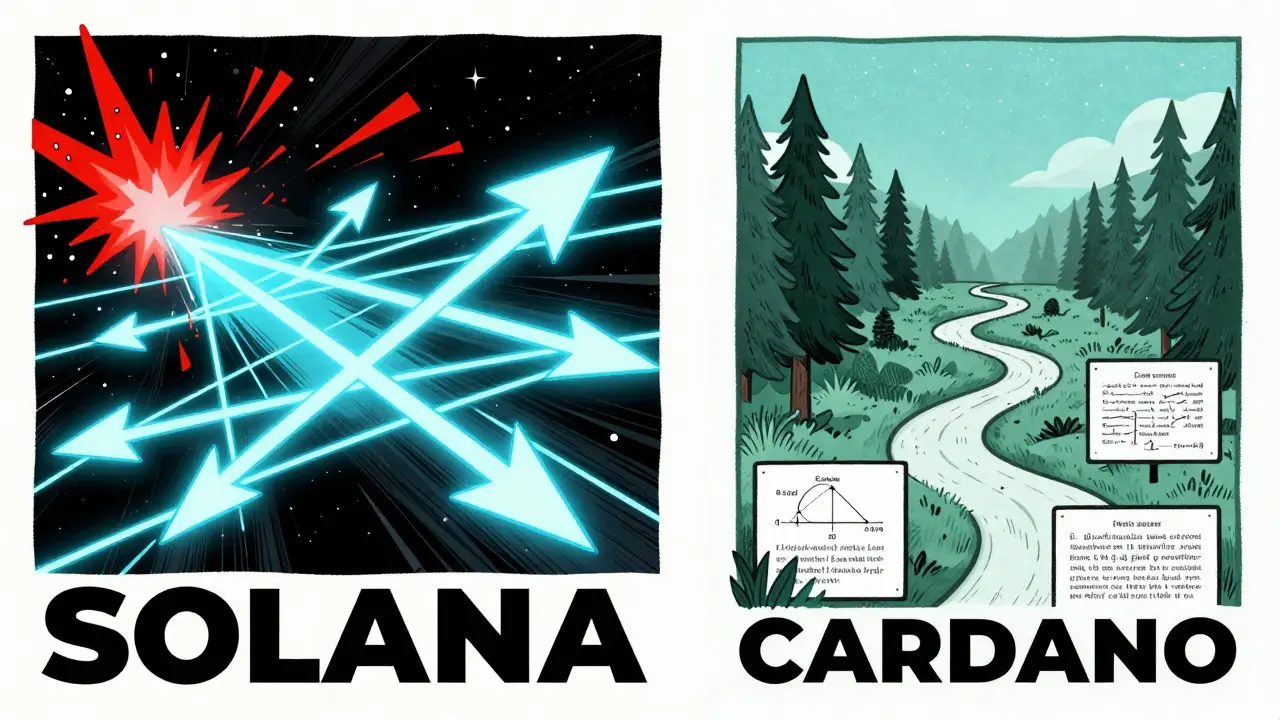
Solana (SOL) is the speed demon of PoS. At $125.84 billion market cap and 7.58% staking rewards, it’s drawing users away from slower chains. You can stake with as little as 0.01 SOL (under $3), and your rewards come daily. Wallets like Phantom and Solflare make it as easy as clicking a button. Transactions cost pennies and confirm in under a second. But there’s a catch. Solana’s network has crashed five times in 2025 due to overload. Some call it unstable. Others call it a growing pain. If you want high rewards and low entry, Solana’s hard to beat-but don’t expect 100% uptime.
Cardano: The Research-First Contender
Cardano (ADA) moves slow, but it moves deliberately. At $37.57 billion market cap and 4.96% APR, it’s not the flashiest. But it’s the only major chain built on peer-reviewed academic papers. Every upgrade goes through formal verification-mathematical proof it won’t break. You stake ADA by delegating to a pool. No lock-up. No minimum. Just 2 ADA as a refundable deposit. The rewards are steady, not flashy. And while development feels slow compared to Solana or Avalanche, Cardano’s network has never been hacked. For users who value safety over speed, ADA is the quiet winner.
Polkadot: Interoperability at a Premium
Polkadot (DOT) doesn’t just run its own chain-it connects others. With 15.31% staking rewards, it offers the highest yield among top PoS coins. You need 350 DOT (about $1,400) to become a validator, but you can delegate smaller amounts. Polkadot’s magic? Parachains. These are specialized blockchains that plug into Polkadot’s main network, sharing security and communication. Think of it like an app store for blockchains. One parachain handles payments, another handles identity, another does supply chains-all talking to each other. It’s complex, but it’s the most advanced cross-chain system alive. If you believe the future is multi-chain, DOT is your bet.
Cosmos: The Highest Rewards, Highest Complexity
Cosmos (ATOM) gives you 25.17% staking rewards-the highest on this list. But it’s not for beginners. Cosmos is a network of independent blockchains (called zones) that communicate via the IBC protocol. To stake ATOM, you delegate to a validator, but choosing the wrong one can mean slashed rewards if they go offline. There are over 130 validators, and not all are equal. You need to research them. The upside? Cosmos powers major chains like Osmosis and the Bitcoin Layer 2, Babylon. If you want maximum yield and don’t mind digging into validator performance, ATOM is the prize. But if you just want to click and earn, look elsewhere.
Avalanche, Algorand, and Near: The Strong Contenders
Avalanche (AVAX) offers 9.51% rewards with a 2,000 AVAX validator requirement. Its strength? Subnets. You can create your own blockchain within Avalanche for apps, games, or companies. It’s like AWS for blockchains. Algorand (ALGO) gives 7.2% with a 1 ALGO minimum. It’s fast, secure, and used by banks for tokenized assets. Near Protocol (NEAR) delivers 9.89% and uses a unique sharding system that scales without splitting the network. All three are solid. None have Ethereum’s brand, but they’re growing fast. If you’re looking beyond the top three, these are your next best options.
What You Shouldn’t Chase
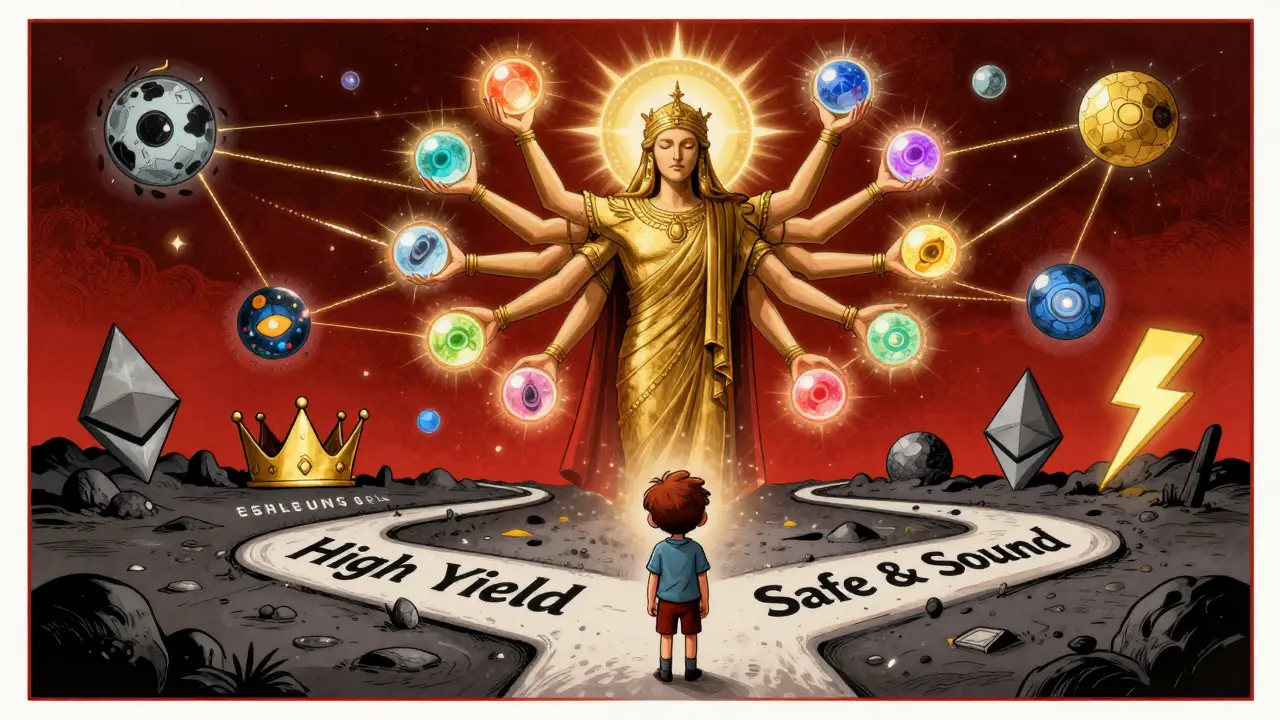
Don’t get sucked in by coins promising 50% APY. Bitcoin Hyper, Maxi Doge, and other meme-style PoS tokens are marketing gimmicks. They have no real infrastructure, no institutional backing, and no track record. They’re designed to pump and dump. Same with Tezos-5.89% sounds good, but you need 6,000 XTZ to validate. That’s $100,000+. Polygon (MATIC) is a legit Ethereum sidechain with 8.61% rewards, but it’s not a standalone blockchain. It’s a scaling tool. Know what you’re buying. Real value comes from networks with developers, users, and security-not hype.
How to Start Staking in 2025
Staking isn’t hard-but it’s not the same everywhere.
- Choose your coin: Pick one based on your goals-security (Ethereum), speed (Solana), rewards (Cosmos), or interoperability (Polkadot).
- Decide your approach: Can you afford 32 ETH? Then run your own validator. Otherwise, use a staking pool or wallet like Coinbase, Kraken, or Phantom.
- Understand lock-ups: Some chains lock your tokens for days or weeks. Others let you unstake anytime. Know the rules.
- Watch for slashing: If your validator goes offline or misbehaves, you lose part of your stake. Pick reputable ones.
- Track real yield: Don’t just look at APR. Some coins inflate supply, so your 10% reward might be worth less next year. Check tokenomics.
What’s Next for PoS?
Ethereum’s next big update-sharding-will split its network into 64 pieces to handle more transactions. Solana is building mobile wallets for real-world payments. Cardano’s Hydra upgrade will make it 1 million transactions per second. Avalanche is signing up Fortune 500 companies to run private subnets. Polkadot is connecting to Bitcoin and Ethereum. The race isn’t about who has the highest yield. It’s about who builds the most useful, secure, and scalable network. The winners in 2025 won’t be the ones shouting loudest. They’ll be the ones quietly scaling.
Final Thoughts: Pick Based on Trust, Not Yield
Staking rewards are tempting, but they’re not the whole story. Ethereum’s 2.48% APR feels boring next to Cosmos’s 25%. But Ethereum’s network is battle-tested. It’s where real money lives. Solana’s speed is great, but its outages cost users real dollars. Cardano’s slow progress is frustrating, but its code is mathematically sound. Choose based on what you value: security, speed, decentralization, or innovation. Don’t chase the highest number. Chase the most reliable system. In 2025, that’s what matters.
What is Proof of Stake and how is it different from mining?
Proof of Stake (PoS) lets users validate transactions by locking up (staking) their coins instead of using powerful computers to solve puzzles like in mining. This cuts energy use by over 99%. Mining rewards those with the most hardware; PoS rewards those with the most stake. PoS is faster, cheaper, and more environmentally friendly.
Can I stake Ethereum without 32 ETH?
Yes. You can stake any amount through staking pools or liquid staking services like Lido, Rocket Pool, or Coinbase. These platforms pool your ETH with others to meet the 32 ETH requirement. You get staking rewards proportional to your share, and you receive a liquid token (like stETH) that you can trade or use in DeFi while your ETH is staked.
Which PoS cryptocurrency has the best staking rewards in 2025?
Cosmos (ATOM) offers the highest staking yield at 25.17% APR. Polkadot (DOT) follows at 15.31%. But higher rewards often come with higher risk-like validator slashing or token inflation. Real yield depends on token supply changes. A coin with 10% APR and deflationary supply may outperform a 25% APR coin that’s printing new tokens constantly.
Is staking crypto safe?
Staking is generally safe if you use trusted platforms and reputable validators. Your coins aren’t stolen-they’re locked. But you can lose part of your stake if your validator goes offline or acts maliciously (called slashing). Avoid unknown staking services. Stick to exchanges like Kraken, Coinbase, or wallet apps like Phantom and Keplr that have proven track records.
Should I stake my crypto or just hold it?
Staking gives you passive income-usually 4% to 15% annually-while holding gives you nothing. If you’re confident in the network’s long-term value, staking makes sense. It supports the network and rewards you for helping secure it. Only avoid staking if you think you’ll need to sell quickly, since some chains have lock-up periods. For most long-term holders, staking is the smarter move.
Are there any risks with staking on Solana or Cardano?
Solana’s risks are network outages-five major crashes in 2025 caused users to miss rewards and lose access to apps. Cardano’s risk is slower innovation. While its code is secure, new features take years to launch. If you need cutting-edge DeFi or NFT tools, Cardano might feel outdated. But neither has been hacked, and both have strong communities backing them.
What’s the easiest way to start staking as a beginner?
Start with Solana (SOL) using Phantom Wallet or Algorand (ALGO) using MyAlgo. Both require under $5 to begin, rewards are paid daily, and there’s no lock-up. You don’t need to understand validators or technical terms. Just click ‘Stake’ and you’re done. Once you’re comfortable, explore Ethereum staking pools or Cosmos delegation.
Alan Brandon Rivera León
December 4, 2025 AT 16:29Still can't believe people think mining is the future. The energy waste alone makes it morally bankrupt.
Mohamed Haybe
December 5, 2025 AT 22:20Andrew Brady
December 7, 2025 AT 07:25Sharmishtha Sohoni
December 9, 2025 AT 01:05Steve Savage
December 9, 2025 AT 18:59And honestly? The real winners won’t be the ones with the highest APY. They’ll be the ones who built something people actually use. Not just trade.
Joe B.
December 11, 2025 AT 17:17Layla Hu
December 12, 2025 AT 22:55Nora Colombie
December 14, 2025 AT 04:57Greer Dauphin
December 15, 2025 AT 16:54also lmao at the 32 eth validator requirement. that’s like saying ‘anyone can own a tesla’ while the price is $137k. yeah sure. and i can fly to mars too.