Understanding Governance Token Value: How Voting Rights Drive Decentralized Finance
 Feb, 10 2025
Governance Voting Power Calculator
How Your Voting Power Works
Governance tokens give you voting power to shape projects. This tool shows how your voting power differs between traditional voting and quadratic voting systems.
What This Means
When you hold a governance token, you’re not just holding a cryptocurrency-you’re holding a vote. That vote can change how a blockchain protocol operates, who gets paid, and even whether the project survives. Unlike regular tokens that might just store value or earn interest, governance tokens give you real power over the future of a decentralized system. But here’s the problem: most people don’t understand what that power is worth, or how to use it effectively.
What Exactly Is a Governance Token?
A governance token is a digital asset that lets its holders vote on decisions for a blockchain project. These decisions aren’t trivial. They include things like changing transaction fees, adjusting how much liquidity providers earn, approving new features, or even spending the project’s treasury. The more tokens you hold, the more votes you get. It’s like owning shares in a company, but instead of a board of directors making decisions, the community votes.
Projects like MakerDAO use MKR tokens for this exact purpose. MKR holders vote on critical economic rules that keep the DAI stablecoin pegged to $1. If the system starts losing stability, MKR holders can vote to increase borrowing fees or adjust collateral requirements. These votes are executed automatically by smart contracts-no middlemen, no delays, no corruption. That’s the promise of decentralization.
Why Do Governance Tokens Have Value?
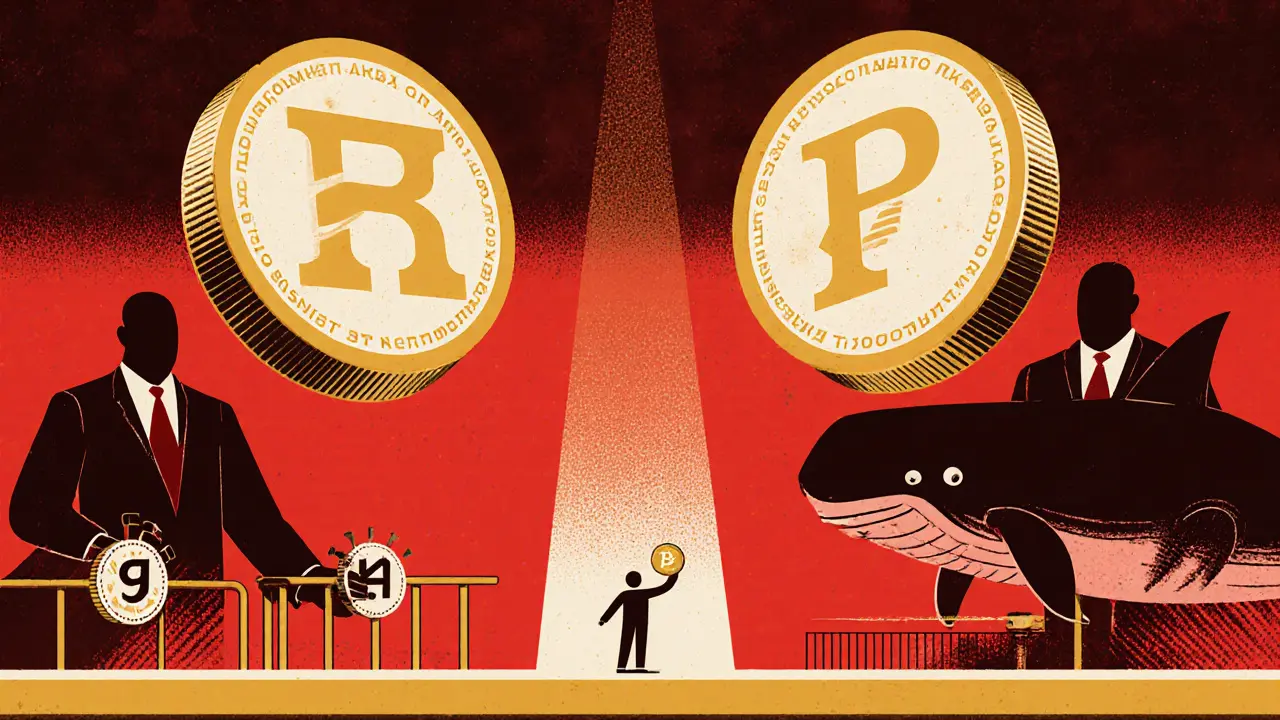
The value of a governance token doesn’t come from mining rewards or staking yields. It comes from influence. If you control a large chunk of voting power, you can steer the project toward outcomes that benefit you-like increasing protocol revenue, lowering competition, or redirecting funds. That’s why big holders, often called whales, pay millions for these tokens.
But here’s the catch: most governance tokens have no direct income stream. They don’t pay dividends. They don’t charge fees. Their price is driven almost entirely by speculation. If people think a DAO will grow, they buy the token hoping its value will rise. But if the community stops voting, or if a proposal fails, the price can crash overnight.
Compare that to a company like Apple. Its stock has value because the company makes money selling iPhones. A governance token like UNI or AAVE has no such guarantee. Its value depends entirely on whether the community can make smart, coordinated decisions. And that’s harder than it sounds.
Who Really Controls the Votes?
It sounds democratic-each token equals one vote. But in practice, it’s not. A small number of wallets hold the majority of tokens. For example, in 2024, just 10 wallets controlled over 40% of the total supply of some major governance tokens. That means a handful of people can pass or block any proposal, even if 90% of the community disagrees.
This isn’t just theoretical. In 2023, a proposal to redistribute treasury funds to small holders in a popular DeFi protocol was blocked because a single whale voted against it. The proposal had 85% support from participants-but because the whale held enough tokens to meet the quorum threshold, their single vote killed it. That’s not democracy. That’s plutocracy.
And it’s getting worse. Institutional investors are now buying governance tokens not to participate, but to manipulate outcomes. They buy low, influence decisions that boost the protocol’s value, then sell high. The community doesn’t benefit-they just get left with a token that’s now overvalued and unstable.
Why Don’t More People Vote?
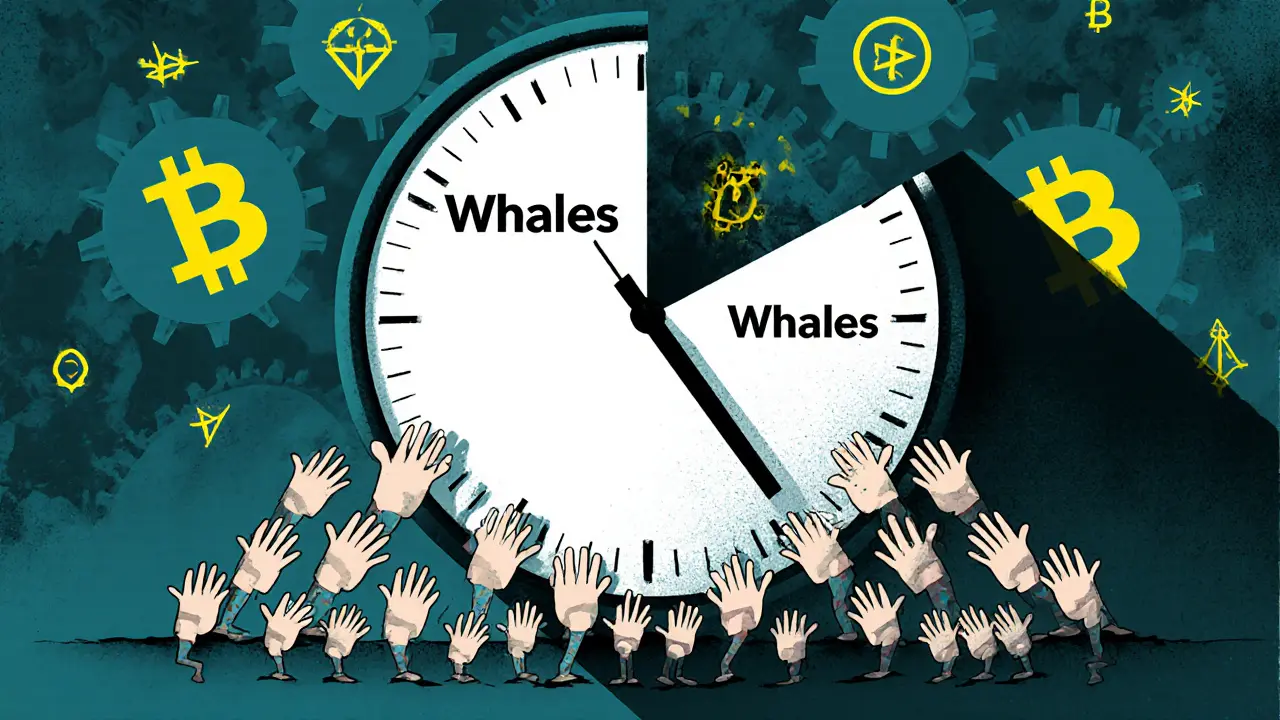
If you have voting rights, why wouldn’t you use them? The answer is simple: it’s too hard.
Governance proposals are written in technical jargon. They reference smart contract addresses, risk parameters, and economic models most people don’t understand. To vote wisely, you need to spend hours reading forums, watching YouTube explainers, and checking community discussions. Then you have to wait days for the vote to close. And even if you do all that, your single vote might only be worth 0.001% of the total.
This is called governance fatigue. A 2024 study of 12 major DAOs found that fewer than 15% of token holders participated in any vote. In some cases, less than 5% of the total supply was used to approve changes. That means a tiny fraction of the community controls the entire project. And those who do vote? Often they’re the same people-repeat participants who’ve spent months learning the system.
Small holders feel powerless. Why spend 10 hours researching a proposal if your vote won’t matter? The system rewards expertise and capital, not participation. And that defeats the whole point of decentralization.
How Are Projects Fixing This?
Some teams are trying to fix the broken model. One approach is quadratic voting. Instead of one token = one vote, quadratic voting gives diminishing returns to large holders. For example, if you hold 100 tokens, you get 10 votes-not 100. If you hold 1,000 tokens, you get 31 votes. This makes it harder for whales to dominate without completely shutting out small holders.
Another idea is revenue sharing. Instead of just voting, you earn a cut of protocol fees when you vote. MakerDAO tested this with a system where MKR holders who voted on debt ceiling changes received a small portion of the fees generated by DAI loans. That gave people a direct financial reason to participate-not just because they cared, but because they’d get paid.
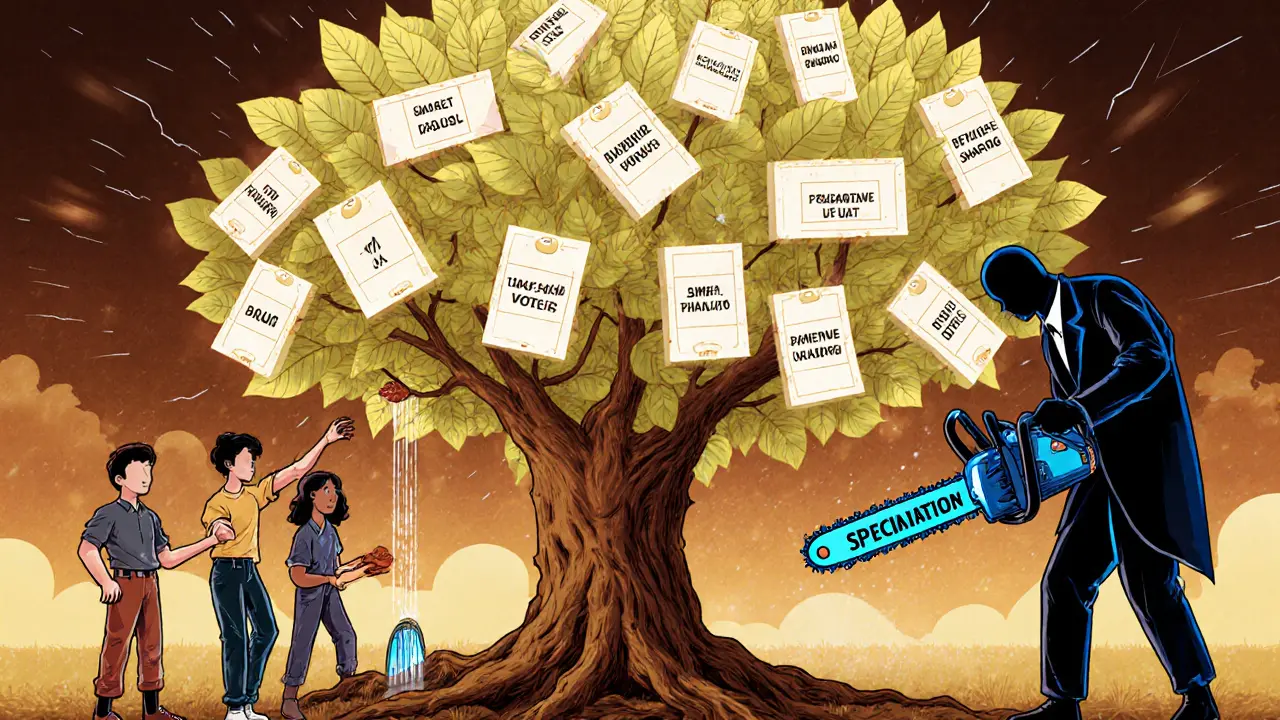
Then there’s progressive decentralization. Instead of handing over control all at once, projects gradually transfer governance to token holders over time. This gives the founding team room to build and fix bugs before the community takes over. It reduces the risk of early chaos while still moving toward true decentralization.
Some DAOs are even using AI to summarize proposals. Tools like DAOhaus now auto-generate plain-language summaries of complex governance votes, helping non-technical users understand what’s at stake. That’s a small step-but it’s a step toward making governance accessible.
What’s Next for Governance Tokens?
The future of governance tokens isn’t just about better voting systems. It’s about tying their value directly to real outcomes.
Imagine a governance token that increases in value every time the protocol grows. More users? Higher fees? More liquidity? The token price rises automatically. That’s what revenue-backed tokens aim to do. Projects like Frax and Lido are experimenting with this model, where token holders get a share of protocol earnings-not just the right to vote.
Another trend is cross-protocol governance. Instead of each DAO operating in isolation, future systems might let you vote on multiple protocols at once. Want to influence both a lending platform and a stablecoin? One token could let you vote on both. That could create a network effect where governance power compounds across ecosystems.
And then there’s the question of regulation. In 2025, the U.S. SEC started treating some governance tokens as securities if they’re sold with promises of future influence or profit. That could force projects to redesign their models-or stop offering tokens to U.S. users entirely. The legal landscape is shifting fast, and no one knows where it’ll end.
Should You Care About Governance Tokens?
If you’re just holding tokens to flip them, then no-governance tokens are a risky gamble. Their value is tied to community behavior, which is unpredictable. But if you believe in decentralized systems and want to help shape them, then yes-this is where the real power lies.
Start small. Pick one DAO you trust. Read one proposal. Vote. Even if your vote doesn’t change the outcome, you’re part of the experiment. The more people participate, the harder it becomes for whales to control everything.
And remember: governance tokens aren’t meant to be investments. They’re meant to be tools. The value isn’t in the price chart. It’s in the system you help build.
Can you make money from governance tokens?
You can make money from governance tokens, but not directly. Unlike staking rewards or yield farming, governance tokens don’t pay you interest. Any profit comes from buying low and selling high based on market speculation. Some newer models, like revenue-sharing tokens, pay holders a portion of protocol fees-but these are still rare. Most people who profit from governance tokens do so through trading, not voting.
What happens if I don’t vote on a governance proposal?
If you don’t vote, your voting power is effectively lost for that proposal. The decision is made by whoever does vote-which is often just a small group of active participants or large token holders. Your silence doesn’t block the proposal; it just gives more weight to those who do participate. Over time, this leads to governance being controlled by a minority, not the community.
Are governance tokens safe?
Governance tokens carry risks beyond price volatility. If a proposal passes that changes how the protocol works, it could reduce your token’s utility or even break its economic model. Smart contracts can have bugs. Whales can manipulate votes. And if the project loses community trust, the token can lose all value. Always research the proposal and the team before voting.
How do I start participating in governance?
First, hold the governance token of a DAO you’re interested in-like MKR for MakerDAO or UNI for Uniswap. Then visit their official governance forum or dashboard (usually on Snapshot or Tally). Read the proposal summaries, join discussions, and wait for the voting period to open. You can vote directly on-chain or through a snapshot vote. Start with one vote. Learn how it works before diving deeper.
Can small token holders really influence decisions?
Individually, no-your vote won’t tip the scale if you hold a few hundred dollars’ worth. But collectively, yes. If thousands of small holders coordinate to vote together, they can override whales. Some DAOs have seen proposals pass because small holders banded together through Discord or Telegram groups. It’s rare, but it’s possible. The key is organization, not ownership size.
Rachel Thomas
November 27, 2025 AT 13:05Sierra Myers
November 29, 2025 AT 06:40SHIVA SHANKAR PAMUNDALAR
November 30, 2025 AT 05:50Shelley Fischer
December 1, 2025 AT 04:40Komal Choudhary
December 3, 2025 AT 03:33Wilma Inmenzo
December 3, 2025 AT 15:48Tony spart
December 4, 2025 AT 07:34