Uniswap V3 on Optimism Review: Speed, Fees, and Liquidity in 2026
 May, 21 2026
Trading cryptocurrency used to mean paying more in network fees than the profit you made from the trade. If you swapped tokens on Ethereum mainnet during peak hours, you might have paid $50 or even $100 just to execute a simple transaction. That era is largely behind us, thanks to Layer 2 solutions like Optimism, which is a scaling solution for Ethereum that uses optimistic rollups to process transactions off-chain before posting them to the mainnet. By combining this speed with the advanced mechanics of Uniswap V3, a decentralized exchange protocol featuring concentrated liquidity and multiple fee tiers, traders now have access to a platform that is fast, cheap, and highly efficient.
This review breaks down exactly how Uniswap V3 performs on Optimism in 2026. We will look at the costs, the complexity of providing liquidity, and whether it is truly better than centralized exchanges or other decentralized options. If you are looking for a quick answer: yes, it is one of the best ways to trade ERC-20 tokens today, but it requires a bit more attention than clicking 'buy' on a traditional app.
Why Combine Uniswap V3 with Optimism?
To understand why this combination matters, you need to look at the two problems each technology solves. Uniswap V3 solved the problem of capital inefficiency. In previous versions (V1 and V2), liquidity providers had to spread their funds across every possible price range, from zero to infinity. This meant most of your money sat idle, earning no fees. V3 introduced concentrated liquidity, allowing you to allocate funds within specific price ranges to maximize capital efficiency and fee earnings.
However, using V3 on Ethereum mainnet was expensive. The gas fees for adding, removing, or rebalancing liquidity positions could eat up all your profits. This is where Optimism steps in. Optimism processes transactions much faster and cheaper than Ethereum L1. When you use Uniswap V3 on Optimism, you get the sophisticated liquidity tools of V3 without the prohibitive costs of the base layer.
The result is a hybrid experience. You get the security and decentralization of Ethereum, the efficiency of V3's automated market maker (AMM) model, and the low-cost environment of a Layer 2 network. As of 2026, Uniswap supports over 34 blockchain networks, but its integration with Optimism remains one of the most popular due to the balance of speed and established liquidity depth.
Trading Experience: Interface and Usability
If you have ever tried to navigate a complex decentralized finance dashboard, you know it can be overwhelming. Menus within menus, obscure token addresses, and confusing slippage settings can deter new users. Uniswap has done a remarkable job of simplifying this. The interface is clean, dominated by a simple search bar and a clear swap widget.
When you connect your wallet-whether it is MetaMask, Coinbase Wallet, or any Ethereum-compatible browser extension-the experience feels similar to a centralized exchange like Coinbase or Binance. You select the token you want to sell, choose the token you want to buy, and see the estimated output immediately. Because Optimism handles the transaction processing, the confirmation time is usually under ten seconds. This is a massive improvement over the minutes-long waits often seen on congested Layer 1 networks.
One limitation to keep in mind is token selection. Uniswap primarily deals with ERC-20 tokens. You cannot directly swap native Bitcoin (BTC) or Solana (SOL) tokens. Instead, you must use wrapped versions, such as WBTC (Wrapped Bitcoin). While this is standard practice in the Ethereum ecosystem, it adds an extra step for users who prefer dealing with native assets. For most traders, however, the variety of ERC-20 tokens available on Optimism is sufficient.
Fees and Costs: What Will It Actually Cost You?
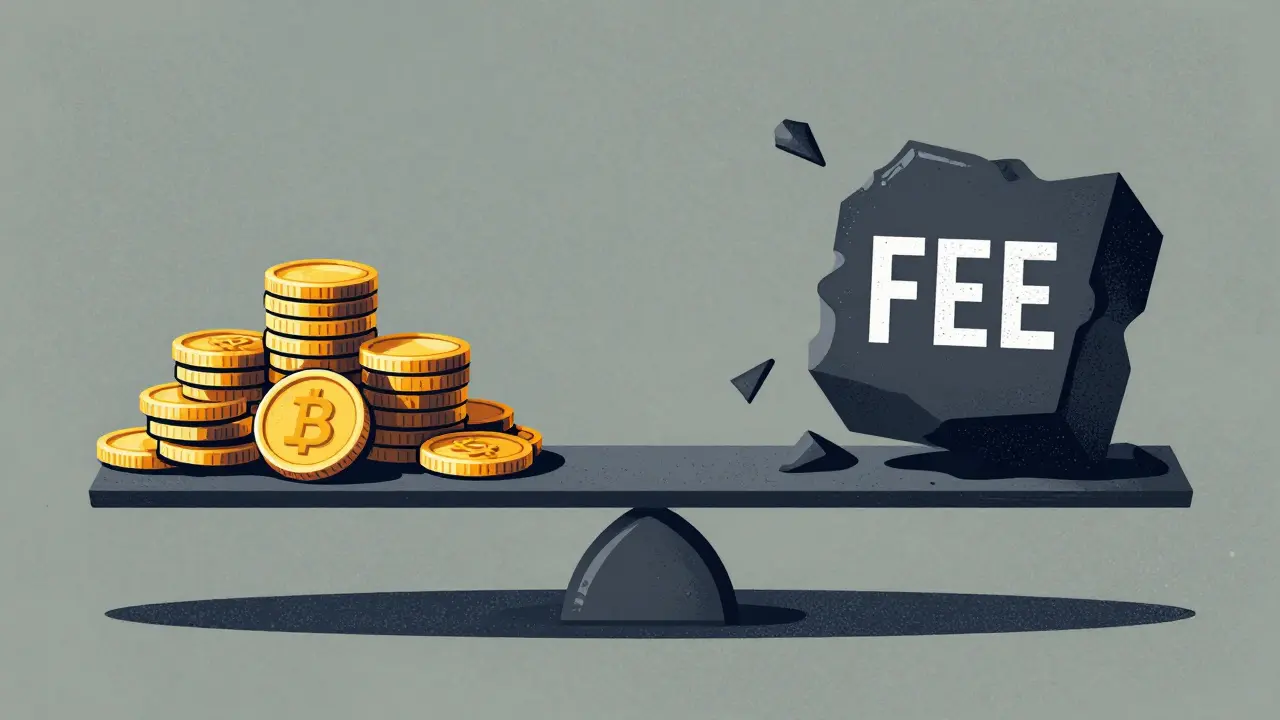
Cost is the primary driver for choosing Optimism over Ethereum mainnet. On Uniswap V3, there are two types of fees to consider: the trading fee and the network gas fee.
Trading Fees: Uniswap V3 allows liquidity providers to set different fee tiers based on the risk of the pair. These typically include 0.01% for stablecoin pairs, 0.05% for common pairs, 0.30% for standard pairs, and 1% for exotic pairs. As a trader, you pay these fees when you swap. Compared to centralized exchanges that often charge 0.1% to 0.5%, Uniswap's 0.05% tier is highly competitive for active traders.
Gas Fees: This is where Optimism shines. On Ethereum mainnet, a single swap might cost $5 to $50 depending on congestion. On Optimism, the same transaction usually costs less than $0.10. This makes small trades viable. If you want to swap $50 worth of tokens, paying $5 in gas on mainnet doesn't make sense. On Optimism, paying $0.05 does.
| Feature | Ethereum Mainnet (L1) | Optimism (L2) |
|---|---|---|
| Average Gas Fee per Swap | $5 - $50+ | $0.01 - $0.10 |
| Transaction Time | 15 seconds - 5 minutes | Under 10 seconds |
| Liquidity Depth | Highest | High (but lower than L1) |
| Best For | Large institutional trades | Retail traders and frequent swaps |

Providing Liquidity: High Rewards, Higher Complexity
While swapping is easy, providing liquidity on Uniswap V3 is not for beginners. This is where the "concentrated liquidity" feature becomes both a blessing and a curse. By focusing your capital in a narrow price range, you earn significantly more fees. Industry analysts note that V3 can enable approximately 54% higher returns compared to V2 for well-managed positions.
However, this comes with increased responsibility. Each liquidity position is represented as a unique non-fungible token (NFT) using the ERC-721 standard. Why? Because each position has specific parameters: the token pair, the price range, and the amount invested. Since no two positions are identical, they must be tracked individually.
You must actively manage these positions. If the price of the token moves out of your selected range, you stop earning fees entirely. You then need to pay gas fees again to rebalance your position. On Optimism, these rebalancing costs are negligible, making it much easier to adjust frequently. On mainnet, frequent rebalancing would destroy your profitability.
The biggest risk here is impermanent loss. This occurs when the price of the deposited tokens changes compared to when you deposited them. Data from 2025 showed that while liquidity providers earned millions in fees, many suffered net losses due to impermanent loss exceeding those fees. For example, a sample group covering 43% of Total Value Locked (TVL) earned $199.3 million in fees but suffered $260.1 million in impermanent loss. This highlights that providing liquidity is a speculative strategy, not a passive income stream.
Security and Decentralization
One of the core appeals of Uniswap is that it is non-custodial. You never give up control of your private keys. Your funds remain in your wallet until the moment of the swap. This eliminates the risk of exchange hacks, where a centralized company loses user funds. Uniswap itself has never been hacked in a way that compromised user funds held in wallets, though smart contract vulnerabilities are always a theoretical risk in DeFi.
Optimism adds another layer of security through its optimistic rollup technology. Transactions are assumed to be valid unless proven otherwise. A fraud proof period allows anyone to challenge invalid transactions. This maintains the security guarantees of Ethereum while offering scalability. However, it does introduce a slight withdrawal delay if you want to move funds back to Ethereum mainnet, typically taking around seven days. For trading purposes on Optimism, this delay is irrelevant, but it is something to remember if you need emergency access to your mainnet funds.
User Support and Documentation
Because Uniswap is decentralized, there is no customer service team to call if you make a mistake. There is no password reset button. If you send tokens to the wrong address, they are gone. This lack of hand-holding is a feature, not a bug, for purists, but it can be terrifying for newcomers.
Uniswap provides a ticket-based support system that responds within an hour, but these responses often assume a high level of technical knowledge. They may direct you to external tools like Etherscan or DEX explorers to debug issues. The Discord community is active but can be difficult to navigate for those unfamiliar with crypto slang and concepts. Most users rely on community tutorials, YouTube guides, and documentation rather than official support. This means you must be comfortable doing your own research (DYOR).
Verdict: Is Uniswap V3 on Optimism Right for You?
Uniswap V3 on Optimism represents the current gold standard for decentralized trading. It offers the best balance of low fees, high speed, and deep liquidity for ERC-20 tokens. If you are a retail trader who wants to avoid high spreads and custodial risks, this is likely your best option.
It is less suitable if you are completely new to cryptocurrency. The concepts of gas fees, wallet connections, and slippage tolerance require learning. Additionally, if you plan to provide liquidity, you must be prepared to monitor markets closely and accept the risk of impermanent loss. For simple swapping, however, it is streamlined, secure, and significantly cheaper than alternatives.
Is Uniswap V3 on Optimism safe to use?
Yes, it is considered very safe. Uniswap is a non-custodial protocol, meaning you retain control of your funds via your private keys. Optimism uses Ethereum's security model through optimistic rollups. However, you are responsible for securing your own wallet and avoiding phishing sites. Always verify URLs before connecting your wallet.
How do I bridge funds to Optimism to use Uniswap?
You can use the official Optimism Bridge or third-party bridges like Across or Stargate. Connect your Ethereum mainnet wallet, select the amount to bridge, and confirm the transaction. Note that bridging from Ethereum L1 to Optimism L2 is usually instant, but moving funds back to L1 takes approximately seven days for finality.
What is the difference between Uniswap V2 and V3?
The main difference is concentrated liquidity. V2 spreads liquidity across all prices, while V3 allows providers to target specific price ranges. This makes V3 more capital-efficient and profitable for providers but also more complex to manage. V3 also offers multiple fee tiers, whereas V2 had a flat 0.3% fee.
Can I trade Bitcoin directly on Uniswap?
No, Uniswap operates on the Ethereum Virtual Machine (EVM) and only supports ERC-20 tokens. To trade Bitcoin, you must use Wrapped Bitcoin (WBTC), which is an ERC-20 token pegged 1:1 to the value of Bitcoin. You need to wrap your BTC before sending it to an EVM-compatible chain like Optimism.
Why are my Uniswap fees so low compared to Coinbase?
Centralized exchanges like Coinbase charge fees to cover operational costs, regulatory compliance, and profit margins. Uniswap is a decentralized protocol run by code. The fees you pay go directly to liquidity providers who supply the tokens for the trade. On Optimism, gas fees are minimal, allowing the total cost to be significantly lower than centralized platforms.
Tricia Alach
May 23, 2026 AT 02:48i love how we finally got to a point where gas fees dont eat ur profits for breakfast
its kinda poetic really, like the universe correcting itself after years of paying $50 to move $10 worth of shitcoins
optimism is just so smooth compared to mainnet lag
Jan Gilmore
May 24, 2026 AT 02:20You are missing the fundamental point about capital efficiency here. While Optimism reduces gas costs, Uniswap V3's concentrated liquidity model introduces significant complexity that most retail traders are not equipped to handle properly. The notion that it is 'easy' because the interface is clean is a dangerous oversimplification. You have to actively manage your ranges, rebalance frequently, and understand impermanent loss mechanics deeply. If you do not monitor your position every few hours during volatile markets, you will bleed value faster than you earn in fees. It is not a passive income stream; it is an active trading strategy disguised as DeFi yield farming. Most people lose money because they treat it like a savings account.
Caique Muniz
May 25, 2026 AT 16:43lol yeah sure jan keep telling yourself that u r some genius trader when u probably cant even wrap btc without crying
who gives a shit about 'capital efficiency' if i just want to swap eth for usdc without getting charged rent by vitalik
this whole review is boring af but at least the fees are low enough that i wont go broke swapping my lunch money
Bradley Geldenhuys
May 26, 2026 AT 07:58look man im not gonna sit here and tell u that defi is perfect or easy bc its not
but the idea that centralized exchanges are better is laughable
u r giving ur keys to strangers who can freeze ur account whenever they feel like it
with uniswap on optimism u r in control
yes its complex yes u have to learn stuff but thats the price of freedom
stop being lazy and read the docs
once u get it u will never go back to binance
its empowering to own ur assets truly
dont let fear stop u from exploring what web3 can actually do for regular people
we need more builders and less complainers
keep pushing forward even if its hard
the future is decentralized whether u like it or not
embrace the chaos and learn from it
trust the process and do ur own research
it pays off in the end
stay strong out there
robert Whitehead
May 26, 2026 AT 19:33The moral hazard of promoting such a speculative instrument without emphasizing the predatory nature of impermanent loss is disgusting. You are essentially encouraging users to gamble their life savings on smart contracts that could be drained by a single exploit. The fact that you highlight 'low fees' while ignoring the systemic risk of bridge failures and rollup vulnerabilities shows a complete lack of ethical responsibility. People are losing millions because influencers like you paint this as a safe harbor. It is not safe. It is a casino built on code that hasn't been audited enough. Stop pretending this is financial advice when it is clearly just hype for early adopters looking to exit liquidity. Shameful.