What is a Public Blockchain Network? A Complete Guide
 Apr, 19 2026
Quick Summary
- Open Access: Anyone with an internet connection can join, read, and write data.
- Decentralized: No single entity controls the network; it is run by thousands of independent nodes.
- Immutability: Once data is written into a block and added to the chain, it is nearly impossible to change.
- Trustless: You don't need to trust a middleman because the math and consensus mechanisms verify the truth.
How Public Blockchains Actually Work
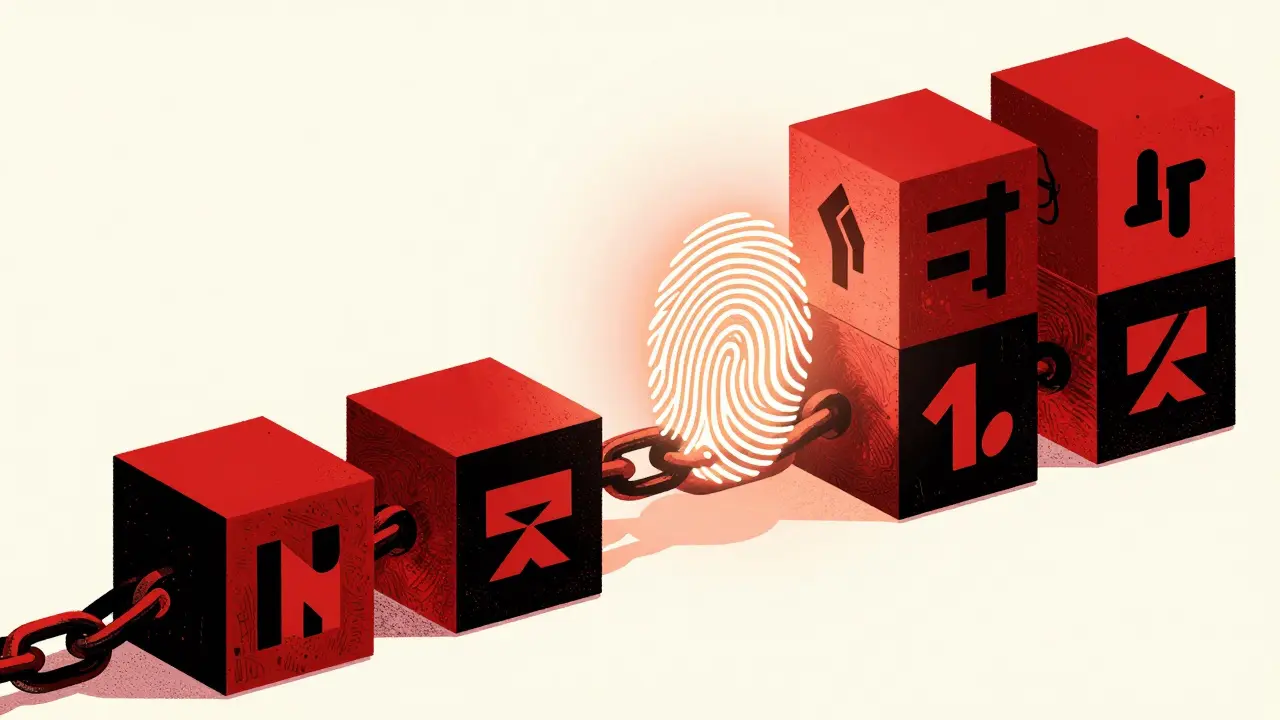
At its simplest, a public blockchain is a series of data blocks linked together using cryptography. Think of it like a digital chain of notebooks. Every time a page (a block) is filled with transactions, it is sealed with a unique digital fingerprint called a hash. This hash depends on the content of the previous page, creating a chronological link. If you try to change a single letter on page one, the fingerprint for that page changes, which breaks the link to page two, and so on. This is why we call it "immutable." To keep this system honest without a boss, these networks use consensus mechanisms. These are sets of rules that all computers (nodes) on the network follow to agree on which transactions are valid.The two most common types are:
- Proof of Work (PoW): Used by Bitcoin. Miners use powerful hardware to solve complex math puzzles. The first one to solve it wins the right to add the next block and earns a reward. It is incredibly secure but eats a lot of electricity.
- Proof of Stake (PoS): Used by Ethereum after "The Merge" in 2022. Instead of mining, people "stake" their own coins to become validators. It is much faster and uses a fraction of the energy compared to PoW.
Public vs. Private Blockchains: What is the Difference?
Not all blockchains are created equal. While public networks are the "wild west" of transparency, private blockchains are more like a corporate intranet. A private blockchain is controlled by a single organization that decides who can join and what they can see. While that sounds restrictive, it makes them incredibly fast. If you look at the numbers, a public network like Bitcoin processes about 7 transactions per second (TPS). Compare that to a private setup using Hyperledger Fabric, which can hit over 10,000 TPS. The trade-off is simple: you give up decentralization and censorship resistance to get speed and privacy.| Feature | Public Blockchain | Private Blockchain | Consortium Blockchain |
|---|---|---|---|
| Access | Open to everyone | Single organization | Pre-selected group |
| Speed (TPS) | Low (e.g., 7-30 TPS) | Very High (10,000+) | Medium (1,000-2,000) |
| Immutability | Extremely High | Moderate (controlled) | High |
| Example | Bitcoin, Ethereum | Internal corporate ledgers | R3 Corda |
Real-World Use Cases and the "Trustless" Economy
Why do we even need this? The biggest value is the removal of the middleman. In a traditional bank transfer, you trust the bank to move your money. In a public blockchain, you trust the code. One of the most powerful applications is Decentralized Finance (DeFi). DeFi allows people to lend, borrow, and trade assets without a bank. Ethereum is the powerhouse here, hosting thousands of decentralized applications (dApps). For example, instead of getting a loan from a bank that requires a credit check, you can use a DeFi protocol to lock up some crypto as collateral and get an instant loan. Then there are Non-Fungible Tokens (NFTs). While many see them as just expensive JPEGs, they are actually a way to prove ownership of a unique digital asset on a public ledger. Because the network is public, anyone can verify that you actually own that specific token without needing a gallery or auction house to vouch for it.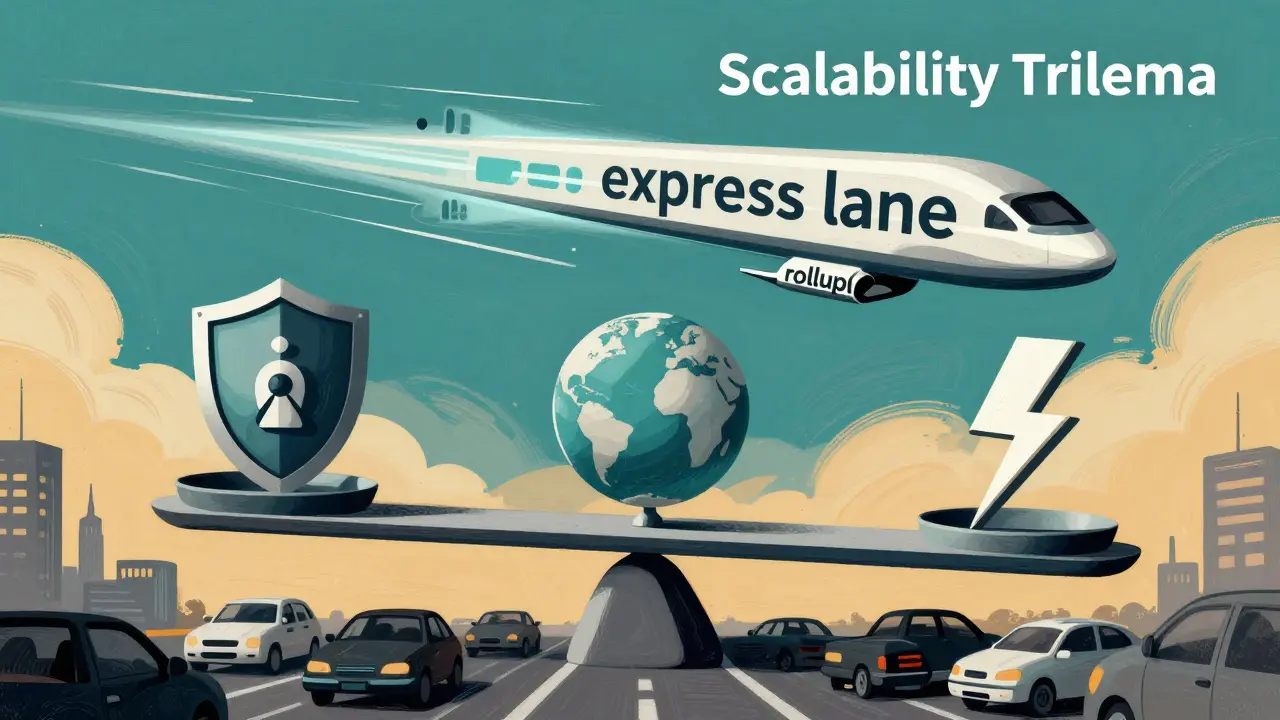
The Hard Truth: Limitations and Pitfalls
It isn't all sunshine and moon-missions. Public blockchains have some serious baggage. The first is the "Scalability Trilemma," which suggests that a network can only pick two of three: security, decentralization, or speed. Bitcoin chose security and decentralization, which is why it's so slow. Then there's the cost. When the network gets crowded, you have to pay a "gas fee" to get your transaction processed. During the NFT craze of 2021, some Ethereum users reported paying $50 just to mint a single piece of art because the network was jammed. But the biggest risk is personal responsibility. In a public blockchain, there is no "forgot password" button. You use public-key cryptography. You have a public key (like an email address) and a private key (like a super-secret password). If you lose your private key, your funds are gone forever. There is no customer support line to call to get them back.The Future of Public Networks
We are moving away from the era where the main blockchain does everything. The future is "Layer 2" solutions. Think of the main public blockchain (Layer 1) as the slow, secure court system, and Layer 2 as the fast, daily business transactions. Rollups are now processing millions of transactions daily on top of Ethereum, bundling them together and then settling the final result on the main chain. This solves the speed and cost issues while keeping the security of the public network. Looking ahead, we are seeing a shift toward quantum-resistant cryptography to protect against future computers that could potentially crack current encryption. We are also seeing the rise of "sharding," where the network is split into smaller pieces to handle more data simultaneously. If these work, we could see public blockchains handling 100,000 transactions per second, making them competitive with giants like Visa.Is a public blockchain the same as a cryptocurrency?
No. The blockchain is the infrastructure (the road), while cryptocurrency is the asset that moves on it (the car). Bitcoin is a currency, but it runs on the Bitcoin public blockchain network.
Can a public blockchain be hacked?
While the core protocol is incredibly secure, smaller networks are vulnerable to a "51% attack," where someone controls more than half the network's mining power. However, for massive networks like Bitcoin, the cost of such an attack is practically impossible for any single entity to afford.
Why is Bitcoin so slow compared to Visa?
Visa uses a centralized server that just updates a database. Bitcoin requires thousands of computers globally to agree on every single transaction using Proof of Work, which takes time and massive computational effort to ensure the network remains decentralized and secure.
Who owns a public blockchain?
Nobody. That is the point of decentralization. It is owned and operated collectively by the people who run the nodes and the miners/validators who secure the network.
Do I need special hardware to use a public blockchain?
To simply send and receive coins, you only need a smartphone or computer with a wallet app. However, if you want to run a "full node" (which helps secure the network), you'll need a dedicated machine with a high-capacity SSD (usually 2TB+) and a stable internet connection.
Yuhan Mo
April 20, 2026 AT 05:54The breakdown of the scalability trilemma is spot on. Most people don't realize that achieving high throughput usually means sacrificing some level of decentralization or security via a more centralized consensus mechanism. Layer 2 rollups are definitely the meta right now for balancing those trade-offs.
Shantal Sanjur
April 21, 2026 AT 06:59Oh sure, just trust the "math" and the "code."
It's so convenient how we're told there's no central authority while the biggest mining pools and staking validators basically run the whole show from behind a curtain. Just another way to move the goalposts of control while making us feel like we're in a digital revolution. Please, tell me more about how this is actually "trustless" while you're relying on a handful of companies to maintain the infrastructure.
Joshua Salwen
April 21, 2026 AT 21:59LMAO the part about the private keys is literally the most horrifying thing ever!!
imagine losing your entire life savings because you misplaced a piece of paper or a USB stick... its absolute MADNESS. i can't even find my socks half the time, why would i trust myself with a 64-character string of gibberish?? absolute nightmare fuel!!
Michelle Stanish
April 23, 2026 AT 10:28Private blockchains are better. They are just faster and that's what matters for actual business.
Jeff Barlett
April 23, 2026 AT 15:01Actually, calling it a "global ledger" is such a stretch. It's more like a very expensive, very slow database that we've all collectively decided to pretend is the future of finance just so some VCs can dump their bags on retail investors. The whole concept of immutability is a joke when you consider how many "hard forks" happen whenever the whales decide the rules need to change for their benefit.
Tracy Sperandio
April 24, 2026 AT 18:37Let's get pumped about the potential here! The sheer audacity of removing the middleman is a total game-changer for global financial inclusion. We are talking about a vibrant, electric shift in how value moves across borders, breaking down those dusty old walls of traditional banking. It is an absolute blast to see the DeFi ecosystem evolve into this wild, neon-lit jungle of innovation where anyone with a spark of curiosity can carve out their own path to wealth creation! Keep pushing the boundaries and let's ride this wave of decentralization into a bright, borderless future!
Karen Mogollon Gutierrez
April 25, 2026 AT 03:14It is truly an utter travesty that the common populace is expected to manage their own cryptographic keys without a shred of institutional support. The sheer audacity of suggesting that a human being-prone to error and emotional turmoil-should be the sole custodian of their fortune is nothing short of scandalous. One misplaced seed phrase and one's entire digital estate vanishes into the ether, leaving behind only the bitter taste of regret and an empty wallet. It is a tragedy of Shakespearean proportions played out on a digital stage.
Kaitlyn Wu
April 25, 2026 AT 10:16We need to be very clear that while this tech is inclusive, the responsibility is heavy. Newcomers should always start with small amounts and use a hardware wallet to avoid the pitfalls mentioned. It's a great tool, but only if you respect the boundaries of the technology and don't gamble what you can't afford to lose.
Evan Iacoboni
April 26, 2026 AT 10:59The 51% attack explanation is too simple. It doesn't account for the cost of hardware depreciation or the social layer of a network where miners might actually want to maintain the value of the coin they are mining.