What is CheeseSwap (CHEESE)? A Deep Look at the Token's Current State
 Apr, 27 2026
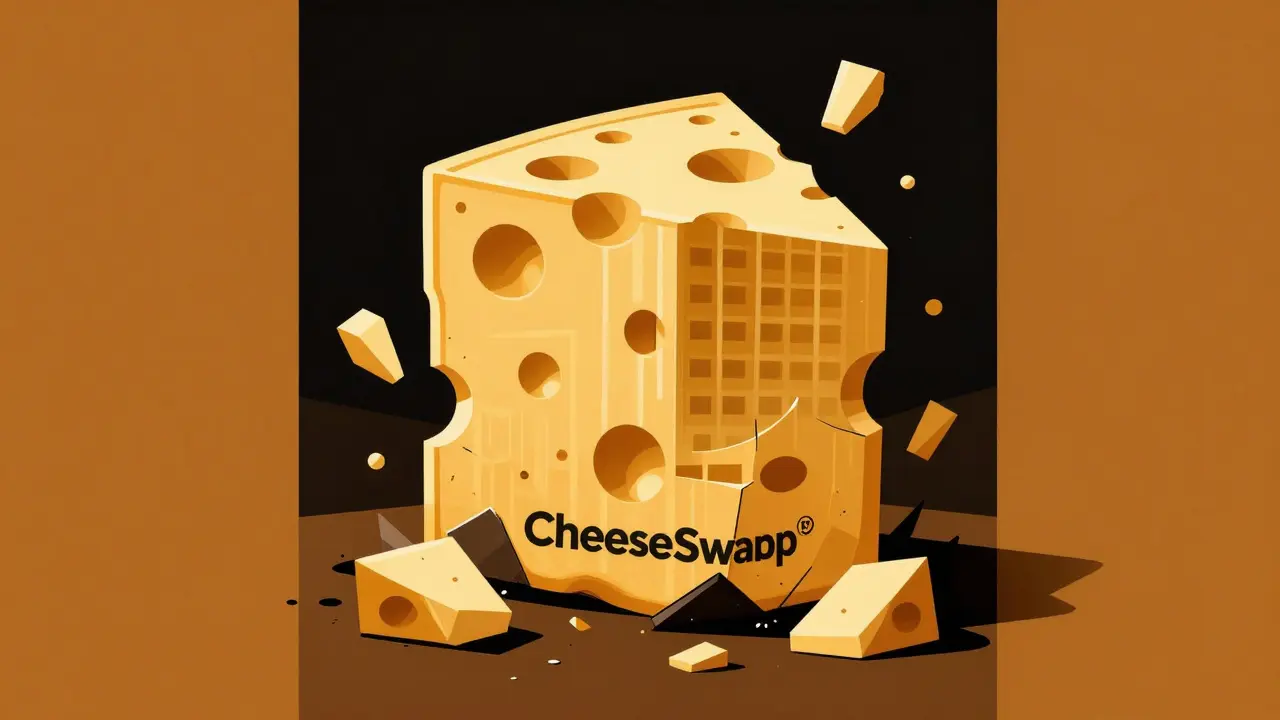
Imagine investing in a project that promises to be a "one-stop crypto solution," only to watch its value vanish by 99.97%. That is the reality for those holding CheeseSwap is a cryptocurrency token and decentralized exchange (DEX) operating on the Binance Smart Chain. Also known as CHEESE, it was designed to offer various DeFi products, but today it serves more as a cautionary tale than a financial tool.
The Hard Truth About CHEESE Prices
If you are looking at the charts for CheeseSwap, the numbers are bleak. To understand where this token stands, you have to look at the gap between its peak and its current reality. The token reached an all-time high of $0.001267, but it has since plummeted. By late 2025, the price settled around $0.0000003894. When a coin drops nearly 100% of its value, it isn't just a "market correction"-it's a total collapse.
What makes the situation worse is the volatility. You might see a 11% price swing in a single day, but don't let that fool you into thinking there is a "bull run" happening. Because the liquidity is so low, a single tiny trade can move the price percentage significantly. It is a ghost town of a market where the price fluctuates not because of demand, but because there is nobody left to trade.
How CheeseSwap Works (In Theory)
On paper, CheeseSwap was built to be a hub for Decentralized Finance (DeFi). It leverages the Binance Smart Chain (BSC) to provide a platform where users can swap tokens without a central authority. This is the same basic logic used by giants like PancakeSwap, which remains the primary place where CHEESE is still traded via the CHEESE/WBNB pair.
The project marketed itself as a comprehensive ecosystem, claiming to offer a multitude of services. However, there is a massive gap between marketing and execution. There is almost no public documentation, no clear whitepaper, and no updated roadmap. In the crypto world, if a project stops talking about its future and stops updating its code, it usually means the developers have moved on.
| Attribute | Value / Status |
|---|---|
| Current Price (Approx) | $0.0000003894 |
| All-Time High Drop | -99.97% |
| 24-Hour Trading Volume | Near $0 |
| Total Supply | 99.49 Billion CHEESE |
| Market Cap | ~$34.26K |
Red Flags for Every Investor
When you evaluate a token, you look for a few key signs of life: trading volume, community engagement, and developer activity. CheeseSwap fails all three. A market cap of roughly $34,000 puts it in the lowest tier of cryptocurrencies, ranking it around #6767 on major tracking sites. But the real red flag is the volume-to-market cap ratio, which is effectively 0%.
Why does this matter? Because if you buy $100 worth of a token with zero volume, you might find it impossible to sell those tokens later. This is called "illiquidity." You are essentially holding a digital asset that no one wants to buy back from you. Furthermore, while there are over 13,000 holders, the lack of Reddit threads, Twitter activity, or forum discussions suggests these holders are simply "bag holders"-people waiting for a miracle recovery that likely isn't coming.

Comparing CHEESE to Established DEX Tokens
To see how far CheeseSwap has fallen, it helps to compare it to a successful BSC project. Most users who wanted a DEX experience went with CAKE (the token for PancakeSwap). While CAKE has actual utility, governance, and massive daily volume, CHEESE offers no clear utility beyond being a speculative asset. One is a functional piece of financial infrastructure; the other is a defunct token.
If you are using a Binance Web3 Wallet, you can technically connect to decentralized exchanges to trade CHEESE, but the risk of "slippage" is extreme. Slippage happens when the price changes between the time you submit your trade and the time it is executed. In a low-liquidity pool like CheeseSwap's, you might try to buy at one price and end up paying significantly more.
Is There Any Chance of a Recovery?
In the crypto space, "dead coins" occasionally have a second life if a new team takes over or a meme trend hits. But CheeseSwap lacks the basic ingredients for a comeback. There is no GitHub activity, no new product announcements, and no professional analysis suggesting a pivot. When a project loses 99% of its value and the volume hits zero, it usually means the project has been abandoned.
For anyone tempted by the low price, remember that a low price doesn't mean it's "cheap" or a "bargain." It means the market has decided the project has no value. Without a working product or an active team, the token is essentially a placeholder for a failed experiment.
Is CheeseSwap (CHEESE) a scam or just a failed project?
While there isn't a formal legal verdict, the patterns are classic for a failed DeFi project. The combination of a 99.97% price drop, zero trading volume, and a complete lack of developer updates suggests that the project is abandoned. Whether it was a deliberate scam or just poor execution, the result for investors is the same: a near-total loss of value.
Where can I buy or sell CHEESE tokens?
The most active (though still very low) trading pair is CHEESE/WBNB on PancakeSwap (v2). You can access this using a Web3 wallet like the Binance Web3 Wallet. However, be warned that due to extreme illiquidity, you will likely experience high slippage.
What is the total supply of CHEESE?
The total and circulating supply of CheeseSwap is approximately 99.49 billion CHEESE tokens.
Why is the price of CHEESE so volatile despite zero volume?
This happens because of the lack of liquidity. When there are very few buy and sell orders in a pool, even a very small trade can shift the price by a large percentage. It doesn't indicate a trend or high demand; it's just a mathematical result of a thin market.
Does CheeseSwap have a roadmap or whitepaper?
Publicly available information on a current roadmap or technical whitepaper is extremely limited or non-existent. The project marketed itself as a "one-stop crypto solution," but provided very few concrete technical details to support those claims.
Arun Prabhu
April 27, 2026 AT 11:45Typical. Another textbook example of the mindless herds chasing a glimmer of digital gold only to find a wasteland of zero liquidity. It's truly a symphony of incompetence when a project boasts a 'one-stop solution' without a single shred of technical documentation to back its delusions of grandeur. The sheer audacity of these developers to launch a token and then vanish into the ether is almost impressive in its cowardice. We live in an era where financial literacy is replaced by 'trust me bro' and the result is this pathetic $34k market cap ghost town. It's a laughable tragedy, really, that anyone thought a coin named after a dairy product was a sound investment strategy for the future of finance. Truly a masterclass in how to incinerate capital with maximum efficiency.
Kara Spadone
April 28, 2026 AT 07:29The universe has a funny way of purging the delusions of greed 🙄. People really thought they found a shortcut to wealth and now they're just holding digital dust. It's a spiritual lesson in detachment, if you can call losing everything a lesson 💅.
VIVEK SINGH
April 30, 2026 AT 04:13Oh look, another 'revolutionary' project that managed to do absolutely nothing except lose money. Truly groundbreaking stuff here. I'm sure the 'bag holders' are just waiting for the magic fairy of DeFi to come and save their portfolio from the void. It's almost poetic how the lack of a whitepaper is the only thing that actually worked as advertised.
Kristi Swartz
April 30, 2026 AT 14:34this is why due diligence is mandatory for any investor who has any common sense it is a simple matter of checking the github and the roadmap before putting money into a project that has no transparency
April D Thompson
May 1, 2026 AT 13:21My heart actually breaks for the people who got swept up in the hype of this one! Imagine the emotional rollercoaster of seeing those green candles only to realize the floor had completely dropped out from under you. It's an absolute tragedy of the digital age, a haunting reminder that we are all so vulnerable to the promise of a better life through a screen.
But maybe, just maybe, there is a glimmer of hope in the ruins. Not for the money, but for the soul. We can learn to be more mindful, to hold each other's hands as we navigate this chaotic wilderness of decentralized finance, and to realize that our value isn't tied to a ticker symbol on a screen. Let this be a catalyst for a more compassionate way of investing, where we prioritize community and ethics over the frantic pursuit of a 100x return. We are all just travelers in this strange new world, trying to find our way home through a fog of scams and failed dreams. It is so incredibly painful to see such a collapse, but the shared experience of loss can sometimes create a bond more valuable than any token ever could. Let's use this as a moment to reflect on what truly matters in our lives beyond the volatility of the markets. We must protect each other from these pitfalls and foster a space of genuine mentorship and support for the newcomers who are just trying to find their footing in this dizzying landscape. The tragedy isn't the loss of the coins, but the loss of trust in a system that promised liberation but delivered a trap.
Jehan ZA
May 2, 2026 AT 19:32The data provided is quite illuminating regarding the risks of illiquidity.