What is First Digital USD (FDUSD) Crypto Coin?
 Mar, 10 2026
When you think of crypto, you probably picture Bitcoin swinging wildly or Ethereum shifting with the market. But what if there was a digital coin that stayed exactly at $1.00-no spikes, no crashes, just steady value? That’s First Digital USD (FDUSD). It’s not trying to beat the market. It’s built to hold the line.
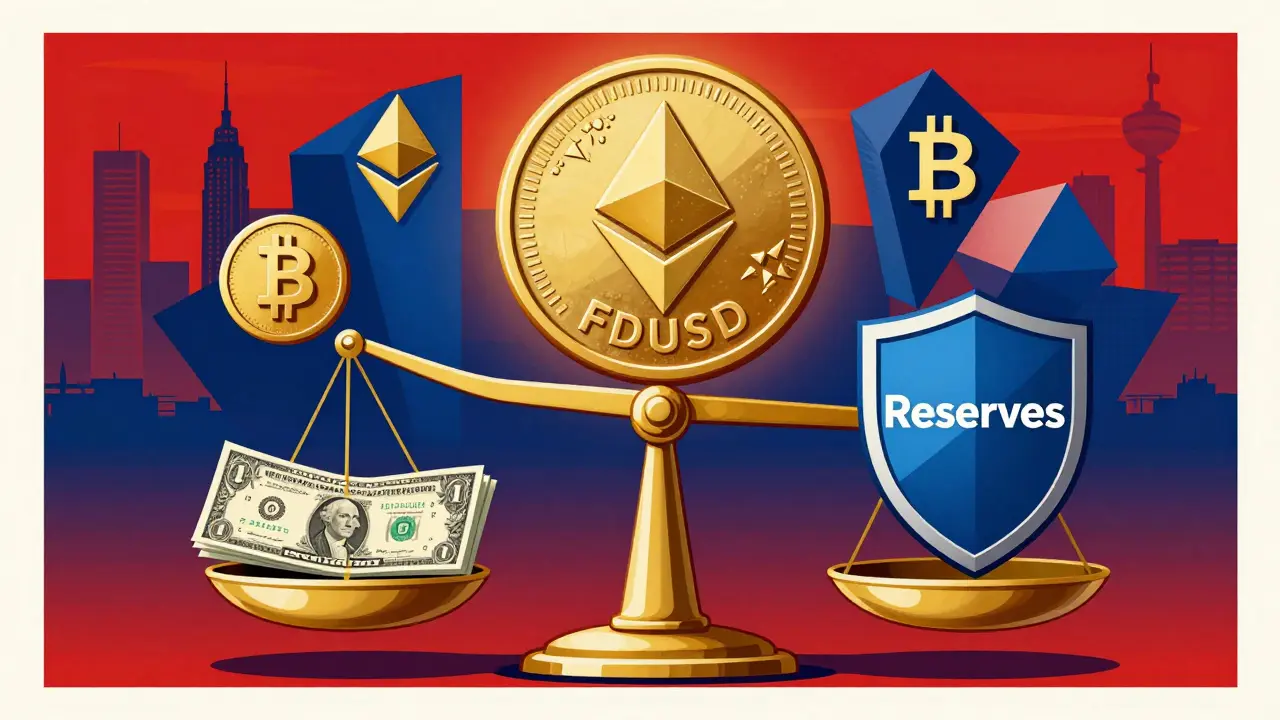
FDUSD is a stablecoin, meaning every single token is meant to be worth exactly one U.S. dollar. Not $0.98. Not $1.05. Exactly $1.00. It’s not magic. It’s backed. Each FDUSD token you hold is tied to a real dollar held in reserve. If you ever wanted to turn your FDUSD back into cash, the system is designed to let you do that, at any time.
Who Created FDUSD and Why?
FDUSD was launched in May 2023 by FD121 Limited, a company based in Hong Kong and part of First Digital Limited. This isn’t some anonymous team working out of a garage. First Digital Limited is a regulated financial firm with real licenses, real offices, and real oversight. They built FDUSD because there’s a growing need for a trustworthy, compliant digital dollar-especially in Asia, where institutions and traders want to move money without the chaos of traditional banking.
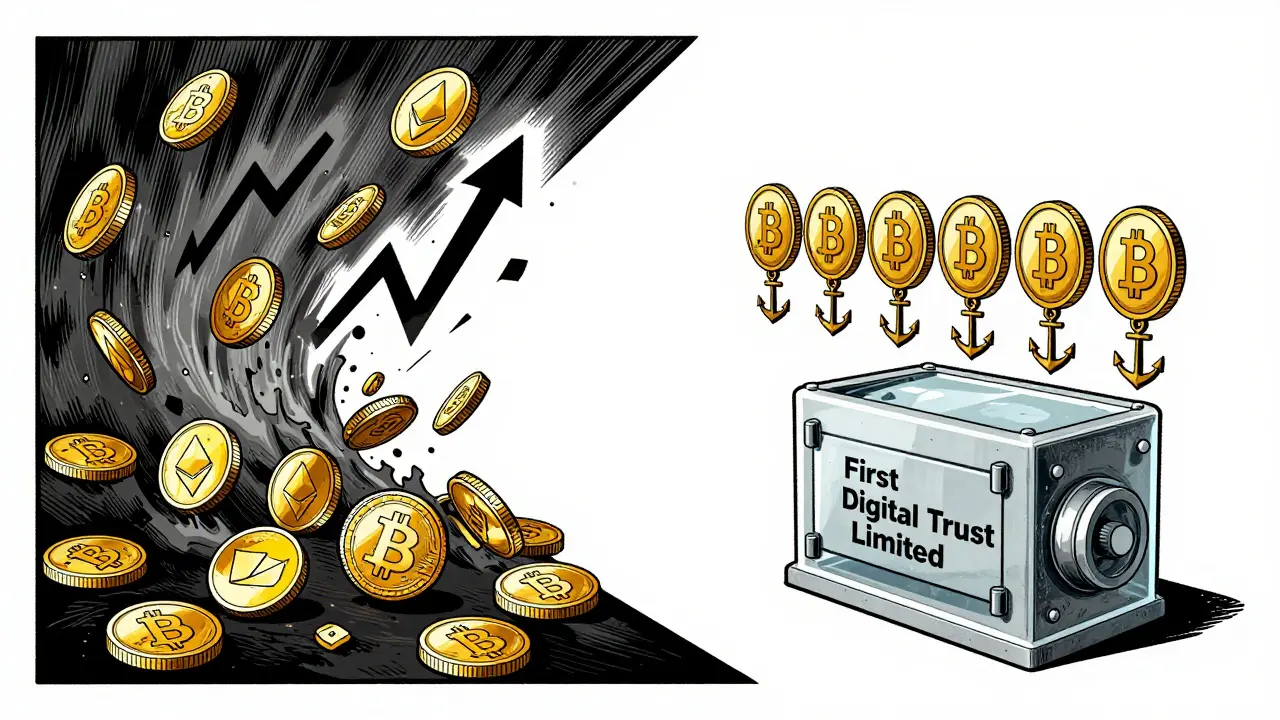
Unlike some stablecoins that got into trouble because their reserves were murky or risky, FDUSD’s backing is structured to be clear and safe. The reserves aren’t held by First Digital themselves. They’re kept by First Digital Trust Limited, a separate trust company registered under Hong Kong law. That means your dollars aren’t mixed with the company’s other money. They’re locked in their own accounts, legally separated. This setup is meant to protect users even if the parent company runs into trouble.
How Is FDUSD Backed?
Every FDUSD in circulation must be matched by a dollar-or something just as good-in reserve. These reserves are held in cash or assets that can be turned into cash quickly: U.S. Treasury bills, bank deposits, or short-term government securities. No risky crypto, no loans, no speculative investments. Just safe, liquid assets.
To prove this isn’t just a claim, FDUSD releases regular attestation reports. These aren’t internal audits. They’re done by independent, third-party accounting firms. These reports show exactly how much cash is sitting in the reserve, and how many FDUSD tokens are out there. If the numbers don’t match, the system breaks. And so far, they’ve always matched.
As of March 2026, FDUSD has a circulating supply of 1.4 billion tokens. That means roughly $1.4 billion in reserves are being held to back them. The market cap sits around $1.2 billion, which reflects some trading volume and slight price deviations-but the peg holds tight. The lowest it’s ever dipped was $0.999283. The highest? $1.0141. That’s noise. Not a crisis.
Where Can You Use FDUSD?
FDUSD isn’t just sitting on a shelf. It’s being used everywhere.
First, it’s one of the most popular trading pairs on Binance. If you trade crypto, you’ve probably seen FDUSD listed alongside BTC, ETH, or SOL. Traders use it to move in and out of positions without converting to fiat. No bank delays. No fees. Just swap your Ethereum for FDUSD in seconds and lock in your profit.
Second, it’s a shield. Crypto prices swing hard. If Bitcoin drops 20% overnight, you can convert your holdings to FDUSD and keep your value intact. No need to cash out to a bank account. Just hit a button. When the market calms down, you can swap back.
Third, it’s a bridge. Imagine sending money to a friend in Nigeria, Brazil, or Vietnam. Traditional wire transfers take days and cost $30+. With FDUSD, you send it through a blockchain in minutes for less than $1. No currency conversion. No middlemen. Just digital dollars moving fast.
Fourth, businesses use FDUSD for payments. A U.S.-based company can pay freelancers overseas without worrying about exchange rates or banking restrictions. The freelancer gets a stable dollar value, and the business avoids hidden fees.
Why Does FDUSD Stand Out?
There are dozens of USD stablecoins out there: USDT, USDC, DAI, FRAX. So why FDUSD?
It’s not the biggest. It’s not the oldest. But it’s one of the few built with institutional trust in mind. Most stablecoins are either U.S.-based (like USDC) or operate with minimal transparency (like USDT). FDUSD sits in the middle. It’s Hong Kong-based, regulated under Asian financial law, and audited by global firms. That makes it a go-to option for traders and institutions in Asia, the Middle East, and Africa-regions where access to U.S.-regulated stablecoins is limited or complicated.
Also, FDUSD is live on Ethereum and BNB Chain right now. That means it works with most wallets, DeFi apps, and exchanges. Plans are already in motion to expand to Solana, Polygon, and others. It’s not stuck on one chain. It’s built to move.
What Are the Risks?
Nothing in crypto is risk-free. FDUSD is no exception.
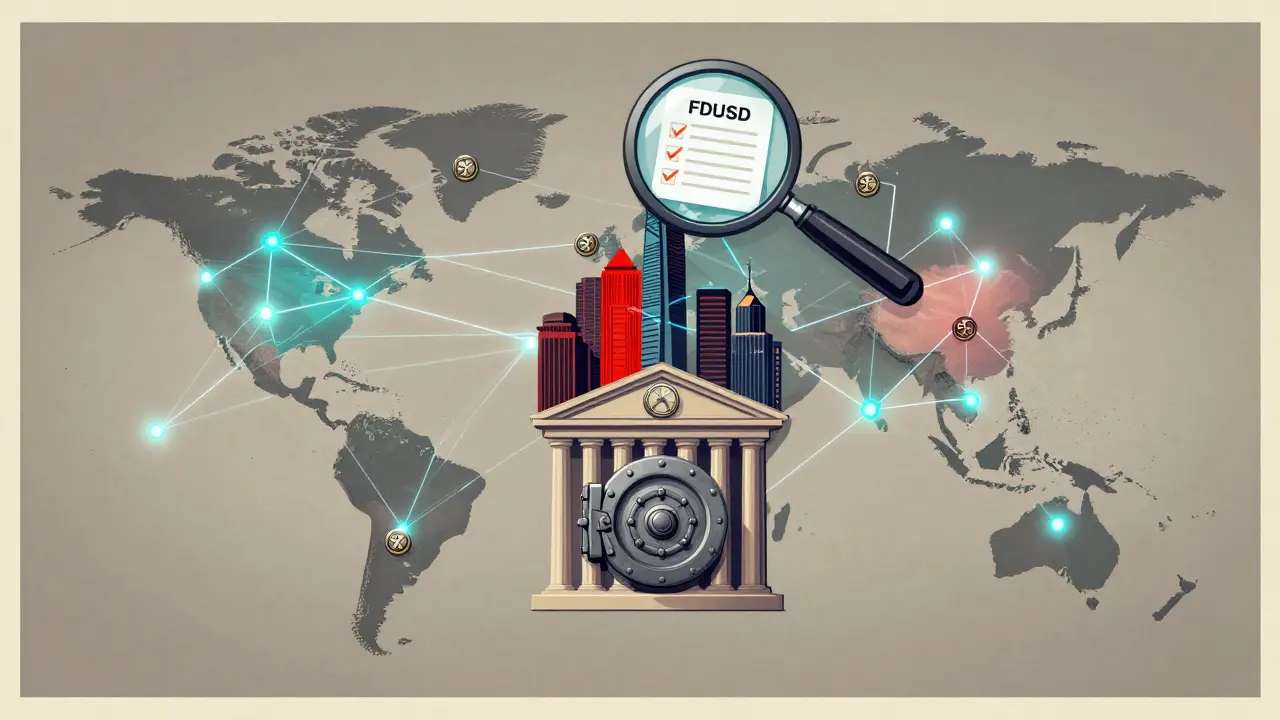
The biggest risk? If the reserve assets lose value or become illiquid. Say a major bank holding the cash fails. Or U.S. Treasuries suddenly become hard to sell. That could break the $1 peg. But so far, the reserves are in the safest, most liquid assets possible. The custodian is legally required to keep them separate. The audits are public. The system has held for over two years.
The second risk? Regulation. If Hong Kong or another jurisdiction cracks down on stablecoins, FDUSD could face restrictions. But First Digital has been proactive-working with regulators, publishing reports, and keeping reserves clean. That’s not luck. That’s strategy.
The third risk? Trust. If people stop believing FDUSD is backed, they’ll sell. And if enough sell at once, the price could drop. That’s why transparency matters. Every attestation report is a chance to rebuild trust. So far, they’ve kept it.
Where Does FDUSD Fit in the Big Picture?
As of March 2026, FDUSD ranks #93 on CoinMarketCap. It’s not top 10. But it’s in the top 100 stablecoins by market cap-and that’s a big deal. It’s not trying to be Bitcoin. It’s trying to be the digital dollar everyone can trust.
For everyday users: it’s a safe place to park crypto gains.
For traders: it’s a fast, cheap way to move between assets.
For businesses: it’s a global payment tool without the banking hassle.
For institutions: it’s a compliant, Asia-based alternative to U.S.-centric stablecoins.
FDUSD doesn’t promise to make you rich. But it does promise to keep your money safe. And in crypto, that’s worth more than you think.
Is FDUSD really backed by U.S. dollars?
Yes. Each FDUSD token is intended to be fully backed by one U.S. dollar or equivalent liquid assets held in segregated accounts by First Digital Trust Limited, a Hong Kong-registered trust company. Independent auditors regularly verify these reserves through public attestation reports.
Can I redeem FDUSD for real U.S. dollars?
Theoretically, yes. The system is designed to allow redemption at a 1:1 ratio. However, direct redemption is typically available only to institutional partners and large holders through approved channels. Individual users usually trade FDUSD on exchanges for USD instead.
Is FDUSD safer than USDT or USDC?
It depends on what you value. USDC is fully backed and regulated in the U.S. USDT has faced scrutiny over reserve transparency. FDUSD offers a middle ground: Hong Kong-based regulation, third-party custody, and regular audits. It’s not risk-free, but it’s one of the more transparent options outside the U.S. system.
Which blockchains support FDUSD?
FDUSD currently runs on Ethereum and BNB Chain. These are the two most widely used blockchains for stablecoins, ensuring compatibility with most wallets and DeFi platforms. Expansion to Solana, Polygon, and others is planned for 2026.
Why is FDUSD’s market cap lower than its circulating supply?
Market cap is calculated by multiplying the current price by circulating supply. If FDUSD trades slightly below $1.00 (e.g., $0.999), the market cap will be slightly below the total supply value. This is normal for stablecoins and reflects minor market fluctuations-not a failure of the peg.
Can I earn interest on FDUSD?
Yes, through DeFi platforms like Aave, Compound, or Celsius (where available). You can lend your FDUSD to earn yield, similar to how you would with USDC or DAI. The interest rates vary based on market demand and platform rules.
Douglas Anderson
March 11, 2026 AT 13:11Tina Keller
March 12, 2026 AT 16:52vasantharaj Rajagopal
March 13, 2026 AT 15:46vishnu mr
March 14, 2026 AT 15:26Grace van Gent-Korver
March 16, 2026 AT 07:58