What is GRABWAY (GRAB) Crypto Coin? Real Use, Risks, and Current Status
 Nov, 21 2025
GRABWAY Earnings Calculator
How It Works
Calculate your potential net earnings from GRABWAY based on your driving habits, NFT investments, and operational costs. This tool uses data from the article about GRABWAY's tokenomics and user experiences.
Estimated Earnings
Daily Earnings
Monthly Earnings
Costs & Investments
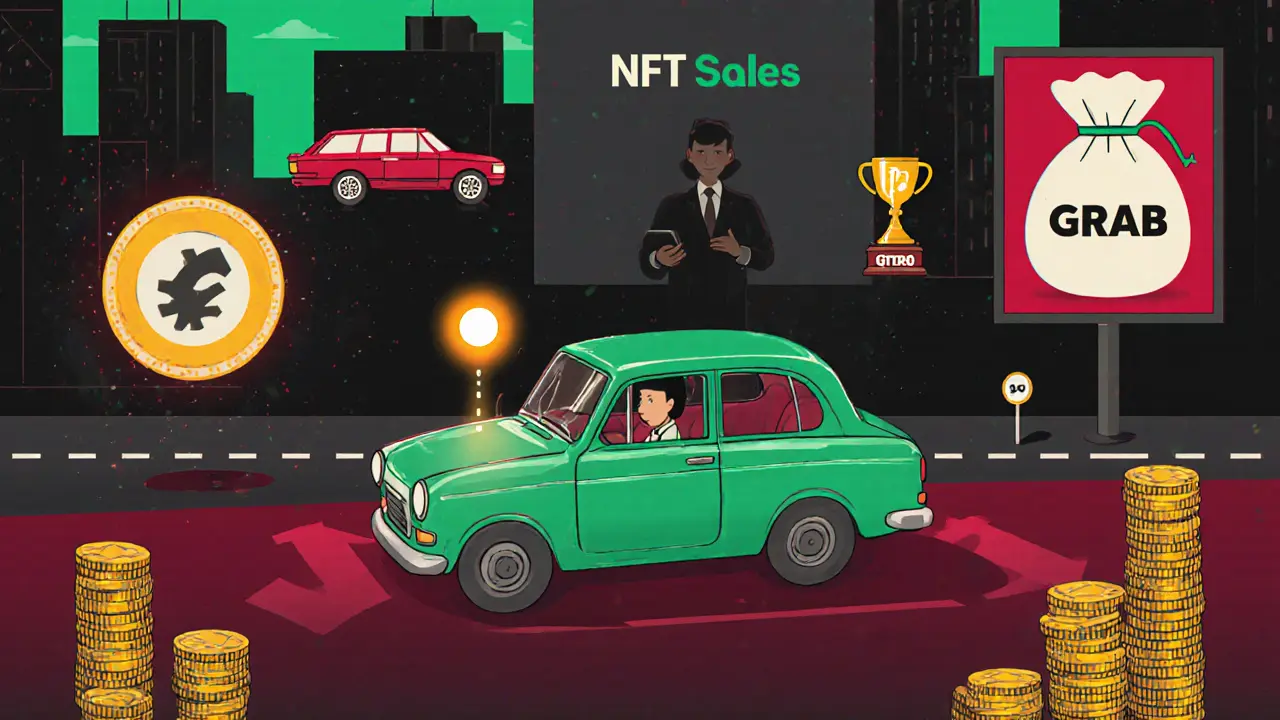
GRABWAY (GRAB) isn’t another Bitcoin clone or meme coin. It’s a crypto project built around a simple idea: get paid for driving. You download the app, turn on GPS, and as you drive around - whether it’s your daily commute, Uber shifts, or weekend road trips - the app rewards you with GRAB tokens. Sounds appealing? Maybe. But the reality is far more complicated.
How GRABWAY Actually Works
GRABWAY runs on the Binance Smart Chain and uses your phone’s GPS to track how far you travel. For every mile or kilometer you drive, you earn points. Those points convert into GRAB tokens, which you can hold, trade, or use inside the app’s ecosystem. But here’s the twist: you don’t just earn tokens by driving. You also need an NFT vehicle - called an NTT - to unlock higher earning rates. Think of it like upgrading your car in a video game. A basic NTT gives you 1 point per mile. A level 5 NTT? Maybe 5 points. You buy these NFTs on the app’s marketplace using GRAB tokens or BNB.
The whole system feels like a cross between a fitness tracker and a mobile game. You’re not just logging miles - you’re leveling up. There are even in-app racing competitions where you compete against other drivers based on your GPS data. Winners get bonus tokens. It’s gimmicky, but it’s designed to keep you driving - and spending.
The Numbers Don’t Add Up
GRABWAY launched on October 10, 2024, with a fixed supply of 60 million tokens. At launch, it traded at $0.07. By April 2025, it hit an all-time high of $0.19. That’s a 171% gain. Sounds great, right? But here’s what’s missing: volume.
On some days, GRABWAY trades under $500,000. On others, it spikes to $500,000. That’s a 100x swing. That kind of volatility isn’t normal. It suggests one thing: low liquidity. There aren’t enough buyers and sellers. A few large wallets could be moving the price up and down. That’s dangerous for anyone trying to cash out.
Even more troubling? The circulating supply. Coinbase says 33 million GRAB are out in the wild. CoinMarketCap says 42 million. That’s a 9 million token gap - over 25% difference. In crypto, that’s a red flag. Experts say when a project can’t agree on how many tokens are actually being used, it’s often because the team is hiding something - maybe tokens locked in wallets they control, or tokens they’re slowly releasing to manipulate the market.
Who’s Actually Using It?
GRABWAY claims to be for gig workers. Uber drivers. Delivery riders. People who spend hours on the road. But here’s the truth: as of May 2025, only 12,480 people hold GRAB tokens. That’s it. Twelve thousand people. For comparison, the average Uber driver in the U.S. alone is over 1.5 million. If GRABWAY wanted to be the go-to crypto for drivers, it would need millions of users - not thousands.
Real users on Reddit and Trustpilot are frustrated. One driver drove 127 miles over two weeks and earned $0.50 in GRAB. After paying for battery drain, data usage, and time spent managing the app, he lost money. Another user said the GPS tracking was wrong 7 out of 10 trips - meaning they didn’t get rewarded even when they drove. The app requires Android 8.0 or iOS 12+, uses 150MB of storage, and drains 35% more battery per hour than normal. That’s expensive.
The NFT Vehicle Trap
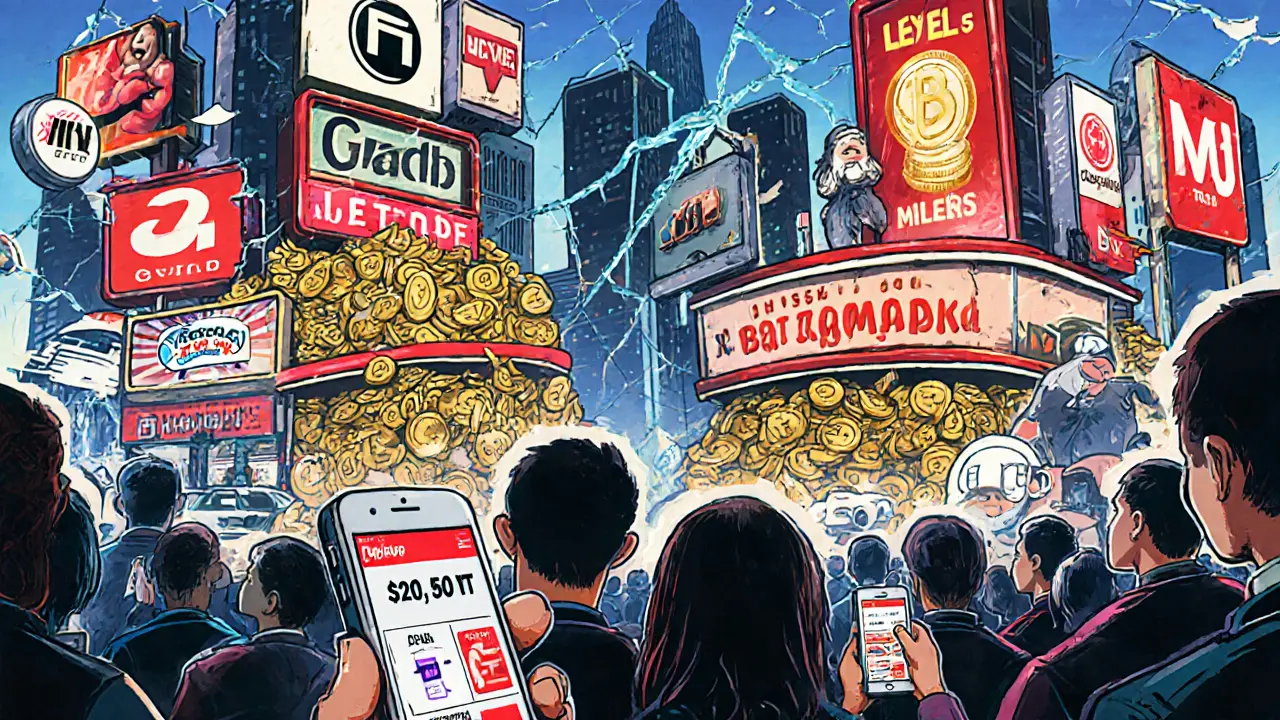
GRABWAY’s biggest flaw? It forces you to spend money to make money. You can’t earn well unless you buy an NFT vehicle. The cheapest one costs around 100 GRAB - about $6 at today’s price. But to unlock decent rewards, you need a level 3 or 4 NTT. Those cost 500-1,000 GRAB. That’s $30-$60 upfront. And that’s just the start. Upgrades cost more. Racing events cost entry fees. You’re not just earning - you’re investing. And if the token drops, your NFT loses value too.
This isn’t a passive income tool. It’s a pay-to-play game. And like any game, the house always wins. The team profits from NFT sales and trading fees. You? You’re gambling that the token will rise enough to cover your costs - and then some.
Is GRABWAY Legal?
There’s a quiet legal risk no one talks about. The U.S. Securities and Exchange Commission (SEC) uses the Howey Test to decide if something is a security. If you’re buying GRAB tokens or NFTs with the expectation of profit based on the project’s success - not just to use the app - then you might be buying an unregistered security. That’s a problem. The SEC doesn’t go after small projects often, but if GRABWAY grows, it becomes a target. No one knows if the team has legal counsel. No one knows if they’ve filed anything. That’s a ticking clock.
Why It’s Not Going Anywhere
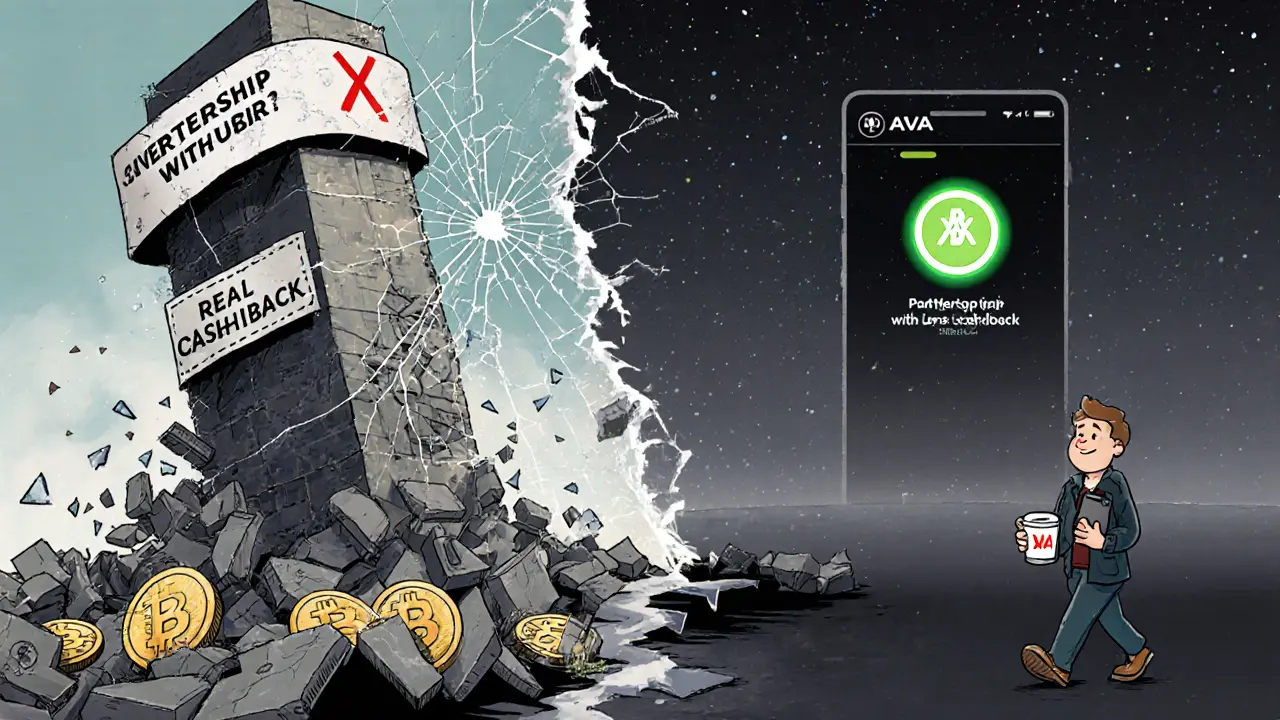
GRABWAY promised to partner with Uber, Lyft, and other ride-share platforms by Q2 2025. As of May 2025, no such partnerships exist. TechCrunch confirmed this. No major company is integrating GRABWAY. That means your rewards stay locked inside a tiny app with no real-world value. You can’t use GRAB to pay for gas, food, or tolls. You can’t trade it on Coinbase or Binance. It’s only on smaller exchanges like MEXC and Bitrue - places with little oversight.
Compare this to Travala.com’s AVA token. It’s used to book hotels worldwide. It’s accepted by thousands of properties. GRABWAY? You can’t buy a coffee with it. That’s the difference between a utility token and a gimmick.
Should You Buy GRABWAY?
Let’s be clear: GRABWAY is not an investment. It’s a speculative bet on a failing idea. The token is down 67% from its peak. Trading volume is thin. User growth is flat. The team hasn’t delivered on its roadmap. The app is buggy. The NFT system is a cash grab. And the community is mostly negative.
If you’re a gig worker looking for extra cash, save your time and energy. Use a cashback app. Or just drive more. You’ll earn more without the crypto risk.
If you’re a crypto trader looking for a quick flip - maybe you’ll get lucky. But don’t call it a project. Don’t call it innovation. It’s a high-risk, low-reward gamble wrapped in a shiny app.
GRABWAY might be the future of travel rewards. But right now, it’s just another crypto experiment that didn’t work - and the people who believed in it are left holding the bag.
Is GRABWAY (GRAB) a real cryptocurrency?
Yes, GRABWAY (GRAB) is a real token on the Binance Smart Chain with a smart contract and blockchain transactions. But being "real" doesn’t mean it’s valuable or trustworthy. Many scams are built on real blockchains - the technology itself isn’t the issue. The problem is the project’s structure, lack of adoption, and questionable tokenomics.
Can I earn real money with GRABWAY?
Technically, yes - you earn GRAB tokens by driving. But in practice, most users earn pennies per day after accounting for battery drain, data usage, and time spent managing the app. To earn more, you need to spend money on NFT vehicles, which raises your costs. For most people, the return is negative after factoring in all expenses.
Why is GRABWAY’s price so volatile?
GRABWAY has extremely low trading volume compared to its market cap. That means a small number of trades can swing the price dramatically. This is typical of low-cap tokens with weak liquidity. It’s not normal market behavior - it’s manipulation risk. One large holder selling 100,000 tokens can crash the price 20% overnight.
Is GRABWAY available on Coinbase or Binance?
No. GRABWAY is not listed on Coinbase, Binance, or any major exchange. You can only buy or sell it on smaller platforms like MEXC, Bitrue, or PancakeSwap. That makes it harder to trade, increases fees, and raises the risk of scams or fake listings.
What’s the biggest risk of using GRABWAY?
The biggest risk is losing money on NFT vehicles and tokens that have no real-world use. The app doesn’t integrate with ride-share platforms, you can’t spend GRAB outside its ecosystem, and the token’s price is falling. You’re betting on a project that’s already failed to deliver on its promises - and the odds are stacked against you.
Should I download the GRABWAY app?
Only if you’re okay with wasting battery, data, and time for a chance at a few cents. If you’re looking for real income, skip it. If you’re curious and want to experiment with small amounts of crypto - fine. But don’t invest more than you can afford to lose. And never buy NFTs thinking they’ll make you rich. They won’t.
Abby cant tell ya
November 26, 2025 AT 07:36This is the most transparent scam I've seen in crypto this year. They're not paying drivers-they're selling NFTs to desperate people who think they're getting free money. I drove 800 miles last month and made $1.20 after battery wear and data costs. They're not a project. They're a pyramid with wheels.
And don't even get me started on how the GPS lies. I got zero points for a 45-minute Uber shift because the app thought I was parked at a gas station. I was literally driving.
Janice Jose
November 27, 2025 AT 10:59I get why people are mad, but I also get why the idea sounds cool. Who wouldn’t want to get paid just for driving? The problem isn’t the concept-it’s the execution. They turned a simple reward system into a pay-to-win game with NFTs that no one needs.
Maybe if they’d started with just token rewards and added NFTs later as optional upgrades, it could’ve worked. Now it feels like they’re just trying to cash out before the whole thing collapses.
Savan Prajapati
November 27, 2025 AT 21:26Stupid. No real driver uses this. Only idiots buy NFTs for pennies. I drive Uber in Delhi. I don’t care about tokens. I care about cash in hand. This app drains battery, uses data, and gives nothing. Waste of time. Avoid.
Brian Bernfeld
November 29, 2025 AT 15:51Let me break this down like I’m talking to my cousin who just got his Uber license: GRABWAY isn’t crypto. It’s a digital slot machine with GPS.
You think you’re earning? You’re not. You’re funding the devs’ vacation fund. The NFTs? They’re not cars-they’re lottery tickets. And the odds? Worse than the state lotto.
I’ve seen this movie before. Remember the ‘Earn Bitcoin by walking’ apps? The ones that vanished after raising $20M? GRABWAY is the same script. Different name. Same exit strategy.
The SEC is watching. The community is shrinking. The token’s down 67%. And the only people still talking about it are the ones who bought in at the top and won’t admit they got played.
If you’re a driver, use Uber’s own rewards. If you’re a trader, go play with Dogecoin. At least that’s honest about being a meme.
This? This is financial exploitation wrapped in a slick app. Don’t be the next sucker.
Ian Esche
November 30, 2025 AT 09:22Americans love to cry about scams, but this is exactly what happens when you let fringe crypto bros run wild. We don’t need another ‘innovation’ that turns driving into a video game. This isn’t capitalism-it’s a rigged casino with fake stats and zero oversight.
And don’t tell me it’s ‘for gig workers.’ The only workers here are the ones who built the app and sold NFTs to suckers. The rest? Just fuel for the machine.
If you’re not in the U.S., you’re lucky. We’re the ones who let this garbage get funded, promoted, and treated like tech. Shame on us.
fanny adam
December 1, 2025 AT 05:28There is a high probability that GRABWAY constitutes an unregistered security under the Howey Test, given that investors purchase tokens and NFTs with the expectation of profit derived from the efforts of the GRABWAY team. The absence of regulatory filings, coupled with the substantial discrepancies in circulating supply reporting between Coinbase and CoinMarketCap, suggests intentional obfuscation.
Furthermore, the app’s battery consumption metrics, inconsistent GPS tracking, and lack of integration with major ride-hailing platforms indicate a fundamental failure to deliver on core utility claims. The NFT vehicle system functions as a liquidity trap, incentivizing continuous capital injection rather than sustainable value creation.
Historical precedent indicates that projects exhibiting these characteristics-low trading volume, opaque tokenomics, and forced user expenditure-are frequently subject to enforcement actions by the SEC following a collapse in retail participation. The current user base of 12,480 holders is statistically insignificant and indicative of a dying project.
It is not merely unwise to participate-it is a demonstrable financial risk with potential legal ramifications for those who acquired tokens under the assumption of future profit.
Do not confuse technological feasibility with economic viability. This is not innovation. This is fraud dressed in algorithmic clothing.