What is Smart Energy Pay (SEP) crypto coin? Real claims, price chaos, and red flags
 Jan, 27 2026
Smart Energy Pay (SEP) isn't just another crypto coin. It claims to be the future of energy payments - powered by wind turbines, blockchain, and a $500 billion token supply. But behind the flashy promises of revolutionizing how we generate and pay for clean energy, there's a mess of conflicting data, unverified tech, and wild price swings that make it more of a gamble than a green investment.
SEP is supposed to power real energy tech - but does it?
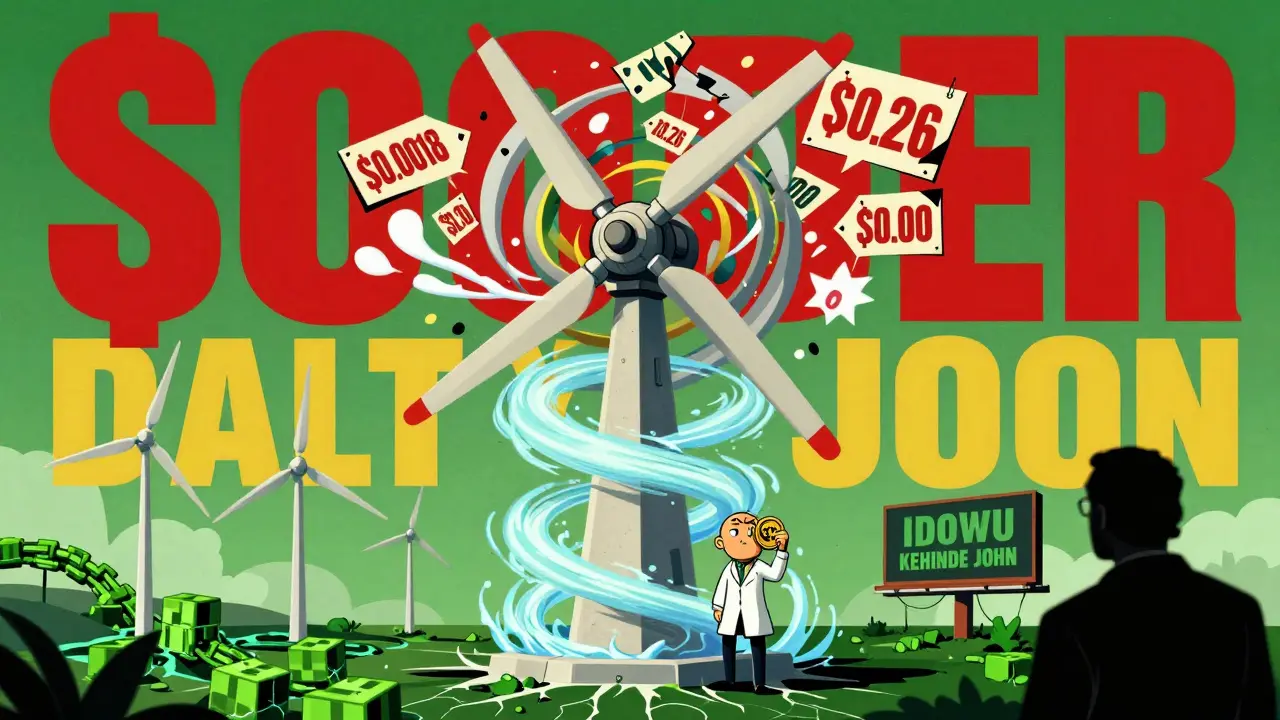
Smart Energy Pay says it’s built around the 3D Wind device, a gadget that supposedly captures wind, thermal, and updraft energy all at once. That’s the kind of claim that makes engineers raise their eyebrows. No peer-reviewed paper, no third-party lab results, no independent verification. Just a video on their website showing a spinning device with vague efficiency numbers. Meanwhile, real renewable energy companies like Vestas or Siemens Gamesa spend years testing turbine designs. SEP’s team hasn’t released a single technical spec that holds up to basic scrutiny. The coin itself - SEP - is meant to be the only way to pay for these devices, their Smart Energy Cards, and their POS terminals. But here’s the problem: if you can’t prove the hardware exists, the coin has no real utility. It’s like selling a currency for a ride on a spaceship that hasn’t been built yet.Price chaos: Why no two platforms agree on SEP’s value
Check CoinMarketCap and you’ll see SEP trading around $0.015. Crypto.com says $0.0151. LBank? $0.0018. Binance says it’s not even listed - and reports a $0 market cap. That’s not just a discrepancy. That’s chaos. The all-time high? CoinMarketCap says $0.2601 on January 2, 2026. That’s a 94% crash in under a month. Binance’s all-time high? Just $0.02. Which one’s right? Neither, probably. These wild swings are classic signs of low liquidity and possible pump-and-dump activity. With a max supply of 500 billion tokens, even a tiny price bump creates a massive market cap on paper - $7.5 billion fully diluted. But the actual circulating supply? CoinMarketCap says 15 billion. Binance says zero. That’s not a data error. That’s a red flag.Staking rewards sound great - until you try to cash out
SEP’s staking portal promises 8% to 25% APY depending on how long you lock your tokens. Sounds too good to be true? It is. Users on Reddit report waiting up to 72 hours just to withdraw staking rewards. One person said their $500 payout took three days to appear. Meanwhile, the official website says withdrawals are “processed within 24 hours.” That’s not a delay - that’s a system bottleneck or worse, intentional hold-ups to keep people locked in. Minimum staking? 100 SEP. Lock periods from 30 to 365 days. That’s not investment. That’s a trap. If you’re stuck with tokens that can’t be easily sold - and the price keeps crashing - you’re not earning interest. You’re just holding a losing asset.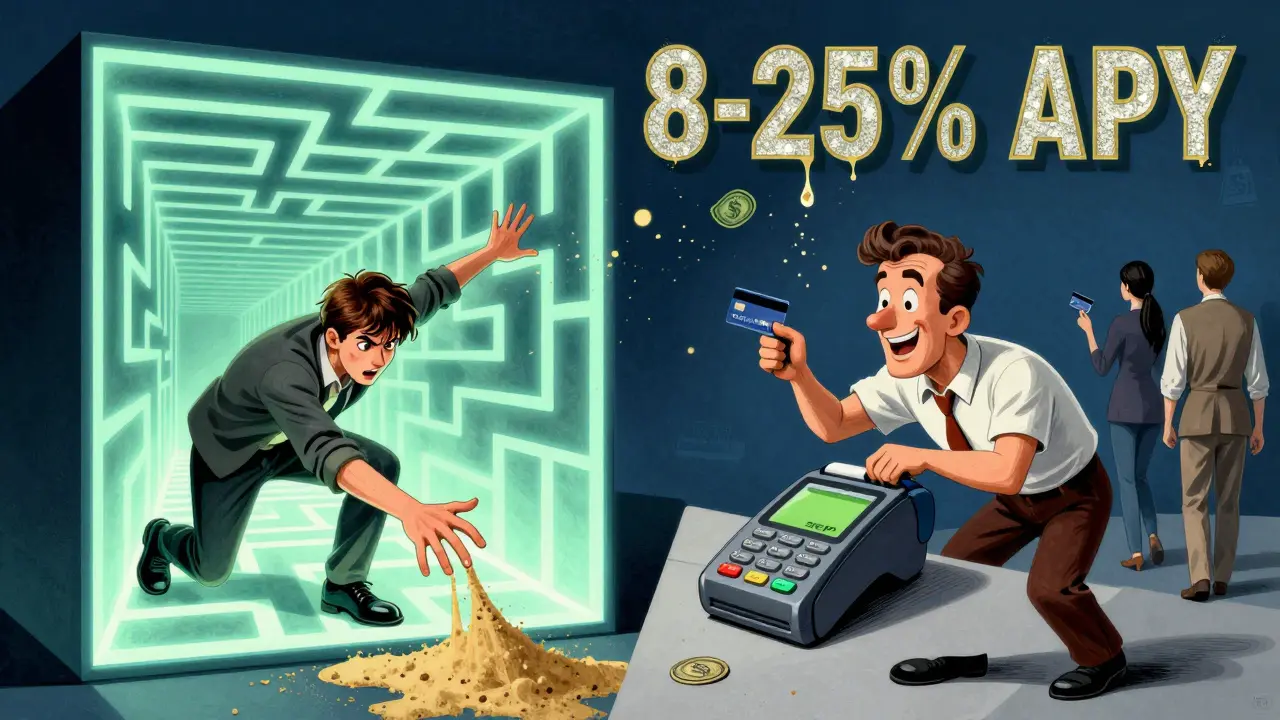
Merchant adoption? Hard to verify
SEP claims over 3,200 merchants accept it via their POS system. Sounds impressive? Check the source: a Telegram group with 12,450 members, run by “SEP_Official.” No public list of businesses. No integration with Shopify, Square, or Stripe. No verifiable receipts or transaction logs. One cafe owner on Reddit said his SEP POS takes 8-12 seconds per transaction. That’s slower than cash. Credit cards do it in 2-3 seconds. Why would a business use this? Unless they’re being paid in SEP tokens to promote it - which is exactly what the Telegram group seems to be doing.Who’s behind SEP? And why does it matter?
The team is led by someone named IDOWU KEHINDE JOHN, listed as “Listing Manager.” That’s not a typical title in tech or energy. No LinkedIn profile. No past projects. No interviews. Just a name on a website. Compare that to Power Ledger or WePower - both have real teams with track records in energy tech and blockchain. SEP has none. The SEC said in January 2026 that any project claiming to back its token with physical assets - like wind turbines - must provide audited proof. SEP hasn’t. Not a single audit. Not a single report. That’s not just risky. It’s potentially illegal.Why Binance won’t list SEP
Binance is the biggest crypto exchange in the world. If SEP were legitimate, they’d list it. They don’t. Their page says: “SEP is not listed for trade and service.” That’s not an accident. Binance has strict listing criteria. They require liquidity, transparency, and verifiable use cases. SEP fails all three. Crypto analyst Michael Chen from CoinDesk put it bluntly: “When major exchanges refuse listing due to insufficient liquidity or transparency concerns, it typically indicates underlying project weaknesses.” That’s not an opinion. That’s industry standard.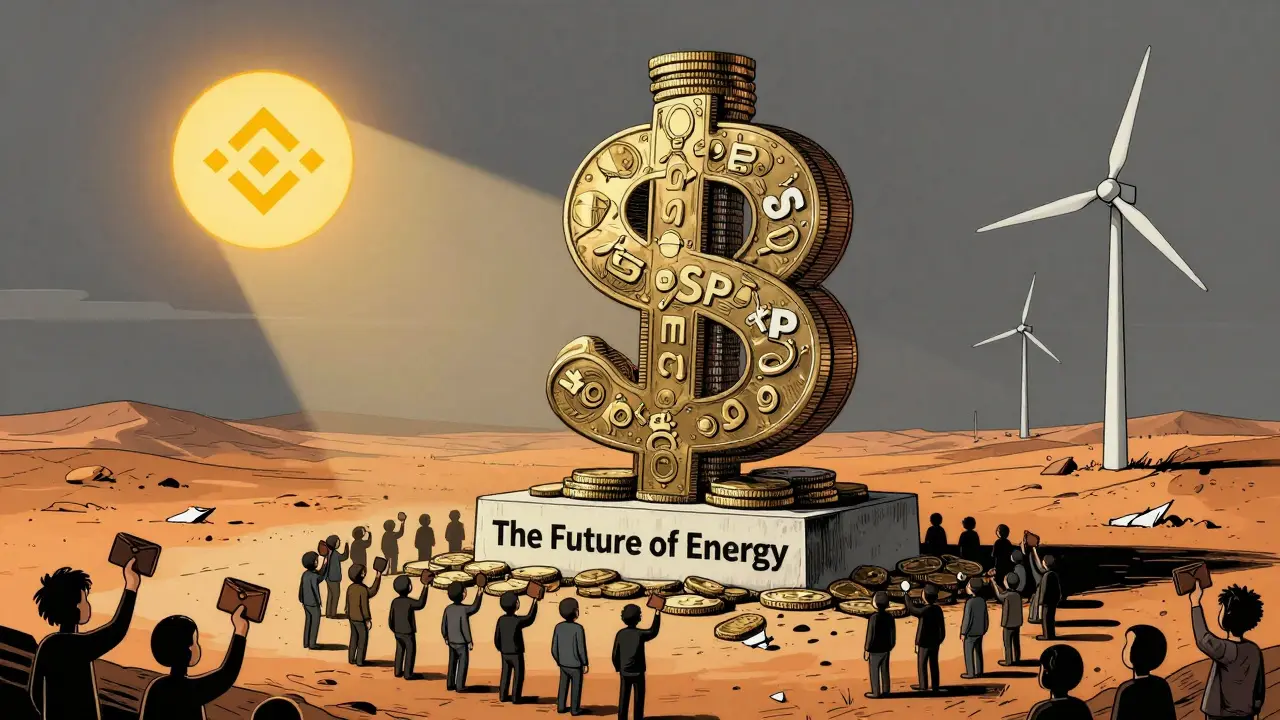
What about the competition?
There are other energy-focused crypto projects - and they’re doing it right. Power Ledger has 14 active utility partnerships across eight countries. They’ve been audited. Their tech is live. Their tokens are on major exchanges. WePower has worked with real energy providers in Australia and Europe. SEP? No verified partnerships. No public contracts. No energy company endorsements. Just a website and a promise.The bottom line: Is SEP worth it?
Smart Energy Pay sounds like a dream: pay for clean energy with a crypto coin, earn rewards, help the planet. But dreams don’t pay bills. Real projects do. SEP has:- Unverified, possibly impossible hardware
- Conflicting price data across exchanges
- No major exchange listing
- Extreme price volatility
- No independent audits or third-party verification
- Staking delays and unclear withdrawal policies
- Zero transparency about its team or tech
Should you buy SEP?
Only if you’re okay with losing your money. The project’s entire value is built on hype, not hardware. The coin’s price is driven by social media buzz, not demand for actual energy services. The roadmap promises global wind turbines by 2028 - but they haven’t even proven they can build one. If you still want to try it, treat SEP like a lottery ticket. Don’t stake more than you can afford to lose. Don’t believe the Telegram hype. And never assume the price will go up - because right now, the only thing rising is the risk.What is Smart Energy Pay (SEP) coin?
Smart Energy Pay (SEP) is a cryptocurrency launched in October 2024 that claims to power a renewable energy ecosystem, including a device called 3D Wind and payment cards. It’s designed to be used within its own closed system for energy transactions, staking, and merchant payments. However, there’s no verifiable proof that its core technology exists or that it’s used in real-world energy projects.
Is SEP listed on Binance or Coinbase?
No, SEP is not listed on Binance, Coinbase, or any major regulated exchange. Binance explicitly states SEP is "not listed for trade and service." Its absence from these platforms is a major red flag, as reputable exchanges require transparency, liquidity, and verifiable use cases - all of which SEP lacks.
Why does SEP’s price vary so much between exchanges?
SEP’s price varies wildly because it’s traded on low-liquidity, unregulated platforms like LBank and CoinMarketCap-listed exchanges with minimal trading volume. This creates artificial price spikes and drops. Some platforms report $0 circulating supply, while others claim 15 billion tokens are active. These inconsistencies suggest market manipulation or data fabrication, not genuine trading activity.
Can I stake SEP and earn real returns?
You can stake SEP with advertised APYs between 8% and 25%, but withdrawals are often delayed by 48-72 hours, according to user reports. The minimum stake is 100 SEP, with lock periods up to a year. While the returns look attractive on paper, the lack of transparency, slow processing, and extreme price volatility make actual returns unreliable - and your tokens may lose value faster than you earn rewards.
Is the 3D Wind device real?
There is no independent verification that the 3D Wind device exists. No technical specifications, no lab tests, no photos from third parties, and no partnerships with energy firms. Engineers and energy analysts say the claimed simultaneous use of wind, thermal, and updraft energy violates basic physics principles. The device appears to be a marketing tool, not a working product.
Is SEP a scam?
It’s not officially labeled a scam - but it ticks every box for a high-risk, potentially fraudulent project: unverified tech, no major exchange listing, conflicting supply data, extreme volatility, anonymous team, and no audits. The SEC requires proof of physical asset backing for such tokens - SEP has none. Investing in SEP is gambling, not investing.
What are better alternatives to SEP?
If you want exposure to energy-focused crypto, consider Power Ledger (POWR) or WePower (WPR). Both have real-world utility partnerships with energy providers, audited systems, and listings on major exchanges. They focus on verified blockchain applications for renewable energy trading - not fantasy devices. They’re still risky, but they’re grounded in reality.
Steven Dilla
January 28, 2026 AT 09:26Akhil Mathew
January 28, 2026 AT 13:44Aaron Poole
January 29, 2026 AT 09:15Ramona Langthaler
January 30, 2026 AT 21:23Sunil Srivastva
February 1, 2026 AT 19:29Devyn Ranere-Carleton
February 2, 2026 AT 23:20Kevin Thomas
February 3, 2026 AT 22:55Robert Mills
February 5, 2026 AT 09:27