What is UnMarshal (MARSH)? The Truth About the Crypto Indexer
 May, 22 2026
You might have stumbled upon UnMarshal (MARSH) while scrolling through a list of low-cap cryptocurrencies or searching for alternatives to major data providers. It’s easy to wonder: Is this a hidden gem in the blockchain infrastructure space, or just another faded project from the 2021 bull run? The short answer is that UnMarshal is a real utility project focused on decentralized blockchain data indexing, but its journey has been rocky. It offers actual tools for developers and investors, yet it faces significant challenges regarding liquidity, competition, and market relevance.
To understand what UnMarshal actually does-and whether the MARSH token holds any value today-you need to look past the hype and examine the technology, the tokenomics, and the harsh reality of its current market position. This isn’t about predicting moonshots; it’s about understanding a specific piece of Web3 infrastructure.
The Core Problem: Why Do We Need Data Indexing?
Imagine you want to build a dashboard that shows your total crypto portfolio across Ethereum, Polygon, and Binance Smart Chain. You also want to see your NFT history and calculate your tax liabilities. To do this manually, you’d need to run full nodes for every single blockchain, write complex code to decode raw transaction logs, and constantly sync with the network. That’s expensive, slow, and technically demanding.
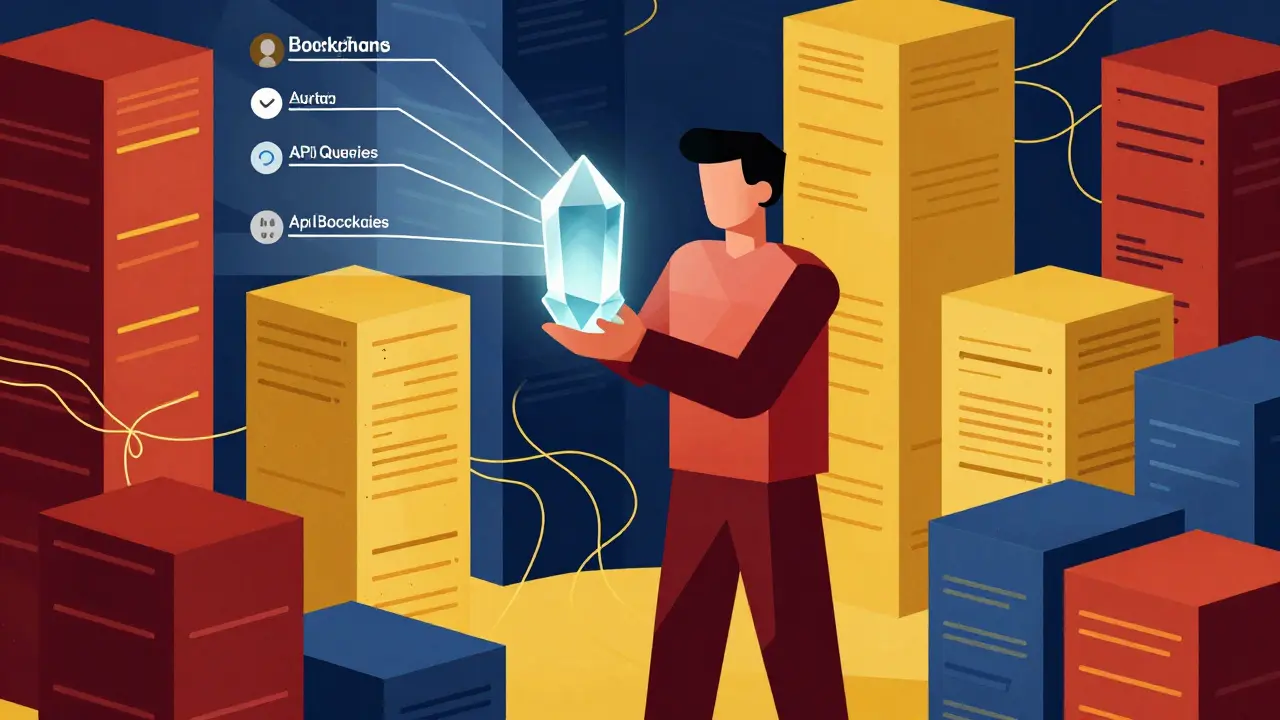
This is where blockchain data indexing comes in. Think of an indexer as a librarian for the blockchain. Instead of searching through millions of messy, unstructured blocks of data, the indexer organizes everything into a clean, searchable database. When you ask, “How much USDC does this wallet hold?”, the indexer gives you the answer instantly via an API, without you needing to touch the underlying blockchain directly.
UnMarshal was built to solve this exact problem. Founded by Manohar Kolagondanahalli and an Indian engineering team in late 2020, the project aims to provide structured, real-time data for wallets, exchanges, and DeFi protocols. Their pitch is simple: stop building your own data pipelines. Use UnMarshal’s APIs to get normalized data across multiple chains quickly and cheaply.
Key Features and Technical Architecture
UnMarshal positions itself as a multi-chain data infrastructure layer. It doesn’t just offer one type of data; it provides a suite of tools designed for different users. Here’s how their architecture breaks down:
- Data Ingestion: The network aggregates data from full and archival nodes across supported chains like Ethereum, BSC, Polygon, and Solana.
- Indexing Layer: Raw data (transactions, logs, events) is parsed and decoded using protocol-specific knowledge (ABIs) to make it readable.
- Transformation Engine: This layer computes higher-order metrics. It turns raw transfers into "wallet balances," identifies "LP positions" in DeFi pools, and tracks "NFT ownership history."
- Access Layer: Developers access this data via REST APIs, WebSockets for real-time updates, webhook notifications, and even custom CSV exports.
One of UnMarshal’s standout features is its focus on NFT indexing. They claim to operate the world’s first decentralized NFT indexer, offering detailed metadata, owner history, and transaction records. For collectors and platforms, this is crucial because NFT data is notoriously fragmented and hard to track compared to standard tokens.
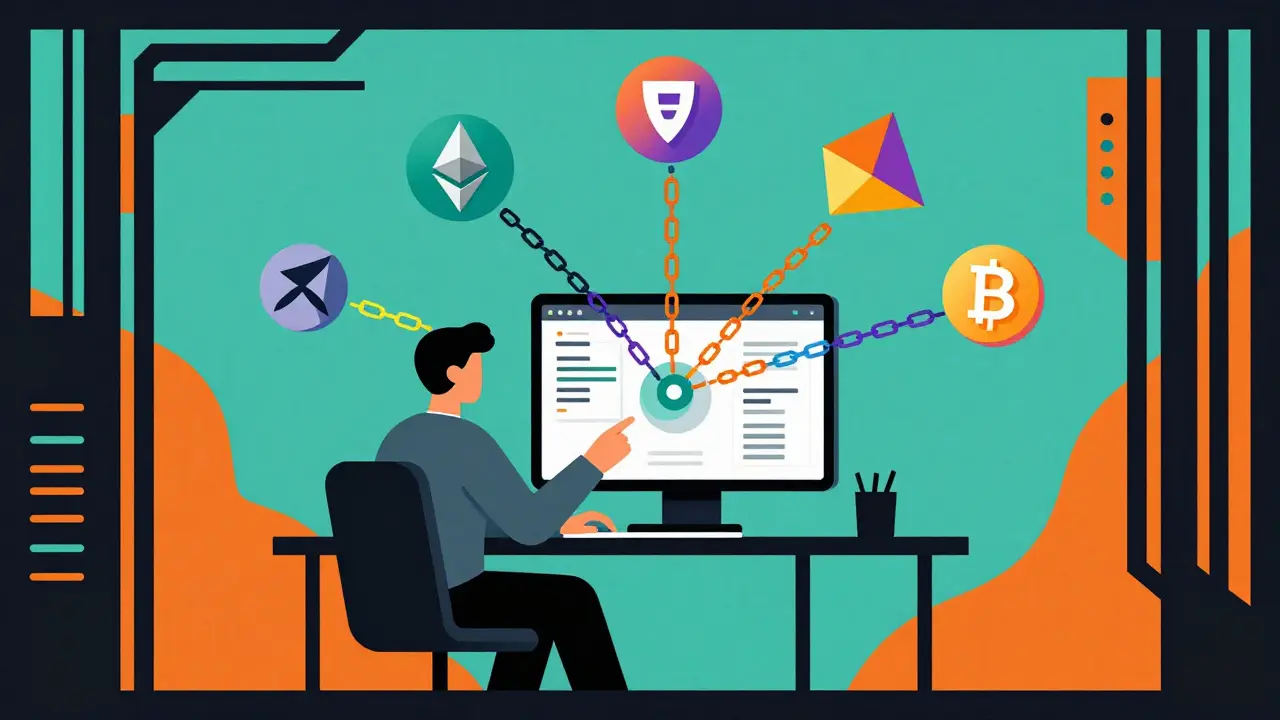
Another useful tool they launched is Xscan. If you’re tired of switching between Etherscan, BscScan, and Polygonscan to check different wallets, Xscan acts as a unified block explorer. You enter one address, and it pulls data from multiple chains simultaneously. It’s a small quality-of-life improvement, but it demonstrates their commitment to making blockchain data accessible to non-technical users.
The MARSH Token: Utility vs. Speculation
Every blockchain project needs a way to incentivize its network. For UnMarshal, that’s the MARSH token. It’s an ERC-20 token deployed on Ethereum, with bridges allowing liquidity on other chains. But what does it actually do?
- Payments: Clients who use UnMarshal’s APIs can pay for their usage fees in MARSH.
- Staking and Validation: Independent indexers and validators must stake MARSH tokens to participate in the network. They earn rewards in MARSH for providing accurate data.
- Governance: While still in development, the token is intended to give holders voting rights in the future DAO (Decentralized Autonomous Organization).
The tokenomics are relatively straightforward. There is a maximum supply of 100 million MARSH tokens. As of mid-2026, the circulating supply hovers between 63 and 76 million tokens, depending on vesting schedules and unlocks. A significant portion (around 60%) of the total supply is allocated to ecosystem incentives and profit-sharing, which is designed to reward early adopters and network participants.
However, you need to be careful here. The utility of the token depends entirely on the adoption of the platform. If few businesses are paying for the APIs, there is little demand for the token beyond speculation. This leads us to the most critical part of this review: the market performance.
Price History and Market Reality
Let’s look at the numbers, because they tell a stark story. UnMarshal launched publicly in March 2021, right in the middle of the massive DeFi bull run. At its peak, the MARSH token hit an All-Time High (ATH) between $11.89 and $15.45, depending on the exchange data source. The market cap was substantial, and interest was high.
Fast forward to 2024-2026, and the picture is very different. MARSH has experienced a drawdown of nearly 99% from its highs. Recent data shows the token trading in the sub-penny range, often below $0.01. In some snapshots, the price was recorded around $0.0004, with a market cap in the tens of thousands of dollars. Daily trading volumes are frequently under $250,000, and sometimes as low as $2,000.
| Metric | Value / Status |
|---|---|
| All-Time High (ATH) | $11.89 - $15.45 (March 2021) |
| Recent Price Range | $0.0004 - $0.02 (Highly volatile, low volume) |
| Max Supply | 100,000,000 MARSH |
| Circulating Supply | ~63M - 76M MARSH |
| Liquidity Risk | High (Thin order books on exchanges like KuCoin) |
This extreme decline raises serious questions about sustainability. Low liquidity means that if you try to buy or sell a large amount of MARSH, you will likely face high slippage-meaning the price moves against you significantly during the trade. For a retail investor, this makes entering or exiting positions risky.
Competition: Can UnMarshal Survive?
UnMarshal operates in a crowded field. The blockchain data indexing sector is dominated by well-funded giants. To understand UnMarshal’s position, we have to compare it to its main competitors.
The Graph (GRT) is the industry leader. Launched in 2018, it has a massive developer community, thousands of subgraphs, and a market cap that has historically exceeded $1 billion. It is the default choice for many DeFi protocols.
Covalent (CQT) is another strong competitor, focusing on a unified API for over 100 chains. They have secured enterprise partnerships and grants, giving them a financial cushion that smaller projects lack.
Then there are centralized powerhouses like Alchemy and Dune Analytics. Alchemy offers robust infrastructure-as-a-service, while Dune allows users to write custom SQL queries to visualize data. Both have huge user bases and deep pockets.
So, where does UnMarshal fit? Its differentiators are niche. They emphasize bespoke B2B support, such as custom CSV exports and specialized NFT indexing. They also target the Indian developer ecosystem heavily. However, they lack the brand recognition, security audits (publicly documented third-party audits are scarce), and liquidity of their competitors. Without a unique technological breakthrough or a major partnership announcement, breaking into the top tier of indexing providers is an uphill battle.
Security and Transparency Concerns
When dealing with crypto infrastructure, security is paramount. UnMarshal inherits data integrity from the underlying blockchains (Ethereum, etc.), which is good. However, the application layer-the code that processes and serves the data-needs its own security measures.
A notable gap in UnMarshal’s public profile is the lack of widely publicized third-party security audits. Major competitors like The Graph highlight audits by firms like OpenZeppelin to build trust. UnMarshal’s documentation and aggregator pages do not prominently feature similar audit reports. For a project handling financial data and staking mechanisms, this is a red flag for institutional clients and cautious investors.
Additionally, the decentralization roadmap has been slow. While the vision is a network of independent validators staking MARSH, the current operation appears to be largely controlled by the core team. The promised governance portal has not become a central part of the narrative, suggesting that true decentralization may take longer than initially planned.
Who Is UnMarshal For?
Despite the risks, UnMarshal isn’t useless. It serves specific audiences effectively:
- Web3 Developers: If you are building a small-scale DeFi app or an NFT tracker and don’t want to manage your own nodes, UnMarshal’s APIs are a viable, cost-effective option. The learning curve is moderate for those familiar with REST/JSON.
- Tax Preparers: Their focus on generating tax-ready histories for crypto transactions is a practical utility. Aggregating cross-chain data for tax purposes is a pain point for many investors, and UnMarshal attempts to solve this.
- NFT Collectors: The specialized NFT indexing tools provide deeper insights into ownership and transaction history than standard explorers.
For the average retail trader looking for quick profits, however, MARSH is likely not the right choice. The illiquidity and historical performance suggest high risk with uncertain upside.
Final Thoughts
UnMarshal is a legitimate project solving a real problem in the blockchain ecosystem. Data indexing is essential for the growth of DeFi and NFTs, and UnMarshal provides functional tools for developers and analysts. The team is active, the website is maintained, and the APIs work.
But functionality doesn’t always equal financial success. The MARSH token has suffered a catastrophic loss of value since its 2021 peak, and it faces stiff competition from better-funded rivals. Unless UnMarshal can secure major B2B contracts, differentiate itself further in AI-driven analytics, or achieve genuine decentralization, it may remain a niche player. If you are interested in the technology, explore their APIs. If you are interested in the token, proceed with extreme caution and fully understand the liquidity risks.
What is UnMarshal (MARSH) used for?
UnMarshal is a decentralized data-indexing network. It provides APIs and tools that allow developers, wallets, and exchanges to access structured, real-time blockchain data (like balances, transactions, and NFT history) across multiple chains without running their own nodes. The MARSH token is used to pay for these services, stake for validation, and participate in governance.
Is MARSH a good investment in 2026?
Investing in MARSH carries high risk. The token has dropped over 99% from its all-time high and suffers from low liquidity and thin trading volumes. While the underlying technology has utility, the token's financial performance has been poor. It is considered a speculative asset rather than a stable investment.
How does UnMarshal compare to The Graph?
The Graph is the market leader with a larger ecosystem, more developers, and higher liquidity. UnMarshal is a smaller competitor that focuses on specific niches like NFT indexing, custom CSV exports, and serving the Indian developer community. UnMarshal is less established but may offer more personalized B2B support for smaller projects.
What is Xscan by UnMarshal?
Xscan is a unified multi-chain block explorer provided by UnMarshal. It allows users to search for wallet addresses and transactions across multiple blockchains (like Ethereum, BSC, and Polygon) in a single interface, eliminating the need to switch between different chain-specific explorers.
Where can I buy MARSH tokens?
MARSH is primarily traded on centralized exchanges like KuCoin and can be accessed via decentralized exchanges (DEXs) using wallets like MetaMask or Binance Web3 Wallet. Due to low liquidity, traders should expect potential slippage when executing large orders.