Why More Merchants Are Accepting Cryptocurrency Payments in 2025
 May, 2 2025
Crypto Payment Savings Calculator
How Much Could You Save?
Compare traditional payment processor fees vs cryptocurrency payment fees
Your Results
Based on industry data: 2.9% + $0.30 traditional fees vs 0.5-1.5% crypto fees. International transactions save $29+ per transaction.
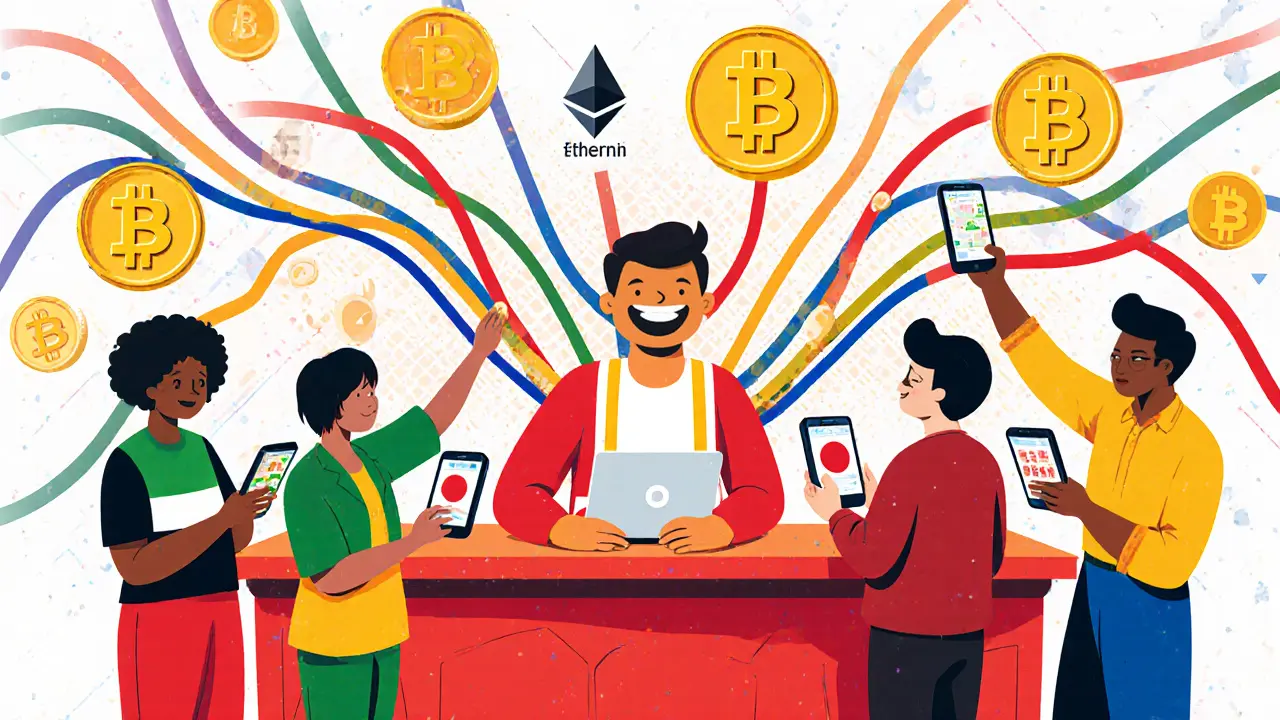
By 2025, if you run a small online store, a SaaS business, or even a freelance marketing agency, not accepting cryptocurrency isn’t just outdated-it’s losing you customers. More than 659 million people around the world hold crypto, and nearly 40% of Gen Z and Millennials say they’ll shop more often at stores that take Bitcoin, Ethereum, or USDC. That’s not a niche trend. It’s a payment shift happening right now.
What’s Driving Merchant Adoption of Crypto Payments?
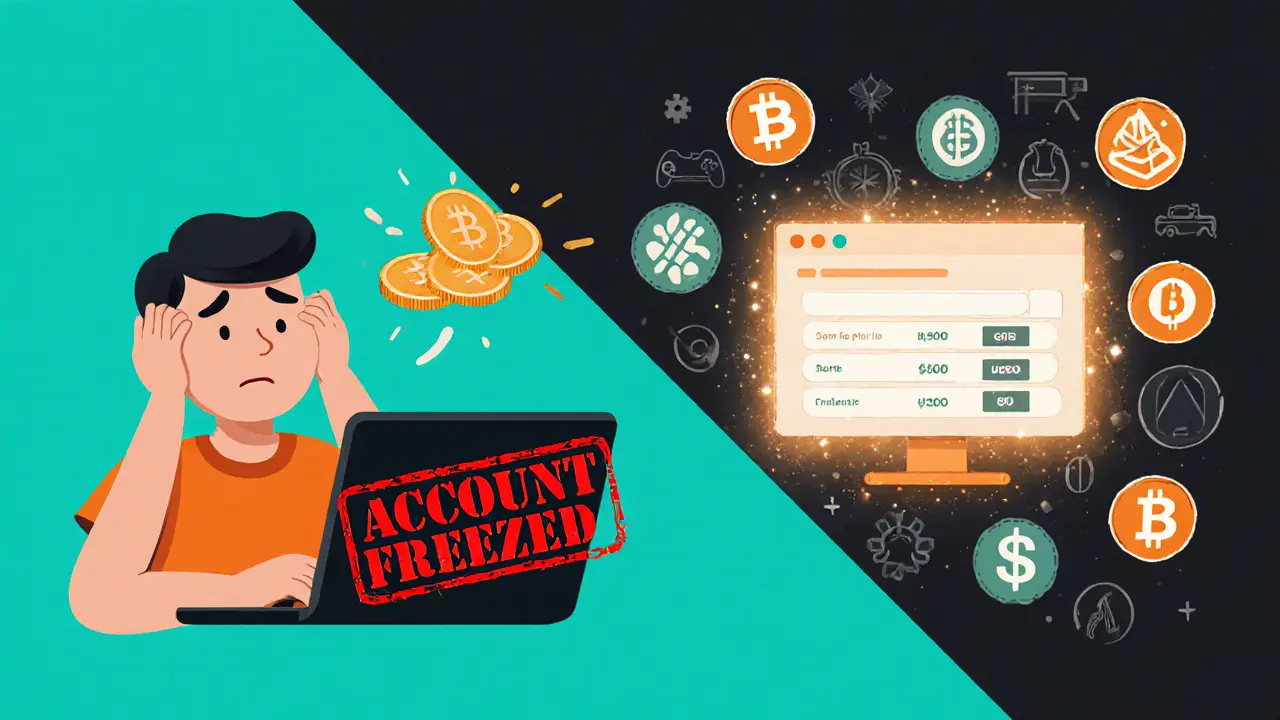
Merchants aren’t jumping into crypto because it’s cool. They’re doing it because it solves real problems. Traditional payment processors like PayPal, Stripe, or Square often freeze accounts for high-risk businesses-think online gaming, supplements, or forex trading. These businesses get hit with chargebacks, reserve requirements, and hidden fees. Crypto payments cut out the middleman. Funds arrive directly, often in under a minute, with fees that are a fraction of what credit card processors charge. Stablecoins like USDC and USDT are the real heroes here. While Bitcoin gets all the headlines, 70% of crypto payments made to merchants today are in stablecoins. Why? Because they don’t swing up and down like Bitcoin. A merchant gets paid in USDC, which is always worth $1.00, and can then convert it to USD or keep it on-chain for future transactions. No volatility risk. No surprise losses. For international sellers, crypto is a game-changer. Sending money from Germany to Nigeria through a bank? Expect 3-7 days, $30 in fees, and a maze of compliance forms. With crypto? It’s done in 10 minutes for under $1. Freelancers on Upwork, digital marketers in Brazil, and game developers in Japan are already using crypto to get paid without waiting weeks or paying 5% in conversion fees.Who’s Leading the Charge?
It’s not big corporations. It’s small, agile businesses that move fast. Marketing agencies are adopting crypto because their clients are global and their own payments are delayed by banks. SaaS companies selling subscriptions to users in 20 countries find crypto reduces failed payments and currency conversion errors. Gaming platforms like Steam alternatives now let you buy in-game items directly with ETH or USDC. Influencer platforms accept crypto tips because their creators are often based in countries with unstable banking systems. The U.S. and India lead global adoption. In the U.S., 32% of small business owners now accept some form of crypto payment, according to recent surveys. That number is climbing fast. Why? Because the regulatory fog is lifting. Under the current administration, clear rules are emerging for crypto payment processors. Payment providers like CoinsPaid, BitPay, and Crypto.com Pay are now offering legal compliance tools, KYC integrations, and tax reporting features that make it easier for merchants to stay on the right side of the law.How Do Merchants Actually Accept Crypto?
You don’t need to run a blockchain node or understand smart contracts. Most merchants use a crypto payment gateway-a simple plug-in or API that sits between your online store and the blockchain. Here’s how it works:- You sign up with a gateway like CoinsPaid or Coinbase Commerce.
- You install their plugin on Shopify, WooCommerce, or your custom website.
- When a customer checks out, they pick Bitcoin, USDC, or another crypto.
- The gateway generates a one-time wallet address for that transaction.
- The customer sends the crypto. The gateway confirms the payment on the blockchain.
- You get paid in USD, EUR, or stablecoins-your choice.
Why Stablecoins Are Winning Over Bitcoin and Ethereum
Bitcoin is great for savings. But it’s terrible for buying coffee-or a $200 SaaS subscription. Its price swings too much. Imagine selling a product for 0.005 BTC, only to see its value drop 15% by the time the transaction confirms. That’s a real loss. Stablecoins fix that. They’re pegged to the dollar, euro, or other fiat currencies. USDC is backed by real cash and short-term U.S. Treasuries. When a customer pays you in USDC, you know exactly what you’re getting. That’s why 80% of crypto shoppers now choose stablecoins over Bitcoin or Ethereum for payments. Plus, stablecoins settle on fast, low-cost blockchains like Ethereum Layer 2s, Solana, or Polygon. Transactions cost pennies and confirm in seconds. For merchants, that’s the sweet spot: the speed and borderless nature of crypto, without the rollercoaster ride.Barriers Still Exist-But They’re Shrinking
Despite the momentum, adoption isn’t universal. Many merchants still don’t trust crypto. They worry about scams, regulatory crackdowns, or tech complexity. Some small business owners say they don’t know how to manage private keys or handle gas fees. But these concerns are being addressed. Payment gateways now handle everything behind the scenes. You don’t touch a private key. You don’t need to understand blockchain. You just get paid. Another hurdle? Consumer trust. Even though millions of people own crypto, not everyone knows how to use it to pay. That’s changing. More checkout pages now show crypto options clearly. Wallet apps like MetaMask and Phantom are making it easier to send payments with a tap. And as more stores accept crypto, more people will learn how to use it.
Where Crypto Payments Are Growing Fastest
The industries seeing the biggest crypto adoption aren’t surprising:- Marketing & Influencer Platforms - 70% of marketers targeting Gen Z in 2025 are building crypto payment options into their client billing.
- Gaming & Digital Goods - Players pay for skins, NFTs, and subscriptions in ETH or USDC. No chargebacks. No delays.
- SaaS & Subscription Services - Companies like Notion and Canva alternatives are testing crypto subscriptions to serve global users without banking friction.
- Freelance Marketplaces - Platforms like Fiverr and Upwork are integrating crypto payouts to help freelancers in Argentina, Nigeria, and Vietnam get paid faster.
What’s Next for Crypto Payments?
By 2026, crypto payments won’t be a feature. They’ll be a standard option-like Apple Pay or Google Pay. The global crypto payment gateway market is expected to hit $1.68 billion this year, growing at nearly 19% annually. That’s not small. It’s the kind of growth that forces even banks to take notice. The real tipping point will come when mainstream e-commerce platforms like Amazon or Walmart start accepting crypto. That’s not far off. Once one major player does it, others will follow. Until then, the early adopters-small businesses, digital creators, and global service providers-are already winning. If you’re a merchant wondering whether to get on board, the answer isn’t ‘if’-it’s ‘how soon.’ The customers are there. The tools are ready. The cost savings are real. And the competition isn’t waiting.Do I need to hold cryptocurrency to accept it as a merchant?
No. Most crypto payment gateways automatically convert incoming crypto into your preferred currency-USD, EUR, or stablecoins like USDC-right after the transaction. You never have to store or manage Bitcoin or Ethereum yourself unless you choose to.
Is accepting crypto payments legal?
Yes, in the U.S. and most major economies, accepting crypto as payment is legal. The key is proper reporting. You must record the fair market value of crypto received at the time of sale for tax purposes. Payment gateways now offer built-in tax reports to simplify this process.
What’s the difference between Bitcoin and stablecoins for payments?
Bitcoin’s value can change drastically in minutes, making it risky for merchants. Stablecoins like USDC are pegged to the U.S. dollar and stay at $1.00. For payments, stablecoins offer crypto’s speed and low fees without the price swings. That’s why 70% of crypto payments now use stablecoins.
Can I accept crypto if I’m a high-risk business?
Yes. High-risk industries like online gaming, forex, and supplements are among the fastest adopters of crypto payments. Traditional payment processors often freeze their accounts. Crypto gateways don’t care about your industry-they only care that the transaction is valid on the blockchain.
How much does it cost to accept crypto payments?
Fees are typically 0.5% to 1.5% per transaction, compared to 2.9%+ for credit cards. Some gateways charge a small flat fee for stablecoin conversions. Overall, you save 50-80% on payment processing costs, especially on international sales.
Michael Labelle
November 27, 2025 AT 00:34Been using USDC for my freelance gigs for over a year now. No more waiting 3 weeks for a payment from a client in Nigeria. Just send, confirm, done. No drama, no fees, no bank drama. I wish I’d switched sooner.
Still weird seeing crypto on checkout pages, but honestly? It’s smoother than PayPal now.
SARE Homes
November 28, 2025 AT 09:55Stop lying to small businesses!! Crypto is a SCAM!! You think stablecoins are safe?? USDC is backed by ‘short-term Treasuries’?? That’s just Wall Street jargon for ‘we might not have enough cash’!! And don’t even get me started on ‘payment gateways handling everything’-they freeze accounts too, just slower!! You’re all being played!!
Evelyn Gu
November 28, 2025 AT 12:41I just want to say-this whole thing hit me differently after my friend in Lagos got paid in USDC for her graphic design work and bought her mom a new fridge the same day. Like, literally, same day. No bank delays, no exchange rate nonsense, no ‘we can’t process payments from your country.’
And yeah, I used to think crypto was just for bros buying meme coins, but now? My Shopify store has a USDC option, and honestly? It’s the most peaceful part of my business. No chargeback nightmares. No ‘your account is under review.’ Just clean, quiet money moving. I’m not even a tech person, and I get it now.
Also, the fact that a 17-year-old in Brazil can tip her favorite artist with a tap? That’s the future. And it’s already here.
Also also-I didn’t even know I needed this until I tried it. Now I can’t imagine going back.
Michael Fitzgibbon
November 30, 2025 AT 05:47There’s something quietly revolutionary about not having to beg a bank for permission to do business.
For years, small creators and high-risk vendors were treated like criminals just because their industry didn’t fit some spreadsheet. Crypto doesn’t care if you sell supplements or run a Discord server for retro game modders-it just moves value. And that’s it.
I don’t love volatility. I don’t care about NFTs. But the idea that a freelancer in Jakarta can get paid in real time, without a middleman taking 8% and holding their cash hostage? That’s not innovation. That’s justice.
And yeah, stablecoins are the unsung heroes here. Bitcoin’s a store of value. USDC is a payment tool. Don’t mix them up.
Also, the fact that gateways now auto-generate tax reports? That’s the quiet killer feature. No more panic in April.
imoleayo adebiyi
November 30, 2025 AT 06:01As someone from Nigeria who has received payments via crypto for over three years, I can confirm this is not hype-it is survival. Bank transfers from Europe to Nigeria take up to a week and cost up to $40. Crypto? Ten minutes, less than $1. I have clients in Germany, Canada, and Australia who now insist on paying me in USDC because it’s the only way they know I’ll actually receive the money.
Many of my peers still fear the technology, but once they see how simple the gateways are-no private keys, no wallet setup-they change their minds. The real barrier is not tech, but misinformation.
And yes, I do not hold any Bitcoin. Only USDC. I convert immediately. The goal is not speculation. The goal is to get paid.
Thank you for writing this. It reflects our reality.
Angel RYAN
December 1, 2025 AT 02:16Just started accepting crypto last month. Didn’t tell anyone. Just turned it on. First week: one payment. Second week: three. Now it’s like 40% of my sales.
My customers don’t even ask questions. They just click it like it’s Apple Pay.
And I didn’t have to learn anything. The plugin did it all.
Also, no more ‘sorry, we don’t ship to your country’ from payment processors. Just… done.
Simple. Quiet. Effective.
stephen bullard
December 2, 2025 AT 05:48There’s a deeper shift here than just payment tech.
We’re moving from a world where money is controlled by institutions that don’t know you, to a world where money moves because it’s supposed to-no permission needed.
It’s not about Bitcoin being ‘digital gold.’ It’s about a single mom in India running a handmade jewelry store being able to sell to a customer in Canada without her bank freezing her account because ‘it looks suspicious.’
That’s not economics. That’s dignity.
And yeah, the fees are lower. The speed is faster. But what’s really changing is who gets to participate. For the first time, the global south isn’t just a market-it’s a player.
I used to think crypto was for speculators.
Now I see it as a quiet act of economic self-determination.
SHASHI SHEKHAR
December 3, 2025 AT 20:31Brooo!! 🚀 I just integrated crypto payments on my SaaS last week and OMG!! 😱 70% of my new users are from countries where PayPal is blocked!! 🇳🇬 🇻🇳 🇦🇷 🇵🇰 And guess what? They’re paying in USDC!! 💸 No chargebacks!! No delays!! No ‘account suspended’ emails!! 🙌
My old Stripe fees were eating 3.5%!! Now I pay 0.9%!! That’s like $3000/month saved!! 💰
Also, my customers are LOVING it!! One guy from Nigeria sent me a voice note saying ‘I finally got paid for my work without my bank stealing it’ 😭
Do it!! Just do it!! Use CoinsPaid!! It’s so easy!! Even my grandma could do it!! 🤓📱 #CryptoIsTheFuture #StablecoinsWin
Vaibhav Jaiswal
December 4, 2025 AT 04:34My cousin runs a gaming store in Delhi. He got banned by Stripe for ‘high-risk activity’ because he sold in-game skins. Then he switched to crypto. Now he’s making more than ever. No one freezes him. No one asks questions. He just gets paid.
People say crypto’s risky. Nah. The real risk is staying stuck in a system that treats you like a criminal just because you’re not in Silicon Valley.
I’m not a crypto bro. I don’t own any. But I see what it’s doing for people like him.
And honestly? It’s beautiful.