Why $4.18 Billion Flew Out of Iran via Crypto in 2024
 Jan, 10 2026
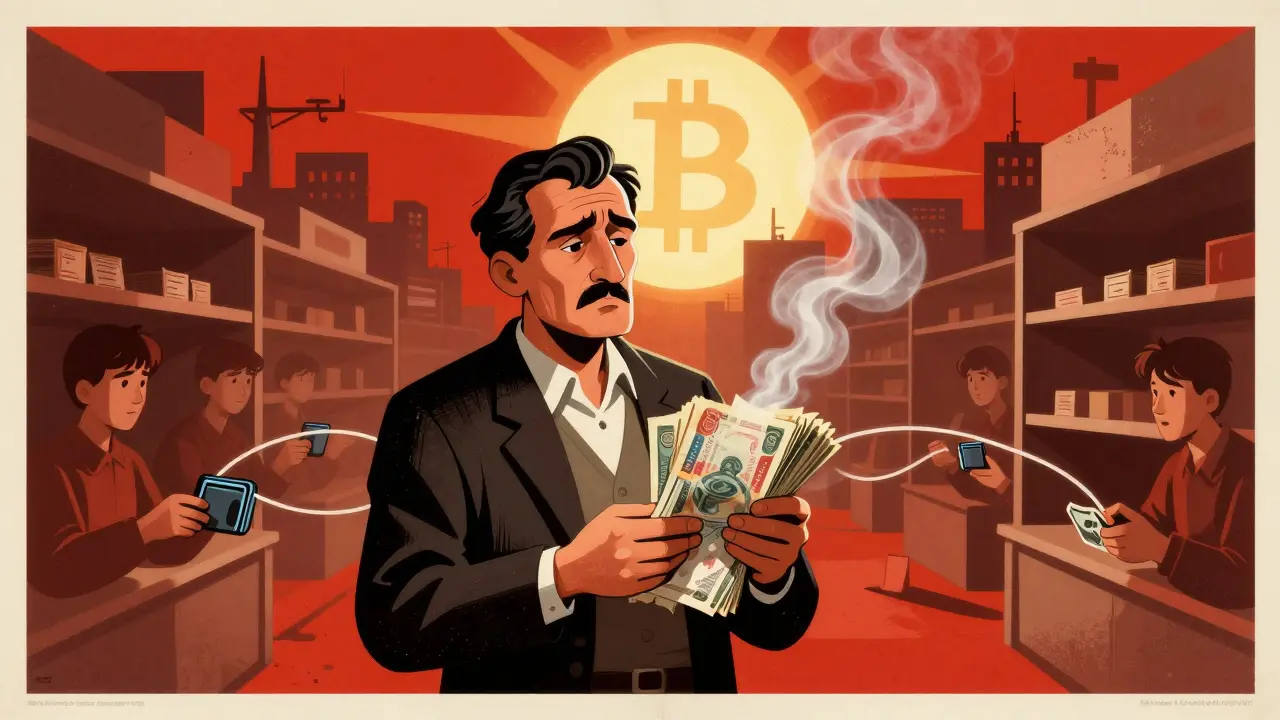
When the Iranian rial lost 90% of its value over six years, people didn’t just stop buying bread-they stopped trusting their own money. By 2024, that loss of trust turned into a flood: $4.18 billion in cryptocurrency left Iran. Not because of hackers or state secrets. But because ordinary people-teachers, shopkeepers, students, parents-were trying to save what little they had left.
It Wasn’t a Heist. It Was a Survival Strategy
Most people think crypto outflows from sanctioned countries mean drug money, ransomware, or government evasion. That’s not what happened in Iran. Chainalysis, the blockchain analytics firm that tracks these flows, found something different: ordinary citizens moving small amounts of Bitcoin and other digital assets out of the country, one transaction at a time. The average transfer? Under $1,000. These weren’t oligarchs. These were people converting their life savings into something that wouldn’t vanish overnight. The rial’s collapse wasn’t gradual. Inflation hit 45% in 2024. Prices doubled in months. A kilogram of rice that cost 100,000 rials in January cost 220,000 by June. People watched their bank accounts evaporate. So they turned to Bitcoin-not because they believed in decentralization, but because it didn’t require a government to honor its value.When War Hits, Crypto Spikes
The outflows didn’t happen evenly. They spiked like clockwork when conflict flared. On April 9 and 14, 2024, Israel bombed the Iranian embassy in Damascus. Iran responded with missile strikes. Within hours, Bitcoin transaction volumes from Iran jumped 300%. Another surge came in late September and early October, during renewed Iran-Israel strikes. Google Trends data showed searches for “Iran Israel” spiked at the exact same moments. People weren’t speculating. They were running. When the sky looked like it might fall, they turned their rials into Bitcoin. Not to profit. To survive.Bitcoin Was the Escape Route
You’d think stablecoins like USDT or USDC would be the go-to in hyperinflation. They’re pegged to the dollar, after all. But in Iran, Bitcoin dominated. Why? Because it was the only asset that couldn’t be easily frozen, blocked, or seized. Stablecoins still run through centralized exchanges-exchanges that could be pressured by U.S. sanctions. Bitcoin, once sent to a personal wallet, was invisible to banks and regulators. Iranians used domestic platforms like Nobitex and Wallex to buy Bitcoin with rials, then moved it overseas through VPNs and proxy servers. When international exchanges started cutting off Iranian users in 2023 and 2024, people adapted. They used peer-to-peer marketplaces. They traded through friends abroad. They sent crypto to relatives in Turkey, Armenia, or the UAE-places where cashing out was easier.The Government Played Both Sides
Here’s the twist: Iran’s own government didn’t stop crypto. It tried to control it. In 2024, the Central Bank forced local exchanges to hand over every user’s identity, transaction history, and IP address. They wanted to track who was moving money out. But they also encouraged mining-giving state-backed companies cheap electricity to run Bitcoin rigs. Why? Because they could sell the mined Bitcoin to foreign buyers for hard currency. So while citizens were scrambling to get crypto out, the state was trying to get it in. It created a paradox: the same technology that let people escape the system was being used to fund it.
How It Compared to Other Sanctioned Nations
Russia also saw crypto surges after its 2022 invasion of Ukraine. But Russia’s outflows were bigger in absolute terms-and came from corporations and elites. Iran’s were smaller in total but far larger relative to its economy. In fact, Iran’s $4.18 billion in outflows was more than 5% of its entire GDP. Venezuela had similar hyperinflation and crypto adoption. But Iran’s outflows were nearly twice as high as Venezuela’s peak. North Korea? They steal crypto through hacking. Iran? People just sold their jewelry, their cars, their savings-and turned them into Bitcoin.The Tools People Used
Accessing crypto in Iran wasn’t easy. Internet speed was slow. Mobile payment apps were blocked. Banks refused to process crypto-related transfers. So people got creative. - VPNs: Nearly every user relied on them to reach international exchanges. Some paid monthly for premium services like ExpressVPN or NordVPN. - Telegram: Thousands of private channels shared tips on which exchanges still accepted Iranian users, how to bypass KYC, and where to find trusted P2P traders. - Local meetups: In Tehran and Isfahan, small groups met in cafes to teach each other how to set up wallets and send transactions. - Family networks: Iranian students abroad became unofficial crypto gateways. A student in Germany might receive Bitcoin from a parent, cash it out, and wire dollars home through informal channels.Why Traditional Sanctions Failed
The U.S. and EU hoped sanctions would cripple Iran’s economy. They didn’t expect digital assets to become the new lifeline. Banks refused to process Iranian transfers. Credit cards were blocked. SWIFT was cut off. But Bitcoin? It doesn’t need banks. It doesn’t need permission. Chainalysis reported that 26% of all sanctioned crypto activity in 2024 came from Iran. That’s more than Russia, Syria, and North Korea combined. And it wasn’t because Iran was better at hacking. It was because its people had no other choice.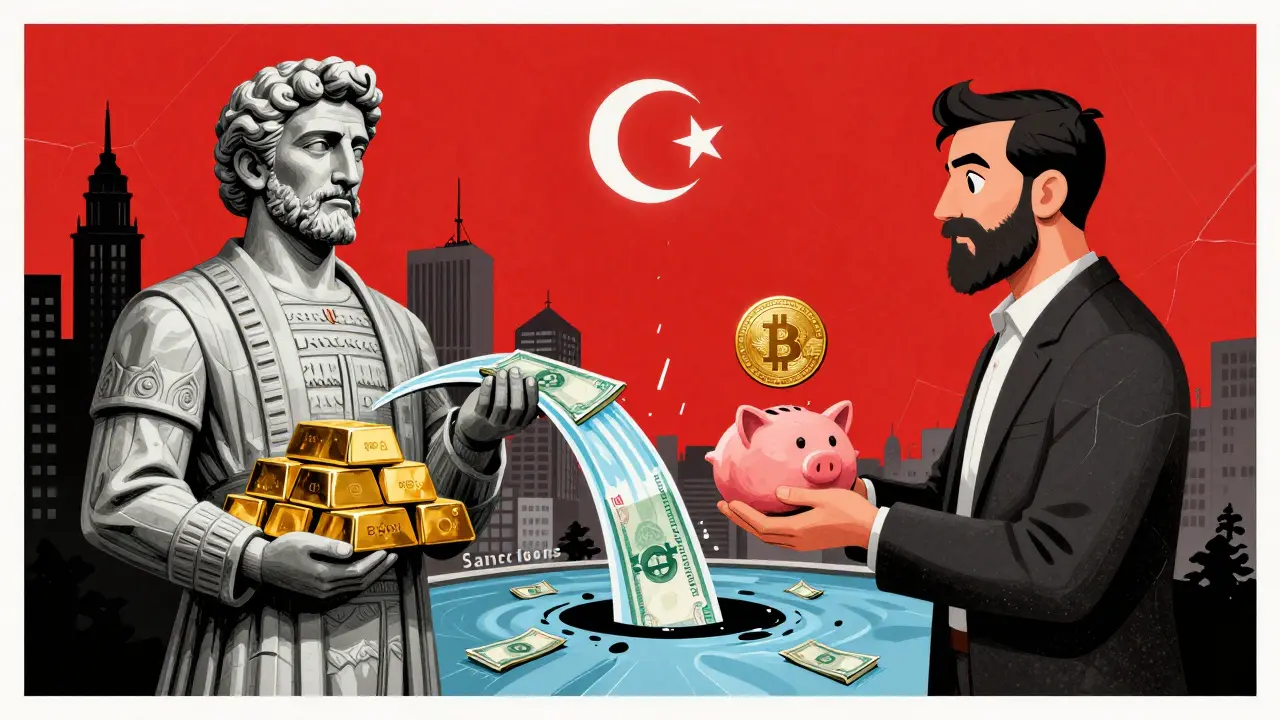
Jon Martín
January 10, 2026 AT 19:04This hit me right in the chest
These aren't speculators or criminals
These are moms buying rice with Bitcoin because their savings vanished overnight
I used to think crypto was for bros in Silicon Valley
Turns out it's for people who just want to eat tomorrow
That's the real revolution right there
Mujibur Rahman
January 11, 2026 AT 07:33Let’s cut through the noise - this isn't about decentralization ideology it's about systemic collapse and adaptive resilience
Iranians didn’t choose Bitcoin because they loved blockchain they chose it because the Central Bank was a paper tiger
Stablecoins are centralized liabilities Bitcoin is atomic sovereignty
Sanctions designed to strangle economies end up catalyzing crypto adoption - classic unintended consequence
And yes the state mining Bitcoin while citizens flee? That’s the dystopian irony of the century
Danyelle Ostrye
January 12, 2026 AT 06:45My uncle in Tehran sent me 0.02 BTC last year to help pay for my tuition
I cashed it out in Chicago and wired him $800 through hawala
He said it was the only way he could help without getting arrested
People think crypto is risky
They don’t know what real risk looks like
Jennah Grant
January 13, 2026 AT 00:46From a macroeconomic standpoint this is textbook currency substitution under hyperinflation
But the institutional layer is what’s fascinating - the state’s dual role as both suppressor and beneficiary of crypto flows creates a feedback loop of institutional hypocrisy
Digital Rial? A centralized ledger with zero trust anchors - it’s just the rial with a UI redesign
Meanwhile peer-to-peer crypto bypasses all state control vectors
Sanctions are becoming obsolete when the population becomes its own liquidity network
Dave Lite
January 13, 2026 AT 08:24Just saw a post from a guy in Shiraz - he sold his motorcycle to buy 0.3 BTC last month
His kid’s gonna study in Germany next year
He didn’t care about HODLing
He just needed a way to get value out of a country that stole his future
And yeah I cried reading it
😭
Bitcoin isn’t a currency for the rich
It’s a lifeline for the desperate
sathish kumar
January 14, 2026 AT 17:43It is imperative to recognize that the phenomenon described herein constitutes a paradigmatic shift in the socioeconomic architecture of sanctioned economies.
The utilization of decentralized digital assets as a medium of value preservation transcends mere financial innovation; it reflects the erosion of institutional legitimacy and the emergent autonomy of civil society.
While the Iranian government's contradictory posture toward cryptocurrency mining and capital flight is analytically intriguing, the fundamental driver remains the catastrophic failure of monetary policy.
This case study provides compelling empirical evidence that financial exclusion, when systemic and prolonged, inevitably catalyzes decentralized alternatives.
It is therefore not merely prudent but morally imperative for the international community to reassess the humanitarian consequences of unilateral sanctions in light of these developments.