Angola Crypto Mining Ban as of April 2024: What Happened and Why It Matters
 May, 26 2025
Angola Mining Energy Impact Calculator
Energy Impact Calculator
Based on Angola's 2024 mining ban data, calculate how much energy crypto mining consumed and what it meant for the country's electricity supply.
Energy Impact Analysis
Energy Consumption
This is equivalent to homes per day
National Impact
Affecting citizens
Legal Warning
According to Angola's Law No. 3/24 (April 2024):
- Simply owning mining equipment = 1-5 years prison
- Active mining = 1-12 years prison
- All equipment automatically seized
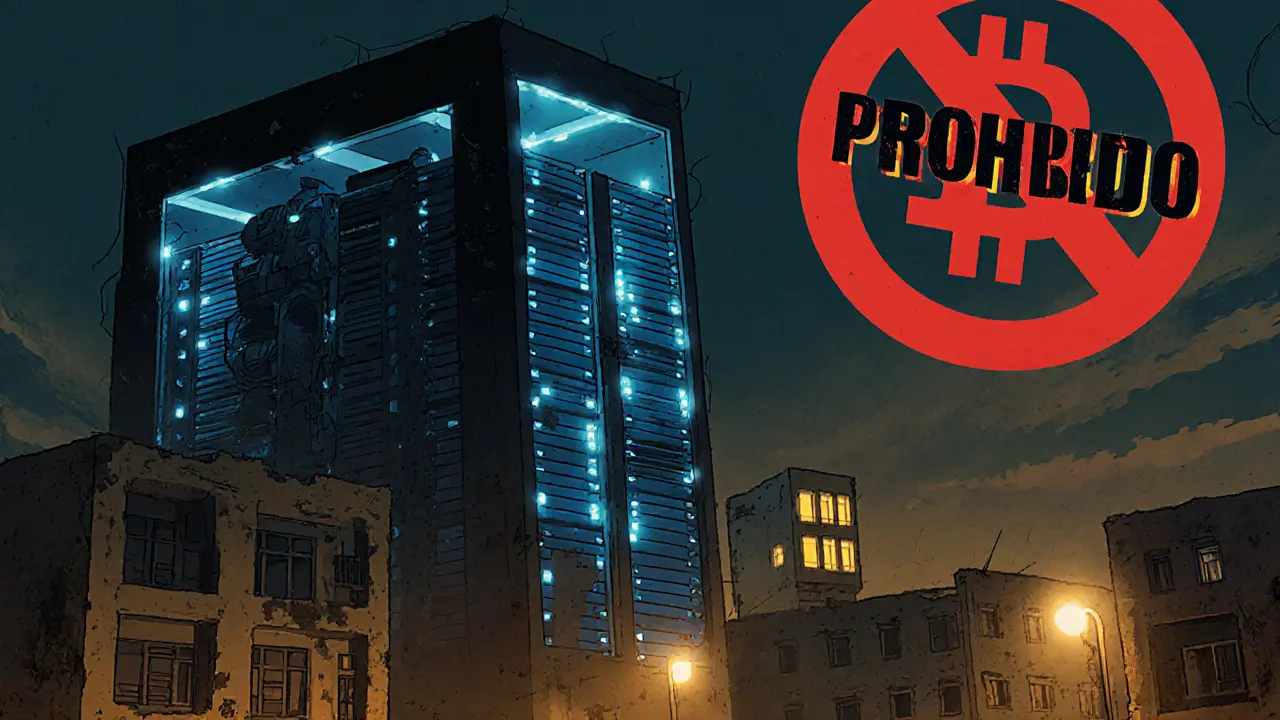
Before April 2024, Angola was one of the biggest Bitcoin mining hubs in the world - and the largest in Africa. Then, overnight, it shut down the entire industry. Not with a slow phase-out. Not with fines. But with a total ban backed by prison time. If you were mining crypto in Angola after April 10, 2024, you were breaking the law. And the punishment? Up to 12 years in jail.
Why Angola Banned Crypto Mining
Angola didn’t ban crypto mining because it hated Bitcoin. It banned it because the lights kept going out. By late 2023, Bitcoin mining operations in Angola were using so much electricity that the national grid couldn’t keep up. Power outages became routine in cities like Luanda and Benguela. Hospitals, schools, and homes were losing power for hours at a time. Meanwhile, massive mining farms - often run by foreign companies - were running 24/7, using industrial-grade generators and drawing directly from the public grid. The government’s own data showed mining was consuming more electricity than entire provinces. In some areas, up to 40% of the grid’s capacity was being siphoned off by mining rigs. That’s not just inefficient - it’s dangerous. When a hospital’s backup generator fails because the main grid is overloaded, people die. The ban wasn’t about ideology. It was about survival. Angola has a population of nearly 39 million. Millions still live without reliable electricity. The government chose to protect those people over a few hundred mining operations.What the Law Actually Says
Law No. 3/24, passed in April 2024, didn’t just discourage mining - it made it a felony. The law explicitly bans three things:- Any form of cryptocurrency mining on Angolan soil
- Using licensed electrical installations for mining purposes
- Connecting mining equipment to the national power grid
The Big Crackdown: August 2024
The law was one thing. Enforcement was another. In August 2024, Angolan authorities, with help from Interpol, launched the largest crypto mining bust in African history. They raided 25 illegal mining facilities. Most were operated by Chinese nationals - the same people who flooded into Angola after China banned mining in 2021. The operation netted more than $37 million worth of mining rigs. Thousands of ASIC miners, cooling systems, backup generators - all seized in a single sweep. The Chinese Embassy had already warned its citizens months before. A translated notice from April 2024 told Chinese residents: “Possession of mining equipment is punishable by imprisonment.” Still, many stayed. Some thought they could hide. Others thought Angola wouldn’t enforce the law. They were wrong. The seized equipment wasn’t sold or scrapped. The government announced it would be redistributed to public hospitals, schools, and community centers - repurposed as power generators or cooling units. A symbolic move: the machines that stole electricity now give it back.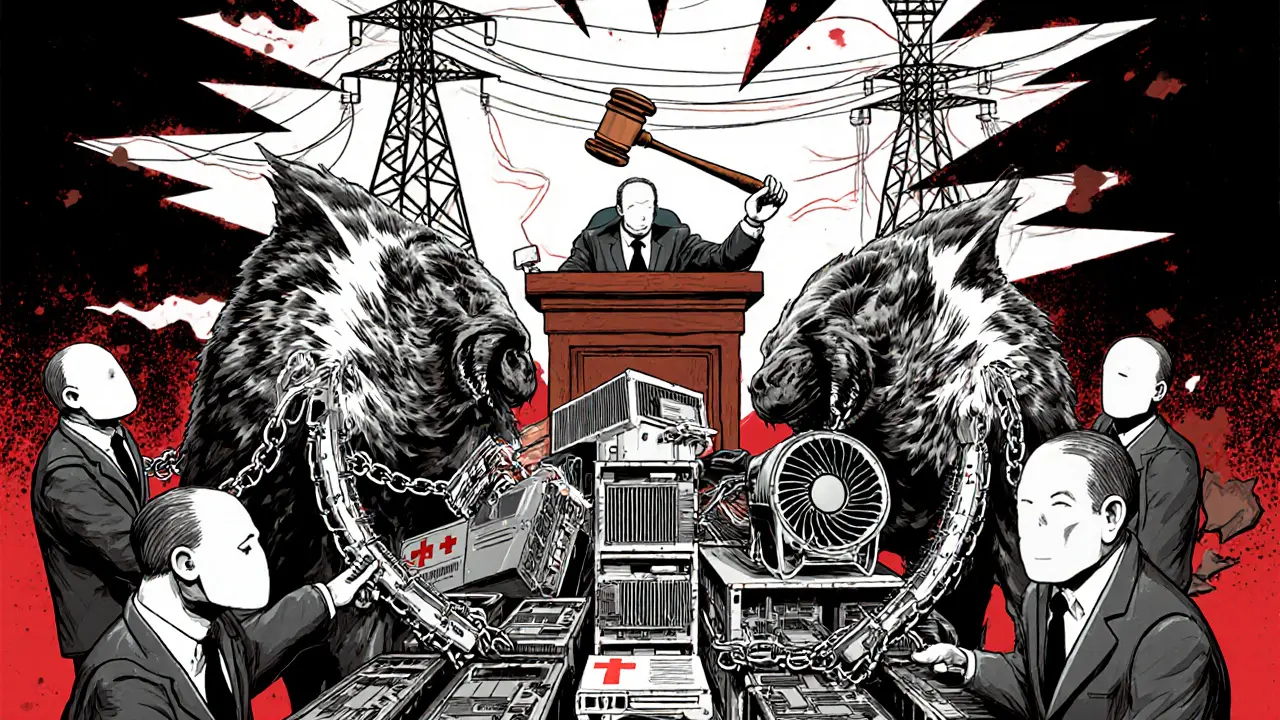
Who Was Mining in Angola?
The mining boom started in late 2021, right after China banned all crypto-related activities. Thousands of Chinese mining companies packed up their rigs and looked for new homes. Angola was perfect: cheap power, lax oversight, and a government eager for foreign investment. Angola is Africa’s seventh-largest country and the second-largest Portuguese-speaking nation. It’s also the continent’s third-biggest oil producer. But oil revenue doesn’t reach most citizens. Mining companies saw an opening. They set up shop in abandoned warehouses, industrial zones, and even near power substations. Some connected directly to high-voltage lines. Others ran diesel generators 24 hours a day. By Q4 2023, Angola was the eighth-largest Bitcoin mining hub in the world. It was producing more hash power than Canada, France, and Germany combined. That’s not a small achievement. It’s a massive, energy-hungry one.Legal Loopholes and Enforcement Problems
The law isn’t perfect. Legal experts from CMS Law Firm pointed out a technical error in the penalty section - the article numbers don’t line up correctly. That could cause confusion in court. A defense lawyer might argue the punishment doesn’t match the charge. Also, the law bans mining but doesn’t ban owning or trading crypto. You can still hold Bitcoin. You can still buy and sell it. You just can’t mine it. That’s a weird gap. It means Angola is trying to kill the production side while leaving the financial side open. It’s like banning wheat farming but allowing bread sales. Some analysts think this was intentional. The government wants to avoid angering the growing number of crypto users who rely on Bitcoin for remittances or as a hedge against inflation. Angola’s currency, the kwanza, has lost over 60% of its value against the dollar since 2020. For many, crypto is the only stable store of value.
What This Means for Global Crypto
Angola’s ban sent shockwaves through the mining industry. Before April 2024, Africa accounted for nearly 7% of global Bitcoin hash rate. Now, it’s close to zero. That’s a big drop. Other countries are watching. Nigeria, Kenya, and Zambia have all seen spikes in crypto mining in recent years. Will they follow Angola’s lead? So far, no. But the Angolan example is now a warning: if your grid can’t handle it, you’ll lose it. The global mining map is shifting again. Texas, Kazakhstan, and Canada are gaining ground. But the real story isn’t about where mining happens - it’s about who gets to decide. Angola made a clear choice: people over profit. Energy for hospitals, not for rigs.What About the Future?
There’s no sign the ban will be lifted. The government has shown zero tolerance. The seized equipment is being repurposed. The arrests are ongoing. Interpol is still monitoring cross-border crypto crime. The few miners who survived the crackdown are now operating underground - in remote villages, using solar panels or tiny generators. But they’re not mining Bitcoin anymore. They’re mining for survival. Angola’s story isn’t about crypto. It’s about power. About who gets to use it. About what happens when a country chooses its citizens over a global trend. If you thought crypto was decentralized, think again. Sometimes, the most powerful force isn’t a blockchain. It’s a government with a broken grid and a million people waiting for the lights to come back on.Is crypto mining still legal in Angola as of 2025?
No. The ban enacted by Law No. 3/24 on April 10, 2024, remains fully in effect. Mining any cryptocurrency in Angola is illegal. Possession of mining equipment is also a criminal offense punishable by one to five years in prison, plus asset seizure.
Why did Angola ban crypto mining but not crypto itself?
Angola targeted mining because it was draining the national power grid. People were losing electricity for hospitals and homes. The government didn’t ban holding or trading Bitcoin because many citizens use it to protect savings from inflation. The ban was about energy, not finance.
What happened to the seized mining equipment?
Over $37 million worth of mining hardware was seized in August 2024. The Angolan government announced plans to repurpose the equipment - including ASIC miners and generators - for use in public hospitals, schools, and community centers to help with power and cooling needs.
Were Chinese miners the only ones affected?
Most of the large-scale operations were run by Chinese nationals who moved to Angola after China’s 2021 mining ban. But the law applies to everyone - Angolan citizens, foreign workers, and companies. The August 2024 crackdown targeted 60 Chinese nationals, but arrests and seizures continue for all violators.
Can you still buy Bitcoin in Angola?
Yes. The ban only applies to mining. Buying, selling, or holding Bitcoin and other cryptocurrencies is still legal. Many Angolans use crypto as a way to protect their savings from inflation, since the national currency has lost significant value since 2020.
Did other African countries follow Angola’s lead?
Not yet. But Angola’s crackdown has raised alarms. Zambia, Nigeria, and Kenya have seen increased crypto mining activity and are now monitoring energy usage more closely. Some officials have hinted at future restrictions, but no country has passed a full ban like Angola’s.
How did Angola become a top Bitcoin mining country so quickly?
After China banned mining in 2021, thousands of Chinese mining companies relocated to countries with cheap power and weak regulations. Angola, with its oil wealth, underused infrastructure, and lack of oversight, became a top destination. By late 2023, it was the eighth-largest Bitcoin mining hub in the world.
What’s the punishment for just owning mining equipment?
Simply possessing mining hardware - even if it’s turned off - can lead to one to five years in prison and automatic confiscation of all equipment. The law doesn’t require proof of active mining. Ownership alone is enough for prosecution.
jeff aza
November 27, 2025 AT 18:28Okay, but let’s be real - this isn’t about “people over profit,” it’s about a corrupt regime that couldn’t tax the miners, so they just stole their hardware. 🤡 The government didn’t “repurpose” the rigs - they confiscated them and now probably sell them on the black market to their cronies. The “symbolic move” is just theater. And don’t get me started on the legal loophole: banning mining but not trading? That’s not policy - that’s regulatory cowardice. They want the benefits of crypto (remittances, inflation hedge) without the infrastructure costs. Classic.
Vijay Kumar
November 28, 2025 AT 06:14Power is life. Mining rigs don’t breathe. People do. Angola chose humanity over hype. Simple. No ideology. Just survival. The world needs more of this - not more crypto bros screaming about “decentralization” while their rigs fry a hospital’s backup generator. 🌍⚡
Christina Oneviane
November 30, 2025 AT 06:04Ohhh so now the government is the hero? 🙄 Let me guess - the same government that lets oil executives loot the treasury but throws people in jail for owning a GPU? The ‘repurposing’ is just PR spin. They’re not saving hospitals - they’re building a crypto hardware museum for their VIP friends. And don’t even get me started on how they’ll ‘maintain’ these ASICs. LOL. These things need dust-free rooms and liquid cooling. Not a dusty schoolroom in Benguela. 😂
Casey Meehan
November 30, 2025 AT 17:55Angola didn’t ban crypto - they banned greed. 💪🔥 And honestly? I’m here for it. Imagine if every country did this when mining broke their grid? No more ‘crypto’ as an excuse to drain public resources. The seized rigs becoming power units? That’s next-level karma. 🤖➡️💡 Also, 12 years in jail for owning a rig? YIKES. But… kinda fair? 🤔
Tom MacDermott
December 1, 2025 AT 15:47Let’s not romanticize this. This isn’t ‘people over profit’ - it’s authoritarian over innovation. You don’t solve a grid crisis by criminalizing technology - you solve it by upgrading infrastructure, taxing energy use, or negotiating power-sharing agreements. Instead, Angola chose the easiest path: blame the outsiders, seize assets, and pretend they’re righteous. The fact they still allow crypto trading proves they don’t care about principles - they care about control. And now they’ve created a black market for mining rigs that’ll be worth more than gold in 6 months. Classic failed state move.
Martin Doyle
December 2, 2025 AT 17:48Stop pretending this is a moral victory. The Chinese miners were exploiting a vacuum - yes. But the Angolan government didn’t fix the grid. They didn’t invest in renewables. They didn’t regulate. They just raided. That’s not governance - that’s gangsterism. And now the seized hardware is being ‘repurposed’? Please. ASICs aren’t space heaters. They’re precision machines. Throwing them into a school with no cooling or maintenance? That’s not sustainability - that’s a death sentence for $37M worth of tech. This isn’t justice. It’s vandalism with a press release.
Susan Dugan
December 4, 2025 AT 03:18Here’s the beautiful thing - Angola didn’t ban Bitcoin. They didn’t ban freedom. They just said: ‘No, you can’t turn our shared electricity into your private profit.’ That’s not anti-tech - that’s pro-community. Think about it: when your neighbor’s generator is running all night, drowning out your kid’s asthma machine… you don’t negotiate. You act. The seized rigs? Maybe they won’t work perfectly as hospital coolers - but they’re a start. A symbol. A middle finger to the idea that crypto should be allowed to burn down a country just because it’s ‘decentralized.’ The real decentralization? When power belongs to the people - not the rigs. And maybe, just maybe, this sparks a global conversation: how do we build tech that serves humanity - not the other way around? 🌱⚡