BitMEX Crypto Exchange Review: Is It Worth Using in 2026?
 Aug, 18 2026
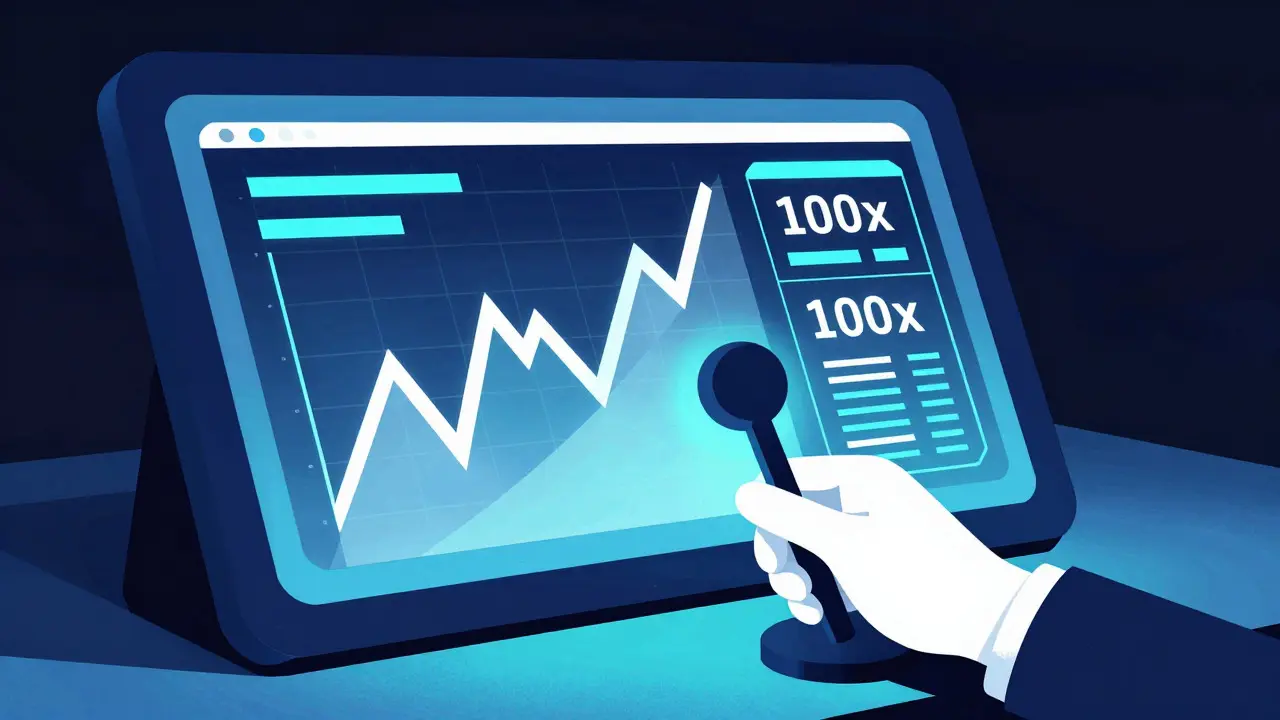
You might have heard the name BitMEX is a leading offshore cryptocurrency derivatives exchange known for high-leverage perpetual swap trading mentioned in trading circles, but do you actually know if it’s safe or useful for your strategy? Founded in 2014 by former banking professionals, BitMEX pioneered the concept of perpetual swaps, allowing traders to bet on price movements without an expiration date. However, its history isn't without drama; a $100 million settlement with the U.S. CFTC in 2020 forced it out of the American market entirely. Today, in 2026, it remains a powerhouse for professional traders outside the U.S., offering deep liquidity and low fees, but it comes with significant risks that beginners should carefully consider.
Quick Summary / Key Takeaways
- Best For: Professional and advanced traders seeking high leverage (up to 100x) and deep liquidity in Bitcoin perpetuals.
- Not For: Beginners, U.S. residents (currently inaccessible), or those who prefer simple spot trading interfaces.
- Key Risk: Offshore regulation creates counterparty risk; platform freezes during extreme volatility are a common complaint.
- Costs: Very competitive maker/taker fees (-0.025% / 0.075%) compared to major competitors like Binance.
- Verdict: A powerful tool for specific use cases, but not a one-size-fits-all exchange for the average retail investor.
What Makes BitMEX Different?
Most crypto exchanges focus on buying and holding coins. BitMEX is different because it was built specifically for derivatives. The core product here is the Perpetual Swap, a contract that tracks the price of an asset like Bitcoin or Ethereum but never expires. This allows you to go long or short indefinitely. When BitMEX launched, it offered up to 100x leverage, which was unheard of at a time when most platforms capped you at 3x or 5x. That aggressive stance attracted serious traders who wanted to amplify their positions quickly.
In 2026, the landscape has changed. While other giants like Binance Futures and Bybit have caught up in terms of volume, BitMEX still holds a unique position. It commands roughly 8.7% of the global crypto derivatives market share. Its strength lies in order book depth. If you’re trying to move large amounts of capital-say, $50,000 or more-slippage can eat into your profits. On BitMEX, the order book for BTC/USD perpetuals typically shows around 500 BTC available within 0.5% of the mid-price. By comparison, Deribit offers about 320 BTC in that same range. For institutional players or heavy retail traders, that extra depth saves real money.
Fees and Trading Costs
Let’s talk numbers, because fees compound fast in high-frequency trading. BitMEX uses a maker-taker fee structure. As a maker (adding liquidity to the book), you actually get a rebate of -0.025%. As a taker (taking existing liquidity), you pay 0.075%. To put this in perspective, Binance Futures charges 0.04% for makers and 0.08% for takers. Over thousands of trades, that small difference adds up significantly.
| Feature | BitMEX | Binance Futures | Deribit |
|---|---|---|---|
| Maker Fee | -0.025% | 0.02% | 0.00% |
| Taker Fee | 0.075% | 0.04% | 0.05% |
| Max Leverage (BTC) | 100x | 125x | 100x |
| Spot Pairs Available | 12 | 350+ | ~50 |
| U.S. Access | No | Limited/Restricted | No |
One catch: withdrawal fees. You’ll pay 0.0005 BTC per Bitcoin withdrawal. More importantly, only Bitcoin withdrawals are currently free of additional processing surcharges in some contexts, though network fees always apply. If you trade other assets heavily, check the current schedule, as it can change. Also, note that there are no fiat on-ramps directly on the platform. You must deposit crypto from another wallet or exchange first. This adds an extra step and potentially extra costs if you’re moving funds between platforms.
User Experience and Learning Curve
Here’s where many new users stumble. BitMEX is not designed for casual investors. The interface is dense, filled with data points, charting tools, and order types that assume you already know what you’re doing. According to a 2025 survey of over 1,200 traders, the average learning curve to master the platform is 30-45 hours. That’s a lot of time before you feel comfortable placing complex orders.
The mobile app, available on both iOS and Android, scores around 3.5 to 3.8 stars depending on the store. Users praise the speed but often complain about the lack of intuitive tooltips. If you’ve used a mainstream app like Coinbase or Robinhood, BitMEX will feel like driving a manual transmission race car after riding in a sedan. It’s powerful, but you need to know how to operate it. For beginners, the TestNet feature is a lifesaver. It lets you practice with fake money using live market data. Over 400,000 users have used this demo account to hone their skills before risking real capital.
Security and Regulatory Status
Security is non-negotiable in crypto. BitMEX keeps 98.5% of user assets in cold storage, meaning they’re offline and harder to hack. A security audit by Kudelski Security in early 2025 found 12 critical vulnerabilities, all of which were patched by January 2025. They also require two-factor authentication (2FA) and offer withdrawal whitelisting, which means you can restrict withdrawals to specific addresses you trust.
However, the regulatory picture is complex. Because BitMEX is headquartered in Seychelles, it operates under offshore jurisdiction. This allowed them to avoid strict U.S. regulations for years, until the CFTC stepped in. The 2020 settlement wasn’t just a fine; it signaled that regulators were watching. In 2023, the Seychelles Financial Services Authority tightened oversight, requiring BitMEX to hold $150 million in segregated customer funds. This is a good sign for safety, but it also highlights the platform's vulnerability to changing laws. If regulations tighten further globally, BitMEX could face operational hurdles. Fitch Ratings downgraded BitMEX to 'CCC' in late 2025, citing these persistent regulatory risks. So, while the tech is secure, the legal environment carries inherent uncertainty.
Who Should Use BitMEX?
BitMEX shines for a specific type of trader. If you are experienced with derivatives, understand liquidation mechanics, and trade frequently, the low fees and deep liquidity make it a top choice. Professional traders report saving hundreds of dollars weekly in slippage compared to less liquid venues. The API is also robust, making it a favorite for algorithmic trading bots.
On the other hand, if you are a beginner, stick to simpler platforms. The complexity here can lead to costly mistakes. Unexpected liquidations during volatility spikes are a common complaint among negative reviewers. One G2.com user noted, "Bitmex decides to freeze during volatility, making stop losses useless." While not universal, these incidents remind us that high leverage cuts both ways. If you prefer buying and holding Bitcoin or Ethereum, look elsewhere. BitMEX’s spot market is limited to just 12 cryptocurrencies, whereas competitors offer hundreds.
Frequently Asked Questions
Can U.S. residents use BitMEX in 2026?
Officially, no. Since the 2020 CFTC settlement, BitMEX has withdrawn from the U.S. market. While some users find workarounds, the company does not actively support U.S. clients, and using VPNs may violate terms of service. For U.S. traders, Kraken Futures or CME Group futures are safer, regulated alternatives.
Is BitMEX safe for long-term holdings?
It is better suited for active trading than long-term storage. With 98.5% of assets in cold storage and regular audits, it is relatively secure. However, due to its offshore status and regulatory history, many experts recommend keeping only trading capital on the exchange and storing long-term holdings in personal hardware wallets.
What is the minimum deposit amount?
The minimum deposit is $10 for spot trading and $100 for derivatives trading. This is quite low compared to some institutional platforms, making it accessible for smaller traders who want to test the waters.
How does BitMEX compare to Binance Futures?
Binance generally has higher total volume and more listed pairs. BitMEX often has deeper order books for specific BTC contracts and lower maker fees. Binance is more user-friendly for beginners, while BitMEX is preferred by pros for execution speed and cost efficiency in high-volume scenarios.
Does BitMEX charge fees for withdrawals?
Yes. You pay network fees plus a platform fee. For Bitcoin, the platform fee is 0.0005 BTC. Other assets may have different rates. Always check the current fee schedule before initiating a large transfer, as these can fluctuate based on network congestion.