Blockchain for Supply Chain Transparency: A Practical Guide
 Nov, 2 2026
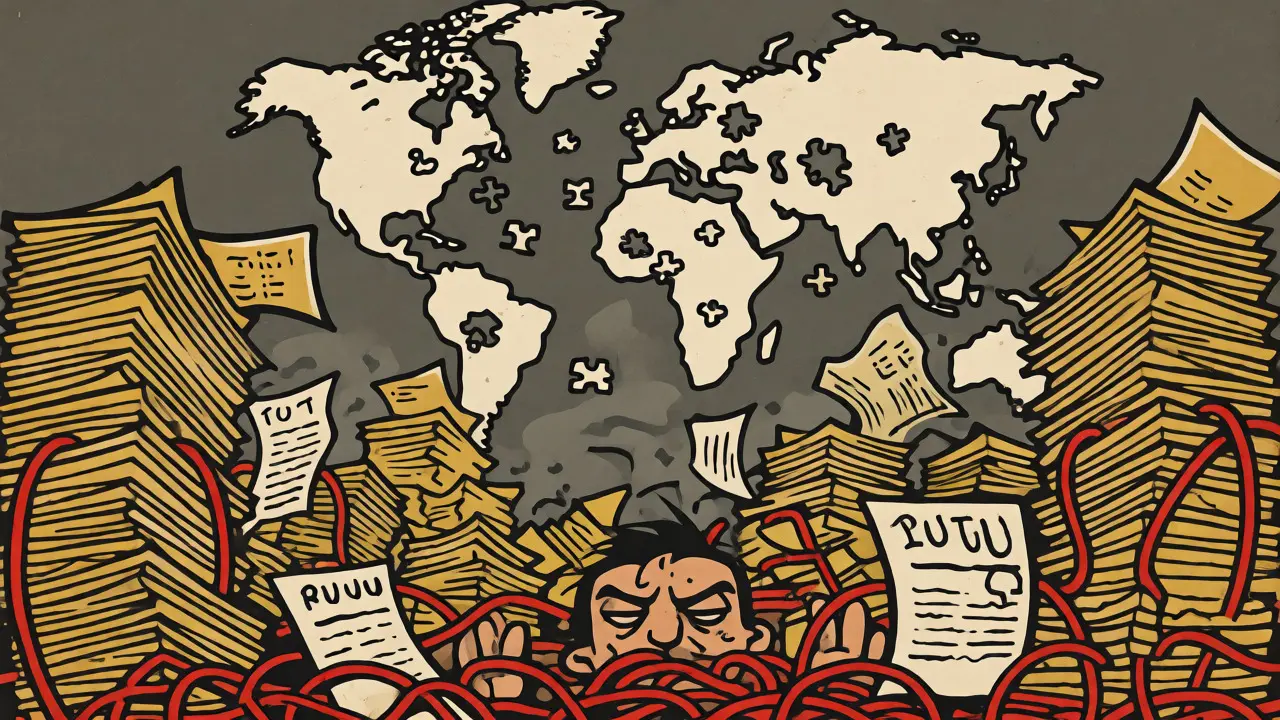
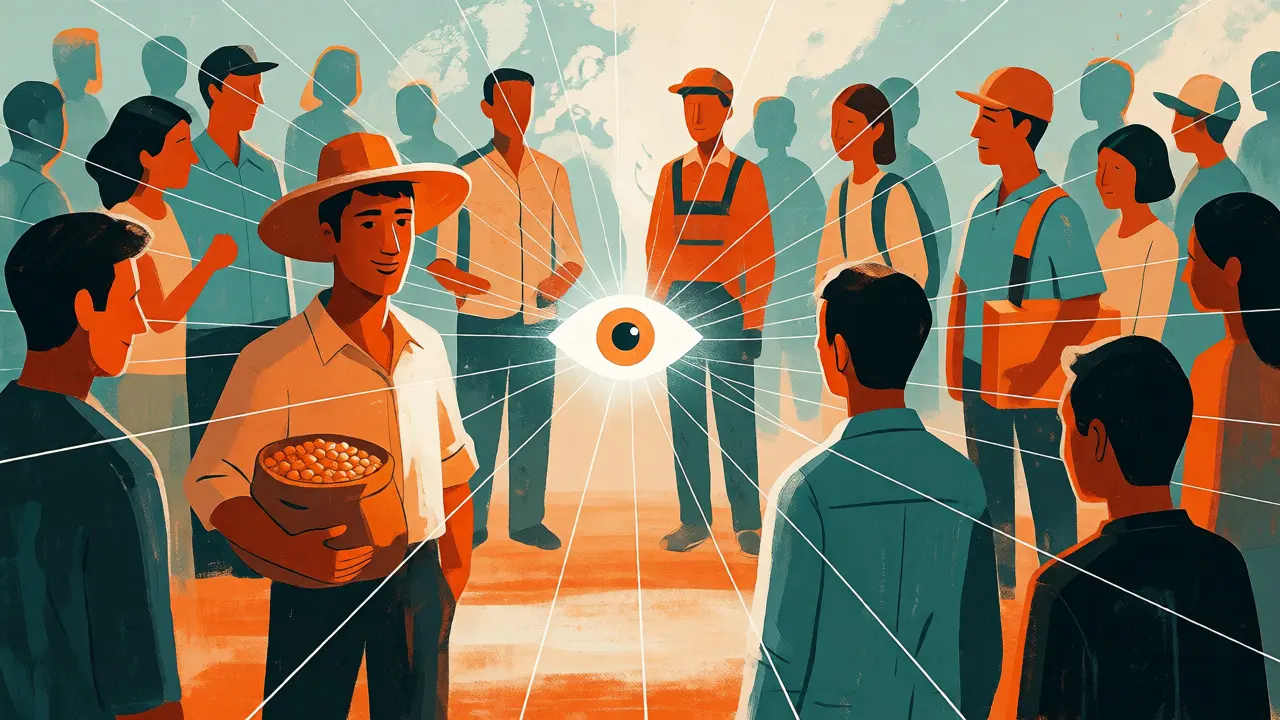
You buy a bag of coffee. The label says "Fair Trade." But did the farmer actually get paid fairly? Did those beans really come from that specific farm in Colombia, or were they mixed with cheaper stock halfway to your local roaster? For decades, we’ve had to trust the label because checking the truth was impossible. Too many middlemen, too many spreadsheets, and way too much room for error or fraud.
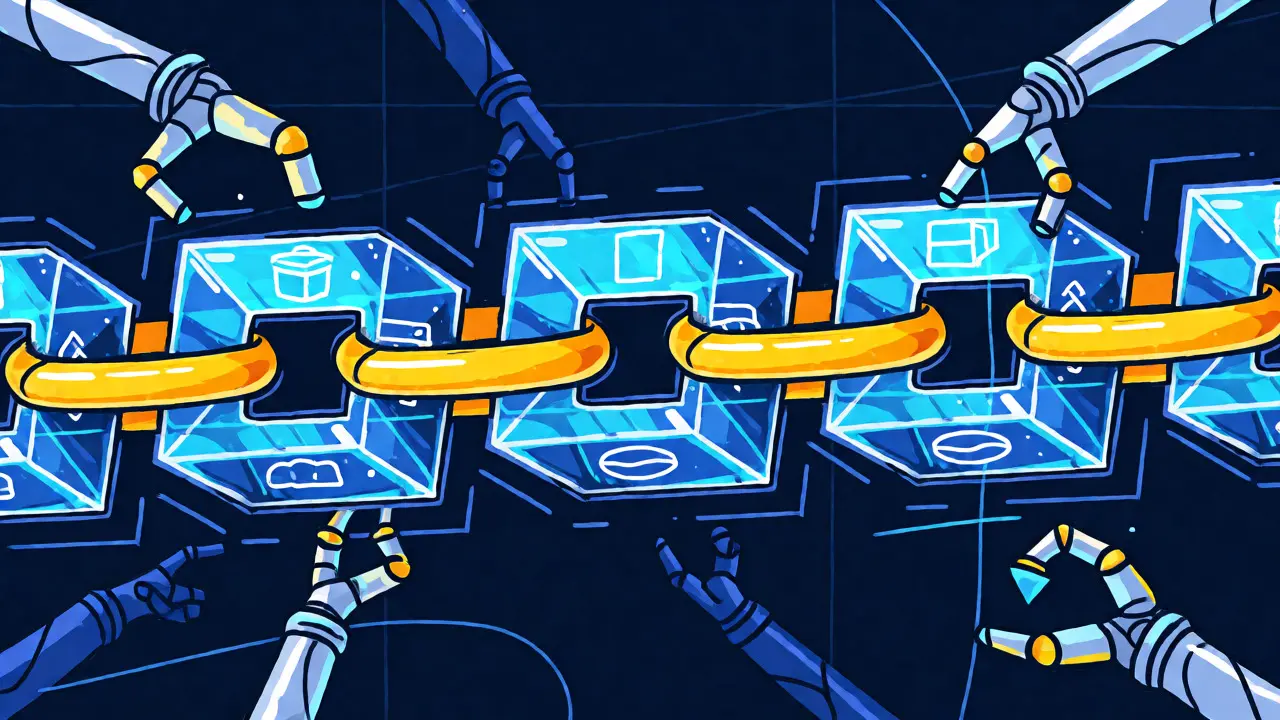
Blockchain is a decentralized digital ledger technology that records transactions across many computers so that the record cannot be altered retroactively without the alteration of all subsequent blocks and the consensus of the network. In supply chains, it acts as a single source of truth. It doesn’t just track where a product is; it proves who touched it, when, and under what conditions. This isn’t about cryptocurrency hype anymore. It’s about fixing a broken system where information gets lost between the factory floor and your doorstep.
Why Traditional Tracking Fails Us
Think about how you currently track a package. You get a number, you check a website, and you see vague updates like "Departed Facility" or "In Transit." That’s it. Now scale that up to a global supply chain involving dozens of suppliers, manufacturers, logistics providers, and retailers. Each company keeps its own database. They don’t talk to each other. If Supplier A says they shipped 100 units, and Manufacturer B says they received 98, who’s right? Who lost the two units? Was it theft? Damage? Paperwork error?
This fragmentation creates what experts call information asymmetry. One party knows something the other doesn’t. In traditional systems, you only see one step ahead or behind. You can’t see the whole journey. This blind spot costs money. It leads to recalls that take weeks instead of hours, wasted inventory because no one knew a shipment was delayed until it missed a deadline, and a general lack of trust among partners. When you rely on email threads and PDF invoices, errors are inevitable, and disputes are expensive.
The Core Tech: How It Actually Works
At its heart, blockchain solves this by creating an immutable record. Once data is entered, it can’t be changed or deleted without everyone agreeing to the change. This tamper-proof nature is crucial. If a supplier logs that their goods were stored at 4°C, that timestamp and temperature reading are locked in. No one can quietly tweak the log later to hide spoilage.
Three key features make this work:
- Decentralization: Instead of one central server (like Oracle or SAP) holding all the power, the ledger is shared across all participants. If one node goes down, the network stays up. There’s no single point of failure.
- Cryptographic Security: Every transaction is secured using public and private keys. This ensures that only authorized parties can add data, and anyone can verify it without needing to trust the person who added it.
- Smart Contracts: These are self-executing contracts with the terms directly written into code. For example, if a shipment arrives and the IoT sensor confirms the temperature stayed within range, the smart contract automatically releases payment to the carrier. No manual invoicing, no waiting for accounts payable teams.
This setup shifts the model from "trust me" to "verify it." You don’t need to trust your supplier’s word; you can look at the shared ledger and see the proof.
Real-World Wins: Who Is Doing This Right?
Theory is nice, but execution matters. Several major players have moved beyond pilot projects to real deployment.
IBM Food Trust is a blockchain-based platform designed to improve food safety and reduce waste by providing end-to-end visibility in the food supply chain. Major retailers like Walmart and Carrefour use it. During a recent E. coli outbreak, Walmart used IBM Food Trust to trace the source of contaminated mangoes in seconds. Previously, this kind of traceability took days or even weeks. Now, they can pinpoint the exact farm and batch, allowing them to pull only affected products rather than scrapping entire inventories.
In the automotive sector, Renault Group has migrated its supply chain documentation to blockchain technology to enhance transparency and efficiency across its global network. By moving to a distributed ledger, Renault reduced administrative overhead and improved collaboration with thousands of suppliers. They’re now inviting other carmakers to join, aiming for industry-wide standards.
These aren’t isolated experiments. They show that blockchain shines in industries where provenance matters-food, pharmaceuticals, luxury goods, and high-value electronics. If counterfeit parts can crash a plane or fake drugs can kill people, the cost of implementing blockchain is easily justified.
Challenges: It’s Not All Smooth Sailing
Don’t let the success stories fool you. Implementing blockchain is hard. It’s not a plug-and-play solution.
First, there’s the "garbage in, garbage out" problem. Blockchain guarantees that data hasn’t been changed once it’s on the ledger. It does *not* guarantee the data was true when it was entered. If a worker lies about the temperature in a truck, the blockchain will faithfully record that lie forever. Solving this requires integrating Internet of Things (IoT) sensors that automatically feed data into the blockchain, removing human error.
Second, interoperability is a mess. Company A uses Hyperledger Fabric. Company B uses Ethereum. They can’t easily share data. Until we have common standards-something organizations like GS1 are working on-companies risk getting stuck in proprietary silos.
Finally, there’s the cultural hurdle. Suppliers might resist sharing data due to competitive concerns. Why reveal your pricing or volume to a competitor who shares the same network? Permissioned blockchains help here, allowing companies to control exactly who sees what. But building that trust takes time and clear governance rules.
Implementation Checklist: Where to Start
If you’re considering blockchain for your supply chain, don’t try to boil the ocean. Start small.
- Identify a Pain Point: Don’t adopt blockchain just because it’s trendy. Pick a specific problem, like high recall rates, frequent disputes over delivery times, or difficulty proving ethical sourcing.
- Choose the Right Network Type: Public blockchains (like Bitcoin or Ethereum) offer maximum decentralization but less privacy. Permissioned blockchains (like Hyperledger) are better for enterprise use because they allow access control and faster transaction speeds.
- Standardize Data Formats: Agree with your partners on how data will be structured before you build anything. If everyone sends different file types, integration becomes a nightmare.
- Integrate with Existing Systems: Your ERP (Enterprise Resource Planning) system isn’t going away. The blockchain needs to talk to it. Look for platforms that offer easy APIs for connecting legacy systems.
- Engage Stakeholders Early: Get your suppliers on board. Explain the benefits to them-faster payments via smart contracts, reduced paperwork, and better dispute resolution.
| Feature | Traditional System | Blockchain System |
|---|---|---|
| Data Visibility | Siloed; limited to immediate partners | End-to-end; visible to all authorized parties |
| Data Integrity | Vulnerable to alteration; relies on trust | Immutable; cryptographically secured |
| Transaction Speed | Slow reconciliation; manual checks | Near real-time; automated via smart contracts |
| Cost Structure | High administrative and audit costs | Lower long-term operational costs; higher initial setup |
| Trust Model | Intermediary-dependent | Algorithm-dependent (Trustless) |
The Future: AI, IoT, and Standardization
We’re still in the early stages. Over the next three to five years, expect blockchain to merge with other technologies. Imagine IoT sensors tracking temperature, humidity, and location in real-time, feeding that data directly onto the blockchain. Then, use Artificial Intelligence to analyze that stream of data. AI could predict delays before they happen or detect anomalies suggesting fraud.
Standardization is also accelerating. Groups like the Blockchain in Supply Chain Alliance are pushing for universal protocols. As these standards mature, switching between platforms will become easier, reducing vendor lock-in. Eventually, blockchain won’t be a separate system you manage; it’ll just be the underlying infrastructure powering transparent trade, invisible to the user but essential to the operation.
For businesses, the question isn’t whether to use blockchain, but how soon you can afford not to. Customers demand transparency. Regulators require traceability. Competitors are already moving. The supply chain of the future is open, verifiable, and efficient. The tools exist today. The only missing piece is the decision to start.
Does blockchain replace my current ERP system?
No, it complements it. Your Enterprise Resource Planning (ERP) system handles internal operations like accounting and inventory management. Blockchain handles external interactions and multi-party verification. They should integrate, with the ERP pushing relevant data to the blockchain and receiving verified status updates back.
Is blockchain secure enough for sensitive business data?
Yes, especially permissioned blockchains. Unlike public cryptocurrencies, enterprise solutions allow you to restrict who can view specific data. You can use zero-knowledge proofs to verify facts (e.g., "this product is organic") without revealing underlying details (e.g., the exact price paid), maintaining both transparency and confidentiality.
How long does implementation take?
Typically 6 to 12 months for full technical proficiency and deployment. This includes selecting a platform, defining data standards, integrating with existing systems, and training staff. Pilot projects can be launched faster, often in 3-6 months, to test viability before scaling.
What is the biggest barrier to adoption?
Lack of standardization and interoperability. Different companies use different blockchain platforms that don't communicate well with each other. Additionally, getting all supply chain partners to agree on data formats and participate in the network requires significant coordination and negotiation.
Can blockchain prevent fraud entirely?
It prevents data tampering after entry, but not fraudulent entry. If a bad actor inputs false data initially, the blockchain records that falsehood immutably. Combining blockchain with IoT sensors and third-party audits helps mitigate this risk by automating data capture and verifying physical conditions.