Coinbit Crypto Exchange Review: Liquidity Crisis and Why It’s Not a Viable Option in 2026
 Feb, 22 2026
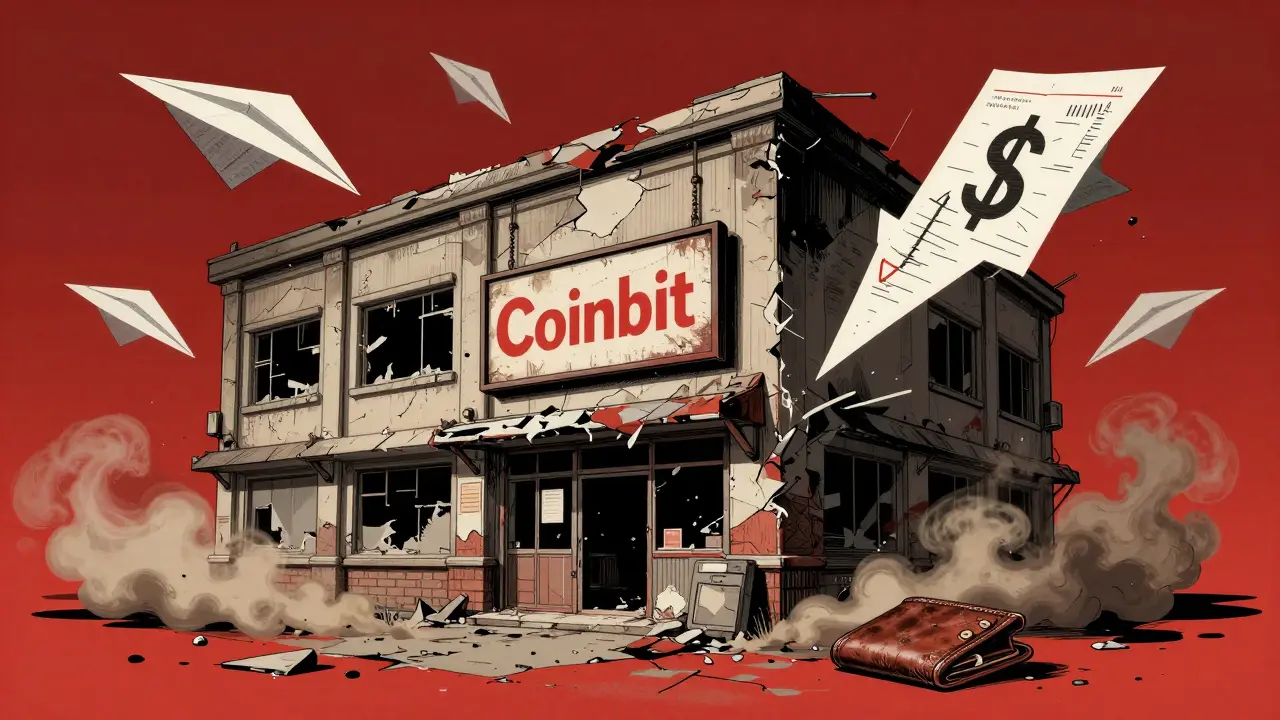
When you hear "Coinbit," you might think of a solid crypto exchange. But if you look at the numbers, the story is very different. Coinbit launched in July 2018 as a South Korean-based platform aiming to compete with giants like Binance and Kraken. It promised security, speed, and an exciting trading experience. But today, in 2026, it’s hard to find anyone actively using it. Why? Because Coinbit collapsed under its own weight - and its trading volume tells the whole story.
What Happened to Coinbit’s Trading Volume?
In April 2019, Coinbit recorded just $1.8 million in daily trading volume. Not huge, but not unheard of for a new exchange. Then, in March 2020, something strange happened. Volume spiked to $313 million overnight. That’s a 17,300% jump. It looked like Coinbit had cracked the code. Traders were flocking. New coins were being listed. The platform even added support for English, Korean, Japanese, and Chinese interfaces to attract global users. But that surge didn’t last. By December 2, 2021, daily volume had crashed to $85.89. That’s not a typo. Eighty-five dollars. That’s less than what a single large trader might move on Binance in five minutes. This isn’t a slow decline - it’s a freefall. And it didn’t recover. Two years later, the numbers haven’t budged. No major news, no relaunch, no new features. Just silence.Why Liquidity Matters More Than You Think
Liquidity isn’t just a buzzword. It’s the heartbeat of any crypto exchange. If you can’t buy or sell at a fair price without moving the market, you’re not trading - you’re gambling. On Coinbit, slippage is extreme. Want to buy 10 BTC? You might end up paying 15% more than the market rate because there’s no depth in the order book. Sell 5 ETH? You could get stuck with a bid that’s 20% below market value. Compare that to Binance or Kraken, where you can trade hundreds of millions in assets without shifting prices. Coinbit doesn’t have market makers. It doesn’t have institutional partners. It doesn’t even have enough retail users to sustain basic trading pairs. The result? Most of its listed tokens are dead. You can’t trade them. You can’t withdraw them. And if you try to deposit, you’re stuck.The Confusion: Coinbit vs. Coinsbit vs. CoinBit App
Here’s where things get messy. There are three completely different platforms with similar names:- Coinbit - the South Korean exchange we’re talking about. Operated by Axia Inc. in Seoul. Now inactive.
- Coinsbit - a separate, still-active exchange based internationally. Offers staking, OTC trading, IEOs, and fiat on-ramps. It’s not the same thing.
- CoinBit - a mobile app by Binary Bricks. It tracks prices across 150+ exchanges. It doesn’t let you trade. It’s just a price monitor.

No User Base. No Reviews. No Community.
Try finding reviews for Coinbit. Go to Trustpilot. Try Reddit. Check CryptoSlate or CoinMarketCap’s user comments. You’ll find almost nothing. Not because it’s a secret gem - because there’s no one left to review. A thriving exchange has thousands of user posts, complaints, tips, memes, and debates. Coinbit has silence. Compare that to Kraken, which has over 12,000 user reviews on Trustpilot. Or Binance, where every major update sparks a thread on r/CryptoCurrency. Coinbit doesn’t even have a dedicated subreddit. No Discord server. No Telegram group. No active Twitter account. That’s not a sign of a quiet platform - it’s a sign of abandonment.Why It Failed When Other Korean Exchanges Succeeded
South Korea is one of the most active crypto markets in the world. Retail traders there love digital assets. Bithumb, Upbit, and Korbit all thrive. So why did Coinbit fail? It didn’t solve a real problem. It didn’t offer unique features. No staking. No lending. No NFT marketplace. No fiat deposits. No mobile app. No customer support worth mentioning. It was just another exchange trying to copy Binance without the infrastructure, the team, or the funding. Worse, it never built trust. There’s no public audit history. No transparency reports. No KYC/AML compliance details published. In a market where regulatory scrutiny is growing, especially in Asia, that’s a death sentence.
Is Coinbit Still Operational in 2026?
Technically, yes. The website still loads. You can still log in. But try to deposit BTC. Try to withdraw ETH. Try to trade a new token. You’ll hit errors. You’ll get delayed responses. You’ll see zero liquidity on every pair. There’s no evidence of updates since 2021. No blog posts. No announcements. No team changes. The CEO, HyunBaek Park, hasn’t made a public statement in over four years. The domain is registered. The servers are up. But the platform is dead.What Should You Do Instead?
If you’re looking for a reliable exchange in 2026, don’t waste time on Coinbit. Here’s what works:- Binance - largest volume, 500+ trading pairs, staking, futures, and spot trading.
- Kraken - trusted in the U.S., strong security, transparent audits, and good customer support.
- Bybit - great for derivatives, low fees, and high liquidity.
- Upbit - if you’re in Asia, this is the dominant Korean exchange with deep liquidity.
Final Verdict: Avoid Coinbit
Coinbit isn’t just underperforming. It’s obsolete. Its trading volume isn’t low - it’s nonexistent. Its user base isn’t small - it’s gone. Its platform isn’t outdated - it’s abandoned. There’s no scenario where using Coinbit in 2026 makes sense. Not for trading. Not for storing crypto. Not even for experimenting. The risk of losing access to your funds is too high. The chance of getting a fair trade is near zero. And there’s no one to help you if something goes wrong. If you’ve ever used Coinbit, consider your funds lost. If you’re thinking about signing up - don’t. Walk away. Save yourself the time, the frustration, and the potential loss.Is Coinbit still operational in 2026?
Technically, the Coinbit website still loads, but the platform is functionally dead. Trading volume has been under $100 daily since late 2021. Deposits and withdrawals are unreliable, liquidity is nonexistent, and there’s no customer support activity. It’s not a working exchange - it’s a digital ghost.
Is Coinbit the same as Coinsbit?
No. Coinbit is a South Korean exchange that shut down. Coinsbit is a completely different, still-active international exchange that offers staking, OTC trading, and fiat on-ramps. They have different owners, websites, and features. Confusing them is common, but they’re not the same.
Why did Coinbit’s trading volume crash so hard?
Coinbit’s volume spiked in 2020 due to unverified activity - likely wash trading or short-term speculation. Once that dried up, there was no real user base to sustain trading. No market makers, no institutional support, no unique features. Users left, and the platform collapsed under its own lack of liquidity.
Can I trust Coinbit with my crypto?
No. Coinbit has no public audit history, no transparency reports, and no evidence of secure fund storage. With zero trading volume and no user activity, there’s no way to know if your assets are still on the platform - or if they were moved long ago. It’s not worth the risk.
Are there any alternatives to Coinbit for Asian users?
Yes. Upbit (South Korea), Bitget (global, supports Korean), and Binance (multi-language) are all active, liquid, and trusted. Upbit alone handles over $1 billion in daily volume. Coinbit’s entire existence was less than 0.01% of that. Stick with platforms that have real users and real volume.
Jeff French
February 23, 2026 AT 14:27Elana Vorspan
February 25, 2026 AT 06:27Kenneth Genodiala
February 27, 2026 AT 04:12Michael Rozputniy
February 27, 2026 AT 11:32Danny Kim
February 28, 2026 AT 21:24