Crypto Regulations in Canada by Province: What You Need to Know in 2025
 May, 15 2025
Canada Crypto Tax Calculator
Calculate Your Crypto Capital Gains Tax
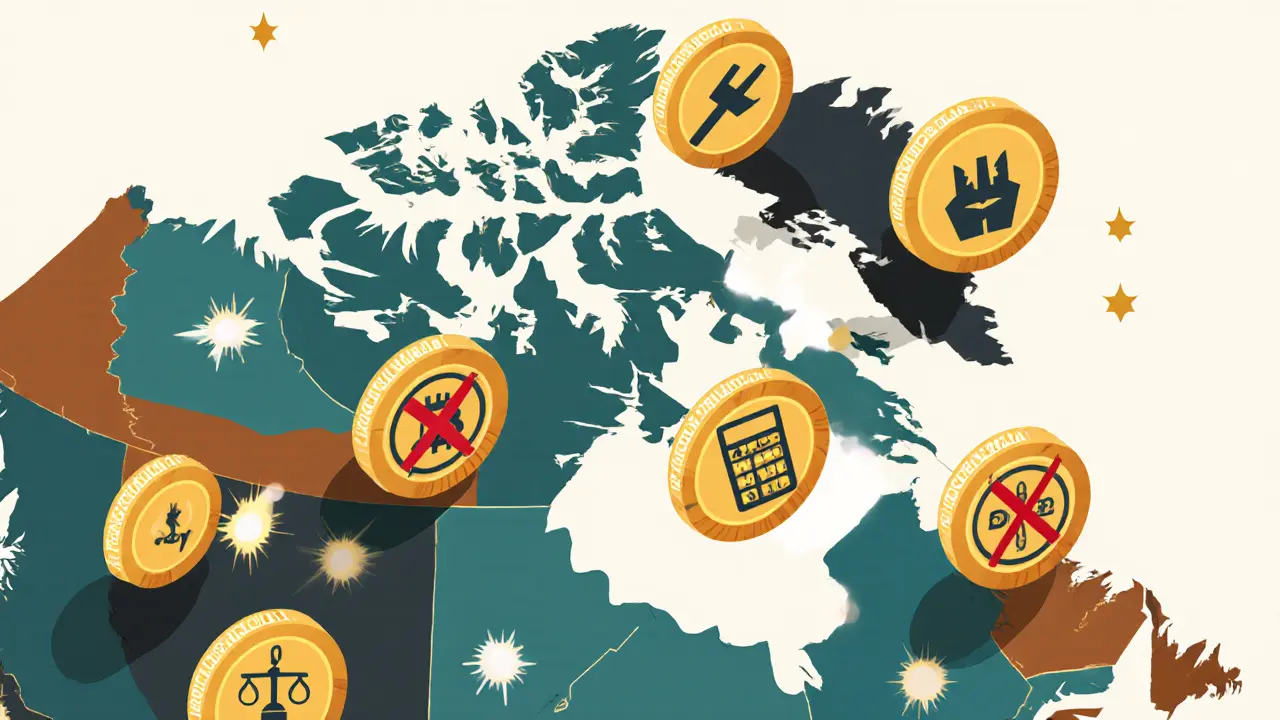
Canada lets you buy, sell, and hold cryptocurrency - but where you live changes everything. In 2025, there’s no single national rulebook for crypto. Instead, you’re dealing with a patchwork of provincial regulations that affect everything from mining to trading platforms to how much tax you pay. If you’re running a crypto business or just holding digital assets, ignoring these differences can cost you - legally, financially, or both.
How Crypto Is Treated Under Canadian Law
Crypto isn’t money in Canada. It’s treated as a commodity, which means every time you trade it, sell it, or use it to buy something, you trigger a taxable event. The Canada Revenue Agency (CRA) doesn’t care if you traded Bitcoin for Ethereum or used Dogecoin to pay for groceries - either way, you owe capital gains tax on the profit. Half of your gain is added to your income and taxed at your marginal rate, which varies by province.
What’s tax-free? Buying crypto with Canadian dollars. Holding it in your wallet. Sending it to another personal wallet. Receiving it as a gift. But the moment you convert it to cash or another asset, the clock starts ticking. No exceptions.
Businesses that handle crypto - exchanges, wallets, mining farms - must register with FINTRAC as money service businesses. That’s federal. But if you’re offering crypto investment products, you’re also playing in the sandbox of provincial securities regulators. And that’s where things get messy.
Provincial Trading Platform Rules: Not All Platforms Are Allowed Everywhere
Just because Kraken or Crypto.com is available in Ontario doesn’t mean it’s legal in Saskatchewan. Each province’s securities commission has to approve crypto trading platforms individually. The Canadian Securities Administrators (CSA) coordinates this, but each regulator makes its own call.
As of 2025, only a handful of platforms have full provincial coverage:
- Kraken (Payward Canada Inc.) - Approved in Alberta, BC, Manitoba, and Saskatchewan
- Crypto.com (Foris DAX CAN ULC) - Authorized across multiple provinces as of May 2025
- Newton Crypto Ltd. - Amended approval in March 2025, operates in several provinces
- NDAX Canada Inc. - Approved April 2025
- Fidelity Digital Assets Services - Operates as an exempt marketplace with federal clearance
Some platforms, like Netcoins, have approval in some provinces but not others. If you’re a Canadian user, check your provincial regulator’s website before signing up. Using an unapproved platform puts your funds at risk - and you won’t have investor protection if things go wrong.
Mining Regulations: Energy Is the New Battleground
Canada used to be a crypto mining hotspot. Cheap hydro power, cold winters, and stable politics made it ideal. But that’s changing fast. Provinces are now treating mining like a heavy industry - not a tech startup.
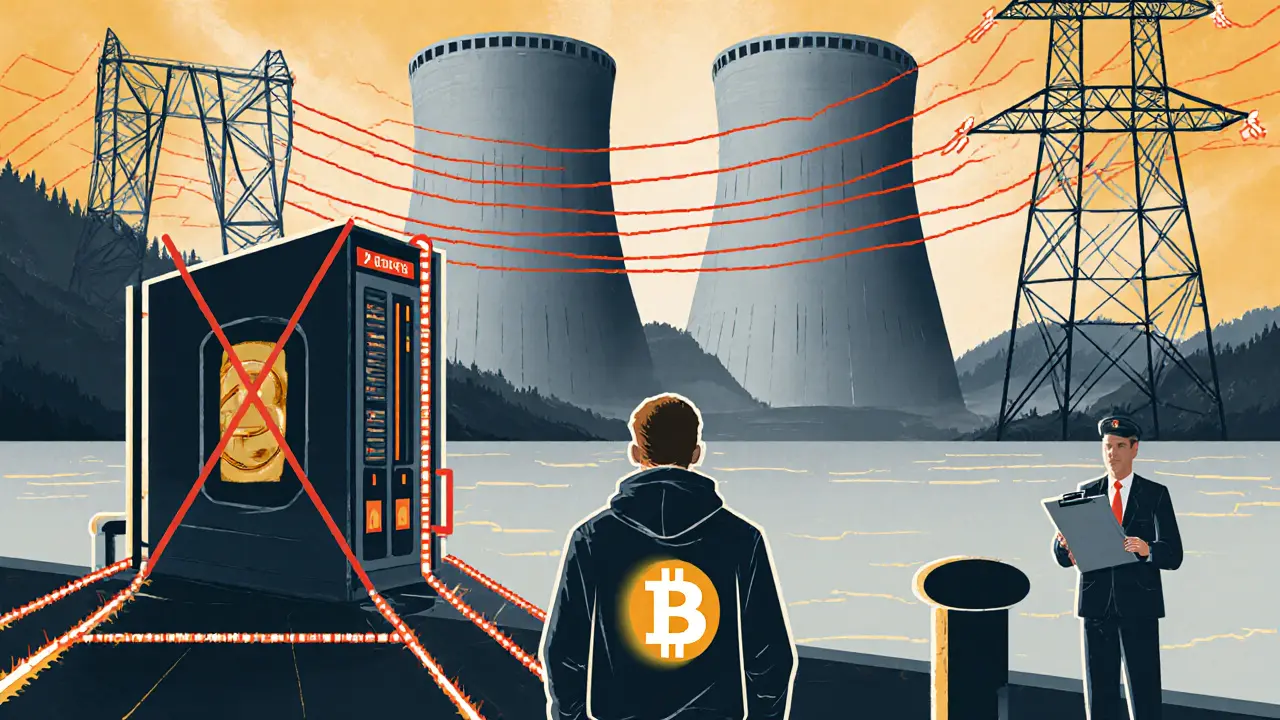
British Columbia took the strongest step. In May 2024, amendments to the BC Utilities Commission Act gave the government power to block, limit, or regulate electricity supply to crypto mining projects. Before that, BC Hydro was ordered to pause new mining connections for 18 months in late 2022. Now, new mining operations need explicit approval - and they’re not getting it easily.
Quebec isn’t far behind. In January 2023, the Régie de l’énergie froze new capacity allocations for crypto mining and set a special rate of 16.603¢/kWh for any new project using over 50 kilowatts. That’s nearly double the average residential rate. The goal? Stop large-scale mining from eating up grid capacity meant for homes and hospitals.
Other provinces like Ontario and Alberta haven’t imposed direct bans - yet. But they’re watching. Energy use is now a red flag for regulators. If you’re planning a mining operation, assume you’ll need permits, environmental reviews, and a solid energy contract. Don’t just buy hardware and plug it in.
Investment Funds and Crypto ETFs: The CSA’s New Rules
Canada was the first country to approve a Bitcoin ETF - and in 2025, it’s tightening the rules around crypto investment funds. The CSA updated National Instrument 81-102 in April 2025 to spell out exactly what crypto assets public funds can hold.
Now, funds must:
- Only invest in crypto assets that are traded on approved platforms
- Use custodians that meet strict security standards (no hot wallets allowed)
- Limit exposure to any single asset to avoid concentration risk
- Disclose all fees, risks, and custody arrangements clearly to investors
This doesn’t affect retail investors buying ETFs directly - but it makes the products you’re investing in safer. It also means fewer shady tokens will slip into funds. The goal? Protect regular people from pump-and-dump schemes disguised as investment products.
Taxation: It’s the Same Across Canada - But Your Rate Isn’t
Capital gains tax on crypto is a federal rule. But your actual tax rate? That depends on your province. Here’s what you pay on $10,000 in crypto gains in 2025:
| Province | Combined Federal + Provincial Tax Rate (for $5,000 added income) | Estimated Tax Owed |
|---|---|---|
| Alberta | 26% | $1,300 |
| British Columbia | 30% | $1,500 |
| Ontario | 31% | $1,550 |
| Quebec | 34% | $1,700 |
| Newfoundland and Labrador | 32% | $1,600 |
That’s a $400 difference between Alberta and Quebec on the same gain. If you’re moving provinces, your crypto tax bill can jump overnight. Keep records of every transaction - dates, amounts, values in CAD at time of trade. The CRA audits crypto more than ever.
Why This Fragmented System Is a Problem
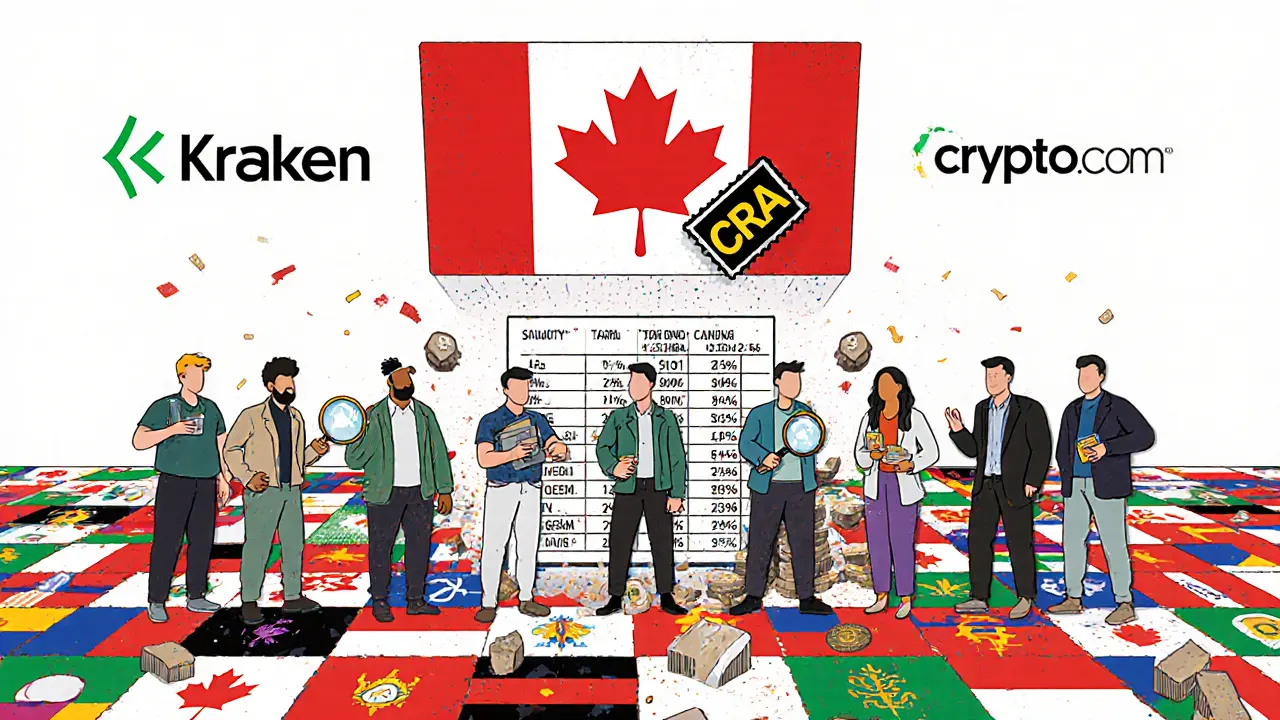
Canada’s crypto rules aren’t broken - they’re just messy. The federal government handles AML and tax. The CSA handles securities. Each province handles platform approvals and energy use. The Bank of Canada watches for systemic risk. No one coordinates.
Startups waste months navigating overlapping requirements. A company in Toronto might get approval from the OSC, but still need separate permits from Alberta and BC to serve customers there. Mining firms can’t scale because they’re stuck in provincial energy limbo.
Experts say this fragmentation is slowing innovation. Canada was the birthplace of Ethereum and the first to approve a Bitcoin ETF. But without a unified approach, it risks falling behind the EU, Singapore, and even some U.S. states that are creating clearer, faster frameworks.
What You Should Do Right Now
If you’re a crypto user:
- Use only platforms approved in your province. Check your provincial securities regulator’s website.
- Track every trade. Use software that auto-calculates gains and losses in CAD.
- Don’t assume your crypto exchange handles your taxes. They don’t.
If you’re a business:
- Register with FINTRAC - mandatory.
- Apply for provincial authorization where you plan to operate. Don’t assume national coverage.
- For mining: Talk to your provincial energy regulator before buying equipment.
- For investment funds: Follow the new CSA rules on custody and asset selection.
Canada isn’t shutting down crypto. It’s trying to tame it. The rules are getting tighter, not looser. But if you know where you stand - and where your province stands - you can still thrive.
Is cryptocurrency legal in Canada?
Yes, cryptocurrency is legal in Canada as of 2025. You can buy, sell, hold, and trade crypto without breaking any federal laws. But businesses must register with FINTRAC, and investment products must follow provincial securities rules. It’s legal - but tightly regulated.
Do I pay tax on crypto in Canada?
Yes. Every time you sell crypto, trade it for another coin, or use it to buy goods or services, you trigger a capital gain or loss. Half of the gain is added to your income and taxed at your marginal rate. Buying crypto with Canadian dollars or holding it in your wallet is tax-free.
Can I mine cryptocurrency in Canada?
You can, but it’s getting harder. British Columbia and Quebec have strict rules on energy use. New mining projects need approval from provincial energy regulators. In BC, electricity supply to miners can be blocked. In Quebec, new projects pay nearly double the standard rate. Other provinces haven’t banned mining yet, but they’re watching closely.
Which crypto exchanges are legal in Canada?
Only platforms approved by provincial securities regulators are legal. As of 2025, Kraken, Crypto.com, Newton, NDAX, and Fidelity Digital Assets are authorized in multiple provinces. But some platforms are only approved in one or two provinces. Always check your provincial regulator’s website before signing up.
What happens if I use an unapproved crypto platform?
You’re not breaking the law as a user, but you’re at risk. Unapproved platforms don’t have to follow investor protection rules. If the platform gets hacked, shuts down, or disappears, you have no legal recourse. Your funds may be lost forever. Plus, you could face issues with the CRA if your transactions can’t be verified.
Are crypto ETFs allowed in Canada?
Yes. Canada was the first country to approve a Bitcoin ETF. In 2025, new rules require these funds to use approved custodians, limit exposure to single assets, and only invest in crypto traded on regulated platforms. This makes them safer for retail investors, but also means fewer crypto assets are available in ETFs.
Which province has the strictest crypto rules?
British Columbia and Quebec are the strictest - but for different reasons. BC controls electricity access to miners, effectively blocking new projects. Quebec imposes a high, fixed energy rate on mining operations. Both provinces treat crypto mining like a utility risk, not a tech innovation. For trading platforms, Quebec’s securities regulator is also among the most cautious in reviewing new applications.
Is Canada becoming less crypto-friendly?
Not less friendly - just more careful. Canada still allows Bitcoin ETFs, crypto trading, and mining. But it’s shifting from "let’s see what happens" to "how do we protect people and the grid?" The goal isn’t to stop crypto. It’s to make sure it doesn’t become a tool for crime, a drain on energy, or a gamble for unsuspecting investors.
Rachel Thomas
November 26, 2025 AT 16:19Canada’s crypto rules are a joke. One province says you can mine, another says your electricity bill is now a crime. Meanwhile, I’m over here using Kraken and wondering why my tax software doesn’t just auto-delete my gains. This isn’t regulation-it’s bureaucratic chaos with a maple leaf sticker on it.
Sierra Myers
November 27, 2025 AT 19:30Honestly, I don’t get why people are surprised. If you’re trading crypto, you’re already playing in a gray zone. The fact that Canada even has provincial rules means they’re trying. At least they’re not like the US where half the states are still arguing if Bitcoin is a currency or a collectible.
SHIVA SHANKAR PAMUNDALAR
November 28, 2025 AT 22:26Provincial fragmentation isn’t a flaw-it’s a feature. Canada’s system forces you to think. Not everyone needs a national crypto free-for-all. Quebec doesn’t want your rigs draining the grid. BC doesn’t want to become Nevada 2.0. And honestly? That’s wisdom. Innovation doesn’t require chaos. It requires boundaries. We’re not building a wild west. We’re building a society. And societies need guardrails-even for digital gold.
Shelley Fischer
November 29, 2025 AT 06:08The federal-provincial divide in Canadian crypto regulation is not merely inconvenient-it is structurally unsound. The absence of centralized oversight creates regulatory arbitrage opportunities for bad actors and imposes undue compliance burdens on legitimate businesses. The Canadian Securities Administrators must either unify standards under a single national framework or formally delegate exclusive jurisdiction to provincial authorities-otherwise, Canada risks becoming a regulatory outlier in the global crypto landscape.
Evelyn Gu
November 29, 2025 AT 07:02I just moved from Ontario to Alberta last month, and my crypto taxes dropped by like $250 overnight… I didn’t even realize it until I filed. I mean, I’m not rich or anything, but that’s a whole weekend of coffee and snacks gone. And I didn’t even do anything-just packed my bags. It’s wild how much your zip code matters when you’re holding Bitcoin. I’m now obsessively checking my provincial regulator’s site like it’s a weather app. I used to think crypto was the wild frontier… turns out, it’s just… bureaucracy with a blockchain.
Michael Fitzgibbon
November 30, 2025 AT 06:52There’s something quietly brilliant about how Canada’s handling this. No one’s banning crypto. No one’s pretending it’s magic money. They’re just… being careful. Mining? Yeah, it’s cool-but not if it’s robbing power from hospitals. Trading? Fine-but only if the platform has real safeguards. Tax? Absolutely-but at least you know what you’re paying. It’s not flashy. It’s not Silicon Valley. But it’s the kind of thinking that keeps people safe without killing innovation. Maybe the future isn’t about going fast. Maybe it’s about going steady.