DAR Open Network (D) Airdrop Guide: How to Earn D Tokens via Web3 Quests
 Nov, 12 2026
Have you ever wondered if playing video games could actually pay your rent? It sounds like a pipe dream, but the DAR Open Network is trying to make it real with its new Web3 Quest System and monthly D token airdrops. If you're sitting on the sidelines wondering how to get in on the action, you're not alone. The crypto gaming space is noisy, full of hype, and often confusing. But DAR’s approach is different because it focuses on accessibility rather than just speculation.
This guide breaks down exactly how the (D) DAR airdrop works, what you need to do to qualify, and why this might be worth your time even if you aren't a hardcore gamer. We'll look at the mechanics, the rewards, and the realistic expectations for someone starting out today.
What Is the DAR Open Network?
Before we talk about free tokens, you need to understand the engine under the hood. Dalarnia (often referred to as DAR Open Network) is an AI-powered, chain-agnostic infrastructure provider. Think of it as the operating system for a specific cluster of web3 games. Unlike many blockchains that try to be everything to everyone, DAR focuses specifically on gaming utility. It connects developers and players through shared technology and assets, all powered by the $D token.
The network launched its comprehensive Web3 Quest System on September 1, 2025. This wasn't just a marketing stunt; it was a structural shift in how gamers earn. The goal is simple: unite games and gamers across the ecosystem. By using a "Play-2-Airdrop" mechanism, they reward consistent play instead of just lucky drops. This means if you log in and complete tasks, you are building a track record that translates directly into $D tokens.
How the Play-2-Airdrop Mechanism Works
Most airdrops feel random. You hold a coin, wait, and hope. DAR flips that script. Their system operates on a structured reward framework where effort equals reward. Here is how you actually earn:
- Quest Points: These are your primary currency within the quest system. You earn them by completing daily, weekly, and seasonal challenges.
- Moon Coins: An in-game currency used for various transactions within specific titles on the network.
- Exclusive Rewards: Sometimes you unlock NFTs or special access passes that don't show up on the leaderboard but add long-term value.
The first season ran for four weeks, ending shortly after launch, and distributed a pool of 100,000 D tokens. That might sound small compared to some massive ICOs, but for a targeted group of active gamers, it was significant. The distribution wasn't equal; it was performance-based. If you played more quests and performed better, you got a larger slice of the pie. This incentivizes quality engagement over bot-like grinding.
Step-by-Step: How to Qualify for the Airdrop
You don't need to buy a $2,000 rig to start. The barrier to entry is surprisingly low. Here is the practical workflow to get your first $D tokens:
- Connect Your Wallet: Most games on the DAR network support standard wallets like MetaMask or specialized Web3 wallets. Ensure your wallet is linked to the correct network (usually BNB Chain or Ethereum, depending on the specific game integration).
- Select a Game: Browse the DAR ecosystem. Popular titles include Dalarnia Legends and other RPGs or strategy games integrated into the network. Pick one that actually looks fun. If you hate the game, you won't complete the quests consistently.
- Complete Daily Quests: Log in every day. Even if you only have five minutes, check off the daily tasks. Consistency is key here. The algorithm favors regular users.
- Participate in Seasonal Events: Keep an eye on the calendar. When a new season starts, the reward pools often increase. Participating in limited-time events can double your Quest Point earnings.
- Claim Your Rewards: At the end of the cycle, head to the claim portal. You will see your total Quest Points converted into $D tokens. You can then swap these for stablecoins or hold them for potential appreciation.
Understanding the $D Token Utility
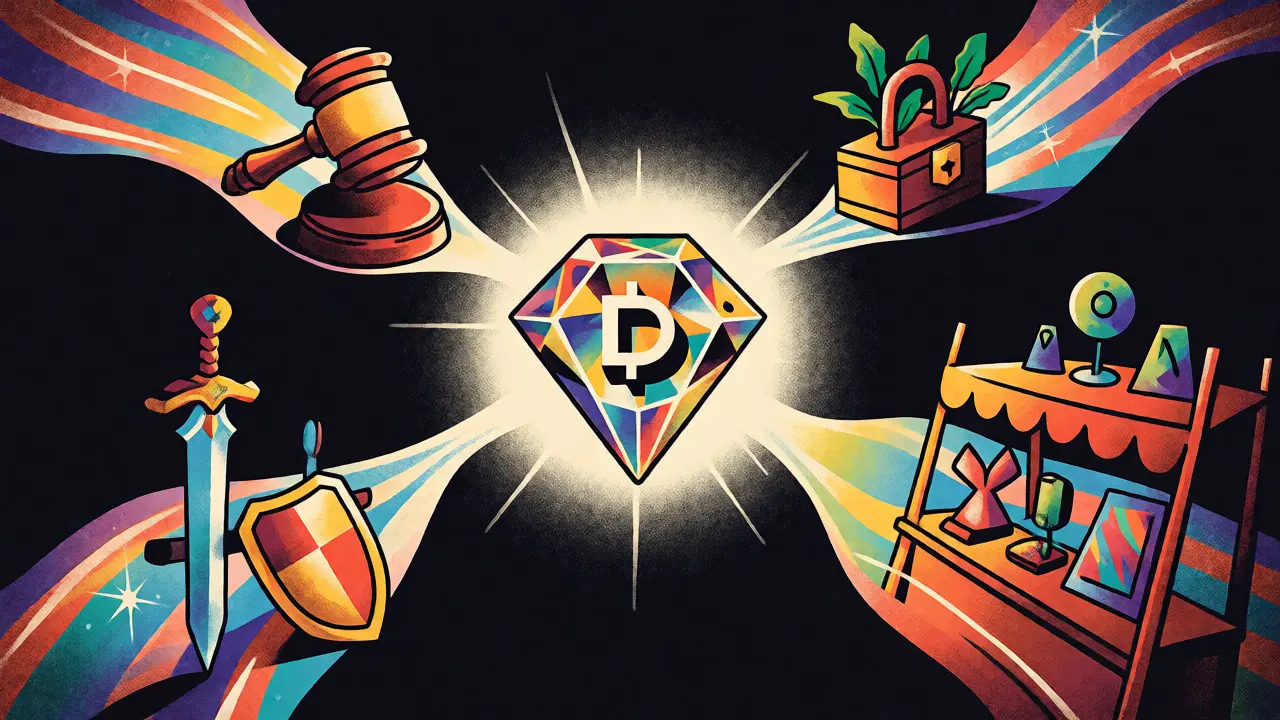
Why should you care about holding $D? In many meme coins, the token has no purpose other than trading. In the DAR ecosystem, the token does actual work. Let's look at the attributes of the $D token to understand its value proposition.
| Utility Type | Description | User Benefit |
|---|---|---|
| Governance | Voting rights on network upgrades and fund allocations. | Influence the future of the games you play. |
| Staking | Locking tokens to earn passive yield via Bitget Earn or native protocols. | Generate interest on idle holdings. |
| In-Game Spending | Purchasing skins, boosts, or entry fees for tournaments. | Enhance gameplay experience without fiat currency. |
| Marketplace Transactions | Buying and selling NFT assets across connected games. | Liquidity for digital collectibles. |
As of late 2025, the token traded around $0.03 with a market cap hovering near $20 million. While it experienced volatility, the circulating supply of 640 million tokens suggests there is room for growth if user adoption increases. The key takeaway is that demand for $D comes from usage, not just speculation. Every time a player buys a sword or enters a tournament, they burn or lock $D, reducing sell pressure.
Competitive Gaming: The Legends Circuit
If you consider yourself a skilled gamer, the standard quests might feel too easy. Enter the Legends Circuit, a layered tournament structure introduced alongside the quest system. This isn't just for casuals; it's a ladder to glory.
The structure works like this:
- Daily Tournaments: Low stakes, high frequency. Great for warming up and earning small amounts of Moon Coins.
- Weekly Qualifiers: Top performers from daily tours move up. The prize pools get bigger.
- Grand Masters Final: The annual climax where 64 elite players compete for the largest share of the seasonal pot.
This tiered approach solves a major problem in Web3 gaming: the gap between whales and beginners. Casual players can still earn steady income through daily quests, while competitive players chase the big wins. It creates a healthy economy where everyone has a lane to run in.
Realistic Expectations and Pitfalls
Let's be honest. You probably won't retire on your first month of DAR airdrops. The initial pool was 100,000 tokens. If 10,000 people participated, that's an average of 10 tokens each-worth about $0.30 at current prices. But averages lie. The top 1% likely took home hundreds of dollars.
Here are three things to watch out for:
- Time Cost vs. Reward: Calculate your hourly rate. If you spend 5 hours grinding for $2 worth of tokens, you're losing money compared to minimum wage jobs. Optimize your playtime.
- Gas Fees: Depending on the underlying blockchain, transaction fees can eat into small gains. Use Layer 2 solutions or networks with low fees when possible.
- Token Volatility: $D is a micro-cap asset. It can swing 10% in a day. Don't panic sell during dips if you believe in the long-term utility.
The strategy for most users should be accumulation. Hold the tokens, stake them for yield, and wait for ecosystem expansion. As more games join the DAR network, the utility of $D increases, potentially driving up price.
Future Outlook for DAR Open Network
The success of the inaugural season will dictate the future. DAR has hinted at expanding the reward pools based on community feedback and ecosystem growth. They are also integrating more AI-powered features to personalize the gaming experience. Imagine an NPC that adapts to your playstyle or a matchmaking system that ensures fair fights. That's the promise of the DAR infrastructure.
For now, the door is open. You don't need to invest thousands to participate. You just need a wallet, a bit of curiosity, and the willingness to play. Whether you view this as a side hustle or a hobby, the DAR airdrop offers a low-risk entry point into the world of Web3 gaming.
Do I need to buy D tokens to participate in the airdrop?
No, you do not need to purchase D tokens to start. The Quest System is designed to reward activity. You earn tokens by playing games and completing quests. However, having a small amount of gas fee currency (like BNB or ETH) is necessary to connect your wallet and interact with smart contracts.
How often are the D token airdrops distributed?
The airdrops follow a seasonal schedule. The initial model used four-week seasons, with distributions occurring at the end of each cycle. This monthly cadence allows for predictable reward opportunities and gives players time to strategize their gameplay for maximum efficiency.
Can I play multiple games to earn more Quest Points?
Yes, the system is cross-game compatible. Quest Points earned in one title contribute to your overall standing in the Play-2-Airdrop competition. Exploring different games within the Dalarnia Open Network ecosystem is encouraged and can accelerate your progress toward higher-tier rewards.
What happens if I miss a day of logging in?
Missing a day means you forfeit the daily quest points for that specific period. However, you can usually catch up by completing weekly challenges or participating in weekend events. Consistency helps, but missing one day won't disqualify you from the entire season's rewards.
Is the DAR Open Network secure?
DAR utilizes established blockchain security standards. As a chain-agnostic provider, it leverages the security of the underlying networks it integrates with (such as BNB Chain). Always verify contract addresses and use reputable wallets to ensure your assets remain safe during interactions.