Ethereum Sharding Implementation: Why the Plan Changed to Danksharding
 Jul, 12 2026
You’ve probably heard that Ethereum was going to solve its congestion problems by splitting itself into pieces. That idea is called Ethereum sharding, and for years, it was the holy grail of the network’s roadmap. But if you look at the code today, you won’t find the classic sharding implementation everyone predicted in 2021. The plan changed. In fact, it changed dramatically.
As of mid-2026, the original vision of 64 separate chains running in parallel has been shelved. Instead, the community pivoted toward a strategy centered on Layer 2 rollups and a new data availability mechanism known as Danksharding. This shift wasn’t a failure; it was a strategic retreat to prioritize security and simplicity. Understanding this change is crucial for anyone building on or investing in Ethereum, because the way transactions are processed-and how cheap they become-depends entirely on this new architecture.
The Original Vision: How Classic Sharding Was Supposed to Work
To understand where we are, we have to look at where we were headed. The original Ethereum sharding proposal aimed to divide the network into 64 independent shard chains, each processing its own subset of transactions and state. Imagine a single highway with one lane (the current mainnet) versus a massive interstate with 64 lanes. In theory, every lane could handle traffic simultaneously, multiplying the network’s throughput from roughly 15-30 transactions per second (TPS) to potentially over 100,000 TPS.
Here is how the technical architecture was designed:
- Independent State: Each of the 64 shards would maintain its own account balances, smart contract code, and transaction history. Nodes wouldn’t need to store the entire history of the whole network, just their assigned shard.
- The Beacon Chain Coordinator: A central chain, already live as part of Ethereum’s Proof-of-Stake consensus, would manage validator assignments. It would use pseudorandom selection to assign validators to specific shards every epoch (approximately every 6.4 minutes).
- Security via Randomness: Because validators were shuffled constantly, an attacker couldn’t easily target a specific shard. To take over one shard, you’d need to control two-thirds of the validators assigned to it. With random reshuffling, the probability of an attacker getting enough power in multiple shards simultaneously was calculated to be astronomically low-one in a trillion.
This design promised horizontal scaling. You could add more shards as demand grew, much like adding servers to a cloud cluster. But there was a catch: complexity. Managing cross-shard communication-getting a user on Shard A to send money to a user on Shard B-introduced significant technical hurdles and potential security vulnerabilities.
Why the Community Pivoted Away from Classic Sharding
If the math looked good, why did the developers stop? The answer lies in the rise of Layer 2 solutions. Between 2022 and 2025, technologies like Optimistic Rollups and ZK-Rollups matured rapidly. These Layer 2 networks process transactions off the main Ethereum chain and then post compressed proofs back to the mainnet. They offered immediate scalability without requiring the complex overhaul of the base layer.
Core developers realized that building 64 full execution environments (shards) was redundant when Layer 2s were already doing the heavy lifting. Moreover, classic sharding required nodes to verify data availability across all shards, which created bandwidth bottlenecks. If a node had to download data from 64 different shards to ensure nothing was missing, the network would slow down again, defeating the purpose.
The pivot allowed the team to focus on "The Merge"-transitioning Ethereum from Proof-of-Work to Proof-of-Stake-which happened successfully in 2022. Once that was secured, the priority shifted to making Layer 2s cheaper and more efficient, rather than rebuilding the base layer into 64 smaller chains.
Danksharding: The New Scalability Engine
Enter Danksharding, a hybrid approach named after researchers Protocols and Dankrad Feist, which focuses on data availability rather than execution. Unlike classic sharding, Danksharding does not create new execution environments. It doesn’t let you deploy smart contracts directly on a shard. Instead, it creates space on the Ethereum blockchain for Layer 2 networks to post their transaction data.
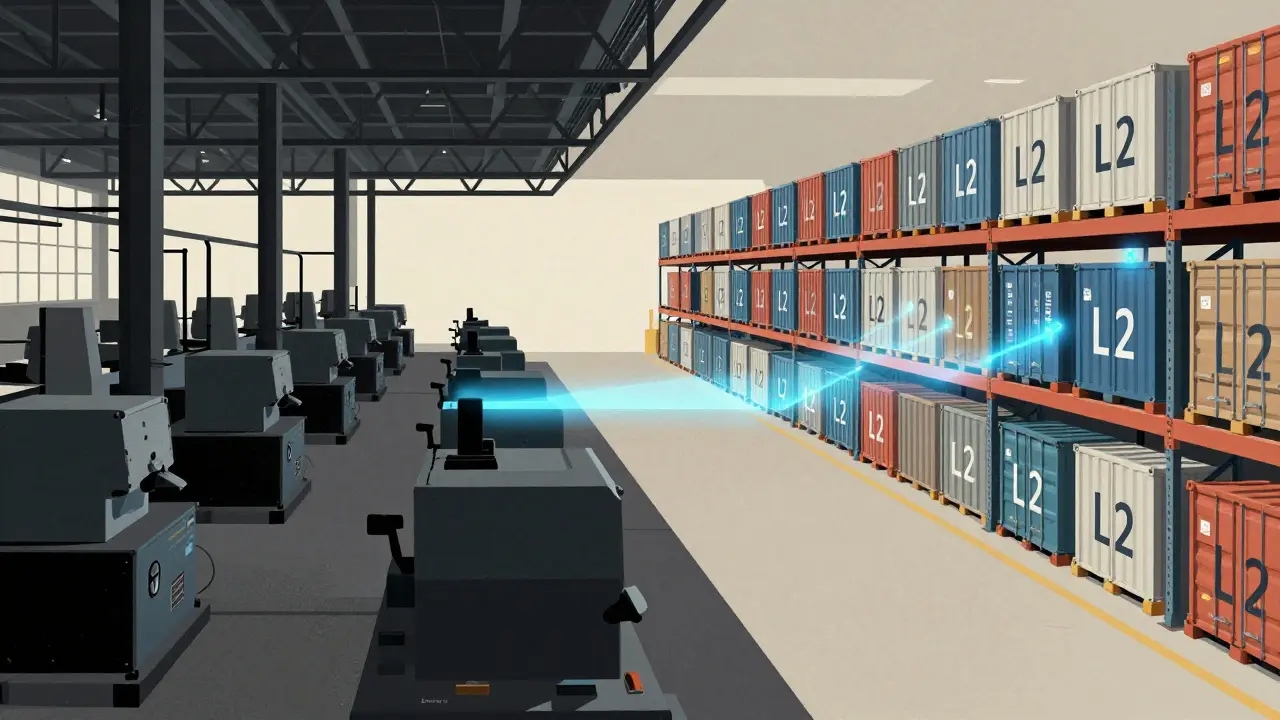
Think of it this way: Classic sharding was about building 64 new factories to make products. Danksharding is about expanding the warehouse so those factories can ship their goods faster and cheaper. By introducing "Proto-Danksharding" (via EIP-4844) in 2024, Ethereum introduced "blobs"-temporary data structures that hold Layer 2 transaction data without bloating the permanent blockchain state.
In the full Danksharding implementation planned for late 2026 and beyond, these blobs will be distributed across 64 data columns. This allows the network to support hundreds of Layer 2 networks simultaneously. Each Layer 2 can post its data to a different column, and thanks to a technique called erasure coding, users only need to sample a small fraction of the data to verify that the rest is available. This solves the bandwidth bottleneck that killed the classic sharding idea.
| Feature | Classic Sharding | Danksharding |
|---|---|---|
| Primary Goal | Execute transactions in parallel | Provide cheap data availability for L2s |
| Execution Environment | Yes (each shard runs smart contracts) | No (data only, no execution) |
| Node Requirements | High bandwidth (verify all shards) | Low bandwidth (sample data columns) |
| Cross-Shard Complexity | High (complex messaging protocols) | None (L2s handle logic independently) |
| Impact on Gas Fees | Moderate reduction | Drastic reduction (up to 100x cheaper for L2s) |
How Danksharding Changes the User Experience
For the average user, the difference between classic sharding and Danksharding is subtle but profound. You won’t see a wallet interface asking you to choose between "Shard 1" and "Shard 2." Instead, you’ll continue using your favorite Layer 2 network-whether it’s Arbitrum, Optimism, Base, or zkSync-but the fees will drop significantly.
Currently, Layer 2s pay Ethereum for the right to post transaction data. This cost is passed down to users as gas fees. With Danksharding, the cost of posting that data plummets because the data is stored temporarily in blobs rather than permanently in the blockchain’s state trie. Early estimates suggest that transaction costs on Layer 2s could decrease by a factor of 10 to 100 once full Danksharding is live.
This means microtransactions become viable. Imagine paying $0.0001 for a game move or sending a tiny tip to a content creator. Under the old model, even with Layer 2s, the overhead was too high for such small amounts. Danksharding removes that friction by turning Ethereum into a high-capacity data bus for thousands of applications.
Security Implications and Data Availability Sampling
A common concern with any scaling solution is security. Does splitting the network make it easier to attack? In classic sharding, the fear was that an attacker could target a small shard with fewer validators. Danksharding mitigates this through Data Availability Sampling (DAS), a cryptographic method that allows light nodes to verify data integrity without downloading everything.
Here’s how it works: When data is posted to the network, it is encoded using erasure codes, which split the data into many fragments. To reconstruct the original data, you only need a portion of these fragments. Light nodes randomly sample a few fragments. If the data is missing or corrupted, the samples will fail to reconstruct, alerting the network. This ensures that no single entity can hide or delete transaction data without being detected.
This approach maintains Ethereum’s decentralization. You don’t need a supercomputer to run a node anymore. A laptop can verify the network’s health by sampling data, ensuring that power remains distributed among thousands of participants rather than concentrated in large data centers.

Comparative Context: How Other Chains Handle Sharding
Ethereum isn’t the only project experimenting with sharding. NEAR Protocol implemented a sharding system called Nightshade, which splits both the state and transaction processing. Unlike Ethereum’s Danksharding, NEAR’s shards are active execution environments. Every block contains information about all shards, and every validator tracks all shards, but the work is divided.
Another example is Polkadot, which uses a relay chain to coordinate multiple parachains. While similar in concept to Ethereum’s beacon chain, Polkadot’s parachains are dedicated blockchains with their own tokenomics and governance. Ethereum’s approach is distinct because it keeps a single economic security layer (ETH) while allowing diverse Layer 2 ecosystems to flourish on top. This unified security model is a key reason why Ethereum retained its dominance despite the complexity of its roadmap.
What This Means for Developers in 2026
If you’re a developer, the shift to Danksharding simplifies your life. You no longer need to worry about writing cross-shard messaging protocols or managing state across 64 different chains. Instead, you build your application on a Layer 2 of your choice, leveraging standard Ethereum Virtual Machine (EVM) compatibility.
The primary challenge now is interoperability between Layer 2s. Since each L2 operates somewhat independently, moving assets between them requires bridges. The industry is focusing on standardized bridge protocols and intent-based architectures to make these transfers seamless. As Danksharding scales, expect to see more modular designs where computation happens on specialized Layer 2s or Layer 3s, while Ethereum handles finality and data availability.
For enterprise adoption, this modularity is a win. Companies can choose a Layer 2 optimized for their specific needs-high throughput for gaming, privacy for healthcare, or low latency for finance-without sacrificing the security guarantees of the Ethereum mainnet.
Timeline and Future Roadmap
Where do we stand in July 2026? Proto-Danksharding is live, and users are already seeing reduced fees on major Layer 2s. Full Danksharding is in the testing phase, with targeted deployment expected in the next major upgrade cycle. Following that, the Verkle Tree upgrade is slated to further reduce node storage requirements, paving the way for even lighter clients.
The original dream of 64 execution shards may never happen, but the outcome is arguably better. By focusing on data availability, Ethereum has positioned itself as the settlement layer for the entire internet of value. The complexity is hidden beneath the hood, leaving users with a faster, cheaper, and more scalable experience.
Is classic Ethereum sharding dead?
Yes, the original plan for 64 execution shards has been abandoned. The community shifted focus to Layer 2 scaling and Danksharding, which provides data availability without the complexity of managing multiple execution environments.
What is Danksharding?
Danksharding is a scalability upgrade that increases the amount of data Ethereum can handle per block. It uses "blobs" to store Layer 2 transaction data temporarily, making it cheaper for Layer 2s to operate and reducing gas fees for users.
How does Danksharding affect gas fees?
Danksharding drastically reduces the cost of posting data to Ethereum. Since Layer 2s rely on this data posting, their fees drop significantly-potentially by 10 to 100 times-making microtransactions economically viable.
Do I need to update my node to support sharding?
If you run a full node, you will need to update your client software to support the new blob-carrying blocks and Data Availability Sampling. However, the hardware requirements remain manageable for most home users due to the sampling efficiency.
When will full Danksharding be live?
Proto-Danksharding is already live as of 2024. Full Danksharding, with all 64 data columns active, is expected to be deployed in subsequent upgrades throughout 2026 and 2027, depending on testing progress.
Shay Thomson
July 13, 2026 AT 18:46Oh my god, this is absolutely fascinating! I never realized how much the roadmap had shifted under our noses. It’s like watching a massive ship change course in the middle of a storm and somehow ending up in a safer harbor. The idea that we abandoned the 64-shard dream for something more pragmatic is just... wow. It makes me feel so relieved that they prioritized security over pure hype. We really dodged a bullet with all that cross-shard complexity. 🙌
DJ Maleko
July 14, 2026 AT 09:35Look, let's be real here. This whole pivot was just panic management disguised as innovation. You think the devs actually cared about 'simplicity'? No. They realized the original sharding model was a developer nightmare and a node operator's death sentence. 💀 Classic sharding would have required insane bandwidth. Danksharding is just a band-aid on a gaping wound, but hey, at least gas fees are lower now. Don't get too excited, it's still centralized data availability.
Erika Pozzetto
July 15, 2026 AT 15:42I must say that the transition from the initial proposal to the current implementation of Danksharding represents a significant evolution in blockchain architecture which deserves careful consideration by all stakeholders involved in the ecosystem development process moving forward into the future years ahead where scalability remains paramount importance for adoption rates globally speaking across different sectors including finance gaming and social media platforms alike without exception whatsoever regarding any particular use case scenario imaginable today or tomorrow respectively depending upon market conditions prevailing at such times accordingly based upon empirical evidence gathered thus far through extensive testing phases conducted rigorously over several months duration previously mentioned hereinabove earlier paragraphs contained within this very document itself obviously intended solely for informational purposes only not constituting financial advice per se necessarily implying endorsement thereof explicitly nor implicitly either way whatsoever under any circumstances conceivable hypothetically speaking theoretically possible outcomes notwithstanding actual results may vary significantly due to numerous external factors beyond control of developers users investors regulators governments institutions corporations individuals etcetera ad infinitum essentially meaning take everything with grain salt always do own research before making decisions involving cryptocurrencies generally speaking specifically ethereum network upgrades particularly those related to scaling solutions like rollups bridges chains shards blobs columns erasure coding sampling verification mechanisms consensus algorithms proof stake work hybrid models whatever terminology currently popular among enthusiasts experts professionals amateurs beginners newcomers veterans old timers newbies pros cons advantages disadvantages benefits drawbacks risks rewards opportunities challenges threats weaknesses strengths opportunities threats swot analysis pepest macroeconomic indicators technical fundamental sentiment analysis chart patterns candlesticks volume open interest funding rates basis spreads arbitrage strategies hedging delta gamma theta vega rho omega lambda sigma epsilon zeta eta iota kappa mu nu xi pi rho tau upsilon phi chi psi omega alpha beta gamma delta epsilon zeta eta theta iota kappa lambda mu nu xi omicron pi rho sigma tau upsilon phi chi psi omega repeat cycle loop iteration recursion function method class object interface module package library framework tool kit software application platform system network protocol standard specification guideline best practice recommendation suggestion tip trick hack cheat code exploit vulnerability bug fix patch update upgrade release version branch fork merge commit push pull request issue ticket backlog sprint milestone goal objective target metric kpi roi irr npv pv fv pmf fit product market customer user persona journey map story board wireframe mockup prototype design ui ux frontend backend database server cloud api gateway load balancer firewall dns ssl tls http https grpc websocket rpc rest graphql json xml yaml csv sql nosql graph neural network machine learning ai ml dl rl nlp cv speech vision audio video image text data big data analytics insights intelligence wisdom knowledge information data bits bytes qubits photons electrons protons neutrons atoms molecules cells organisms ecosystems biosphere lithosphere hydrosphere atmosphere magnetosphere heliosphere galaxy universe multiverse omniverse everything nothingness void emptiness silence peace love joy happiness contentment satisfaction fulfillment completion realization enlightenment nirvana moksha satori zen dao taoism buddhism hinduism judaism christianity islam bahaism sikhism jainism zoroastrianism taoism confucianism shintoism animism atheism agnosticism secularism humanism rationalism empiricism positivism pragmatism existentialism nihilism absurdism surrealism dadaism cubism futurism expressionism impressionism realism naturalism romanticism classicism baroque rococo gothic renaissance medieval ancient modern contemporary postmodern metaposthypertransultraomniuniversalcosmicdivineeternalinfiniteabsoluteultimatefinalendbeginningstartorigincreationgenesisbirthlifeexistencebeingconsciousnessawarenessmindthoughtideaconcepttheoryhypothesisassumptionbeliefopinionviewpointperspectiveanglestandpointpositionstanceattitudemoodtemperamentpersonalitycharactertraitfeatureattributequalitypropertycharacteristicaspectfacetdimensionlayerplanelevelstagephasestepprocessproceduremethodtechniqueapproachstrategytacticplanprogramprojectinitiativecampaignmovementrevolutionwarconflictbattlefightstrugglecontestcompetitionracegameplaymatcheventoccurrenceincidentaccidentdisastercatastrophecrisisemergencyurgencypriorityimportancevalueworthmeritdeservingnessjusticefairnessequityequalitylibertyfreedomrightsprivilegesresponsibilitiesdutiesobligationscommitmentspromisesvowspledgesoathscontractsagreementsdealsbargainsnegotiationscompromisessettleresolutionsanswerssolutionsfixescuresremediesrepairsrestorationsrehabilitationsrecoverieshealingsmendingpatchinggluingbondingconnectinglinkingjoiningunitingcombiningmixingblendingmergingintegratingharmonizingbalancingstabilizingsecuringprotectingdefendingguardingshieldingcoveringhidingconcealingmaskingdisguisingcamouflagingblendinginfittingbelongingacceptanceapprovalrecognitionvalidationacknowledgementappreciationgratitudethanksgivingpraisecelebrationjoyhappinesslovepeace
Russ Fincham
July 16, 2026 AT 01:04The technical debt accumulated during the early sharding discussions is staggering. You cannot simply ignore the bandwidth requirements for verifying 64 independent state transitions. The pivot to data availability sampling was the only logical engineering decision. If you want to scale execution, you do it off-chain. If you try to force execution onto the base layer via shards, you kill decentralization. Simple as that. Stop romanticizing the 2021 roadmap. It was flawed from day one.
Linda Hilliard
July 17, 2026 AT 01:46Let us not forget that the average retail investor has no clue what a 'blob' is. :P They are celebrating cheaper gas fees while completely missing the fact that Ethereum is becoming a mere settlement layer for Layer 2 oligopolies. The fragmentation of liquidity across dozens of L2s is a disaster waiting to happen. True decentralization requires a unified execution environment, not this fragmented mess of bridges and wrapped assets. We are trading sovereignty for convenience, and frankly, it is pathetic. The 'modular' narrative is just marketing fluff for a lack of cohesive vision. One does not simply shard away the complexity; one merely hides it deeper in the stack where the uninitiated cannot see it. The result is a system that is harder to audit and easier to manipulate by those with sufficient capital to dominate the sequencer markets. Wake up sheeple. The matrix is expanding, not shrinking. 📉
Winston Lacewing
July 18, 2026 AT 02:07This is absolutely UNACCEPTABLE behavior by the core dev team! 😡 How dare they change the plan after we all bought into the 64-shard narrative? I feel personally betrayed. My entire portfolio strategy was based on the assumption that execution shards would launch by 2024. Now I’m stuck holding bags of L2 tokens that are slowly bleeding value because the mainnet isn’t scaling the way I was promised. This is a moral failure of epic proportions. They owe us an explanation. They owe us our lost time. They owe us the ETH we wasted on gas during the congestion peaks. Do you hear me?! This isn’t just a technical pivot; it’s a betrayal of trust. The community deserved better than this half-baked 'data availability' solution. We wanted SHARDS! Not blobs! Blobs are for storing cat pictures, not for securing the future of money! 😤🔥
Kristine Lawson
July 19, 2026 AT 21:40I find it rather amusing that everyone is so quick to praise this 'pivot.' Let us consider, for a moment, the implications of relying entirely on Layer 2 networks for execution. Is it truly wise to outsource the integrity of your transactions to third-party operators who may or may not act in your best interest? The article suggests that this shift simplifies development, yet I argue it complicates the user experience exponentially. Who wishes to manage multiple wallets across disparate chains? The notion that 'microtransactions become viable' is contingent upon the assumption that bridge protocols will remain secure, a premise that history has repeatedly proven false. Therefore, one must question whether this architectural change serves the individual user or merely the institutional interests seeking to monetize every interaction. It is a nuanced debate, indeed, but the moral hazard inherent in this design cannot be ignored. ;)
Tawny Holmes
July 19, 2026 AT 22:43Danksharding works. Stop complaining. Fees are down. L2s are faster. Move on.
Jessie Smith
July 21, 2026 AT 21:50its kinda funny how people think 'sharding' was ever gonna work anyway. the whole concept is rooted in a misunderstanding of distributed systems theory. you cant just split the state and expect magic to happen. danksharding is basically admitting that the base layer shouldnt do anything except verify data. its a step towards true modularity, even if the purists hate it. the 'classic' sharding plan was a fantasy sold to raise VC money. reality hit hard when they tried to implement it. now we have blobs. blobs are cool. they allow l2s to spam txs without clogging the chain. its elegant in its simplicity. stop missing the boat that sailed years ago. the future is modular, not monolithic. deal with it. 🚢💨