Historical Bitcoin Halving Analysis: Price Impact and Supply Shock
 Sep, 3 2026
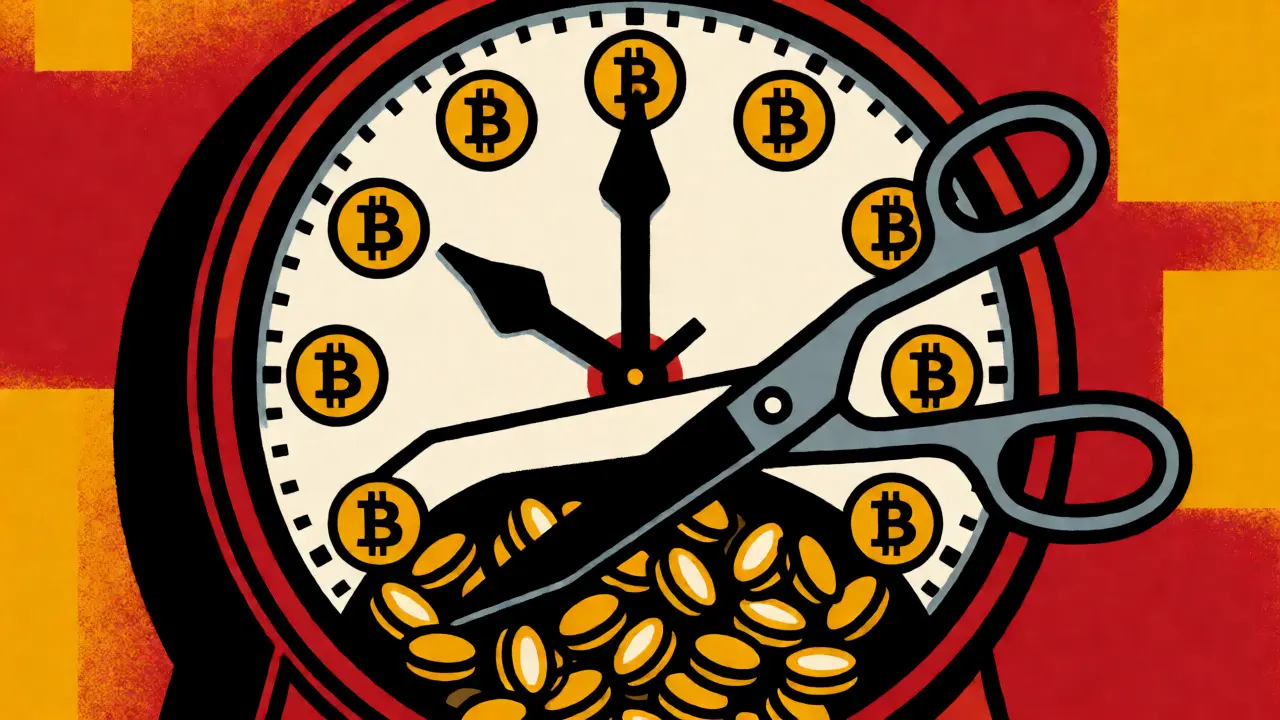
Imagine waking up one day to find that the paycheck for your hardest-working employees has just been cut in half. Now imagine this happens automatically, every four years, without a vote, a board meeting, or a CEO’s signature. That is the Bitcoin halving, a programmed deflationary event hardwired into the network’s DNA since Satoshi Nakamoto launched it in 2009. For investors and miners alike, these events are not just technical updates; they are massive supply shocks that have historically reshaped market dynamics. But does the halving actually drive the price up, or is that just a convenient narrative? Let’s break down what really happened after each of the first four halvings, using data rather than hype.
The Mechanics of Scarcity
To understand the impact, you first need to grasp the mechanism. A Bitcoin halving is an automated protocol update that reduces the reward miners receive for validating transactions by 50%. This happens every 210,000 blocks, which roughly translates to four years given the average block time of ten minutes. The goal? To cap the total supply at 21 million coins. As of September 2026, we are living in the post-2024 era where miners earn 3.125 BTC per block. Before that, it was 6.25, then 12.5, then 25, and originally 50. This isn’t a policy decision made by a central bank; it’s code. It cannot be changed without splitting the entire network into two competing chains, a scenario known as a fork. This immutability is why many view Bitcoin as "digital gold"-its scarcity is predictable, unlike fiat currencies which can be printed indefinitely.
2012: The Quiet Revolution
The first halving occurred on November 28, 2012. At this point, Bitcoin was still largely a niche experiment for cypherpunks and early tech enthusiasts. Mining rewards dropped from 50 BTC to 25 BTC per block. Because the market was so small and illiquid, price movements were volatile and less reflective of global macro trends. However, the supply shock was real. Data from Kraken shows that within 180 days following the event, Bitcoin’s price surged from roughly $10.59 to $126.24. That’s an increase of over 1,000%. While it’s tempting to attribute all of this to the halving, we must acknowledge that this period also saw increased media attention and the rise of early exchanges like Mt. Gox. Still, the correlation was stark: less new supply hitting the market coincided with rising demand.
2016: Entering the Mainstream Radar
By July 9, 2016, Bitcoin had shed some of its underground reputation. The second halving reduced rewards from 25 BTC to 12.5 BTC. This event marked a turning point where institutional interest began to trickle in. Retail investors started paying attention, partly due to better access via user-friendly platforms. VanEck’s analysis highlights that this period laid the groundwork for the massive bull run of 2017. Following the halving, Bitcoin crossed the psychological barrier of $1,000, reaching peaks around $1,002.92 before continuing its climb. The market was maturing. Unlike 2012, the 2016 halving occurred in a more liquid environment, meaning the price action was smoother but still significantly upward-biased. The supply squeeze was becoming harder for the market to ignore.
2020: The Perfect Storm
The third halving in May 2020 is perhaps the most interesting case study because it collided with a global crisis. Rewards fell to 6.25 BTC per block right as the world grappled with the pandemic. Central banks worldwide responded with unprecedented quantitative easing, printing trillions to stimulate economies. This created a unique backdrop: traditional money was losing value rapidly, while Bitcoin’s supply growth was slowing down. Within six months, Bitcoin hit new all-time highs of $14,849.09. By late 2021, it would soar past $60,000. Did the halving cause this? Partly. But the macroeconomic context amplified its effect. Investors sought hedges against inflation, and Bitcoin’s fixed supply schedule made it an attractive candidate. This event proved that halvings don’t happen in a vacuum; they interact with broader financial conditions.
| Event Date | Reward Change | Approx. Price (Pre-Halving) | Price Peak (Post-Halving Cycle) | Key Context |
|---|---|---|---|---|
| Nov 28, 2012 | 50 → 25 BTC | $12 - $15 | $1,100+ (2013 peak) | Niche adoption, low liquidity |
| July 9, 2016 | 25 → 12.5 BTC | $650 - $700 | $19,000+ (2017 peak) | Rising retail interest, ICO boom |
| May 11, 2020 | 12.5 → 6.25 BTC | $8,500 - $9,000 | $69,000+ (2021 peak) | Pandemic stimulus, ETF speculation |
| April 20, 2024 | 6.25 → 3.125 BTC | $63,000 - $64,000 | $73,000+ (2024-2025 peak) | Spot ETF approval, institutional entry |
2024: The Institutional Era
The fourth halving took place on April 19-20, 2024, cutting rewards to 3.125 BTC. This event was different. For the first time, major U.S. spot Bitcoin ETFs were already trading, bringing billions in institutional capital into the mix. The pre-halving price was already near historic highs, hovering around $63,000-$64,000. Post-halving, the market didn’t explode immediately in the same way it did in previous cycles. Instead, we saw a consolidation phase followed by a gradual climb. Why? Because the market had already priced in much of the expected supply shock. With ETFs absorbing large amounts of BTC daily, the "shock" was diluted by steady demand. This suggests that as Bitcoin matures, the explosive percentage gains seen in earlier cycles may diminish, replaced by more stable, albeit slower, appreciation.

Mining Economics Under Pressure
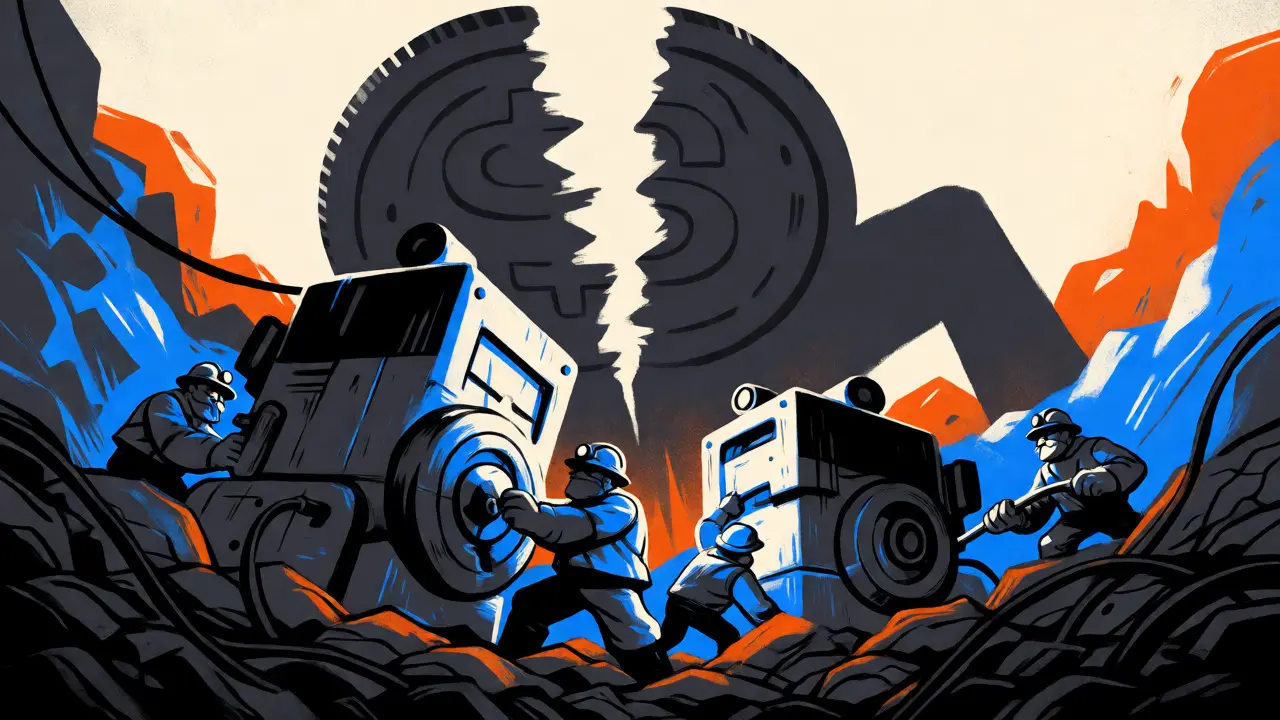
It’s not just about price charts. Halvings drastically affect the people keeping the network secure: miners. When rewards drop by 50%, miner revenue plummets unless the price doubles instantly-which rarely happens. This forces a shakeout. Less efficient miners, those with older hardware or high electricity costs, often go offline. We saw temporary dips in network hash rate after each halving. For instance, after the 2024 halving, some smaller operations struggled to remain profitable. This concentration of mining power among larger, more efficient firms raises questions about decentralization. If only a few big players can afford to mine, does Bitcoin remain truly decentralized? Historically, the network has recovered, with hash rates rebounding as prices eventually adjust upward, but the short-term pain for miners is real.
Looking Ahead: The Next Halving
So, what’s next? Based on current block production speeds, the fifth halving is projected for March 26, 2028. Rewards will drop from 3.125 BTC to 1.5625 BTC. By then, Bitcoin will be nearly two decades old. Will the pattern hold? Likely, but with diminishing returns. Each subsequent halving represents a smaller percentage reduction in total circulating supply compared to the last. In 2012, the reduction was huge relative to the tiny existing supply. In 2028, the existing supply will be vast, making the new issuance even scarcer in absolute terms, but the market’s reaction might be muted. Investors should watch macro factors closely-interest rates, regulatory clarity, and global adoption-because these will likely outweigh the pure supply mechanics in future cycles.
Common Misconceptions About Halvings
Many newcomers think the halving causes an immediate price spike. It doesn’t. History shows the biggest moves often happen 12-18 months *after* the event. Another myth is that miners get nothing. They still earn transaction fees, though these are currently a small fraction of their income. Finally, some believe the halving ends when Bitcoin hits $100k. It doesn’t. It continues until the year 2140, when the last satoshi is mined. After that, miners rely entirely on fees, a model that requires robust network usage to keep security incentives aligned.
Does the Bitcoin halving always cause the price to rise?
Not immediately or guaranteed. While historical data shows significant price increases in the 12-24 months following a halving, it is not a law of physics. Macroeconomic conditions, regulatory news, and market sentiment play huge roles. For example, the 2024 halving saw a slower initial response due to prior price anticipation and ETF inflows.
What happens to miners if the price doesn't double after a halving?
Miners face reduced profitability. Those with high operational costs or inefficient hardware may shut down their rigs. This leads to a temporary decrease in network hash rate. Over time, the difficulty adjustment algorithm lowers mining difficulty, making it easier for remaining miners to find blocks, helping them stabilize their earnings.
When is the next Bitcoin halving scheduled?
The next halving is projected to occur around March 2028. It will reduce the block reward from 3.125 BTC to 1.5625 BTC. The exact date depends on how fast blocks are mined, as the trigger is based on block count (every 210,000 blocks), not calendar dates.
Why does Bitcoin have halvings?
Halvings enforce digital scarcity. By reducing the rate of new Bitcoin creation, the protocol ensures that the total supply never exceeds 21 million coins. This mimics the scarcity of precious metals like gold and contrasts with fiat currencies, which central banks can print in unlimited quantities, potentially leading to inflation.
Can the Bitcoin halving schedule be changed?
Changing the halving schedule would require a consensus change in the Bitcoin protocol. Since this alters the fundamental monetary policy, it is highly unlikely to happen without causing a major split (fork) in the community. Most users value the predictability of the current schedule, so changes are rare and contentious.