How Blockchain Ensures Election Integrity: A Practical Guide
 Oct, 2 2026
Imagine casting your vote on a Tuesday morning and watching it appear on a public ledger by noon, with no one able to change it. Not even the person running the server. That’s the promise of Blockchain. It’s not just about Bitcoin anymore; it’s about trust in our most basic democratic process.
We’ve all heard the horror stories. Missing ballots, disputed counts, machines that glitch during recount season. Traditional voting systems, whether paper or electronic, rely heavily on central authorities. If that authority is compromised, the whole system wobbles. Blockchain flips this model on its head. Instead of one trusted middleman holding all the cards, everyone holds a copy of the deck. This shift from centralized control to distributed verification is exactly how blockchain ensures election integrity.
The Core Problem with Current Voting Systems
Before we talk solutions, let’s look at the cracks in the foundation. Most modern elections use some form of electronic tallying. You mark a ballot, a machine scans it, and data gets sent to a central location for counting. Simple, right? But here’s the catch: that central location is a single point of failure. If a hacker breaches that server, they could theoretically alter thousands of votes. Or worse, if a human error occurs during data transfer, it might go unnoticed until days later.
Paper ballots have their own issues. They’re vulnerable to physical damage, loss, or misinterpretation. Plus, recounting them takes time and money. Neither method offers real-time transparency. You can’t log into a portal and see your specific vote verified against a global standard while you’re still drinking your coffee. That lack of immediate, independent verification is where distrust festers.
How Blockchain Actually Works in Elections
At its heart, a blockchain is a decentralized, immutable digital ledger. Think of it as a chain of blocks, where each block contains a batch of transactions (in this case, votes). Once a block is added, it’s locked using cryptography. To change a past vote, you’d have to change every subsequent block across thousands of computers simultaneously. Practically impossible.
Here’s the step-by-step flow of a typical blockchain-based vote:
- Voter Authentication: You prove who you are. This isn’t just typing in a name. It often involves biometric data (like a fingerprint) or a government-issued digital ID linked to a cryptographic key.
- Vote Casting: You select your candidate. The system encrypts this choice so no one knows who you voted for except through a complex mathematical proof.
- Transaction Broadcasting: Your encrypted vote is sent to the network. It doesn’t go to one server; it goes to many nodes (computers) around the world.
- Verification via Smart Contracts: Automated code called Smart Contracts checks if you’re eligible, haven’t voted twice, and signed correctly.
- Block Addition: Once verified, your vote joins other votes in a new block. This block is hashed (given a unique digital fingerprint) and added to the chain.
- Final Tally: Because every node has the same copy of the ledger, the count is instant and identical everywhere.
This process removes the "black box" problem. In traditional e-voting, you trust the software. With blockchain, you trust the math and the consensus of the network.
Key Pillars of Election Integrity
Integrity isn’t just one thing. It’s a mix of security, transparency, and fairness. Here’s how blockchain tackles each pillar specifically.
Immutability: No One Can Change History
Once a vote is on the blockchain, it’s there forever. You can’t delete it. You can’t tweak it. This prevents post-election tampering. Remember those debates about "missing" votes? On a blockchain, if the transaction exists, the vote exists. There’s no ambiguity. This feature alone eliminates a huge chunk of fraud allegations related to ballot stuffing or destruction.
Transparency: Everyone Can Audit
In a permissioned blockchain (the kind used for elections), anyone with the right access keys can view the ledger. This means political parties, independent watchdogs, and journalists can audit the results in real-time. They don’t need to wait for an official announcement. They can run their own scripts to count the votes and verify the total matches the official report. This radical openness builds public confidence.
Anonymity vs. Verifiability
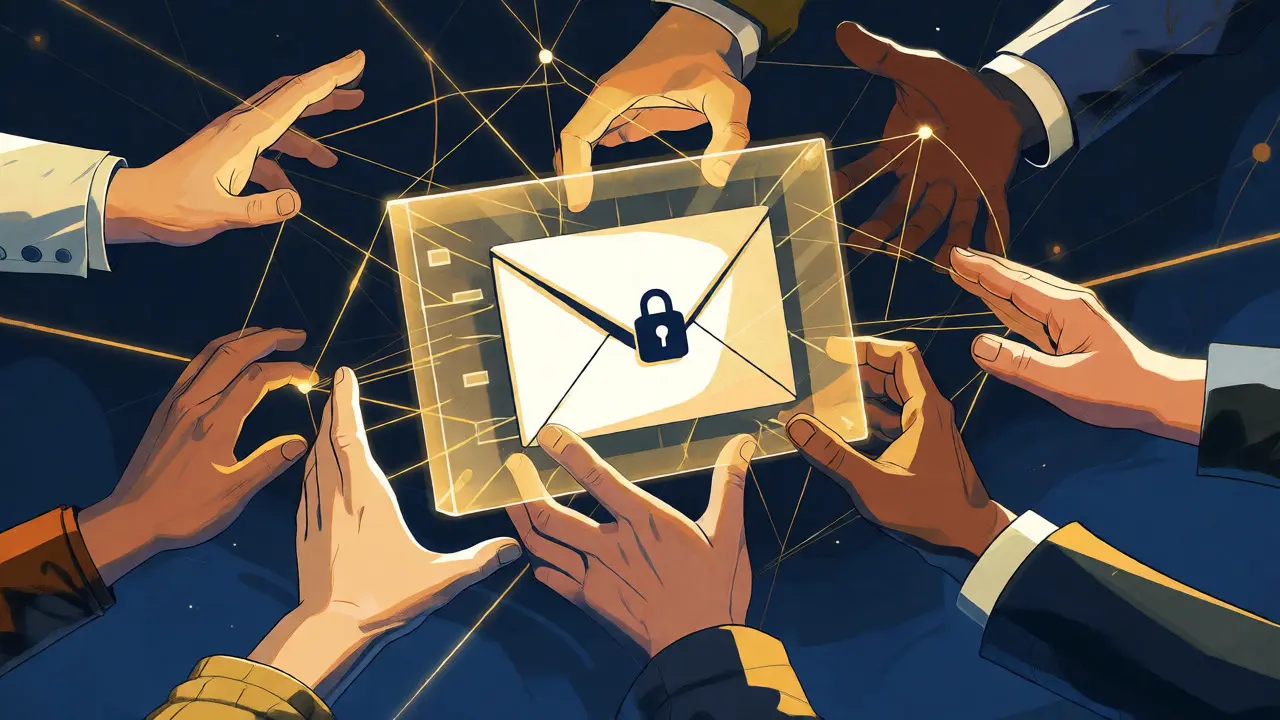
Critics often ask: "If everything is transparent, won’t my vote be public?" Not necessarily. Advanced cryptographic techniques like zero-knowledge proofs allow the system to verify that a vote is valid without revealing who cast it. Your identity is linked to a digital token, but the content of your vote remains hidden until the final tally is decrypted. This balances privacy with accountability.
Real-World Implementation Challenges
If blockchain is so great, why aren’t we all using it? The answer lies in logistics, not magic. Implementing this technology is hard work.
| Feature | Paper Ballots | Traditional E-Voting | Blockchain Voting |
|---|---|---|---|
| Speed of Count | Slow (Days) | Fast (Hours) | Instant (Minutes) |
| Tamper Resistance | Low (Physical loss/damage) | Medium (Central server risk) | High (Distributed ledger) |
| Auditability | Manual Recount | Limited Software Audit | Full Public Ledger Access |
| Cost per Vote | High (Printing/Staffing) | Medium (Hardware maintenance) | Variable (Network fees/Infra) |
| User Trust | High (Tangible) | Low (Black box fear) | Growing (Requires education) |
Infrastructure Requirements: You need robust internet connectivity. In rural areas, this can be a hurdle. If the network goes down, does voting stop? Hybrid models are being tested where offline votes are synced later, but this complicates the "real-time" aspect.
Voter Education: People are skeptical of new tech. If voters don’t understand how their vote is secured, they won’t trust the result. Comprehensive campaigns are needed to explain concepts like private keys and encryption without drowning people in jargon.
Scalability: During a national election, millions of transactions happen in a short window. Older blockchains like Bitcoin struggle with this speed. Newer platforms like Ethereum or specialized electoral chains handle high throughput better, but stress testing is critical.
Case Studies and Pilot Programs
We aren’t talking sci-fi. Several places have already tested the waters.
Estonia: Often cited as the gold standard for digital governance, Estonia uses blockchain components in its healthcare and judicial records. While their full e-voting system relies on different cryptographic methods, they are actively integrating blockchain for greater transparency in record-keeping.
West Virginia (USA): In 2018, West Virginia piloted a mobile voting app based on blockchain for overseas military personnel. Over 140 votes were cast. While small-scale, it proved that remote voting could be secure and verifiable. Critics noted potential smartphone vulnerabilities, but the core blockchain mechanism held up.
South Korea: Local municipalities have experimented with blockchain for budget referendums. These smaller-scale tests help refine the user interface and backend logic before attempting larger deployments.
The Future: Hybrid Models and Regulatory Frameworks
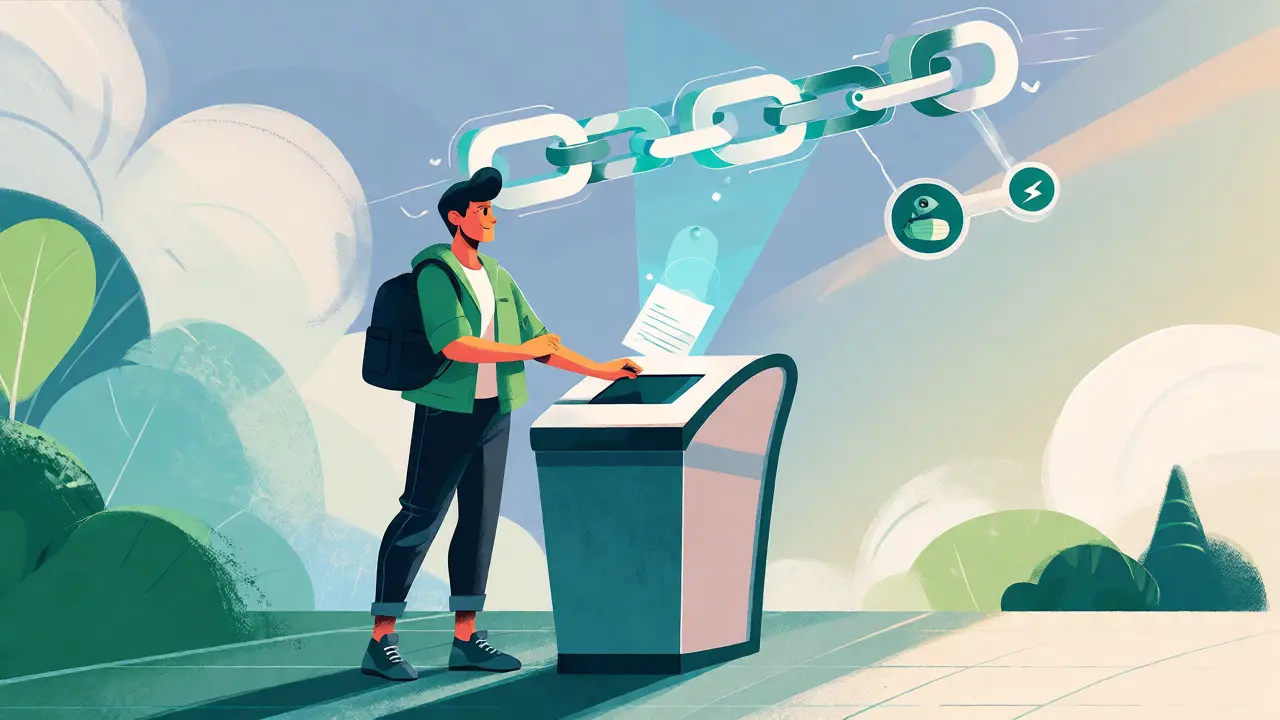
Don’t expect a complete switch overnight. The future likely holds hybrid systems. Imagine a paper ballot that generates a QR code. You drop the paper in a box, but scan the QR code to add your vote to a blockchain ledger. This gives you the tangible comfort of paper plus the digital security of blockchain.
Regulation will play a huge role. Governments need to define what constitutes a valid digital signature and how disputes are handled. Who owns the private keys? If you lose your phone, do you lose your vote? These legal questions must be answered before widespread adoption.
Moreover, energy consumption is a concern. Proof-of-Work blockchains (like early Bitcoin) use massive amounts of electricity. Modern electoral blockchains use Proof-of-Stake or other consensus mechanisms that are far more energy-efficient, addressing environmental concerns raised by green advocates.
Why This Matters to You
You might think, "I’m not a coder, why should I care?" Because your voice matters. If the system recording your voice is flawed, your influence diminishes. Blockchain offers a tool to ensure that when you speak, the system listens accurately. It shifts power from opaque institutions to verifiable code. It makes cheating expensive and difficult, and honest participation easy and transparent.
As we move toward a more digital society, our democratic tools must evolve too. Blockchain isn’t a silver bullet-it requires good implementation, strong laws, and informed citizens-but it provides the strongest foundation yet for ensuring that every vote truly counts.
Is blockchain voting completely anonymous?
Yes, typically. While the transaction is recorded on a public ledger, the actual vote content is encrypted. Techniques like zero-knowledge proofs allow the system to verify eligibility and uniqueness without revealing the voter's identity or their specific choice until the tally is finalized.
What happens if I lose my digital key or device?
This is a major challenge. Most systems use recovery mechanisms, such as linking your digital ID to a government database or allowing multi-signature approvals from trusted contacts. However, losing access can mean losing the ability to vote digitally, which is why backup methods (like paper ballots) are often retained in hybrid systems.
Can hackers manipulate blockchain votes?
It is extremely difficult. To alter a vote, a hacker would need to compromise more than 50% of the network nodes simultaneously (a 51% attack) and redo the work for all subsequent blocks. Given the distributed nature of the network, this is computationally prohibitive and easily detected by honest nodes.
Does blockchain voting require internet access?
Generally, yes, for real-time transmission. However, offline modes exist where votes are stored locally and synced to the blockchain once connectivity is restored. This ensures that lack of signal doesn't disenfranchise voters, though it delays the final tally slightly.
How does blockchain prevent double voting?
Each voter is assigned a unique digital identifier or token. Smart contracts automatically check the ledger to ensure this token hasn't been used recently. If a second vote attempt is made with the same token, the network rejects it instantly, preventing duplicate entries.